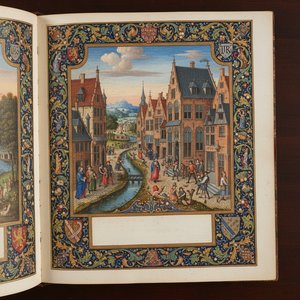
Peeter Baltens (1527 – Before 1584): A Flemish Painter of Lively Detail
Peeter Baltens, born around 1527 in Antwerp, Belgium, was a prolific Flemish painter who flourished during the Renaissance and Mannerist periods. While biographical details remain somewhat sparse—records indicate he died before 1584—his artistic output speaks volumes about his talent and contribution to Flemish art history. He is primarily recognized for his genre scenes depicting everyday life, particularly bustling marketplaces and festive celebrations like Kermis (carnival fairs), alongside impressive religious paintings that showcase a masterful understanding of composition and color.
Early Life and Training
Information regarding Baltens’s formative years is limited. Like many artists of his time, he likely received training in Antwerp's renowned artistic milieu, where workshops fostered innovation and stylistic experimentation. Antwerp was at the height of its commercial prosperity during Baltens’s lifetime, attracting artisans from across Europe and fostering a vibrant cultural landscape. The influence of Italian Renaissance masters—particularly Raphael and Michelangelo—can be discerned in his early works, demonstrating an awareness of humanist ideals and artistic conventions prevalent on the continent.
Notable Works: Genre Scenes and Festive Celebrations
Baltens’s fame rests largely upon his captivating genre paintings, capturing the dynamism and spirit of Flemish society. His depiction of “Een cluyte van Plaeyerwater” (A Lively Carnival Performance), circa 1570, exemplifies this style perfectly. The canvas bursts with color and movement—figures engaged in music, dance, and theatrical spectacle—creating a vivid tableau of festive merriment. Baltens’s meticulous attention to detail—from the costumes to the expressions on the faces of the performers—reveals his commitment to portraying authentic human experience. These scenes aren't merely decorative; they offer invaluable insights into the social customs and beliefs of Antwerp during the Elizabethan era.
Religious Paintings: Compositional Mastery and Color Harmony
Beyond genre paintings, Baltens produced several noteworthy religious compositions demonstrating exceptional compositional skill and harmonious color palettes. “Christ on the Road to Calvary,” a poignant depiction of Jesus carrying his cross, exemplifies Baltens’s ability to convey emotion through visual storytelling. The artist skillfully utilizes perspective and shading to create depth and drama, drawing viewers into the scene's emotional core. His use of muted hues—primarily blues and browns—contrasts beautifully with brighter accents—such as the radiant robe of Christ—enhancing the painting’s spiritual impact.
Influence and Legacy
Baltens’s artistic legacy extends beyond his individual masterpieces. He played a crucial role in shaping Antwerp's artistic identity during the Mannerist period, characterized by stylized forms and exaggerated gestures. His work influenced subsequent generations of Flemish painters, contributing to the continuity of stylistic traditions. Although Baltens’s oeuvre remains relatively modest compared to some of his contemporaries—such as Rubens or Bruegel—his paintings continue to resonate with audiences today due to their expressive power and enduring beauty. They stand as testament to a remarkable artist who captured the essence of his time, cementing his place in Flemish art history.