


x


 angelica kauffmann (maria anna angelika)
Discover Angelica Kauffmann: Swiss neoclassical painter known for history & portraiture in London & Rome. Admired for classical themes & royal connections.
The story of Angelica Kauffmann begins not amidst the grand salons of London or Rome, but in the serene landscapes of Chur, Switzerland. Born Maria Anna Angelika Kauffmann in 1741, her early life was steeped in artistic tradition; her father, Joseph Johann Kauffmann, a relatively unassuming muralist, recognized and nurtured an extraordinary gift in his daughter from a remarkably young age. This wasn’t merely encouragement—it was a dedicated apprenticeship, moving through various Swiss towns and into Italy as the family sought commissions. Even then, Angelica's talent wasn’t confined to brushstrokes; she possessed a rare linguistic aptitude, mastering German, Italian, French, and English before her teens – skills that would prove invaluable in navigating the cosmopolitan art world awaiting her. Her childhood was one of constant travel and observation, absorbing the nuances of different cultures and artistic styles. By age twelve, she was already receiving recognition as a painter, a testament to both her innate ability and her father’s rigorous training. This early success wasn't simply about technical skill; it hinted at an intellectual curiosity and emotional depth that would define her mature work.
The mid-18th century saw a burgeoning art scene in London, ripe with opportunity for ambitious artists. Angelica Kauffmann arrived in 1760, quickly establishing herself as a sought-after portraitist and history painter. Her ability to capture both likeness and character drew immediate acclaim, attracting commissions from prominent figures of British society. However, her true significance lies not just in her individual success but in her role as a founding member of the Royal Academy of Art in 1768 – one of only two women among its initial cohort (the other being Mary Moser). This was a watershed moment, challenging prevailing societal norms and opening doors for future generations of female artists. The Academy provided Kauffmann with a platform to showcase her work alongside leading male painters like Joshua Reynolds and Thomas Gainsborough, fostering both collaboration and healthy competition. Her election wasn’t without its detractors; some questioned the propriety of a woman holding such a prestigious position, but Kauffmann's talent silenced many critics. She became a symbol of artistic merit transcending gender boundaries.
Neoclassicism, also spelled Neo-classicism, emerged as a Western cultural movement in the decorative and visual arts, literature, theatre, music, and architecture that drew inspiration from the art and culture of classical antiquity. Neoclassicism wa...
Kauffmann’s art is inextricably linked to the rise of Neoclassicism – a movement that sought inspiration from the classical art and architecture of ancient Greece and Rome. Following her formative years in Italy, she embraced this aesthetic wholeheartedly, imbuing her paintings with a sense of order, balance, and idealized beauty. Unlike the flamboyant Rococo style that preceded it, Neoclassicism emphasized clarity, restraint, and moral virtue. Kauffmann’s history paintings often depicted scenes from mythology and ancient literature, populated by figures rendered with graceful forms and elegant drapery. Her technique was characterized by meticulous detail, a refined color palette, and a skillful use of light and shadow to create depth and drama. She wasn't merely copying classical models; she infused them with her own sensibility, creating works that were both historically informed and emotionally resonant. The rediscovery of Pompeii and Herculaneum fueled the Neoclassical fervor, providing artists like Kauffmann with a wealth of new visual references and inspiring a renewed interest in classical themes.
While celebrated for her history paintings, Angelica Kauffmann was equally adept at portraiture. Her portraits weren't simply representations of physical likeness; they were insightful studies of character and social status. She possessed a remarkable ability to capture the personality of her sitters, conveying their intelligence, wit, and inner life with subtle brushstrokes and expressive eyes. Her clientele included members of the British aristocracy, prominent writers, and fellow artists. Kauffmann understood the power of portraiture as a means of self-representation, carefully crafting images that reflected her subjects’ aspirations and social standing. She often depicted her sitters in elegant settings, surrounded by symbols of their wealth, education, or profession. Her portraits weren't merely decorative; they were statements about identity, ambition, and the complexities of 18th-century society. The composition of *The Judgement of Paris* exemplifies this skill – a historical scene rendered with the precision and psychological insight she brought to her portrait work.
In 1774, Kauffmann returned to Rome, where she continued to flourish as an artist. She married Antonio Zucchi, a Venetian painter, establishing a vibrant artistic household that attracted a circle of prominent intellectuals and creatives. Her Roman period saw a shift in her style, with a greater emphasis on decorative painting and allegorical subjects. While still rooted in Neoclassicism, her work became more fluid and expressive, reflecting the influence of Italian Baroque art. Despite facing challenges – including slanderous rumors that threatened her reputation – Kauffmann remained a prolific artist throughout her later years. She continued to receive commissions from European royalty and nobility, solidifying her position as one of the most sought-after painters of her time. Her death in 1807 marked the end of an extraordinary career, but her legacy endured through her numerous paintings, drawings, and engravings.
Angelica Kauffmann’s impact extends far beyond her own artistic achievements. As a founding member of the Royal Academy and a successful artist in a male-dominated field, she paved the way for future generations of female painters. Her story became an inspiration to women seeking to pursue careers in art, demonstrating that talent and ambition could overcome societal barriers. She actively supported other female artists, offering guidance and encouragement. Her success challenged conventional notions about gender roles, proving that women were capable of achieving artistic excellence on par with their male counterparts. While the struggles faced by women artists continued long after Kauffmann’s time, her example provided a powerful symbol of hope and determination. Today, she is recognized as a pioneering figure in art history, whose work continues to inspire and captivate audiences worldwide.

Esplora la vita e l'opera di Joseph Wright of Derby, pittore simbolo dell'Illuminismo. Analisi approfondita del suo uso della luce, dei suoi capolavori scientifici e del contesto storico-artistico. Scopri un artista rivoluzionario!
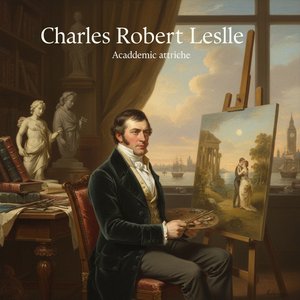
Scopri la vita e le opere di Charles Robert Leslie, pittore transatlantico tra Romanticismo e Accademia. Analisi approfondita del suo stile, delle influenze letterarie e del contributo alla pittura vittoriana.

Esplora la vita e l'opera di Joshua Reynolds, il rivoluzionario pittore inglese del XVIII secolo. Approfondimenti sulla sua tecnica, le 'Discourses' e l'influenza sull'arte britannica. Scopri i suoi capolavori!

Explore the captivating world of 19th-century painting! Discover Realism & Impressionism's revolutionary techniques, key artists like Manet and Monet, and their lasting impact. A comprehensive guide for art enthusiasts.

Explore the captivating world of Neoclassical portraiture! Discover the power & ideals behind masterpieces by David, Girodet & more. Expert analysis, custom reproductions & art appraisal at WahooArt.


Rimani aggiornato sulle ultime novità dell'arte, sulle offerte esclusive e sulle idee di decorazione.
Raccontaci del tuo progetto e i nostri esperti d'arte ti proporranno 3 suggerimenti artistici personalizzati.
Lascia che ci pensiamo noi: 3 opzioni su misura per te – Gratis!


