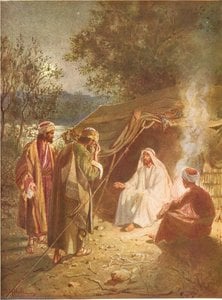
William Brassey Hole: Life & Art
William Brassey Hole’s life was a testament to artistic passion and unwavering dedication to capturing the spirit of Scotland. Born in Salisbury, England, in 1846, his early years were shadowed by profound loss – the untimely death of his father, Richard Hole, during the devastating cholera epidemic of 1849. This tragedy spurred his family’s relocation to Edinburgh, where he embarked on a formative education at Edinburgh Academy and subsequently pursued a civil engineering apprenticeship reluctantly, driven by an innate yearning for artistic expression.Early Life and Education
- Born: Salisbury, United Kingdom (1846)
- Died: 1917
- William Brassey Hole’s early life was marked by tragedy. His father, a doctor named Richard Hole, died in the cholera epidemic of 1849 when William was only three years old.
- Following his father's death, the family relocated to Edinburgh, Scotland.
- He received his education at Edinburgh Academy and then served a five-year apprenticeship as a civil engineer – a path he pursued reluctantly, harboring a strong desire to be an artist.
Artistic Development & Influences
- Early Travels: In 1869, Hole embarked on a six-month sketching tour of Italy, beginning in Genoa. This journey proved pivotal in solidifying his artistic ambitions.
- Key Influence: In Rome, he met Keeley Halswelle, who provided invaluable practical advice and critical feedback that encouraged him to pursue painting professionally.
- Upon returning to Edinburgh, Hole attended the School of Design and subsequently gained admission to the life school of the Royal Scottish Academy in 1873.
- He was elected an associate of the academy in 1878 and later became a full member (RSA).
- Hole also joined the Royal Society of Painters-Etchers (RE) in 1885, having already become a member of the Royal Scottish Watercolour Society (RSW) in 1884.
Artistic Style and Themes
- Specialization: Hole specialized in painting industrial scenes, historical events, and biblical narratives.
- Scottish Focus: Despite being English by birth, he devoted much of his energy to depicting Scottish national subjects and purposes.
- Notable Themes: His work often explored themes of industry, history, faith, and the lives of ordinary people, particularly fishermen on the west coast of Scotland.
- He was a master etcher, with critics praising his ability to translate color and handling into this medium.
Major Works & Achievements
- Key Paintings: Some of his principal paintings include “End of the '45” (1879), “Prince Charlie’s Parliament” (1882), “If thou hadst known” (1885), and “The Canterbury Pilgrims” (1889).
- West Coast Series: His paintings of fishermen, such as "The Night’s Catch" and "The Fill of the Two Boats," were highly acclaimed.
- Frieze for Scottish National Portrait Gallery (1898): He painted a processional frieze depicting over 150 figures from Scotland's past, considered a significant achievement in mural decoration.
- Biblical Illustrations: Around 1900, he traveled to Palestine to study backgrounds for biblical paintings, resulting in 80 watercolors used as illustrations in his book “The Life of Jesus of Nazareth.”
- He also provided historical paintings for Edinburgh City Chambers and ecclesiastical decorations for other buildings.
- Illustrator: Hole illustrated works by Robert Louis Stevenson, J.M. Barrie, and Robert Burns.
Historical Significance & Legacy
- William Brassey Hole’s work provides valuable insights into 19th-century Scottish life, industry, and religious beliefs.
- Blending Genres: He successfully blended historical accuracy with artistic sensitivity, creating compelling narratives in his paintings.
- Etching Mastery: His etchings remained highly regarded for their technical skill and expressive quality.
- Hole’s contributions to Scottish art and culture are recognized through his works displayed in prominent institutions and collections.
Gyakran Ismételt Kérdések
Hol tekinthetném meg William Brassey Hole műveit időrendi sorrendben?
Megக் exists egy időrendi áttekintés William Brassey Hole műveiről: a művész Műalkotások időrendje oldala a alkotások létrehozásának dátuma szerint rendszerezi a műveket.
Szűrhetem William Brassey Hole műveit szín alapján?
William Brassey Hole Színspektrum index oldala olyan felület, amely a művész alkotásait színek szerint csoportosítja.
Honnan származik William Brassey Hole?
William Brassey Hole Egyesült Királyság-ban született.