

Early Life and Artistic Foundations
Walter Crane, born in Liverpool on August 15th, 1845, emerged from a family deeply interwoven with the artistic fabric of Victorian England. His father, Thomas Crane, was a respected portrait painter and miniaturist, instilling within young Walter an early appreciation for form and detail – a meticulous eye for observation that would become central to his artistic practice. This familial atmosphere, further enriched by his brother Thomas’s own pursuit of illustration, fostered a creative environment where artistry wasn't merely a profession but a way of life, a shared passion passed down through generations. From the outset, Crane’s path seemed destined to follow a similar trajectory, yet he would ultimately forge a unique identity within the burgeoning world of British art. His initial training began not with oils or watercolors, but with the rigorous discipline of wood-engraving – an apprenticeship under William James Linton in London that proved foundational. This process honed his observational skills and instilled a deep understanding of line, texture, and composition; he learned to translate complex visual information into precise, graphic forms. The influence of the Pre-Raphaelite Brotherhood was also profoundly felt during these formative years; their commitment to narrative storytelling, vibrant color palettes, and meticulous detail resonated deeply with Crane’s developing aesthetic sensibilities – a fascination with medieval themes, romantic landscapes, and symbolic imagery. He became a dedicated student of John Ruskin, whose writings championed craftsmanship and the integration of art into everyday life – ideals that would shape Crane's artistic philosophy for decades to come, urging him to believe in the power of beauty to uplift and educate.A Blossoming Career: Illustration and the Arts & Crafts Movement
Crane’s artistic journey was remarkably versatile, encompassing painting, illustration, and decorative arts. However, it was in the realm of children’s book illustration that he truly distinguished himself, becoming a pivotal figure in shaping the genre as we know it today. His collaboration with Edmund Evans, beginning in 1865, proved particularly fruitful, leading to a series of beautifully illustrated books – not merely pretty pictures, but carefully constructed narratives designed to engage young readers on multiple levels. These weren’t simply whimsical depictions; they were meticulously researched and thoughtfully composed works of art, imbued with intricate detail, vibrant colors, and a palpable sense of imagination. A recurring motif in Crane’s illustrations was the “child-in-the-garden” theme – a romanticized vision of innocence and connection with nature that became emblematic of English children's literature during the Victorian era. This wasn’t simply a nostalgic portrayal; it often carried subtle social commentary, reflecting Crane’s own progressive views on childhood and society. Beyond his work for Evans, Crane extended his artistic reach into various decorative fields, creating ceramic tiles, wallpapers, and other designs that reflected the principles of the Arts and Crafts movement – a desire to elevate craftsmanship and bring beauty into everyday objects. This commitment to integrating art into everyday life aligned perfectly with Ruskin’s teachings and solidified Crane’s position as a leading figure in this influential aesthetic movement. He believed passionately in the value of skilled labor and sought to create designs that were both beautiful and functional, accessible to all members of society.Key Works and Artistic Style
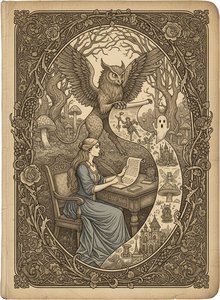
Among Crane's most celebrated works are “Walter Crane: W to Z,” a delightful collection showcasing his artistic range through alphabet illustrations – each letter rendered with unique character and detail; "The Sweep," a poignant depiction of a young boy’s life that subtly incorporates social commentary, reflecting the realities of working-class children in Victorian England; and “Summer,” which perfectly embodies the idyllic “child-in-the-garden” motif with its vibrant depictions of nature and childhood joy. These pieces, along with countless others, reveal Crane's distinctive style – characterized by meticulous detail, flat planes of color, a strong sense of design, and an elegant simplicity. He frequently employed wood engraving and lithography techniques to achieve his unique visual effects, often incorporating elements of Japanese art into his compositions – a fascination with the bold outlines, simplified forms, and decorative patterns found in Japanese prints. This Japonisme influence, prevalent in Victorian England, is evident in his use of strong lines and a flattened perspective, creating a sense of stylized beauty. Crane’s work wasn't merely about aesthetic pleasure; it was also imbued with a deep understanding of storytelling and symbolism. He skillfully combined narrative elements with visual motifs to create images that were both captivating and thought-provoking.- His illustrations often featured mythical or allegorical subjects, drawing inspiration from folklore and literature.
- Crane’s meticulous attention to detail and his use of vibrant colors created a distinctive visual style that was instantly recognizable.
- He experimented with different printing techniques to achieve various effects, demonstrating his versatility as an artist.
Legacy and Enduring Influence
Walter Crane’s legacy extends far beyond his own prolific output. He is rightfully considered a pioneer of children's book illustration, significantly shaping the genre’s development and establishing it as a distinct field within the broader art world. His emphasis on design and detail helped elevate the status of illustrated books, transforming them from simple educational tools into cherished works of art. Crane influenced generations of artists and illustrators, including Randolph Caldecott and Kate Greenaway, who further popularized illustrated children’s books and carried forward his commitment to quality and innovation. His contributions to the Arts and Crafts movement were equally significant, championing the integration of art into everyday life and advocating for a more holistic approach to design. Even today, Crane's work continues to inspire artists, designers, and educators alike, demonstrating the enduring power of illustration to engage, educate, and uplift. His illustrations have been exhibited in museums worldwide, including Christ’s Hospital Museum in Horsham, United Kingdom, the British Museum, and the Victoria and Albert Museum – a testament to his lasting artistic impact. Walter Crane died on March 14th, 1915, leaving behind a rich and diverse body of work that continues to resonate with audiences around the globe.Gyakran Ismételt Kérdések
Milyen hangulatokat közvetítenek Walter Crane művei?
A művész Hangulat alapú gyűjtemény oldala Walter Crane alkotásait hangulat alapján csoportosítva mutatja be.
Hogyan tekinthetném meg minden Walter Crane által készített művet?
Walter Crane minden alkotása a ez a weboldal oldalán megtekinthető az alkotó Összes műalkotás oldalán.
Honnan származik Walter Crane?
Walter Crane Egyesült Királyföld-ban született.
Hol és 어느 해 született Walter Crane?
Walter Crane Liverpool városban született, 1845 évben.
Megvizsgálhatom Walter Crane színhasználatát az összes művében?
Walter Crane műveleteinek színpalettája a művész Paletta Genom oldalán látható.
Hol és melyik országban született Walter Crane?
Walter Crane Liverpool városban, Egyesült Királyföld országban született.
Hogyan találhatom meg Walter Crane műveit egy adott színpalettában?
A Színpaletták szerint oldalon Walter Crane művei színpalettájuk alapján vannak csoportosítva.


![Title Page [plate 1] — Walter Crane](/media/artworks/images-thumb/70/a8/70a851d7c4bdf723720771564f322ccb.jpg)


