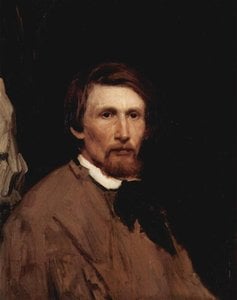
Viktor Mihajlovics Vasznyecov, 1848 – 1926

Viktor Mihajlovics Vasznyecov: A 100 Legnévesebb Festmény

A Bogatírok (1881) Viktor Mihajlovics Vasznyecov leghíresebb festménye, amelyet a Moszkva-i Tretyakov-galéria tartja meg. A Knight At the Crossroads (1878) és Christ Almighty (1896) a következő két mű, amelyeket a világ a legjobban ismer. A Viktor Mihajlovics Vasznyecov 234 műve közül íme a 100 legnépszerűbb alkotás, amelyeket a gyűjtők és a múzeumlátogatók a leggyakrabban tekintik meg, évszámával, múzeumával és a mű történetével együtt.

A rangsorolásunkat a népszerűségi pontszám határozza meg, amely az egyes művek kereséseit, látogatottságát és megrendeléseit ötvözi. Frissítve: október 2026. Az ezen az oldalon található összes remekmű megrendelhető múzeumi minőségű, kézzel festett olajfestmény másolatként vagy fine art nyomtatásként, a választott méretben.

Viktor Mihajlovics Vasznyecov portréja
Viktor Mihajlovics Vasznyecov · 1848 – 1926
Született · meghalt
1848 – 1926, Jevatka
Mozgalom
Realism
A katalógusban szereplő művek
234
Legnépszerűbb
Bogatírok (1881)
A legtöbb művel a
Tretyakov-galéria

Top 10: Viktor Mihajlovics Vasznyecov leghíresebb festményei

Bogatírok (1881) szerzője Viktor Mihajlovics Vasznyecov
1

Bogatírok

1881 · Olajfestmény vászonon · Tretyakov-galéria, Moszkva

The monumental canvas titled Bogatyrs (Heroes) emerges from the brush of Viktor Vasnetsov, a work that took shape through a long period of creation from 1881 until 1898. Within this vast scene, three noble warriors of Kievan Rus ride through the landscape, their presence commanding the space around them. They exist in a moment of quiet strength, appearing as guardians of a storied past. The air seems to hold its…

Christ Almighty (1896) szerzője Viktor Mihajlovics Vasznyecov
3

Christ Almighty

1896 · Oil

In the painting Christ Almighty by Viktor Vasnetsov, the central figure of Jesus is positioned amidst a celestial landscape. He stands upon a foundation of clouds, holding a book in his hand. His gaze is directed upward toward the sky, a posture that suggests a state of contemplation or wonder. The composition places him within a setting defined by celestial elements, including clouds and stars, which surround the figure to…

Judgement Day (1896) szerzője Viktor Mihajlovics Vasznyecov
4

Judgement Day

1896 · Fresco

Within the sacred walls of St. Vladimir's Cathedral in Kiev, Ukraine, the fresco Judgement Day unfolds in a grand display of spiritual narrative. This religious painting, created by the artist Viktor Vasnetsov, captures a moment of profound divine reckoning. The work emerges from a long period of creation, spanning from 1885 to 1896, as the artist poured his vision into the very architecture of the cathedral. One can feel the…

Sirin and Alkonost The Birds of Joy and Sorrow (1896) szerzője Viktor Mihajlovics Vasznyecov
5

Sirin and Alkonost The Birds of Joy and Sorrow

1896 · Oil On Canvas

We are looking at Sirin and Alkonost The Birds of Joy and Sorrow, a significant work by the Russian artist Viktor Vasnetsov. Painted in 1896, this piece captures a specific moment in the artist's exploration of folklore and myth. It is an oil on canvas, rendered with a scale that commands the space it occupies.

Boyan (1910) szerzője Viktor Mihajlovics Vasznyecov
6

Boyan

1910 · Oil

In this work, titled Boyan, we encounter a significant piece by the Russian artist Viktor Vasnetsov. Created in 1910, the painting belongs to the Romanticism style, a movement that often sought to find meaning within the depths of myth and history. Vasnetsov, a figure central to the Russian Revivalist movement, brings a specific sense of national identity to this composition through his unique approach to historical and mythological subjects.

The Last Judgement (1904) szerzője Viktor Mihajlovics Vasznyecov
7

The Last Judgement

1904 · Oil On Canvas

The Last Judgement is a significant work by the Russian artist Viktor Vasnetsov. Painted in 1904, this piece reflects a profound engagement with religious narrative and spiritual themes. It was commissioned by Yu. S. Nechayev-Maltsev, a patron who sought to bring this complex theological vision to life through the medium of oil on canvas.

Descent into Hell (1904) szerzője Viktor Mihajlovics Vasznyecov
8

Descent into Hell

1904 · Oil

The air feels heavy, thick with the scent of earth and the weight of an eternal transition. At the center of this swirling darkness, a figure moves with a quiet, divine purpose. He is a man with long hair and a beard, his presence marked by a soft halo that cuts through the gloom. He wears a simple robe, and in his hand, he carries a book or a scroll,…

God of hosts (1896) szerzője Viktor Mihajlovics Vasznyecov
9

God of hosts

1896 · Oil

The painting presents a central figure seated in a chair with wings, positioned as the focal point of a celestial assembly. This man, representing God the Father, is depicted with long white hair and a beard, wearing flowing white robes. On his chest, a dove is situated within a golden circle, signifying the Holy Spirit. The figure is surrounded by a multitude of angels and archangels. Some of these celestial…

Acrobats (Festival in a Paris Suburb) (1877) szerzője Viktor Mihajlovics Vasznyecov
10

Acrobats (Festival in a Paris Suburb)

1877 · Oil On Canvas

In the heart of a bustling Parisian suburb, amidst the flickering glow of gaslight and the scent of sawdust, Victor Vasnetsov captures a moment of breathless intensity in his masterpiece, Acrobats (Festival in a Paris Suburb). This 1877 oil painting is not merely a depiction of a circus; it is a visceral immersion into a world of movement, drama, and human emotion. The composition pulls the viewer directly into the…

A Viktor Mihajlovics Vasznyecov rangsor további része, 11 és 100 között

Ivan Zarevitsh (1880) szerzője Viktor Mihajlovics Vasznyecov
#12

Ivan Zarevitsh

1880 · Finnish National Gallery

The composition is vertically oriented, centering on two figures mounted upon a large wolf. They move through a dense, shadowy forest where the light is filtered through a…

Rendelj egy reprodukciót →
The Snow Maiden szerzője Viktor Mihajlovics Vasznyecov
#43

The Snow Maiden

{ "description": "Subject and Composition This captivating artwork captures a tranquil winter landscape, where a solitary young girl stands amidst a snow-blanketed terrain. Her contemplative posture and gentle…

Kérjen kézzel festett másolatot →
Lull (1881) szerzője Viktor Mihajlovics Vasznyecov
#46

Lull

1881

A Moment of Tranquility: Exploring Vasnetsov’s ‘Lull’ Viktor Vasnetsov’s 1881 painting, ‘Lull,’ offers a captivating glimpse into the Russian countryside. The artwork depicts a serene forested landscape centered…

Vidd haza! →
Russian Bishops (1896) szerzője Viktor Mihajlovics Vasznyecov
#49

Russian Bishops

1896

In the profound stillness of Viktor Vasnetsov’s 1896 fresco, Russian Bishops, we are invited into a sacred moment that transcends the boundaries of mere portraiture. This evocative work…

A leggyakoribb témakörök, amelyeket Viktor Mihajlovics Vasznyecov festett

A négy leggyakoribb téma ezek között a mesterdarabok közül, mindegyik legkivágtebb példájával.

Hol láthatja Viktor Mihajlovics Vasznyecov festményeit

A 4 olyan múzeum, amely a legtöbb ezen az oldalon szereplő festményet őrzi.

Múzeumok Város Viktor Mihajlovics Vasznyecov művei Ebből a listából származó festmények
Tretyakov-galéria, MoszkvaTretyakov-galéria Moszkva 8 Bogatírok
A Helyszíniségi Orosz Múzeum, SzentpétervárA Helyszíniségi Orosz Múzeum Szentpétervár 2 A Knight At the Crossroads
Kiev National Picture Gallery, KyivKiev National Picture Gallery Kyiv 2 Three princess of the Underworld
Finnish National Gallery, HelsinkiFinnish National Gallery Helsinki 1 Ivan Zarevitsh

Viktor Mihajlovics Vasznyecov évtizedeken át: egy-egy remekmű minden évtizedből

  1. 1860s
  2. 1870s
    A Knight At the Crossroads (1878) szerzője Viktor Mihajlovics Vasznyecov
    #2 100 közül

    A Knight At the Crossroads

    Kor: 22 – 31 év · A Helyszíniségi Orosz Múzeum

    A Knight At the Crossroads is a painting by Viktor Vasnetsov. Created in 1878, the work captures a solitary figure at a point of decision. The knight sits…

  3. 1880s
    Bogatírok (1881) szerzője Viktor Mihajlovics Vasznyecov
    1. / 100

    Bogatírok

    Kor: 32 – 41 év · Tretyakov-galéria

    The monumental canvas titled Bogatyrs (Heroes) emerges from the brush of Viktor Vasnetsov, a work that took shape through a long period of creation from 1881 until 1898.…

  4. 1890s
    Christ Almighty (1896) szerzője Viktor Mihajlovics Vasznyecov
    3. / 100

    Christ Almighty

    Kor: 42 – 51 év

    In the painting Christ Almighty by Viktor Vasnetsov, the central figure of Jesus is positioned amidst a celestial landscape. He stands upon a foundation of clouds, holding a…

  5. 1900s
    The Last Judgement (1904) szerzője Viktor Mihajlovics Vasznyecov
    7. hely 100 közül

    The Last Judgement

    Kor: 52 – 61 év

    The Last Judgement is a significant work by the Russian artist Viktor Vasnetsov. Painted in 1904, this piece reflects a profound engagement with religious narrative and spiritual themes.…

  6. 1910s
    Boyan (1910) szerzője Viktor Mihajlovics Vasznyecov
    6. / 100

    Boyan

    Kor: 62 – 71 év

    In this work, titled Boyan, we encounter a significant piece by the Russian artist Viktor Vasnetsov. Created in 1910, the painting belongs to the Romanticism style, a movement…

  7. 1920s

Viktor Mihajlovics Vasznyecov festményei: gyakranIsmételt kérdések

Mi a leghíresebb Viktor Mihajlovics Vasznyecov festmény?Mutasd meg a választ

Bogatírok (1881), Tretyakov-galéria, Moszkva. Ezután következik A Knight At the Crossroads (1878) és Christ Almighty (1896).

Hány éves volt Viktor Mihajlovics Vasznyecov, amikor megfestette a Bogatírok című művét?Mutasd meg a választ

33 éves: Bogatírok 1881-ből származik, Viktor Mihajlovics Vasznyecov pedig 1848 évfolyamon született.

Melyek a 10 leghíresebb Viktor Mihajlovics Vasznyecov festmény?Mutasd meg a választ

Bogatírok, A Knight At the Crossroads, Christ Almighty, Judgement Day, Sirin and Alkonost The Birds of Joy and Sorrow, Boyan, The Last Judgement, Descent into Hell, God of hosts és Acrobats (Festival in a Paris Suburb). A fenti rangsor a művek évszámát és a múzeumát jelzi.

Hány festménye van Viktor Mihajlovics Vasznyecov művésznek?Mutasd meg a választ

Katalógusunkban 234 mű található Viktor Mihajlovics Vasznyecov alkotótól, 1867 és 1926 közötti időszakból.

Hol láthatom Viktor Mihajlovics Vasznyecov leghíresebb festményeit?Mutasd meg a választ

A legtöbbjüket Tretyakov-galéria (Moszkva), A Helyszíniségi Orosz Múzeum (Szentpétervár) és Kiev National Picture Gallery (Kyiv) találhatja meg. A fenti táblázatban a múzeumokat egymás után soroljuk fel.

Melyik időszakban festette Viktor Mihajlovics Vasznyecov leghíresebb műveit?Mutasd meg a választ

1880s idején: a jelen laphonon található 100 műből 39 származik onnan, köztük Bogatírok.

Mi a leghattyúbb Viktor Mihajlovics Vasznyecov festmény, és melyik a legutóbb készült?Mutasd meg a választ

A legkorábbi alkotás ezen az oldalon Russian proverbs and sayings (1867), a legutóbb pedig Flying carpet (1926).

Milyen témaköröket ábrázolt Viktor Mihajlovics Vasznyecov?Mutasd meg a választ

Men (18), Women (16) és Portraits (14), a jelen oldalon található 100 mű közül.

Mire és mivel festett Viktor Mihajlovics Vasznyecov?Mutasd meg a választ

Oil On Canvas: 5 a 100 ezen az oldalon található műalkotásból.

Mely művészeti irányba tartozik Viktor Mihajlovics Vasznyecov művész alkotmánya?Mutasd meg a választ

Realism, ahogy azt ezen az oldalon látható festmények is mutatják.

Hol vásárolhatok egy Viktor Mihajlovics Vasznyecov reprodukciót?Mutasd meg a választ

Igen. Az oldalon található minden festmény a festmény saját oldalán, a választott méretben rendelhető meg, hogy muzeumi minőségű, kézzel festett olajfestmény-másolatként vagy kiváló minőségű művészeti nyomtatásként.

Viktor Mihajlovics Vasznyecov: életrajz

Viktor Vasnetsov: A Master of Russian Myth and Spirit

Viktor Mikhaylovich Vasnetsov, a name synonymous with the heart of Russia itself, was more than just an artist; he was a conduit to the nation’s soul. Born in 1848 in the remote village of Lopyal, nestled within the Vyatka Governorate – now Kirov – his early life was steeped in both religious tradition and a nascent artistic sensibility nurtured by his father, a priest and amateur painter. This unique upbringing laid the foundation for Vasnetsov’s extraordinary journey, one that would ultimately transform him into Russia's foremost interpreter of its rich folklore, epic legends, and profound spiritual heritage.

Initially drawn to theological studies at the Vyatka Seminary, Vasnetsov soon realized his true calling lay not in the scriptures but in capturing the vibrant world around him. He abandoned his academic pursuits to pursue painting with unwavering dedication, enrolling at the Imperial Academy of Arts in St. Petersburg in 1867. It was within these hallowed halls that he encountered and forged lasting friendships with some of Russia’s most influential artists – a circle deeply influenced by the Peredvizhniki movement, known for their commitment to realism and social commentary. However, Vasnetsov's artistic trajectory took an unexpected turn when he became utterly captivated by the ancient *byliny*—the epic tales of heroes, gods, and fantastical creatures that formed the bedrock of Russian folklore.

The Birth of a National Style

This fascination with the *byliny* marked a pivotal shift in Vasnetsov’s artistic development. He began to move away from the prevailing realist tendencies of his time, embracing instead a style that blended meticulous detail with elements of fantasy and symbolism—a style that would soon become uniquely Russian. Influenced by artists like Isaak Levitan, whose landscapes evoked a sense of melancholy beauty, and Ivan Aivazovsky, renowned for his dramatic seascapes, Vasnetsov nonetheless carved out his own distinct voice. His travels to Western Europe exposed him to the burgeoning Symbolist movement, further enriching his artistic vocabulary with evocative imagery and layered meanings.

Early works like After the Rain and The Boy with a Bottle of Vodka showcased his remarkable ability to capture the essence of peasant life, reflecting the social realities of his time. However, it was his embrace of Russian folklore that truly set him apart. Paintings such as Alyonushka, Ivan Tsarevich Riding the Grey Wolf, and – perhaps most famously – A Knight at the Crossroads transported viewers to a world of ancient heroes, magical creatures, and timeless legends. These works weren’t merely illustrations; they were vibrant embodiments of Russian identity, imbued with a profound sense of national pride and spiritual depth.

Iconic Visions: Major Works and Themes

Vasnetsov's artistic output spanned a remarkable range of subjects, but he is most celebrated for his depictions of *bogatyrs* – the heroic warriors who feature prominently in Russian folklore. These figures, rendered with immense power and dignity, became symbols of Russian strength, resilience, and unwavering spirit. His designs for St. Vladimir’s Cathedral in Kyiv are equally iconic, showcasing his mastery of Byzantine architectural principles while imbuing the structure with a distinctly Russian aesthetic.

Recurring themes throughout Vasnetsov's oeuvre include heroism, spirituality, national identity, and the mystical power of nature. He didn’t simply depict these elements; he imbued them with profound emotional resonance, inviting viewers to contemplate the very essence of what it meant to be Russian. His ability to seamlessly blend historical accuracy with fantastical imagination cemented his place as a true visionary artist.

A Legacy Forged in Myth and Memory

Viktor Vasnetsov’s contribution to Russian art extends far beyond individual masterpieces. He played a crucial role in the Russian Revivalist movement, which sought to reclaim and celebrate Russia's rich cultural heritage—a movement that profoundly shaped the nation’s artistic identity. His work helped to revive interest in Russian folklore, mythology, and history, ensuring that these traditions would continue to inspire generations of artists and intellectuals.

Vasnetsov died on July 23, 1926, leaving behind a legacy that continues to resonate today. His paintings are treasured national treasures, admired for their beauty, power, and profound connection to the Russian soul. He remains not just an artist but a cultural icon—a testament to the enduring power of myth, memory, and artistic vision.

Minden 234 műmű Viktor Mihajlovics Vasznyecov alkotása →