Vouet Simon, 1590 – 1649

Vouet Simon: A 100 Legnévesebb Festmény

A Venus és Adonis (1642) Vouet Simon leghíresebb festménye, amelyet a Los Angeles-i J. Paul Getty Múzeum tartja meg. The Muses of Urania and Calliope (1634) és Annunciation (1640) a következő két mű, amelyeket a világ a legjobban ismer. A Vouet Simon 166 műve közül íme a 100 legnépszerűbb alkotás, amelyeket a gyűjtők és a múzeumlátogatók a leggyakrabban tekintik meg, évszámával, múzeumával és a mű történetével együtt.

A rangsorolásunkat a népszerűségi pontszám határozza meg, amely az egyes művek kereséseit, látogatottságát és megrendeléseit ötvözi. Frissítve: október 2026. Az ezen az oldalon található összes remekmű megrendelhető múzeumi minőségű, kézzel festett olajfestmény másolatként vagy fine art nyomtatásként, a választott méretben.

Vouet Simon portréja
Vouet Simon · 1590 – 1649
Született · meghalt
1590 – 1649, Párizs
Mozgalom
French baroque
A katalógusban szereplő művek
166
Legnépszerűbb
Venus és Adonis (1642)
A legtöbb művel a
Louvre Múzeum

Top 10: Vouet Simon leghíresebb festményei

Venus és Adonis (1642) szerzője Vouet Simon
1

Venus és Adonis

1642 · Akril festmény vászonon · J. Paul Getty Múzeum, Los Angeles

Venus és Adonis – Egy Szívszomorú Mitológiai Ünnepély Simon Vouet műve, "Venus és Adonis", 1642-ben született francia barokk alkotás, amely kiválóan mutatja meg az artista tudását a színészettel, kompozícióval és az olasz művészi hagyományok felvétele során. Ez az erőteljes jelenet Ovidius *Metamorfoziszából* származik, ahol Venus királyné szerelmi ajánlása elutasítja Adonis vadász férfiú által, elővetője pedig tragikus halálának. Az alkotás nem csak egy mitológiai történet feldolgozásával zajlik; hanem egy érzékletes vizsgálatával…

The Muses of Urania and Calliope (1634) szerzője Vouet Simon
2

The Muses of Urania and Calliope

1634 · Acrylic On Canvas · National Gallery of Art, Washington

Simon Vouet’s “The Muses Urania and Calliope”: A Symphony of Baroque Grace Simon Vouet (1590-1649) stands as a pivotal figure in the artistic landscape of 17th-century France, marking the decisive transition from Mannerism to the opulent grandeur of the Baroque style. His legacy resides not merely in his prolific output but also in his unwavering dedication to mastering Italian influences—a pursuit that fundamentally reshaped French painting and cemented Vouet’s place…

Annunciation (1640) szerzője Vouet Simon
3

Annunciation

1640 · Oil On Canvas · Galleria degli Uffizi, Taruna

Simon Vouet's "Annunciation," painted in 1640, is more than just a religious depiction; it’s a masterful orchestration of light, shadow, and human emotion. This captivating work transports the viewer to an intimate interior space, where the momentous announcement of Mary’s divine conception unfolds with breathtaking drama. The painting immediately draws the eye to the kneeling figure of the Virgin Mary, bathed in a warm, golden glow emanating from the right…

The Fortuneteller (detail) (1617) szerzője Vouet Simon
4

The Fortuneteller (detail)

1617 · Oil On Canvas · Galleria Nazionale d'Arte Antica, Róma

In the heart of 1617, amidst the vibrant and transformative atmosphere of Roman artistic circles, Simon Vouet captured a moment of profound human connection in his masterpiece, The Fortuneteller. This work, particularly when viewed in its intimate details, serves as much more than a mere portrait; it is an emblem of the burgeoning Baroque style that was beginning to reshape the visual landscape of Europe. The scene unfolds with a…

Sleeping Venus (1630) szerzője Vouet Simon
5

Sleeping Venus

1630 · Acrylic On Canvas · Szépművészeti Múzeum, Budapest

Simon Vouet's "Sleeping Venus," painted around 1630, is not merely a depiction of a reclining nude; it’s an exquisite distillation of Renaissance ideals and the burgeoning Baroque aesthetic. This captivating work transcends simple portraiture, offering instead a profound meditation on beauty, repose, and the delicate balance between earthly pleasure and spiritual contemplation. The painting immediately draws the viewer into a world of hushed tranquility, inviting us to share in the…

Allegory of Virtue (1634) szerzője Vouet Simon
6

Allegory of Virtue

1634 · Acrylic On Canvas · Louvre Múzeum, Párizs

Simon Vouet’s “Allegory of Virtue,” completed around 1634, stands as a testament to the burgeoning Baroque aesthetic infiltrating French artistic circles during Louis XIII's reign. More than just a portrait—though it undeniably depicts a woman radiating grace and authority—the painting delves into profound philosophical concepts rooted in humanist ideals prevalent at the time.

The Entombment (1638) szerzője Vouet Simon
7

The Entombment

1638 · Oil On Canvas · Fitzwilliam Múzeum, Cambridge

Simon Vouet's "The Entombment," painted in 1635–1638, is not merely a depiction of a biblical scene; it’s an exquisitely rendered meditation on grief, faith, and the profound dignity of sacrifice. This monumental work, currently residing within the collection of the Fitzwilliam Museum in Cambridge, transcends its subject matter to become a powerful testament to the Baroque era's ability to evoke intense emotion through masterful technique and carefully considered symbolism. Vouet,…

Angels with Attributes of the Passion: Angel Holding the Vessel and Towel for washing the hands of Pontius Pilate (1624) szerzője Vouet Simon
8

Angels with Attributes of the Passion: Angel Holding the Vessel and Towel for washing the hands of Pontius Pilate

1624 · Oil · Minneapolis Institute of Art, Minneapolis

A single celestial figure emerges from a deep, near-black void, commanding the space with an intimate and monumental presence. This angel, caught in a moment of profound spiritual devotion, gazes upward with eyes full of soulful contemplation or sorrow. The light descends from the upper left, carving the figure out of the darkness and casting soft, tender shadows across a face etched with emotion. Every detail feels immediate, from the…

Saint John (1623) szerzője Vouet Simon
9

Saint John

1623 · Oil On Canvas · Philadelphia Művészeti Múzeum, Philadelphia

A young man turns his face toward a light that remains unseen. His eyes, wide and searching, catch a glimmer that pulls his gaze upward, away from the dark, murky depths of the background. Thick, dark curls frame a pale face, creating a sharp contrast against the heavy shadows that swallow the space around him. He is caught in a moment of sudden, quiet realization. The light does not merely…

Virgin and Child, with an Angel (1642) szerzője Vouet Simon
10

Virgin and Child, with an Angel

1642 · Oil On Panel · Philadelphia Művészeti Múzeum, Philadelphia

The light falls softly upon the skin of the Virgin Mary, catching the curve of her cheek and the small, smooth hands of the Christ Child. They sit within a triangular arrangement that anchors the composition, surrounded by the deep shadows of a dense woodland. An angel leans into this intimate circle, its robes glowing with warm yellows and golds that contrast against the heavy, dark trees behind them. At…

A Vouet Simon rangsor további része, 11 és 100 között

Madonna with Child (1625) szerzője Vouet Simon
#11

Madonna with Child

1625 · Hermitaeus-múzeum

The room falls away into a deep, near-black shadow, leaving only two figures bathed in a soft, directional light. From the upper left, a gentle glow spills across…

Rendelj egy reprodukciót →
Heavenly Charity (1640) szerzője Vouet Simon
#14

Heavenly Charity

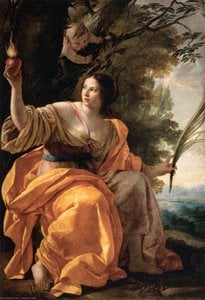
1640 · Louvre Múzeum

A Beacon of Baroque Virtue: Simon Vouet’s Heavenly Charity Simon Vouet's "Heavenly Charity," completed around 1640, stands as a cornerstone of French Baroque painting—a testament to Louis XIII’s…

Vidd haza! →
Allegory (1640) szerzője Vouet Simon
#15

Allegory

1640 · Musei Capitolini

Simon Vouet executed Allegory during his residency in Rome, a period spanning from 1614 to 1627. The work was commissioned by Marcello Sacchetti, a 17th-century Italian merchant and…

Rendelj egy reprodukciót →
Parnassus or Apollo and the Muses (1640) szerzője Vouet Simon
#16

Parnassus or Apollo and the Muses

1640 · Szépművészeti Múzeum

A Celestial Gathering: Simon Vouet’s “Parnassus or Apollo and the Muses” Simon Vouet's "Parnassus or Apollo and the Muses," painted around 1640, isn’t merely a depiction of Greek…

Vidd haza! →
Sacrifice of Isaac (1642) szerzője Vouet Simon
#17

Sacrifice of Isaac

1642 · Milwaukee Art Museum

The painting titled Sacrifice of Isaac is a work of religious art. It is attributed to the French artist Simon Vouet (1590-1649) and Pierre Patel, the Elder (1605-1676).…

Vidd haza! →
The Muse Clio (1640) szerzője Vouet Simon
#22

The Muse Clio

1640 · Staatliche Kunsthalle Karlsruhe

The Muse Clio is an oil on canvas painting by the artist Simon Vouet. Created about 1640, this work depicts the mythological figure Clio, who is recognized as…

Rendelj egy reprodukciót →
Vanitas (1621) szerzője Vouet Simon
#24

Vanitas

1621 · Varsói Nemzeti Múzeum

In Vanitas, Simon Vouet centers the composition on a tight, intimate encounter between two figures. A young woman and an older man emerge from a deep, near-black background…

Vidd haza! →
POLYMNIE, MUSE DE L'ELOQUENCE szerzője Vouet Simon
#58

POLYMNIE, MUSE DE L'ELOQUENCE

Louvre Múzeum

Within the hallowed halls of the Louvre resides a captivating portrait – *Polymnie, Muse of Eloquence* by Simon Vouet, a pivotal work that embodies the burgeoning spirit of…

Vidd haza! →
Angel with dice and tunic (1620) szerzője Vouet Simon
#59

Angel with dice and tunic

1620 · Museo di Capodimonte

The celestial figure in Angel with dice and tunic gazes downward, caught in a moment of quiet contemplation. This oil on canvas work by the artist Simon Vouet…

Vidd haza! →
Saint Catherine of Alexandria (1620) szerzője Vouet Simon
#60

Saint Catherine of Alexandria

1620 · Nemzetközi Nyugati Művészeti Múzeum

Saint Catherine of Alexandria by Simon Vouet, executed in 1620, presents a formal study of the early Christian martyr. Rendered in oil on canvas, the work captures the…

Vidd haza! →
Toilet of Venus (1628) szerzője Vouet Simon
#64

Toilet of Venus

1628 · Cincinnati Art Museum

To gaze upon Simon Vouet’s Toilet of Venus is to step directly into a moment suspended in opulent leisure—a scene dripping with the sensuality and refined drama characteristic…

Kérjen kézzel festett másolatot →
Self-Portrait (1615) szerzője Vouet Simon
#65

Self-Portrait

1615 · Musée Réattu

To stand before this self-portrait is to encounter not merely paint on canvas, but a direct conduit to the vibrant, ambitious spirit of early 17th-century Paris. Painted around…

Vidd haza! →
The Rape of Europa (1640) szerzője Vouet Simon
#67

The Rape of Europa

1640 · Thyssen-Bornemisza Múzeum

To gaze upon Simon Vouet's depiction of The Rape of Europa is to step directly into the charged, dramatic heart of the Baroque era. This canvas is not…

Rendelj egy reprodukciót →
St Catherine (1614) szerzője Vouet Simon
#69

St Catherine

1614 · Quirinale Palota

To stand before Simon Vouet's depiction of St Catherine is to step directly into the vibrant, emotionally charged atmosphere of early seventeenth-century Paris. This portrait captures more than…

Vidd haza! →
Prince Marcantonio Doria (1621) szerzője Vouet Simon
#70

Prince Marcantonio Doria

1621 · Louvre Múzeum

In the hallowed halls of the Musée du Louvre, there exists a window into the soul of the seventeenth century, captured through the masterful brushstrokes of Simon Vouet.…

Vidd haza! →
Szüz és Gyermek Sztánya szerzője Vouet Simon
#76

Szüz és Gyermek Sztánya

Musée des Beaux-Arts de Lyon

Simon Vouet és „A Szülőanya és Gyermek” – Egy Bábel korszakbeli Remény és Megértés Ünnepélyes Megköszönése Simon Vouet, francia festőművész született 1590-ben Párizsban, Franciaországban, és ő volt az…

Vidd haza! →
The Holy Family (1630) szerzője Vouet Simon
#79

The Holy Family

1630 · Kunsthalle Bremen

In the heart of the seventeenth century, as the rigid structures of Mannerism began to dissolve under the weight of a new, more visceral era, Simon Vouet emerged…

Rendelj egy reprodukciót →
Madonna and Child (1633) szerzője Vouet Simon
#80

Madonna and Child

1633 · National Gallery of Art

In the intimate embrace of Simon Vouet’s Madonna and Child, we are invited into a moment of profound, quiet tenderness that transcends the centuries. Painted in 1633, this…

Vidd haza! →
LA MISE AU TOMBEAU szerzője Vouet Simon
#81

LA MISE AU TOMBEAU

Louvre Múzeum

LA MISE AU TOMBEAU is a work by Simon Vouet, created between 1640 and 1642. This painting captures a moment of profound stillness. It depicts the iconographic type…

Rendelj egy reprodukciót →
Allegory of Peace (1627) szerzője Vouet Simon
#82

Allegory of Peace

1627 · Galleria Nazionale d'Arte Antica

Completed in 1627, Allegory of Peace by Simon Vouet offers a profound look into the intellectual fervor and humanist aspirations of the seventeenth century. This work emerged during…

Vidd haza! →
Allegory of Wealth (1630) szerzője Vouet Simon
#83

Allegory of Wealth

1630 · Louvre Múzeum

Simon Vouet's 1630 *Allegory of Wealth* is not merely a painting; it’s an immersive experience, a meticulously crafted tableau that speaks volumes about the values and aspirations of…

Vidd haza! →
LA PRESENTATION AU TEMPLE szerzője Vouet Simon
#85

LA PRESENTATION AU TEMPLE

Louvre Múzeum

The scene unfolds within the sacred walls of the temple in LA PRESENTATION AU TEMPLE, a work painted by Simon Vouet. The air seems to hold its breath…

Vidd haza! →
The Fortune Teller (1618) szerzője Vouet Simon
#87

The Fortune Teller

1618 · Kanadai Nemzeti Galéria

The Fortune Teller, painted in 1618 by the masterful Simon Vouet, offers a captivating glimpse into the social and artistic currents of early 17th-century France. This portrait, measuring…

Kérjen kézzel festett másolatot →
Saint Guillaume d'Aquitaine ( ) szerzője Vouet Simon
#88

Saint Guillaume d'Aquitaine ( )

Louvre Múzeum

In the grand tapestry of the seventeenth century, few artists captured the spiritual fervor and theatrical splendor of the French Baroque as masterfully as Simon Vouet. His work…

Vidd haza! →
Caritas Romana szerzője Vouet Simon
#92

Caritas Romana

Varsói Nemzeti Múzeum

In Caritas Romana, Simon Vouet presents a quiet, emotionally charged encounter between two figures. The composition centers on a woman cradling an older, bearded man, creating an intimate…

Kérjen kézzel festett másolatot →
St Jerome and the Angel (1622) szerzője Vouet Simon
#93

St Jerome and the Angel

1622 · National Gallery of Art

Simon Vouet’s “St. Jerome and the Angel,” painted in 1622, is more than just a depiction of a biblical scene; it's a carefully constructed meditation on divine guidance,…

Rendelj egy reprodukciót →
The Fortune Teller (1617) szerzője Vouet Simon
#94

The Fortune Teller

1617 · Galleria Nazionale d'Arte Antica

Simon Vouet's "The Fortune Teller," painted in 1617, isn’t merely a portrait; it’s a carefully constructed tableau brimming with intrigue and a palpable sense of the mystical. Housed…

Rendelj egy reprodukciót →

Vouet Simon festményei időszakok szerint

A leggyakoribb témakörök, amelyeket Vouet Simon festett

A négy leggyakoribb téma ezek között a mesterdarabok közül, mindegyik legkivágtebb példájával.

Hol láthatja Vouet Simon festményeit

A 8 olyan múzeum, amely a legtöbb ezen az oldalon szereplő festményet őrzi.

Múzeumok Város Vouet Simon művei Ebből a listából származó festmények
Louvre Múzeum, PárizsLouvre Múzeum Párizs 20 Allegory of Virtue, Heavenly Charity, POLYMNIE, MUSE DE L'ELOQUENCE
Szépművészeti Múzeum, BudapestSzépművészeti Múzeum Budapest 5 Sleeping Venus, Parnassus or Apollo and the Muses, Parnassus or Apollo and the Muses (detail)
National Gallery of Art, WashingtonNational Gallery of Art Washington 4 The Muses of Urania and Calliope, The Muses Urania and Calliope, Madonna and Child
Galleria Nazionale d'Arte Antica, RómaGalleria Nazionale d'Arte Antica Róma 4 The Fortuneteller (detail), Allegory of Peace, The Fortune Teller
Varsói Nemzeti Múzeum, VarsóVarsói Nemzeti Múzeum Varsó 4 Vanitas, Caritas Romana
Los Angeles County Museum of Art, Los AngelesLos Angeles County Museum of Art Los Angeles 3 Model for Altarpiece in St. Peter's, Model for Altarpiece in St. Peter's
Minneapolis Institute of Art, MinneapolisMinneapolis Institute of Art Minneapolis 2 Angels with Attributes of the Passion: Angel Holding the Vessel and Towel for washing the hands of Pontius Pilate, Angels with Attributes of the Passion, the Superscription from the Cross
Philadelphia Művészeti Múzeum, PhiladelphiaPhiladelphia Művészeti Múzeum Philadelphia 2 Saint John, Virgin and Child, with an Angel

Vouet Simon évtizedeken át: egy-egy remekmű minden évtizedből

  1. 1610s
    The Fortuneteller (detail) (1617) szerzője Vouet Simon
    4. / 100

    The Fortuneteller (detail)

    Kor: 20 – 29 év · Galleria Nazionale d'Arte Antica

    In the heart of 1617, amidst the vibrant and transformative atmosphere of Roman artistic circles, Simon Vouet captured a moment of profound human connection in his masterpiece, The…

  2. 1620s
  3. 1630s
    The Muses of Urania and Calliope (1634) szerzője Vouet Simon
    #2 100 közül

    The Muses of Urania and Calliope

    Kor: 40 – 49 év · National Gallery of Art

    Simon Vouet’s “The Muses Urania and Calliope”: A Symphony of Baroque Grace Simon Vouet (1590-1649) stands as a pivotal figure in the artistic landscape of 17th-century France, marking…

  4. 1640s
    Venus és Adonis (1642) szerzője Vouet Simon
    1. / 100

    Venus és Adonis

    Kor: 50 – 59 év · J. Paul Getty Múzeum

    Venus és Adonis – Egy Szívszomorú Mitológiai Ünnepély Simon Vouet műve, "Venus és Adonis", 1642-ben született francia barokk alkotás, amely kiválóan mutatja meg az artista tudását a színészettel,…

Vouet Simon festményei: gyakranIsmételt kérdések

Mi a leghíresebb Vouet Simon festmény?Mutasd meg a választ

Venus és Adonis (1642), J. Paul Getty Múzeum, Los Angeles. Ezután következik The Muses of Urania and Calliope (1634) és Annunciation (1640).

Hány éves volt Vouet Simon, amikor megfestette a Venus és Adonis című művét?Mutasd meg a választ

52 éves: Venus és Adonis 1642-ből származik, Vouet Simon pedig 1590 évfolyamon született.

Melyek a 10 leghíresebb Vouet Simon festmény?Mutasd meg a választ

Venus és Adonis, The Muses of Urania and Calliope, Annunciation, The Fortuneteller (detail), Sleeping Venus, Allegory of Virtue, The Entombment, Angels with Attributes of the Passion: Angel Holding the Vessel and Towel for washing the hands of Pontius Pilate, Saint John és Virgin and Child, with an Angel. A fenti rangsor a művek évszámát és a múzeumát jelzi.

Hány festménye van Vouet Simon művésznek?Mutasd meg a választ

Katalógusunkban 166 mű található Vouet Simon alkotótól, 1614 és 1645 közötti időszakból.

Hol láthatom Vouet Simon leghíresebb festményeit?Mutasd meg a választ

A legtöbbjüket Louvre Múzeum (Párizs), Szépművészeti Múzeum (Budapest) és National Gallery of Art (Washington) találhatja meg. A fenti táblázatban a múzeumokat egymás után soroljuk fel.

Melyik időszakban festette Vouet Simon leghíresebb műveit?Mutasd meg a választ

1620s idején: a jelen laphonon található 100 műből 31 származik onnan, köztük Angels with Attributes of the Passion: Angel Holding the Vessel and Towel for washing the hands of Pontius Pilate.

Mi a leghattyúbb Vouet Simon festmény, és melyik a legutóbb készült?Mutasd meg a választ

A legkorábbi alkotás ezen az oldalon Lovers (1614), a legutóbb pedig Allegory of Prudence (1645).

Milyen témaköröket ábrázolt Vouet Simon?Mutasd meg a választ

Woman (15), Renaissance (11) és Man (9), a jelen oldalon található 100 mű közül.

Mire és mivel festett Vouet Simon?Mutasd meg a választ

Oil On Canvas: 40 a 100 ezen az oldalon található műalkotásból.

Mely művészeti irányba tartozik Vouet Simon művész alkotmánya?Mutasd meg a választ

French baroque, ahogy azt ezen az oldalon látható festmények is mutatják.

Milyen Vouet Simon festményei találhatók a Louvre Múzeum gyűjteményében?Mutasd meg a választ

A Allegory of Virtue, Heavenly Charity és POLYMNIE, MUSE DE L'ELOQUENCE a 12 mű közül foglal helyet ezen az oldalon, amelyeket a Louvre Múzeum, Párizs tartományában őrzik.

Hol vásárolhatok egy Vouet Simon reprodukciót?Mutasd meg a választ

Igen. Az oldalon található minden festmény a festmény saját oldalán, a választott méretben rendelhető meg, hogy muzeumi minőségű, kézzel festett olajfestmény-másolatként vagy kiváló minőségű művészeti nyomtatásként.

Vouet Simon: életrajz

Simon Vouet: A Francia Barokk Festészet Úttörője

Simon Vouet neve szorosan összefonódik a francia festészet átalakulásával, a manierizmustól a barokk felé vezető úton. 1590-ben Párizsban született, egy művészcsaládban – apja, Laurent Vouet is festő volt, és testvére, Aubin szintén a művészetet választotta –, ami kedvező alapot teremtett számára a későbbi sikerekhez. Unokája, Ludovico Dorigny továbbviszi a család művészi hagyományát. A 17. századi francia udvar és arisztokrácia ízlését tükröző Vouet munkássága ma is lenyűgöző erejével hat ránk.

Korai Évek és Olasz Hatások (1608-1627)

Vouet festői karrierje a portréfestéssel kezdődött, hamarosan megmutatva tehetségét. Már 14 évesen Angliába utazott egy megbízásnak köszönhetően, ahol portrét kellett festenie, ami bebizonyította a növekvő hírnevét. 1611-ben csatlakozott Baron de Sancy francia követ küldöttségéhez az Oszmán Birodalomba, ismét portréfestési megbízásokra. Ez a kalandos utazás Konstantinápolyon át vezetette őt Velencébe, 1612-ben. A római időszak (1614-1627) azonban igazi fordulatot hozott életében. Tizenhány évet töltött Rómában, a virágzó barokk művészeti szcéna közepén.

Olaszországban Vouet számos hatás forrása közül merített. Caravaggio drámai megvilágításának technikáját tanulmányozta, magára ötvözve az olasz manierizmus elemeit, és alaposan vizsgálta Paolo Veronese által alkalmazott színpalettákat és a di sotto in su (felülnéző perspektíva) eljárást. Carracci, Guercino, Lanfranco és Guido Reni művészete is inspirálta, amelyeket egyedi művészi látásmódjába integrált.

A Sajátos Stílus Kidolgozása

Római sikerei csúcspontja a híres Accademia di San Luca elnöki tisztségének megszerzése volt (1624), ami bizonyította a római művészeti világban szerzett elismerését. Vouet stílusa azon képességéről tanúskodott, hogy képes befogadni és átalakítani a különböző művészi befolyásokat. Nem csupán másolt, hanem ezek az elemek egy koherens, distinctly olasz barokk esztétikába olvadtak. Franciaországba való visszatérése (1627) után kulcsszerepet játszott az olasz barokk stílus bevezetésében a francia festészetbe, jelentősen befolyásolva az ország művészeti táját.

Főbb Eredmények és Örökség

Vouet Premier peintre du Roi (a király első festője) cím elnyerése hatalmas presztízst és befolyást biztosított számára. Nagy, aktív műhelyt tartott fenn, számos művészt képezve ki, akik a következő generáció francia festőit formálták. Legkiemelkedőbb tanítványai közé tartozott Charles Le Brun (aki később a versailles-i dekoratív festészetet szervezte), Valentin de Boulogne, Charles Alphonse du Fresnoy, Pierre Mignard, Eustache Le Sueur és Claude Mellan. Vouet hatása nem csupán saját műveire korlátozódott; tanítványai stílusát és technikáit Franciaországban terjesztették, létrehozva egy distinct barokk festészeti iskola.

Történelmi Jelentősége

Simon Vouet öröksége abban rejlik, hogy sikeresen hidat épített az olasz és a francia művészet között. A dinamizmus és pompa olasz barokkját Franciaország ízléséhez igazította, ami a királyi udvar és az arisztokrácia kedveltségét nyerte el. Hatása vitathatatlan a 17. századi francia festészet fejlődésében, és hozzájárulásai ma is elismerik a művészettörténészek.

Minden 166 műmű Vouet Simon alkotása →