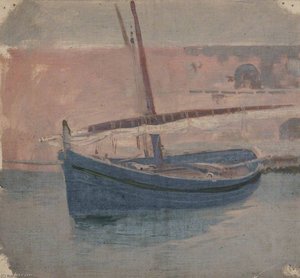
John Fraser, 1838 – 1898

John Fraser festményei: A 60 leghíresebb alkotás, rangsorolva

John Fraser leghíresebb festménye a 'Defender' in the Atlantic (1910), mely a Torre Abbey Historic House And Gardens található, Torquay városában. A Low Tide, Whitstable Harbour, Kent (1885) és a Chain Pier, Brighton, East Sussex (1883) mellett ez alkotja azt a három műet mindenki felismer. Katalógusunkban 60 mű található John Fraser alkotótól; az alábbi 60 alkotás a világ legnézettebbjei, amelyeknél megtudhatjuk a készítés évszámát, a művészét tároló múzeumot, valamint az alkotások jelentőségét.

A rangsorolásunkat a népszerűségi pontszám határozza meg, amely az egyes művek kereséseit, látogatottságát és megrendeléseit ötvözi. Frissítve: október 2026. Az ezen az oldalon található összes remekmű megrendelhető múzeumi minőségű, kézzel festett olajfestmény másolatként vagy fine art nyomtatásként, a választott méretben.

John Fraser portréja
John Fraser · 1838 – 1898
Született · meghalt
1838 – 1898
Mozgalom
Impressionism
A katalógusban szereplő művek
60
Legnépszerűbb
'Defender' in the Atlantic (1910)
A legtöbb művel a
National Maritime Museum

A 10 leghíresebb John Fraser festmény

'Defender' in the Atlantic (1910) szerzője John Fraser
1

'Defender' in the Atlantic

1910 · Oil On Canvas · Torre Abbey Historic House And Gardens, Torquay

A large sailboat with three sails occupies the center of a vast, blue expanse. The vessel floats amidst the open ocean, isolated from any visible land or human presence. The composition focuses entirely on the boat, which remains the singular point of interest against the surrounding waters. The scene is characterized by a sense of stillness and calm, capturing a moment of quietude on the Atlantic.

John Fraser, festmények 11 és 60 között

John Fraser festményei időszakok szerint

A leggyakoribb témakörök, amelyeket John Fraser festett

A négy leggyakoribb téma ezek között a mesterdarabok közül, mindegyik legkivágtebb példájával.

Hol láthatja John Fraser festményeit

A 5 olyan múzeum, amely a legtöbb ezen az oldalon szereplő festményet őrzi.

Múzeumok Város John Fraser művei Ebből a listából származó festmények
National Maritime Museum, LondonNational Maritime Museum London 24 A Large Sloop Yacht and a Barge, A Zeppelin Raid, 8 October 1915, A Lifeboat, c.1920
Torre Abbey Historic House And Gardens, TorquayTorre Abbey Historic House And Gardens Torquay 1 'Defender' in the Atlantic
Walker Art Gallery, LiverpoolWalker Art Gallery Liverpool 1 On the Moray Firth
McNay Art Museum, San AntonioMcNay Art Museum San Antonio 1 Szögletes Szerelés Szögletes Szerelés II
Royal College of Music Museum, LondonRoyal College of Music Museum London 1 Costume design for Miss Bentson in Lakme by Delibes

John Fraser leghíresebb festményei, év év 따라

John Fraser pályaművei mindössze 5 év alatt születtek meg, 1881 és 1885 között. Íme, ez a rövid karrier év évra, a leghíresebb festményeián keresztül.

  1. 1881
  2. 1883
  3. 1885
  4. 1885

Kérdések John Fraser festményeivel kapcsolatban

Mi John Fraser leghíresebb festménye?Mutasd meg a választ

'Defender' in the Atlantic (1910), Torre Abbey Historic House And Gardens, Torquay. Ezután következik Low Tide, Whitstable Harbour, Kent (1885) és Chain Pier, Brighton, East Sussex (1883).

Melyek John Fraser top 10 festménye?Mutasd meg a választ

'Defender' in the Atlantic, Low Tide, Whitstable Harbour, Kent, Chain Pier, Brighton, East Sussex, Low Tide, Whitstable Harbour, Kent, On the Moray Firth, Hulks off Portsmouth, From the Leas, A Large Sloop Yacht and a Barge, A Large Sloop Yacht and a Barge és A Lifeboat. A fenti rangsor a művek évszámát és a múzeumát jelzi.

Hány festményt készített John Fraser?Mutasd meg a választ

Katalógusunkban 60 mű található John Fraser alkotótól, 1881 és 1885 közötti időszakból.

Hol találhatók John Fraser leghíresebb festményei?Mutasd meg a választ

A legtöbbjüket National Maritime Museum (London), Torre Abbey Historic House And Gardens (Torquay) és Walker Art Gallery (Liverpool) találhatja meg. A fenti táblázatban a múzeumokat egymás után soroljuk fel.

Mikor festette John Fraser leghíresebb műveit?Mutasd meg a választ

1885 idején: a jelen laphonon található 60 műből 2 származik onnan, köztük Low Tide, Whitstable Harbour, Kent.

Miküzők John Fraser legkorábbi és legkésőbbi híres festményei?Mutasd meg a választ

A legkorábbi alkotás ezen az oldalon On the Moray Firth (1881), a legutóbb pedig Low Tide, Whitstable Harbour, Kent (1885).

Mit festett leggyakrabban John Fraser?Mutasd meg a választ

Ocean (3), Tranquility (3) és Water (2), a jelen oldalon található 60 mű közül.

Mely művészeti irányba tartozik John Fraser?Mutasd meg a választ

Impressionism és Realism, ahogy azt ezen az oldalon látható festmények is mutatják.

Mely John Fraser festményeket láthatok a National Maritime Museum kiállításaiban?Mutasd meg a választ

A A Large Sloop Yacht and a Barge, A Zeppelin Raid, 8 October 1915 és A Lifeboat, c.1920 a 24 mű közül foglal helyet ezen az oldalon, amelyeket a National Maritime Museum, London tartományában őrzik.

Vásárolhatok egy John Fraser festményének reprodukcióját?Mutasd meg a választ

Igen. Az oldalon található minden festmény a festmény saját oldalán, a választott méretben rendelhető meg, hogy muzeumi minőségű, kézzel festett olajfestmény-másolatként vagy kiváló minőségű művészeti nyomtatásként.

John Fraser életútja

A Life Between Light and Paper

John Arthur Fraser began his days in London, England, born on January 9th, 1838. His father, a tailor from Portsoy, Scotland, carried the political weight of the Chartist movement into their home, while his maternal grandparents had settled in Stanstead, Lower Canada, years earlier. By the time Fraser reached his twenties, he moved to Montreal, finding work as a decorative painter. It was here, in 1860, that his path crossed with William Notman. He joined Notman’s firm not merely as an artist, but as a specialist in color printing. His hands worked on the edges of photography, tinting portraits and adding watercolor washes to photographic paper to create depth and life.

This period in Montreal shaped his eye for detail. Working within the art department of a major photographic studio required a disciplined way of seeing. He learned to translate the flat reality of a negative into something with atmosphere. Alongside assistants like Henry Sandham, he helped produce cartes-de-visite and cabinet photographs that carried his subtle touches of color. His work was often about what could be added to a captured moment—a soft sky or a textured landscape behind a seated subject.

The Expansion Westward

As the Canadian Pacific Railway pushed its tracks toward the mountains, Fraser found himself documenting the changing terrain. He took on commissions that placed him in the heart of the wilderness, from Banff to Jasper National Park. These were not mere sketches; they were records of a landscape being opened to the world. His paintings of the Rockies, such as Fishing Camp, the Rockies, captured the heavy presence of mountains like Mt. Carroll. He used a precise brush to note the way light hit a granite face or how shadows pooled in a mountain pass.

His style grew from these observations. While his roots were in the meticulous realism required for photographic tinting, he began to use color with a lightness that suggested the influence of Impressionism. He focused on the clarity of the air and the specific hues of the Canadian woods and waterways. His landscapes often moved between the heavy textures of oil on canvas and the translucent layers of watercolor, always seeking to capture the actual light of the Eastern Townships or the New Hampshire forests.

Institutional Roots and Later Years

Fraser’s presence was felt in the very structures of the Canadian art community. He did not just paint; he helped build the organizations that supported others. His name is tied to several foundational groups:

  • Royal Canadian Academy of Arts: He was a charter member.
  • Society of Canadian Artists: He was also a charter member.
  • Ontario Society of Artists: He served as a founder and held the position of vice-president from 1872 to 1874.

In 1868, he moved to Toronto, eventually opening the firm Notman and Fraser. This business venture combined his entrepreneurial spirit with his technical skill. Even as he moved through cities like Boston and New York, his subjects remained tied to the North American landscape. He died in New York City on January 1st, 1898, leaving behind a body of work that documented the physical and cultural expansion of a young nation through the lens of both the brush and the camera.

Minden 60 műmű John Fraser alkotása →