John Everett Millais, 1829 – 1896

John Everett Millais: A 100 Legnévesebb Festmény

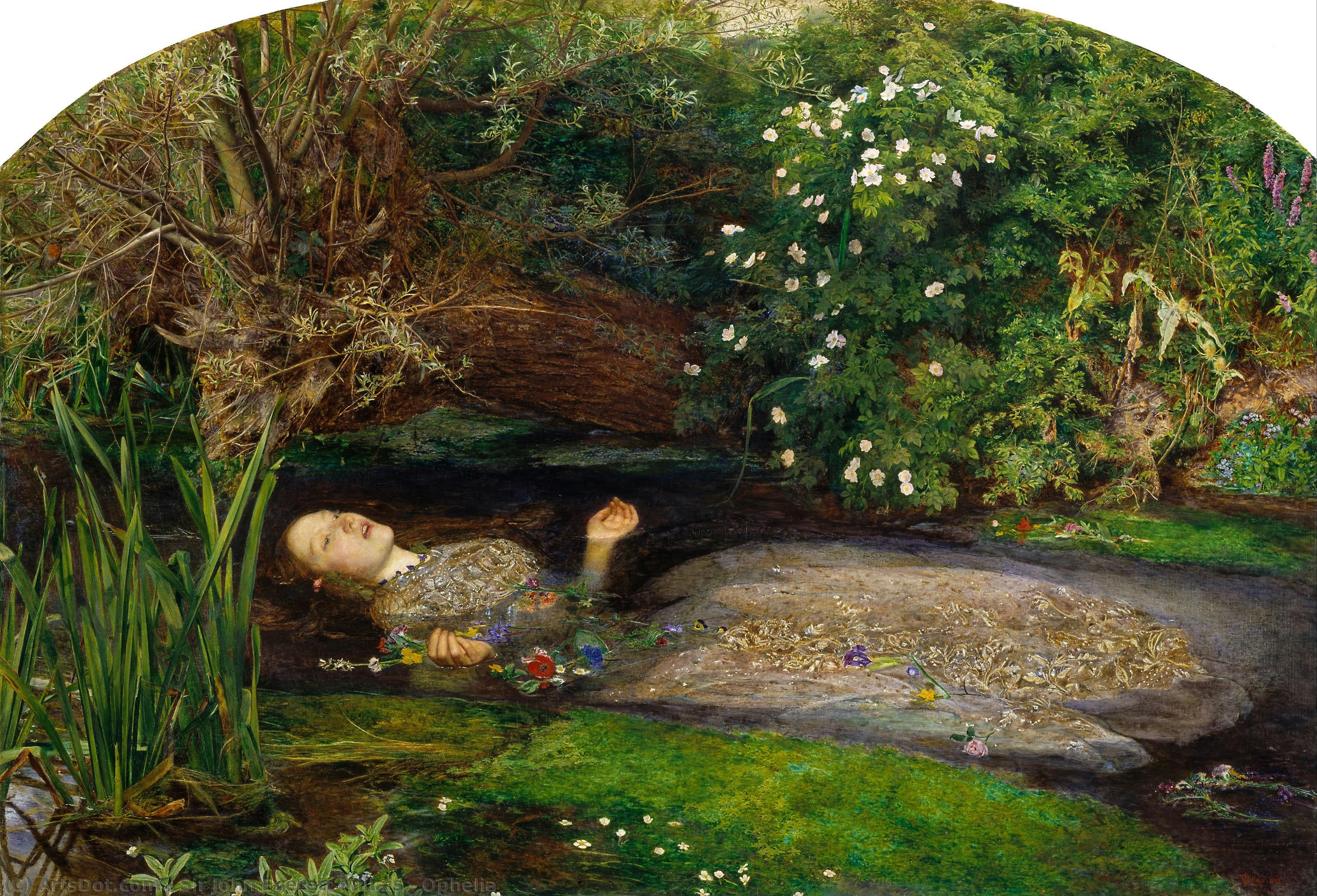
A Ophelia (1851) John Everett Millais leghíresebb festménye, amelyet a London-i Tate Britain tartja meg. Christ in the House of His Parents (`The Carpenter (1849) és The Blind Girl (1856) a következő két mű, amelyeket a világ a legjobban ismer. A John Everett Millais 422 műve közül íme a 100 legnépszerűbb alkotás, amelyeket a gyűjtők és a múzeumlátogatók a leggyakrabban tekintik meg, évszámával, múzeumával és a mű történetével együtt.

A rangsorolásunkat a népszerűségi pontszám határozza meg, amely az egyes művek kereséseit, látogatottságát és megrendeléseit ötvözi. Frissítve: október 2026. Az ezen az oldalon található összes remekmű megrendelhető múzeumi minőségű, kézzel festett olajfestmény másolatként vagy fine art nyomtatásként, a választott méretben.

John Everett Millais portréja
John Everett Millais · 1829 – 1896
Született · meghalt
1829 – 1896, Southampton
Mozgalom
Pre-raphaelite brotherhood
A katalógusban szereplő művek
422
Legnépszerűbb
Ophelia (1851)
A legtöbb művel a
Birmingham Museum and Art Gallery

Top 10: John Everett Millais leghíresebb festményei

Ophelia (1851) szerzője John Everett Millais
1

Ophelia

1851 · Olajfestmény vászonon · Tate Britain, London

Sir John Everett Millais 1851–52-ben festett „Ophelia” című alkotása nem csupán egy tragikus shakespeare-i jelenet ábrázolása; egy magával ragadó élmény — a szomorúság és a szépség gondosan megalkotott táblaképe, amely más fél évszázad után is lenöki a nézőket. Ez az ikonikus pre-raphaelita remekmű túlmutat irodalmi forrásán, és a veszteség, az ártatlanság, valamint a természet ölelésének megható megadódásának mély meditációjává válik. A festmény azonnal magára vonja a tekintetet ragyogó színpalettájával és…

Christ in the House of His Parents (`The Carpenter (1849) szerzője John Everett Millais
2

Christ in the House of His Parents (`The Carpenter

1849 · Oil On Canvas · Tate Britain, London

John Everett Millais’ “Speak! Speak!” (Apparition) captivates with its eerie beauty and symbolic depth, marking a pivotal moment in British art history. Created in 1849–50 during the height of the Pre-Raphaelite Brotherhood’s artistic fervor—a movement dedicated to rejecting academic conventions and embracing a return to medieval artistic ideals—this monumental oil painting remains an enduring emblem of Victorian Romanticism.

The Blind Girl (1856) szerzője John Everett Millais
3

The Blind Girl

1856 · Oil On Canvas · Birmingham Museum and Art Gallery, Birmingham

Sir John Everett Millais’s “The Blind Girl,” completed in 1856, is more than just a painting; it's an immersion into the heart of Romanticism. This evocative scene, measuring 62 x 82 cm, captures a moment of quiet intimacy and profound connection between two women nestled within a meticulously rendered natural world. The work immediately draws the viewer in with its soft color palette – dominated by greens, browns, and subtle…

A Huguenot, on St. Bartholomew's Day Refusing to Shield Himself from Danger by Wearing the Roman Catholic Badge (1852) szerzője John Everett Millais
4

A Huguenot, on St. Bartholomew's Day Refusing to Shield Himself from Danger by Wearing the Roman Catholic Badge

1852 · Oil

In the hauntingly beautiful masterpiece A Huguenot, on St. Bartholomew's Day Refusing to Shield Himself from Danger by Wearing the Roman Catholic Badge, Sir John Everett Millais captures a scene of profound spiritual conviction and tragic romanticism. The painting presents an intimate, heart-wrenching embrace between two lovers caught in the violent crosswinds of religious upheaval. As they hold one another, there is a palpable sense of a final goodbye; the…

Isabella (1849) szerzője John Everett Millais
5

Isabella

1849 · Oil On Canvas · Walker Art Gallery, Liverpool

In the annals of the Pre-Raphaelite Brotherhood, few works capture the raw, unshielded ache of human grief as profoundly as Sir John Everett Millais’ Isabella. Completed in 1849, this masterpiece serves as a haunting window into a moment of profound devastation, where the boundaries between life and death, love and loss, become perilously thin. The painting does not merely depict a scene; it breathes with the heavy atmosphere of a…

The Black Brunswicker (1860) szerzője John Everett Millais
6

The Black Brunswicker

1860 · Oil On Canvas · Lady Lever Art Gallery, Liverpool

The Black Brunswicker is an oil on canvas work by John Everett Millais, dating to 1860. This piece presents a historical scene involving a young lady being embraced by a soldier. The man is depicted as a member of the Black Brunswickers, a specialized troop of highly-trained German soldiers from 1809. There is a quiet tension in their meeting, a moment captured between the domestic sphere and the impending necessity…

Mariana (1851) szerzője John Everett Millais
7

Mariana

1851 · Oil On Canvas · Tate Britain, London

John Everett Millais’s “Mariana,” painted in 1851, isn't merely a portrait; it’s an exquisitely rendered distillation of Victorian melancholy and the quiet desperation of a woman caught between longing and resignation. The painting immediately draws the viewer into a small, intimate chamber, dominated by a figure draped in a luminous blue gown – a color that simultaneously suggests both serenity and profound sadness. This isn't a scene of dramatic action…

Bubbles (1886) szerzője John Everett Millais
8

Bubbles

1886 · Oil On Canvas · Lady Lever Art Gallery, Liverpool

Bubbles is an 1886 oil on canvas by Sir John Everett Millais. Originally exhibited at the Grosvenor Gallery in London under the title A Child's World, the work features the artist's grandson, William Milbourne James, as its subject. The painting captures the boy in a moment of quiet fascination, looking upward at a floating bubble.

The Knight Errant (1870) szerzője John Everett Millais
9

The Knight Errant

1870 · Oil On Canvas

The Knight Errant is an oil on canvas by John Everett Millais. The work arrived at the Royal Academy in 1870. It was exhibited there during that same year. The paint holds the weight of a heavy, metallic sheen against the soft textures of the surrounding landscape.

Ophelia (Kivágott) (1852) szerzője John Everett Millais
10

Ophelia (Kivágott)

1852 · Olajfestmény vászonon

Sir John Everett Millais’ “Ophelia” (Cropped) – egy lenyűgöző, a pre-rafaelites művészeti mozgalom csúcsteljesítménye. Ez a festmény nem csupán egy képet ábrázol, hanem egy érzelmi állapotot, egy elmélyült gondolatmenetet és a természet szépségét fogja meg. A 1852-ben elkészített alkotás, melyet a Tate Britain gyűjteménye őrzi, a William Shakespeare drámájából, Hamletből származó tragikus jelenetet ábrázolja: Ophelia, a szerelem és a bánat között árvídfátyolba úszik. A festmény nem csupán egy történelmi pillanatot…

A John Everett Millais rangsor további része, 11 és 100 között

Őszi levelek (1856) szerzője John Everett Millais
#11

Őszi levelek

1856 · Manchester Art Gallery

Sir John Everett Millais „Őszi levelek” (1856) című alkotása lenyűgöző ábrázolása négy fiatal lánynak, akik az ősziből lehullott levelek gyűjtésének egyszerű örömébe merülnek. A szürkület lágy fényében elmerülő…

Vidd haza! →
Joan of Arc szerzője John Everett Millais
#12

Joan of Arc

To stand before this depiction of Joan of Arc is to encounter a profound stillness amidst the echoes of battle. The painting captures not the fervor of the…

Rendelj egy reprodukciót →
The Boyhood of Raleigh (1870) szerzője John Everett Millais
#13

The Boyhood of Raleigh

1870

Sir John Everett Millais's "The Boyhood of Raleigh" is a captivating oil on canvas painting, measuring 142 x 120 cm, created in 1870. This masterpiece exemplifies the Romantic…

Vidd haza! →
The Vale of Rest (1858) szerzője John Everett Millais
#15

The Vale of Rest

1858 · Tate Britain

In the quiet, amber-hued gloaming of Sir John Everett Millais’ “The Vale of Rest,” time seems to suspend itself between the fading light of day and the encroaching…

Rendelj egy reprodukciót →
Speak! Speak! (also known as Apparition) (1895) szerzője John Everett Millais
#16

Speak! Speak! (also known as Apparition)

1895 · Tate Gallery

Sir John Everett Millais' "Speak! Speak!" – often referred to as “Apparition” – is not merely a painting; it’s an immersive experience, a carefully constructed tableau of mystery…

Vidd haza! →
Ophelia (1851) szerzője John Everett Millais
#18

Ophelia

1851 · Tate Gallery

Sir John Everett Millais' "Ophelia," completed between 1851 and 1852, is more than just a painting; it’s an immersive experience. This iconic Pre-Raphaelite masterpiece transports the viewer to…

Kérjen kézzel festett másolatot →
Untitled (AS84ZV) (1860) szerzője John Everett Millais
#21

Untitled (AS84ZV)

1860 · Getty Center

In the vast tapestry of nineteenth-century British art, few works capture the ethereal intersection of tragedy and natural beauty as profoundly as this masterpiece by Sir John Everett…

Vidd haza! →
The North-West Passage (1874) szerzője John Everett Millais
#23

The North-West Passage

1874 · Tate Britain

Sir John Everett Millais’s “The North-West Passage,” completed in 1874, stands as a cornerstone of the Pre-Raphaelite Brotherhood’s artistic vision—a movement that vehemently rejected academic conventions and championed…

Kérjen kézzel festett másolatot →
Infancy (1847) szerzője John Everett Millais
#24

Infancy

1847 · Leeds Art Gallery

Sir John Everett Millais’s “Infancy,” completed in 1847, is more than just a depiction of a mother and her children; it's a meticulously crafted meditation on innocence, domesticity,…

Vidd haza! →
Little Red Riding Hood (1864) szerzője John Everett Millais
#25

Little Red Riding Hood

1864

A young girl stands at the threshold, her presence defined by a heavy red hooded cloak. This scarlet fabric catches the eye against the muted tones of the…

Vidd haza! →
Portrait of Wilkie Collins (1850) szerzője John Everett Millais
#27

Portrait of Wilkie Collins

1850 · National Portrait Gallery

To stand before this portrait is to step directly into the richly textured drawing rooms of mid-Victorian London, a world steeped in literary fervor and meticulous social ritual.…

Vidd haza! →
A flood (1870) szerzője John Everett Millais
#29

A flood

1870

To gaze upon Sir John Everett Millais's A Flood is to be enveloped by a scene both breathtakingly beautiful and deeply unsettling. Painted in 1870, this oil on…

Vidd haza! →
Mrs Bischoffsheim (1873) szerzője John Everett Millais
#31

Mrs Bischoffsheim

1873 · Tate Gallery

To stand before a portrait such as Mrs Bischoffsheim is to step directly into the richly textured drawing rooms of the late nineteenth century. This exquisite work by…

Vidd haza! →
The Black Brunswicker szerzője John Everett Millais
#33

The Black Brunswicker

Royal Scottish Academy of Art - Architecture

John Everett Millais’s “The Black Brunswicker,” painted in 1860, is more than just a depiction of a soldier preparing for battle; it's a meticulously crafted tableau vivant—a staged…

Kérjen kézzel festett másolatot →
Mariana in the Moated Grange (1851) szerzője John Everett Millais
#41

Mariana in the Moated Grange

1851 · Tate Gallery

Mariana in the Moated Grange: A Pre-Raphaelite Portrait of Longing Sir John Everett Millais's "Mariana in the Moated Grange," created in 1851, is a cornerstone of the Pre-Raphaelite…

Vidd haza! →
Jephthah (1867) szerzője John Everett Millais
#42

Jephthah

1867 · National Gallery of Wales

Sir John Everett Millais's "Jephthah" – a painting that simultaneously evokes profound sorrow and a strange, unsettling beauty – stands as a cornerstone of the Pre-Raphaelite Brotherhood’s artistic…

Vidd haza! →
The Sound of Many Waters (1876) szerzője John Everett Millais
#43

The Sound of Many Waters

1876 · The National Trust For Scotland

John Everett Millais’s “The Sound of Many Waters,” painted in 1876, isn't merely a landscape; it’s an immersive experience, a fleeting moment captured with the meticulous detail and…

Rendelj egy reprodukciót →
Trust Me (1862) szerzője John Everett Millais
#44

Trust Me

1862

In the grand tapestry of Victorian art, few threads shine with as much luminous clarity as Sir John Everett Millais’s 1862 masterpiece, “Trust Me.” This oil on canvas…

Vidd haza! →
Napfürdő (1874) szerzője John Everett Millais
#45

Napfürdő

1874 · The Dick Institute

Sir John Everett Millais’s “Day Dreams,” completed in 1874, stands as a quintessential emblem of Pre-Raphaelite art—a movement that vehemently rejected the idealized conventions of academic painting and…

Kérjen kézzel festett másolatot →
Testvérek (1868) szerzője John Everett Millais
#51

Testvérek

1868

A Szüzek Eleganciája és Egy Kor Megjegyzett Realizmusának Érzeke Sir John Everett Millais művének, pontosan az „Szüzek” című alkotásának megismerése egy különleges élményt jelent minden igazán művészet iránt…

Kérjen kézzel festett másolatot →
The Piper szerzője John Everett Millais
#54

The Piper

To gaze upon The Piper is to be drawn into a moment suspended in time—a tableau vivant brimming with the quiet resonance of family life juxtaposed against the…

Rendelj egy reprodukciót →
The Enemy Sowing Tares (1865) szerzője John Everett Millais
#55

The Enemy Sowing Tares

1865 · Birmingham Museums And Art Gallery

Sir John Everett Millais's "The Enemy Sowing Tares," painted in 1865, is more than just a depiction of a biblical scene; it’s a profound meditation on sin, exile,…

Vidd haza! →
Victory O Lord (1871) szerzője John Everett Millais
#56

Victory O Lord

1871

In 1871, John Everett Millais painted Victory O Lord. This work captures a heavy moment from the Book of Exodus, chapter 17. It depicts Moses, Aaron, and Hur…

Rendelj egy reprodukciót →
Portia (Kate Dolan) (1886) szerzője John Everett Millais
#57

Portia (Kate Dolan)

1886

In this 1886 work, John Everett Millais presents Portia (Kate Dolan), a piece that occupies a delicate space between portrait and history painting. The subject is the resourceful…

Rendelj egy reprodukciót →
Saint Martin's Summer (1878) szerzője John Everett Millais
#59

Saint Martin's Summer

1878 · Montreal Museum of Fine Arts

The water flows with a quiet, steady purpose. It cuts through the dark earth and the tangled roots of the forest, a silver vein pulsing through the green.…

Vidd haza! →
Emily Patmore (1851) szerzője John Everett Millais
#61

Emily Patmore

1851

In 1851, John Everett Millais captured the likeness of Emily Patmore, a portrait that exemplifies the Pre-Raphaelite commitment to meticulous realism. The subject is presented in a bust-length…

Kérjen kézzel festett másolatot →
Apple Blossoms (1859) szerzője John Everett Millais
#62

Apple Blossoms

1859

In the delicate dance of light and petal, Sir John Everett Millais captures a moment of pure, unadulterated serenity in his 1859 masterpiece, Apple Blossoms. This painting serves…

Vidd haza! →
Diana Vernon (1880) szerzője John Everett Millais
#63

Diana Vernon

1880 · National Gallery of Victoria

This full-length portrait, titled Diana Vernon, was executed by the artist John Everett Millais. The work depicts a single female subject positioned in a three-quarter length view. The…

Rendelj egy reprodukciót →
John Henry, Cardinal Newman (1881) szerzője John Everett Millais
#66

John Henry, Cardinal Newman

1881

In this profound 1881 masterpiece, Sir John Everett Millais invites us into a moment of quiet, spiritual introspection. The portrait of John Henry, Cardinal Newman, is far more…

Vidd haza! →
My Second Sermon (1864) szerzője John Everett Millais
#69

My Second Sermon

1864 · Birmingham Museum and Art Gallery

My Second Sermon is an oil on canvas painting by the artist John Everett Millais. Created in 1864, the work depicts a young girl identified as the artist's…

Vidd haza! →
Swallow, Swallow (1864) szerzője John Everett Millais
#70

Swallow, Swallow

1864

“Swallow, Swallow,” painted in 1864 by the esteemed English artist Sir John Everett Millais, is a captivating example of the Romanticism movement. This oil on canvas masterpiece transports…

Vidd haza! →
Mrs Joseph Chamberlain (1891) szerzője John Everett Millais
#87

Mrs Joseph Chamberlain

1891 · Birmingham Museums And Art Gallery

is a portrait by Sir John Everett Millais, executed between 1890 and 1891. The subject is Mary Endicott, also known as Mary Crowninshield Endicott Chamberlain. Joseph Chamberlain commissioned…

Rendelj egy reprodukciót →

John Everett Millais festményei időszakok szerint

A leggyakoribb témakörök, amelyeket John Everett Millais festett

A négy leggyakoribb téma ezek között a mesterdarabok közül, mindegyik legkivágtebb példájával.

Hol láthatja John Everett Millais festményeit

A 8 olyan múzeum, amely a legtöbb ezen az oldalon szereplő festményet őrzi.

Múzeumok Város John Everett Millais művei Ebből a listából származó festmények
Birmingham Museum and Art Gallery, BirminghamBirmingham Museum and Art Gallery Birmingham 15 The Blind Girl, My Beautiful Lady (also known as Lovers by a Rosebush), My Second Sermon
Tate Britain, LondonTate Britain London 13 Ophelia, Christ in the House of His Parents (`The Carpenter, Mariana
Tate Gallery, LondonTate Gallery London 6 Speak! Speak! (also known as Apparition), Ophelia, Christ in the House of His Parents
Birmingham Museums And Art Gallery, BirminghamBirmingham Museums And Art Gallery Birmingham 5 Elgiva Seized by Order of Archbishop Odo, The Enemy Sowing Tares, Mrs Joseph Chamberlain
Walker Art Gallery, LiverpoolWalker Art Gallery Liverpool 4 Isabella, The Martyr of the Solway
Lady Lever Art Gallery, LiverpoolLady Lever Art Gallery Liverpool 4 The Black Brunswicker, Bubbles
Temple Newsam House, LeedsTemple Newsam House Leeds 2 Poetry, Youth
National Portrait Gallery, LondonNational Portrait Gallery London 9 Portrait of Wilkie Collins

John Everett Millais évtizedeken át: egy-egy remekmű minden évtizedből

  1. 1840s
    Christ in the House of His Parents (`The Carpenter (1849) szerzője John Everett Millais
    #2 100 közül

    Christ in the House of His Parents (`The Carpenter

    Kor: 11 – 20 év · Tate Britain

    John Everett Millais’ “Speak! Speak!” (Apparition) captivates with its eerie beauty and symbolic depth, marking a pivotal moment in British art history. Created in 1849–50 during the height…

  2. 1850s
    Ophelia (1851) szerzője John Everett Millais
    #1 100 közül

    Ophelia

    Kor: 21 – 30 év · Tate Britain

    Sir John Everett Millais 1851–52-ben festett „Ophelia” című alkotása nem csupán egy tragikus shakespeare-i jelenet ábrázolása; egy magával ragadó élmény — a szomorúság és a szépség gondosan megalkotott…

  3. 1860s
    The Black Brunswicker (1860) szerzője John Everett Millais
    6. / 100

    The Black Brunswicker

    Kor: 31 – 40 év · Lady Lever Art Gallery

    The Black Brunswicker is an oil on canvas work by John Everett Millais, dating to 1860. This piece presents a historical scene involving a young lady being embraced…

  4. 1870s
    The Knight Errant (1870) szerzője John Everett Millais
    9. hely 100 közül

    The Knight Errant

    Kor: 41 – 50 év

    The Knight Errant is an oil on canvas by John Everett Millais. The work arrived at the Royal Academy in 1870. It was exhibited there during that same…

  5. 1880s
    Bubbles (1886) szerzője John Everett Millais
    8. hely 100 közül

    Bubbles

    Kor: 51 – 60 év · Lady Lever Art Gallery

    Bubbles is an 1886 oil on canvas by Sir John Everett Millais. Originally exhibited at the Grosvenor Gallery in London under the title A Child's World, the work…

  6. 1890s
    Speak! Speak! (also known as Apparition) (1895) szerzője John Everett Millais
    16. hely 100 közül

    Speak! Speak! (also known as Apparition)

    Kor: 61 – 67 év · Tate Gallery

    Sir John Everett Millais' "Speak! Speak!" – often referred to as “Apparition” – is not merely a painting; it’s an immersive experience, a carefully constructed tableau of mystery…

John Everett Millais festményei: gyakranIsmételt kérdések

Mi a leghíresebb John Everett Millais festmény?Mutasd meg a választ

Ophelia (1851), Tate Britain, London. Ezután következik Christ in the House of His Parents (`The Carpenter (1849) és The Blind Girl (1856).

Hány éves volt John Everett Millais, amikor megfestette a Ophelia című művét?Mutasd meg a választ

22 éves: Ophelia 1851-ből származik, John Everett Millais pedig 1829 évfolyamon született.

Melyek a 10 leghíresebb John Everett Millais festmény?Mutasd meg a választ

Ophelia, Christ in the House of His Parents (`The Carpenter, The Blind Girl, A Huguenot, on St. Bartholomew's Day Refusing to Shield Himself from Danger by Wearing the Roman Catholic Badge, Isabella, The Black Brunswicker, Mariana, Bubbles, The Knight Errant és Ophelia (Kivágott). A fenti rangsor a művek évszámát és a múzeumát jelzi.

Hány festménye van John Everett Millais művésznek?Mutasd meg a választ

Katalógusunkban 422 mű található John Everett Millais alkotótól, 1843 és 1895 közötti időszakból.

Hol láthatom John Everett Millais leghíresebb festményeit?Mutasd meg a választ

A legtöbbjüket Birmingham Museum and Art Gallery (Birmingham), Tate Britain (London) és Tate Gallery (London) találhatja meg. A fenti táblázatban a múzeumokat egymás után soroljuk fel.

Melyik időszakban festette John Everett Millais leghíresebb műveit?Mutasd meg a választ

1850s idején: a jelen laphonon található 100 műből 26 származik onnan, köztük Ophelia.

Mi a leghattyúbb John Everett Millais festmény, és melyik a legutóbb készült?Mutasd meg a választ

A legkorábbi alkotás ezen az oldalon Othello and Desdemona (1843), a legutóbb pedig Speak! Speak! (also known as Apparition) (1895).

Milyen témaköröket ábrázolt John Everett Millais?Mutasd meg a választ

Victorian era (29), Portrait (15) és Woman (13), a jelen oldalon található 100 mű közül.

Mire és mivel festett John Everett Millais?Mutasd meg a választ

Oil On Canvas: 51 a 100 ezen az oldalon található műalkotásból.

Mely művészeti irányba tartozik John Everett Millais művész alkotmánya?Mutasd meg a választ

Pre-raphaelite brotherhood, ahogy azt ezen az oldalon látható festmények is mutatják.

Milyen John Everett Millais festményei találhatók a Birmingham Museum and Art Gallery gyűjteményében?Mutasd meg a választ

A The Blind Girl, My Beautiful Lady (also known as Lovers by a Rosebush) és My Second Sermon a 7 mű közül foglal helyet ezen az oldalon, amelyeket a Birmingham Museum and Art Gallery, Birmingham tartományában őrzik.

Hol vásárolhatok egy John Everett Millais reprodukciót?Mutasd meg a választ

Igen. Az oldalon található minden festmény a festmény saját oldalán, a választott méretben rendelhető meg, hogy muzeumi minőségű, kézzel festett olajfestmény-másolatként vagy kiváló minőségű művészeti nyomtatásként.

John Everett Millais: életrajz

The Life of Sir John Everett Millais

The story of Sir John Everett Millais begins in Southampton, England, where he arrived on 8 June 1829. Even in those early years, it was clear that a singular talent resided within him. He was a child prodigy, possessing a natural affinity for the brush that few could claim. This gift led him to the Royal Academy Schools at the remarkable age of eleven, making him the youngest student ever admitted to those halls. His presence there marked the beginning of a life defined by a restless, searching energy that would eventually reshape the landscape of British painting.

As he matured, his ambitions grew beyond the traditional boundaries of the academy. He sought a truth in art that felt more sincere and direct than the polished, idealized works of his predecessors. This drive led him to join a group of like-minded rebels who sought to return to the clarity and detail of the masters who lived before Raphael. Through this association, he became a founder of the Pre-Raphaelite Brotherhood, a movement that would forever link his name to a new way of seeing the natural world. His life was a constant movement between the meticulous study of nature and the complex emotions of the human condition.

Early Life, Family and Training

In the bustling streets of London, specifically within Southampton Street, a child was born into a family of comfortable means. His father, Thomas Millais, was a man of steady craft, finding his livelihood as a successful engraver and lithographer. This environment, steeped in the technicalities of line and print, provided a natural backdrop for a boy destined for the arts. His mother, Emily Mary Millais, helped shape a household where the visual language of the era was a constant presence. From these early years, the seeds of a remarkable talent were sown, nurtured by a family that understood the discipline required to master a craft.

The boy’s gift was so pronounced that it could not be ignored by the institutions of the day. At the tender age of eleven, he achieved a feat that marked him as a prodigy, becoming the youngest student ever admitted to the Royal Academy Schools. It was here that his raw instinct met the rigors of formal discipline. He underwent a strict education in classical techniques, learning the fundamental principles of form and composition under the watchful eyes of established masters. This period of intense training provided him with the technical foundation that would later allow him to challenge the very traditions he was taught to uphold.

The Pre-Raphaelite Brotherhood and Early Works

Before the rebellion of the Brotherhood took hold, the young artist was already making his mark upon the halls of the Royal Academy. In 1846, he exhibited Pizarro Seizing the Inca of Peru, a work that signaled the arrival of a talent that refused to follow the easy paths of the established academies. This early ambition soon found a more radical direction. At his family home at 83 Gower Street, London, he joined forces with Dante Gabriel Rossetti and William Holman Hunt to form the Pre-Raphaelite Brotherhood. This group sought to return to a sincerity of vision that they felt had been lost to the artificiality of the era.

The early years of this brotherhood were marked by a fierce commitment to truth and a willingness to provoke. His first painting under this new banner was Isabella, which he completed between 1848 and 1849. This work helped establish the group's presence, but it was his later output that truly tested the patience of the public. When he presented Christ in the House of His Parents between 1849 and 1850, the reaction was one of intense controversy. Rather than painting the Holy Family in the idealized, ethereal manner expected by many, he rendered them as ordinary people in a setting of stark, unsettling realism. This refusal to look away from the grit of reality would define his early career and cement the reputation of the Brotherhood as a force of change.

Marriage and Evolving Artistic Style

The personal life of the artist underwent a profound transformation in the mid-1850s, intertwined with the shifting light of his canvases. Following the annulment of her marriage to a prominent critic, Effie Chalmers entered his life, and the two were married in 1855. This union was not merely a private matter but a turning point that coincided with a departure from his earlier, more rigid methods. As he settled into this new chapter, his brushwork began to change. The intense, almost microscopic scrutiny of his youth gave way to a broader, more atmospheric realism. He sought to capture the mood of a scene rather than just its smallest details, finding a new way to translate the world onto the canvas.

This period of transition saw him moving through different landscapes and settings. After a time spent in Perth, he eventually returned to London in 1861. His work during these years reflected a growing engagement with the fleeting qualities of light and the soft textures of the natural world. He moved away from the sharp, uncompromising clarity that had once defined his reputation, opting instead for a style that embraced a sense of atmosphere and grace. This evolution allowed him to navigate the changing tastes of the era while maintaining his deep connection to the truth of what he observed.

Technique and Artistic Style

His hand moved with a precision that sought to mirror the very world it depicted. He practiced a faithful truth to nature, a commitment that demanded he observe the smallest leaf and the softest petal with intense scrutiny. This detailed realism was not merely a matter of sight, but a disciplined pursuit of accuracy. He utilized luminous color palettes to bring his subjects to life, ensuring that the light seemed to emanate from within the canvas itself. Through precise draughtsmanship, he defined the edges of his figures and the intricate patterns of the natural world with a clarity that challenged the softer, more generalized traditions of his era.

To achieve such depth, he employed a meticulous method of layering and blending oil paints. This technical approach allowed him to build up textures that invited the eye to linger upon the surface. He possessed a skill in capturing texture that made the heavy fabric of a gown or the damp moss of a riverbank feel tangibly present. His work often relied on bright colours to create a sense of immediacy and life. By avoiding the artificial shadows favored by the academies, he embraced a directness that made his scenes feel startlingly real to those who viewed them.

Key Works and Masterpieces

The brush of Millais often sought the quiet tragedies of literature. In his work Ophelia (1851–52), held at Tate Britain, London, he captured the young Danish noblewoman as she drifted toward her end. He spent months braving the biting cold of English riverbanks to ensure every leaf and dewdrop was rendered with absolute precision. This dedication to the natural world transformed a scene of sorrow into a study of botanical detail, where the pale figure of the woman is set against a lush, wild background.

His early years were marked by a fierce commitment to truth, even when it caused a stir. The painting Mariana (1850-1851), now in the Manchester Art Gallery, reflects this intense focus on mood and atmosphere. During this same period, he produced The Order of Release 1746, which remains in the collection of Tate Britain, London. These works show a man deeply engaged with the textures of the world, refusing to rely on the artificial shadows favored by the academies of his day.

As the years passed, his vision shifted toward a more atmospheric realism. Autumn Leaves (1855–56), located at the City of Manchester Art Galleries, reflects this change, offering a serene depiction of women drifting leaves upon a river. Even in his later years, his ability to capture a specific moment remained strong, as seen in The Boyhood of Raleigh, painted in 1870. His hands moved from the sharp, intense colors of his youth toward a style that embraced the fleeting beauty of light and nature.

Later Years and Professional Success

As the decades passed, the man who had once sparked such controversy with his radical realism found himself at the very heart of the British art establishment. His ascent was steady and marked by the highest honors the academy could bestow. In 1863, he was welcomed as a full member of the Royal Academy, a significant shift from his earlier days of rebellion. His influence grew beyond the walls of London, as seen when he served as the President of the Royal Birmingham Society of Artists from 1881 to 1882. This period of his life reflected a man who had successfully navigated the transition from a youthful provocateur to a respected pillar of the Victorian art world.

The honors bestowed upon him continued to mount, reflecting both his technical skill and his standing in society. In 1885, he was created a baronet, a title that accompanied his increasing social prominence. His professional journey reached its zenith in 1896, when he was elected President of the Royal Academy. It was a position of immense authority, placing him at the helm of the institution he had once challenged. Even as he moved through these high offices, his brush continued to capture the essence of the age, producing works such as:

Death and Final Resting Place

The end came in August 1896, a time when the artist had reached the very summit of his profession. After being elected President of the Royal Academy, he faced a sudden and cruel struggle against throat cancer. The illness took hold in London, where he spent his final days. It was a quiet conclusion for a man who had once stirred such intense debate through his brush.

Following his passing in London, he was laid to rest in a place of great solemnity. He was buried within the crypt of St Paul's Cathedral, finding a permanent home beneath the stone and silence of the great monument. His presence remains there, a quiet part of the city's history, far from the lively debates of the art galleries he once led.

Legacy and Lasting Influence

The ripples of his influence moved through the decades, reaching far beyond the initial stirrings of the Pre-Raphaelite Brotherhood. By redefining the standards of realism and narrative painting, he altered how stories were told upon the canvas. His commitment to a truthful, detailed observation of the natural world provided a new language for those who followed. This legacy can be traced through the works of later artists, including John William Waterhouse and Peter Blake, who found inspiration in the way he balanced intense botanical precision with human emotion.

His presence in the history of English art remains profound. He was a central figure in the nineteenth century, a man whose career spanned the transition from radical rebellion to the highest levels of academic authority. Even as his personal style shifted from the sharp, meticulous detail of his youth toward a more atmospheric realism, his ability to capture the essence of a moment remained intact. This versatility ensured that his name would not be tied to a single, fleeting moment in time, but would instead remain a constant presence in the study of British painting.

Today, his paintings continue to find homes in museums and collections across the globe. His ability to marry the minute details of a leaf or a fabric to the weight of a human story ensures that his work remains a subject of study for those interested in the evolution of Victorian sensibilities. His influence is felt whenever a painter seeks to find the sacred in the natural world or the profound within the ordinary.

Where to See the Works Today

To witness the fruits of his labor, one must travel to the great repositories of British art. In London, the Tate Britain holds ten of his paintings, offering a significant window into the evolution of his hand. It is here that his most famous subjects reside, including the haunting figure of Ophelia. The city also houses his portrait of Wilkie Collins within the National Portrait Gallery, a work that captures a specific face from his era.

The north of England preserves much of his legacy as well. In Manchester, the Art Gallery keeps five of his works, including the serene Autumn Leaves. Nearby, the Birmingham Museums and Art Gallery also holds five paintings, such as The Enemy Sowing Tares. These collections allow a viewer to see how his focus shifted from the intense detail of his youth toward a more atmospheric style in his later years.

Further travel leads to the Walker Art Gallery in Liverpool, where three of his paintings await. This collection includes his early, provocative work, Isabella. For those seeking to understand his technical mastery, these various institutions provide the necessary evidence of his skill and his place in history.

Minden 422 műmű John Everett Millais alkotása →