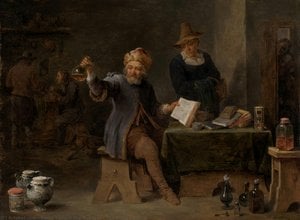
David Teniers a fiatalabb: Élet és örökség
Korai élet és családi háttér
- Született: Antwerpen, Belgium, 1610. december 15.
- David Teniers a fiatalabb egy olyan családból származott, amely mélyen gyökerezett Flandria művészeti hagyományaiban. Apja, David Teniers az idősebb is festőművész volt, és testvérei közül több ember is az alkotás útján vállalta pályáját.
- Képzés: Kezdetesen apja mellett tanult, ahol alapvető ismereteket szerzett a festéstechnikai módszerekről és különböző stílusokról.
- A család időszakosan nehézségekbe került a anyagi helyzet terén, ami arra késztette a fiatal Davidet, hogy régebbi mesterkterevek másolataival járassa bőven a családi kassát.
Művészeti fejlődés és hatások
- Korai hatások: Első műveire erőteljesen hatott apja stílusa, amely elsősorban a kisebb méretű kabinetfestményekre összpontosított. Emellett más flamensú mesterek, például Pieter Bruegel az idősebb munkásságából is rengeteg inspirációt merített.
- Rubens hatása: Teniers fejlődésének egyik döntő pillanata a Peter Paul Rubensszal kialakult kapcsolata volt. Jan Brueghel az idősebb lányával, Anna Brueghellel házasodott össze, melynek esküvőjén Rubens tanúként vett részt, ezzel is szoros kapcsolatot alapítva a két művész között.
- Műfajspecializáció: Teniers fokozatosan a műtermi festészetre specializálódott – azaz a mindennapi élet ábrázolására –, és világhírűvé vált a paraszti fesztiválok (kermess), a kocsmák belsejének és a falusi tájak élettel teli ábrázolásáról.
Főbb művek és művészeti stílus
- Műtermi jelenetek: Legünnepélyebb alkotásai az életeképek. Ezek gyakran nyüzsgő paraszti életet mutatnak be, tele vidámsággal, tánccal, mulatsággal és játékokkal.
- Kermess-festmények: A „flandenszent kermess” sorozat példaként szolgál stílusára – vibráló színek, részletgazdag kompozíciók és az emberi viselkedés éles megfigyelése jellemzi.
- Tájképfestészet: Teniers bátorító tájképeket is alkotott, amelyek gyakran tartalmaznak vidéki tevésekkel foglalkozó alakokat.
- Kocsma-belalakok: Kocsmatermei ábrázolásai különösen kiemelkedőek a mindennapi élet valóságos ábrázolása és az ezekben az intézményekben uralkodó pezsgő hangulat miatt.
Udvari festő és kurátor
- Szolgálat Leopolde Vilmos főerdélyesnél: Teniers tehetsége elismerték a Habsburg-udvaron is. A Spanyol Nyerság fő kormányzójaként szolgáló Leopolde Vilmos főerdélyes udvari festőjévé és kurátorjává vált.
- Gyűjteménykezelés: Kurátorként felelős volt az őrmester hatalmas művészeti gyűjteményének kezeléséért, készítve az inventáriumot és katalógusozva a műalkotásokat.
- Az antwerpi akadémia alapítása: Teniers döntő szerepet játszott az Antwerpi Képzőművészeti Akadémia létrehozásában, célja az volt, hogy megújítsa a flamensú festészetet Rubens és Van Dyck halála utáni hanyatlási időszak után.
Történelmi jelentőség és örökség
- Kiemelkedő műtermi festő: David Teniers a fiatalabb korának vezető flamensú műtermi festőjeként tekinthető, aki rendkívüli képességgel örökítette meg a 17. századi élet lényegét.
- Hatás későbbi művészekre: Munkássága példát adhatott az észak-európai festők későbbi generációinak, sőt, olyan francia rokokó művészeket is elértek, mint Antoine Watteau.
- Termékeny alkotás: Teniers hihetetlenül prolific művész volt; hatalmas mennyiségű alkotást hagyott hátra, amely ma is csodálatos bájáról, részletgazdagságáról és történelmi betekintéséről miatt tiszteletet kivív.
- Halála: 1690. április 25-én halt meg Antwerpenben, hagyva magán 뒤 Flandria egyik legfontosabb barokk festőjeként tartózkodó örökségét.