
1
Portrait of Alexandrine Strübe (1859-1920) as a Child
Kézzel festett olajfestmény másolat, kezdő áron: $181 28 × 36 cm
Az eredeti méretben $304 63 × 81 cm Megrendelem az eredeti méretben →

A Portrait of Alexandrine Strübe (1859-1920) as a Child (1862) Rudolf Epp leghíresebb festménye, amelyet a Freiburg-i Augustiner Museum tartja meg. painting (1875) és Interieur with girl sleeping (1879) a következő két mű, amelyeket a világ a legjobban ismer. A Rudolf Epp 37 műve közül íme a 16 legnépszerűbb alkotás, amelyeket a gyűjtők és a múzeumlátogatók a leggyakrabban tekintik meg, évszámával, múzeumával és a mű történetével együtt.
A rangsorolást a népszerűségi pontszámunk határozza meg, amely az egyes művek kereséseit, látogatottságát és megrendeléseit ötvözi. Frissítve: november 2026. Az ezen az oldalon található összes remekmű megrendelhető múzeumi minőségű, kézzel festett olajfestmény másolatként vagy fine art nyomtatásként, a választott méretben.


A 3 olyan múzeum, amely a legtöbb ezen az oldalon szereplő festményet őrzi.
| Múzeum | Város | Rudolf Epp művei | Ebből a listából származó festmények |
|---|---|---|---|
 Augustiner Museum |
Freiburg | 1 | Portrait of Alexandrine Strübe (1859-1920) as a Child |
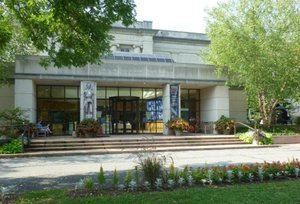 Reading Public Museum |
Reading | 1 | painting |
 Bavári Állami Festırménygyűjtemények |
Munchen | 1 | Still Life with Apple |


Portrait of Alexandrine Strübe (1859-1920) as a Child (1862), Augustiner Museum, Freiburg. Ezután következik painting (1875) és Interieur with girl sleeping (1879).
28 éves: Portrait of Alexandrine Strübe (1859-1920) as a Child 1862-ből származik, Rudolf Epp pedig 1834 évfolyamon született.
Portrait of Alexandrine Strübe (1859-1920) as a Child, painting, Interieur with girl sleeping, Bathing Mother with Child in Forest Pond / Bathing at Forest Pond, In the Tavern, Peasant -Interior. 6 figures: the bride - crown, The Little Sharpener, The Hall of Fame in Munich, Bavaria, Boy with a Crawfish és Still Life with Apple. A fenti rangsor a művek évszámát és a múzeumát jelzi.
Katalógusunkban 37 mű található Rudolf Epp alkotótól, 1862 és 1901 közötti időszakból.
A legtöbbjüket Augustiner Museum (Freiburg), Reading Public Museum (Reading) és Bavári Állami Festırménygyűjtemények (Munchen) találhatja meg. A fenti táblázatban a múzeumokat egymás után soroljuk fel.
1870s idején: a jelen laphonon található 16 műből 3 származik onnan, köztük painting.
A legkorábbi alkotás ezen az oldalon Portrait of Alexandrine Strübe (1859-1920) as a Child (1862), a legutóbb pedig The Hall of Fame in Munich, Bavaria (1901).
Igen. Az oldalon található minden festmény a festmény saját oldalán, a választott méretben rendelhető meg, hogy muzeumi minőségű, kézzel festett olajfestmény-másolatként vagy kiváló minőségű művészeti nyomtatásként.
Born in Eberbach, Grand Duchy of Baden, Rudolf Epp was the son of a decorative painter. His early artistic training began under the landscape painter Karl Ludwig Seeger, followed by studies at the Grand Ducal Art School in Karlsruhe under Johann Wilhelm Schirmer and Ludwig Des Coudres, and later at the Art Academy in Düsseldorf. Due to his talent, he was granted leave from military service by the Regent Friedrich I of Baden. This allowed him to undertake a study trip to the Black Forest, where around 1859, he produced numerous landscape studies in the regions of Freiburg im Breisgau and Landstuhl.
In 1863, Epp moved to Munich, which served as a major center for art. During his time there, he established a reputation as a sought-after painter. He was married to Katharina Steibl in 1862, and they had three children: a son, Franz Ritter von Epp, and two daughters, Helene and Augusta Anna. Augusta Anna frequently served as a model for his various portraits and figurative works. Epp remained an active painter until his death in Munich.
Rudolf Epp is associated with the Munich School and is recognized as a painter of Realism. His body of work consists of hundreds of paintings, many of which were repeated in various motifs. His oeuvre is characterized by:
His paintings gained international appreciation, with many works sold to the USA during his lifetime. His motifs were also featured in early illustrated publications and color lithographs. His work is held in various public collections, including the Neue Pinakothek in Munich and the Kunsthalle Mannheim.


