The Luminous Legacy of Michiel Simons
In the golden twilight of the Dutch Golden Age, few artists captured the ephemeral beauty of the material world with as much tactile intimacy as Michiel Simons. Born around 1648, a period when the Netherlands was flourishing under an unprecedented era of scientific inquiry and mercantile wealth, Simons emerged as a master of the still life. While history often reserves its brightest spotlights for titans like Rembrandt or Vermeer, Simons carved out a profound niche through his ability to transform the mundane—a peeled lemon, a cluster of grapes, or a fallen bird—into a dramatic meditation on existence. His life, though shrouded in the typical biographical mists of the seventeenth century, traces a journey through the heart of the Dutch and Flemish artistic traditions, leading him from his formative years toward a lasting place in the annals of Baroque excellence.
The foundations of Simons’s artistry were laid through rigorous apprenticeship, most notably under the guidance of Hendrick Jacobsz. van Balen I. This connection to the Haarlem Baroque school was instrumental, as it instilled in him a reverence for precision and a sophisticated understanding of light. Through this training, Simons mastered the art of chiaroscuro, using deep, velvety shadows to push his subjects forward into the viewer's space. His technique was not merely about imitation but about an emotional rendering of texture; one can almost feel the cool, damp skin of a plum or the delicate, papery zest of a citrus fruit under his brush. This commitment to realism allowed him to bridge the gap between the physical world and the sensory experience of the observer.
Symbolism and the Baroque Vision
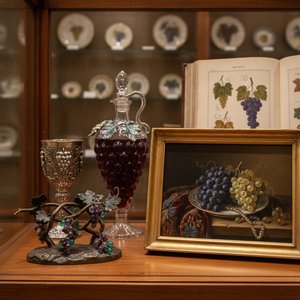
To gaze upon a Simons composition is to engage with a complex language of symbols. During the seventeenth century, still life painting served as more than mere decoration; it was a vessel for profound philosophical and religious thought. Simons utilized the pronkstillevens—or sumptuous still lifes—to explore themes of abundance and the fleeting nature of life. In his celebrated works, such as Still Life with Fruit, the presence of ripe, luscious fruit alongside dead game serves as a poignant memento mori. The vibrant vitality of the harvest stands in stark contrast to the stillness of death, reminding the viewer that all earthly delights are subject to the inevitable passage of time.
His compositions often integrated exotic elements, such as Chinese porcelain and luxurious glassware, which reflected the global reach of Dutch commerce. These objects were not chosen at random but acted as markers of status and worldly achievement, yet they were always balanced by a sense of fragility. By weaving together biblical allegories and mythological undertones with the tangible reality of his subjects, Simons elevated the genre of still life from simple observation to a high intellectual pursuit. His work captured the tension of an era caught between the celebration of newfound prosperity and a deep-seated spiritual awareness of mortality.
Artistic Significance and Enduring Influence
The historical significance of Michiel Simons lies in his ability to synthesize the diverse influences of the Low Countries into a cohesive, breathtaking style. Though some scholars have historically grappled with attributions—occasionally distinguishing his hand from the "Pseudo-Simons" group of Antwerp painters—the core of his legacy remains unmistakable. His work represents a pinnacle of the Baroque aesthetic, where light, shadow, and subject matter converge to create a sense of theatrical grandeur. Even as the art world moved toward different sensibilities in later centuries, the meticulousness of his compositions continued to command respect from collectors and historians alike.
Today, Simons’s contributions are preserved in some of the world's most prestigious institutions, including the Rijksmuseum, where his ability to evoke atmosphere remains as potent as ever. His life, which saw him active in major artistic hubs like Utrecht and Amsterdam until his passing after 1673, serves as a testament to the enduring power of the Dutch still life tradition. Through his mastery of the brush, Simons ensured that the fleeting beauty of the natural world would be captured in an eternal, luminous dance of light and shadow.
Kérdések és válaszok
Honnan származik Michiel (II) Simons?
Michiel (II) Simons Belgium-ban született.
Mely történelmi korszakban alkotott Michiel (II) Simons?
Michiel (II) Simons a Early Modern korszakban alkotott. Ez az időszak a művész tevékenységét a történelembe helyezi.
Hol és 어느 해 született Michiel (II) Simons?
Michiel (II) Simons Antwerp városban született, 1620 évben.