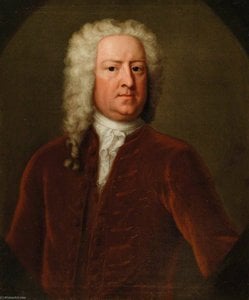
A Life Bridging Worlds: The Artistic Journey of Michael Dahl
Michael Dahl, a name that echoes through the halls of 18th-century portraiture, was more than just an artist; he was a cultural ambassador, seamlessly blending Swedish heritage with the vibrant artistic currents of England. Born in Stockholm around 1659 – precise dates remain somewhat elusive, debated between 1658 and 1659 – his life unfolded as a remarkable journey across Europe, culminating in him becoming one of the most celebrated portraitists of his time. His story isn’t simply about brushstrokes and pigments; it's a tale of familial sacrifice, relentless pursuit of knowledge, a strategic conversion fueled by opportunity, and an astute understanding of navigating diverse cultural landscapes. The unwavering dedication of his mother, Catarina Dahl, served as the bedrock upon which his artistic career was built – a testament to her belief in his potential and her willingness to champion his ambitions, even at personal cost.Early Foundations: Sweden and the Seeds of Talent
Dahl’s artistic education began within the familiar confines of Stockholm, under the tutelage of Martin Hannibal in 1674. Hannibal, an Italian artist brought to Sweden by David Klöcker Ehrenstrahl, established a portrait academy – a relatively novel concept at the time – aiming to cultivate a new generation of skilled painters. This initial training provided Dahl with fundamental skills and a grounding in classical techniques. However, his ambition quickly outgrew the limitations of Stockholm. In 1682, he embarked on an extraordinary educational odyssey across Europe, armed with a passport that facilitated travel and driven by an insatiable thirst for artistic mastery. This wasn’t merely a vacation; it was a calculated investment in his future, a deliberate attempt to immerse himself in the most influential art centers of the era. His arrival in London proved pivotal, marking the beginning of a transformative chapter in his career.The English Crucible: Robert White and Godfrey Kneller
London became Dahl’s artistic incubator, where he found himself under the guidance of two titans of the English art world: Robert White and Godfrey Kneller. White, a renowned engraver and painter, initially served as an assistant, providing Dahl with invaluable practical experience – including assisting in the creation of a portrait of King Charles XI of Sweden. This early exposure to royal commissions instilled within him a sense of professionalism and an understanding of the demands of aristocratic patronage. However, it was his time spent with Kneller that truly shaped his artistic trajectory. Kneller wasn’t just a teacher; he was a shrewd businessman who understood the importance of catering to public taste and securing lucrative commissions. He imparted not only technical expertise but also the pragmatic skills necessary to navigate the competitive art market – a crucial lesson for Dahl, who quickly realized that artistic talent alone wasn't enough to guarantee success. The mentorship extended beyond mere instruction; Kneller introduced Dahl to a network of influential figures, opening doors to opportunities he might otherwise have missed.Rome and the Papal Patronage: A Strategic Conversion
Dahl’s journey took a dramatic turn when he traveled to Rome in 1685. This wasn't a leisurely excursion; it was a calculated move designed to immerse himself in the heart of Baroque art and secure papal patronage – a vital resource for ambitious artists at the time. The exiled Queen Christina of Sweden, a former Swedish monarch who had embraced Catholicism, became a pivotal figure in Dahl’s Roman experience. Recognizing his potential and appreciating his artistic sensibilities, she actively sought him out and commissioned portraits of herself, effectively catapulting him into a circle of influential figures. This strategic conversion – a deliberate shift to the Catholic faith – wasn't solely motivated by religious conviction; it was a pragmatic decision that dramatically expanded his opportunities and elevated his status within the art world. The Pope himself recognized Dahl’s talent, bestowing upon him a gold medal – a tangible symbol of his rising reputation.A Master of English Aristocracy: Portraits of Power
Upon returning to England in 1689, Michael Dahl swiftly established himself as one of the most sought-after portraitists of his time. His style was characterized by an elegant and refined sensibility, capturing not merely the likeness but also the status, personality, and inner life of his aristocratic subjects. He possessed a remarkable ability to convey both outward grandeur and subtle nuances of character – a skill that made his portraits highly prized by royalty, nobility, and wealthy merchants. Notable works include striking portraits of Sir William Carew, John Churchill (1st Duke of Marlborough), and Sir Robert Walpole – each piece reflecting the sitter’s individual personality and social standing. His ability to capture the essence of his subjects, combined with a masterful command of technique and a keen eye for detail, cemented his reputation as one of England's foremost portraitists.Legacy and Enduring Influence
Michael Dahl’s artistic legacy extends far beyond the individual portraits that adorn galleries and private collections. His work represents a fascinating synthesis of influences – a harmonious blend of Swedish realism, Italian Baroque drama, and English aristocratic sensibilities. He absorbed the technical foundations from his early mentors, honed his market savvy through experience in London, and drew inspiration from the opulent artistic environment of Rome. His portraits influenced subsequent generations of portrait painters with their elegant style and technical proficiency. Dahl’s story is a testament to the power of ambition, adaptability, and strategic vision – qualities that enabled him to transcend national boundaries and establish himself as a truly international artist. His work continues to be studied and admired for its beauty, sophistication, and enduring insight into the lives and appearances of the English aristocracy during a pivotal era in British history.Kérdések és válaszok
Milyen színeket használt leggyakrabban Michael Dahl?
Michael Dahl műveleteinek színprofilja a művész Paletta Genom oldalán tekinthető meg.
Hol és 어느 해 született Michael Dahl?
Michael Dahl Stockholm városban született, 1659 évben.
Szűrhetem Michael Dahl műveit szín alapján?
Michael Dahl művei színek szerinti csoportosítással is felfedezhetők a művész Színindex oldalán.