Kim Ho Deuk: A Journey Through Korean Ink Landscape
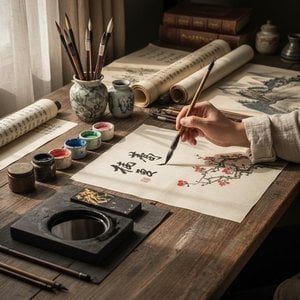
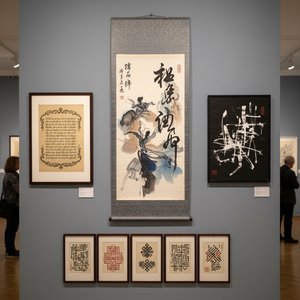
Kim Ho Deuk, born in Daegu, South Korea in 1950, stands as a prominent figure in contemporary Korean ink painting—a tradition deeply rooted in Buddhist philosophy and artistic expression. His formative years were marked by rigorous academic pursuits at Seoul National University’s College of Fine Arts, culminating in degrees in both B.F.A. and M.F.A., specializing in painting. This grounding in classical techniques profoundly shaped his artistic vision, informing a lifelong dedication to exploring the profound symbolism inherent within landscape imagery. Early Influences: Ho Deuk’s artistic sensibilities were nurtured by exposure to Zen Buddhism and its emphasis on mindfulness and contemplation—influences that permeate his oeuvre. The teachings of Zen masters resonated deeply with him, prompting a constant quest for inner harmony and understanding – principles he translates into his art through meticulous observation and expressive brushwork. He frequently cites the Linji Lu (“One must distinguish black and white in a split second and determine life and death in a flash of lightning”) as inspiration for capturing the fleeting essence of experience. Formal Training: His studies at Seoul National University provided him with a comprehensive understanding of Western art history alongside Korean painting traditions, fostering a balanced perspective on artistic innovation. Recognizing the importance of both heritage and experimentation, he sought to synthesize influences from diverse artistic movements—resulting in a distinctive style characterized by subtle tonal gradations and masterful control over ink wash technique. This intellectual curiosity fueled his artistic development throughout his career. Notable Exhibitions: Recognizing his talent early on, galleries like Hakgojae and Gallery BK championed his work, showcasing solo exhibitions that garnered critical acclaim and establishing him as a respected artist within Korea’s art community. These presentations solidified his reputation for capturing the spirit of Korean landscape painting—a tradition celebrated for its ability to convey spiritual depth through deceptively simple visual forms. His participation in Art Basel Hong Kong and Ink Studio further broadened his artistic reach and ensured that his work would be appreciated internationally. The Essence of Korean Ink Landscape Painting: At the core of Kim Ho Deuk's artistic practice lies the meticulous execution of ink wash painting—a technique characterized by its deliberate simplicity and profound expressive power. Unlike Western landscape paintings that strive for realistic representation, Korean ink landscapes prioritize conveying emotion and spiritual insight rather than visual accuracy. The artist employs subtle gradations of tone achieved through layering washes of ink onto rice paper, creating textures that mimic the natural world while simultaneously embodying concepts of emptiness (sunyata) and interconnectedness—themes central to Buddhist cosmology. He believes that “the place I paint is ‘right now,’” reflecting a philosophical stance rooted in Zen’s emphasis on immediacy and presence. Technique: Ho Deuk’s mastery lies in mastering the delicate balance between spontaneity and control—a hallmark of Korean ink painting tradition. He meticulously observes natural phenomena, translating their subtle nuances into expressive brushstrokes that capture not just what is seen but what is felt. His compositions often utilize Gestalt principles to create visual harmony—demonstrating an awareness of perceptual psychology and its impact on artistic interpretation. The resulting paintings are imbued with a sense of quiet contemplation—a testament to his unwavering dedication to preserving Korean ink painting’s legacy. Legacy: Kim Ho Deuk's enduring contribution lies in his ability to transform landscape imagery into vehicles for profound spiritual contemplation—a testament to the transformative power of artistic expression. He continues to inspire younger artists with his commitment to tradition while simultaneously pushing boundaries through conceptual innovation, ensuring that Korean ink painting remains relevant and resonant in the 21st century. His work serves as a reminder that beauty can be found not only in visual perfection but also in the exploration of deeper philosophical truths.Gyakran Ismételt Kérdések
Hol találhatók Kim Ho Deuk művei kulcsszavakra csoportosítva?
Kim Ho Deuk művei kulcsszavakra bontva is felfedezhetők a művész Kulcsszavak alapján oldalán. Minden kulcsszó a hozzá tartozó alkotásokat gyűjti össze.
Hol találhatók Kim Ho Deuk művei témakör szerinti csoportosítással?
Kim Ho Deuk művei témánként is felfedezhetők a művész Témakör-atlasz oldalán.
Milyen hangulatokat közvetítenek Kim Ho Deuk művei?
Kim Ho Deuk művei hangulat alapján is böngészhetők a művész Hangulat alapú gyűjtemény oldalán, amely a alkotásokat az átélhető hangulatuk szerint csoportosítja.
Hogyan tekinthetném meg minden Kim Ho Deuk által készített művet?
Kim Ho Deuk minden alkotása a ez a weboldal oldalán megtekinthető az alkotó Összes műalkotás oldalán.
Hol találhatók Kim Ho Deuk művei művészeti stílusok szerint csoportosítva?
Kim Ho Deuk művész alkotásainak különböző irányzatait a művész Összes irányzat oldalán tekintheti meg, ahol a műalkotások stílusirányzat szerinti csoportosításban láthatóak.
Hány Kim Ho Deuk alkotása tekinthető meg a katalógusban?
A 1 műalkotás darab alkotást Kim Ho Deuk részéről a Összes műalkotás oldalon tekintheti meg.
Van-e kronológiai ismertetés Kim Ho Deuk életművének?
Kim Ho Deuk munkásságának időrendi áttekintése a művész Krónika oldalán érhető el, ahol az alkotások fejezetről fejezetre, a készítés sorrendjében követhetők egymást.
Megtekinthetem Kim Ho Deuk műveit technikánként csoportosítva?
A Összes médium oldalon Kim Ho Deuk művei technikák szerint vannak csoportosítva.