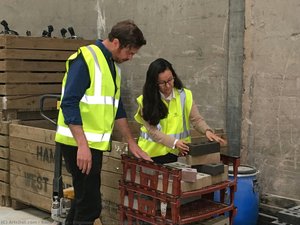
The Pioneering Vision of Kenoteq Ltd: Reimagining Art Through Sustainable Innovation
Kenoteq Ltd represents a fascinating and relatively new force in the art world, though one deeply rooted in historical concerns about materials and process. Unlike traditional artists who work with established mediums like oil paint or bronze, Kenoteq Ltd’s practice centers around transforming waste plastic into compelling artistic forms. Founded on principles of environmental responsibility and circular economy, the collective challenges conventional notions of beauty, value, and the very definition of art itself. While a specific biographical narrative for individual founders is currently unavailable – reflecting their focus on the collaborative process and the material innovation rather than individual authorship – the story of Kenoteq Ltd is intrinsically linked to the growing global awareness of plastic pollution and the urgent need for sustainable solutions. Their emergence signals a shift in artistic priorities, moving beyond aesthetic contemplation towards active engagement with pressing ecological issues.
From Waste Stream to Artistic Expression: The Genesis of a Unique Technique
The core innovation driving Kenoteq Ltd’s work lies in their proprietary process for upcycling plastic waste. Rather than simply recycling plastic into new functional objects, they meticulously sort, clean, and transform it into a versatile material suitable for sculptural creation, paneling, and even intricate decorative elements. This isn't merely about reducing landfill; it’s about elevating discarded materials to the status of fine art. The initial impetus stemmed from observing the sheer volume of plastic debris accumulating in landfills and oceans – a visual testament to unsustainable consumption patterns. Early experiments focused on developing techniques to overcome the inherent challenges of working with such heterogeneous material: inconsistencies in color, texture, and structural integrity. Through rigorous research and development, they perfected methods for blending different types of plastics, creating durable and aesthetically pleasing surfaces that belie their humble origins. This technical mastery is crucial; it allows them to move beyond purely conceptual statements about waste and into the realm of genuinely beautiful and skillfully crafted artworks.
Influences and Artistic Dialogue: Echoes of Minimalism, Environmental Art, and Found Object Traditions
While Kenoteq Ltd’s approach is undeniably novel, their work resonates with several established artistic movements. The clean lines and geometric forms often found in their sculptures evoke the principles of
Minimalism, particularly the emphasis on materiality and reduction to essential elements. However, unlike the pristine industrial materials favored by Minimalist artists, Kenoteq Ltd embraces the inherent imperfections and varied textures of recycled plastic, creating a visual tension between order and chaos. A strong connection can also be drawn to
Environmental Art – specifically the work of artists like Andy Goldsworthy and Agnes Denes, who directly engage with natural landscapes and ecological concerns. Furthermore, their practice builds upon the long tradition of
Found Object art pioneered by Marcel Duchamp and Kurt Schwitters, which challenged conventional notions of artistic authorship and the value of everyday objects. Kenoteq Ltd extends this concept by not only incorporating found materials but actively transforming them into something entirely new, imbued with both aesthetic beauty and a powerful environmental message.
Major Achievements and Expanding Horizons: From Gallery Installations to Large-Scale Public Art
Kenoteq Ltd’s work has garnered increasing attention in recent years, moving from smaller gallery installations to ambitious large-scale public art projects. Their early pieces often focused on creating abstract sculptures that highlighted the inherent beauty of recycled plastic – showcasing its vibrant colors and unexpected textures. More recently, they have undertaken commissions for architectural paneling and decorative elements, demonstrating the versatility of their material and its potential for wider application. A particularly noteworthy achievement was a recent installation at a prominent environmental festival, where they created a sprawling sculptural landscape entirely from ocean-bound plastic waste – a powerful visual statement that drew significant media attention and sparked conversations about responsible consumption. They are currently exploring collaborations with designers and architects to integrate their materials into sustainable building projects, further expanding the reach of their innovative practice.
Historical Significance: A Catalyst for Change in the Art World
Kenoteq Ltd’s significance extends beyond the realm of aesthetics; they represent a crucial intervention in the ongoing dialogue about sustainability and artistic responsibility. By demonstrating the potential to transform waste into valuable art, they challenge the linear “take-make-dispose” model that underpins much of contemporary consumer culture. Their work encourages viewers to reconsider their relationship with plastic – not as disposable trash but as a resource with untapped creative potential. Furthermore, Kenoteq Ltd’s collaborative approach and focus on material innovation offer a compelling alternative to traditional notions of artistic authorship and individual genius. They are paving the way for a new generation of artists who prioritize environmental stewardship and social impact alongside aesthetic expression, solidifying their place as pioneers in the burgeoning field of sustainable art. - Their work actively promotes circular economy principles.
- They challenge conventional definitions of beauty and artistic value.
- Kenoteq Ltd inspires dialogue about plastic pollution and responsible consumption.