John Dick Peddie: A Scottish Portraitist of Dignified Lineage
John Dick Peddie (24 February 1824 – 12 March 1891) was a Scottish architect, businessman and Liberal Party politician whose artistic legacy resides primarily in his meticulously crafted portraits of clergymen, academics, and historical figures. Born into a prominent Edinburgh family—James Peddie WS and Margaret Dick—his upbringing instilled within him an appreciation for both craftsmanship and intellectual pursuits, shaping the trajectory of his life and career.- Early Life & Education:
- The twins were educated at the University of Edinburgh, studying law, but John was articled to the architect David Rhind.
Architectural Pursuits Alongside Artistic Expression
Peddie established his own architectural practice in 1845, swiftly gaining recognition for innovative designs and securing commissions for notable buildings. Notably, he spearheaded the design of the United Presbyterian Synod Hall in Edinburgh—a structure that stands as a testament to his skill and vision—though sadly demolished decades later. His sons, John More Dick Peddie (1853–1921) and Walter Lockhart Dick Peddie (b.1865), followed in his footsteps, continuing the family tradition of architectural excellence. This dual vocation allowed Peddie to hone his observational skills and understanding of spatial relationships—skills that would prove invaluable to his artistic endeavors.The Artistry of John Dick Peddie: Portraiture as Reflection
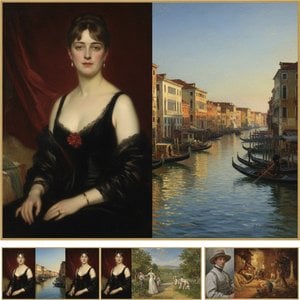
Peddie’s artistic reputation rests upon his prolific output of portrait paintings, characterized by a remarkable ability to capture the essence of his subjects with understated elegance and psychological insight. He meticulously studied anatomy and perspective, mastering techniques that ensured accuracy and realism while simultaneously conveying emotion and character. Peddie's style leaned towards a restrained palette—often favoring muted tones—allowing him to focus on capturing subtle nuances of expression and posture. His portraits weren’t merely representations of likeness; they were explorations of personality and intellect, reflecting the values of Victorian society.Notable Commissions & Artistic Influences
Peddie's commissions spanned across Scotland and England, securing him positions as a respected artist within his time. He produced works for prominent figures including clergymen and academics—demonstrating an understanding of social hierarchy and artistic conventions. Peddie’s artistic sensibilities were undoubtedly influenced by the Romantic movement, particularly its emphasis on emotional intensity and dramatic lighting—though he tempered this influence with classical principles of proportion and balance. Artists like Sir Joshua Reynolds served as models for his meticulous attention to detail and compositional harmony.Legacy & Historical Significance
John Dick Peddie’s contribution to Scottish art history is significant, representing a pivotal voice in the Victorian portraiture tradition. His enduring reputation stems from his ability to elevate portraiture beyond mere likeness—transforming it into a medium for conveying profound psychological truths and celebrating intellectual achievement. Today, Peddie's paintings continue to fascinate scholars and collectors alike, offering invaluable insights into the cultural landscape of 19th-century Scotland and cementing his place as a master craftsman whose artistic vision transcended stylistic boundaries.Kérdések és válaszok
Hol tekinthetném meg John Peddie összes művét?
John Peddie minden alkotása megtekinthető a ez a weboldal oldalán, az alkotó Összes műalkotás oldalán keresztül.
Hogyan találhatom meg John Peddie műveit egy adott színpalettában?
John Peddie művei színek szerinti csoportosítással is böngészhetők a művész Színpaletták alapján oldalán.
Hogyan fejlődött John Peddie művészete az idő múlásával?
John Peddie munkásságának időrendi áttekintése a művész Krónika oldalán érhető el, ahol az alkotások fejezetről fejezetre, a készítés sorrendjében követhetők egymást.