A Steadfast Vision: The Life and Art of Émile Chambon
Émile François Chambon, born in Geneva in 1905, was a Swiss painter who dedicated his life to the enduring power of figurative art. In an era increasingly dominated by abstraction, Chambon remained steadfastly committed to representing the world around him—and within him—with meticulous skill and quiet contemplation. His journey wasn’t one of revolutionary breaks or flamboyant manifestos; rather, it was a deeply personal exploration of form, light, and emotion, guided by a reverence for artistic masters and an unwavering belief in the expressive potential of traditional techniques. Chambon's path began with formal training at the École des Beaux-Arts in Geneva, but his true education unfolded during two pivotal journeys to Paris in 1921 and 1928. These sojourns weren’t merely about acquiring skill; they were immersions into a world of artistic heritage. He spent countless hours studying the works of Rembrandt, Rubens, and Géricault at the Louvre, absorbing their mastery of composition, chiaroscuro, and narrative power. Beyond the Louvre, he explored the Musée Guimet and Petit-Palais, broadening his understanding of art’s diverse expressions. These experiences solidified a commitment to realism tempered by a distinctly modern sensibility.Early Influences and Artistic Development
The formative years also included a valuable apprenticeship with Jean-Louis Gampert from 1925 to 1928. This period provided practical experience in an artist’s studio, contributing to decorative projects like the Corsier church decor, honing his skills while observing a working professional. However, Chambon wasn't simply mimicking his predecessors or contemporaries; he was forging his own path. The influence of Gustave Courbet is particularly evident in his work—a shared dedication to depicting everyday subjects with honesty and without idealization. Yet, Chambon infused this realism with a dreamlike quality, hinting at hidden depths beneath the surface of ordinary life. He wasn’t interested in bold statements or dramatic gestures; instead, he sought to capture fleeting moments of beauty and introspection through expressive lines and carefully considered compositions. His palette remained subtle, favoring muted tones that enhanced the emotional resonance of his scenes. Chambon's early work often featured landscapes imbued with a sense of melancholy and solitude, reflecting his own introspective nature. He was deeply influenced by the Impressionists, particularly their ability to capture the effects of light and atmosphere, but he rejected their emphasis on fleeting impressions in favor of a more enduring and symbolic approach. His artistic development can be seen as a gradual refinement of these influences, culminating in a unique style characterized by its quiet dignity and understated elegance.Parisian Immersion and Artistic Foundations
The trips to Paris in 1921 and 1928 proved transformative for Chambon’s artistic vision. These weren't mere vacations; they were deliberate attempts to immerse himself in the heart of European art history. He spent countless hours studying the masterpieces of the Louvre, meticulously copying works by Rembrandt, Rubens, and Géricault – not as exercises in imitation, but as a means of understanding their techniques and compositional strategies. He also explored other museums, absorbing the diverse artistic traditions of Europe. These experiences instilled in him a deep respect for the past while simultaneously fueling his desire to forge his own distinctive style. He was particularly drawn to the works of Caravaggio, whose dramatic use of light and shadow profoundly influenced his approach to painting. The Parisian atmosphere itself—the vibrant intellectual life, the bustling streets, the sheer concentration of artistic talent—contributed to his creative energy and broadened his perspective. It’s during these periods that he began to develop his signature style – a blend of realism and dreamlike imagery, characterized by its subtle color palette and evocative mood.Themes and Artistic Output
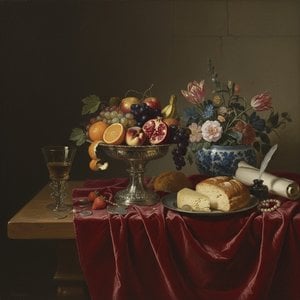
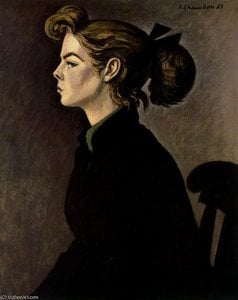
Throughout his prolific career—particularly during the 1930s and 1940s, when his output significantly increased—Chambon consistently returned to certain themes. Mythological scenes offered a canvas for exploring universal human experiences, while genre paintings provided glimpses into the lives of ordinary people. Still lifes, often featuring flowers, fruit, or everyday objects, became vehicles for examining form, texture, and light. These weren’t merely exercises in technical skill; they were meditations on mortality, beauty, and the passage of time. His works frequently depicted solitary figures—often women—lost in thought or engaged in quiet contemplation. He avoided overt narratives or dramatic events, preferring to convey a sense of mood and atmosphere through subtle gestures and carefully chosen details. Chambon’s paintings are characterized by their stillness and serenity – a reflection of his own contemplative nature. He was a master of capturing the fleeting beauty of everyday moments, imbuing them with a profound sense of meaning.Legacy and Lasting Impact
Chambon’s commitment to figurative painting positioned him as something of a counterpoint to the prevailing artistic trends of the 20th century. While abstraction gained prominence, he remained dedicated to representing the visible world—and the inner landscape of human emotion—with skill and sensitivity. In his later years, Chambon demonstrated remarkable generosity, donating paintings to the Carouge museum and a significant collection of African and Oceanic art to the Geneva Ethnographic Museum. This act speaks to a broader appreciation for artistic expression beyond the confines of Western tradition. The establishment of the Fondation Émile Chambon after his death in 1993 ensures that his work continues to be studied and appreciated by future generations. Though not widely known internationally during his lifetime, Chambon’s dedication to craftsmanship, his unique blend of realism and dreamlike imagery, and his unwavering commitment to figurative art continue to inspire contemporary artists seeking a path beyond the dictates of fleeting trends. He stands as a testament to the enduring power of artistic vision—a quiet voice that continues to resonate with those who seek beauty, meaning, and truth in the world around them. His work is a reminder that true artistry lies not in following the crowd, but in staying true to one’s own unique perspective.Kérdések és válaszok
Milyen más nevét vagy álneveit használ még Chambon, Émile?
Chambon, Émile a következő más néven is ismert: Émile François Chambon, Chambon, Emile François.
Megvizsgálhatom Chambon, Émile színhasználatát az összes művében?
Chambon, Émile Paletta Genom egy olyan oldal, amely bemutatja a művész életművének színes profilját.
Milyen hangulatokat közvetítenek Chambon, Émile művei?
A művész Hangulatok szobája oldala Chambon, Émile alkotásait hangulat alapján csoportosítva mutatja be.