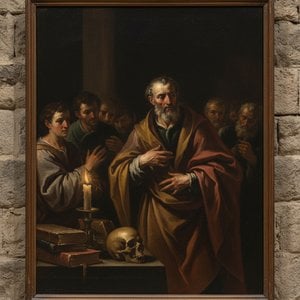
Antonio Muñoz Degrain (1840 - 1924) – A Life Painted in Light
Antonio Muñoz Degrain, a name perhaps less familiar today than some of his contemporaries, nevertheless occupies a significant place within the tapestry of 19th-century Spanish art. Born in Valencia in 1840, his life was one of artistic exploration and eventual triumph, marked by a fascinating transition from academic beginnings to an embrace of Impressionistic sensibilities. His father, a watchmaker, initially steered him towards architecture – a practical profession – but the pull of painting proved too strong. Muñoz Degrain’s early studies at the Real Academia de Bellas Artes de San Carlos in Valencia were short-lived; he soon sought a more independent path, venturing to Rome and immersing himself in a bohemian existence where self-teaching became his primary guide. This period of hardship and artistic freedom profoundly shaped his vision, prompting a return to Spain and the beginning of a career that would span decades and garner considerable acclaim.Early Years & Academic Beginnings
Muñoz Degrain’s formative years were characterized by a grounding in traditional artistic principles. He enrolled at the Real Academia de Bellas Artes de San Carlos at the young age of twelve, where he studied under Rafael Montesinos, absorbing the techniques and conventions of academic painting. While this initial training provided him with a solid foundation, it wasn’t long before he recognized the limitations of adhering strictly to established dogma. His desire for greater expressive liberty led him away from the rigid formalism of his instructors, propelling him toward experimentation and innovation. This restlessness would ultimately prove instrumental in shaping his artistic trajectory.Rome & The Bohemian Spirit
A pivotal moment arrived when Muñoz Degrain abandoned Valencia for Rome in 1862. Seeking refuge from societal expectations and embracing the vibrant intellectual atmosphere of the city, he immersed himself in a bohemian lifestyle—a deliberate rejection of bourgeois norms—where self-teaching supplanted formal instruction. This period was marked by both financial difficulties and intense artistic fervor. He diligently honed his skills through observation and experimentation, absorbing influences from artists like Jean-François Millet and Gustave Courbet, who championed realism and depicted the everyday lives of rural laborers. These experiences instilled in him a profound appreciation for directness and honesty—qualities that would permeate his subsequent work.From Realism to Impressionistic Visions
Muñoz Degrain’s artistic evolution unfolded gradually but decisively. Initially rooted in traditional techniques, he embraced Impressionism, prioritizing looser brushwork and a more vibrant palette. This shift wasn’t abrupt; rather, it was a gradual unfolding, influenced by his travels—particularly to Italy—observations of light, and a growing desire to capture the fleeting moments of nature with greater immediacy. His landscapes began to shimmer with an atmospheric quality, reflecting not just what he *saw*, but how he *felt* in response to the world around him. He skillfully blended elements of Barbizon landscape painting with Impressionistic principles, creating canvases that conveyed both grandeur and intimacy simultaneously.Literary Inspirations & Royal Patronage
Beyond his captivating landscapes, Muñoz Degrain demonstrated a remarkable ability to translate literary narratives onto canvas. He found inspiration in works of literature—Shakespeare’s *Othello*, for instance—bringing scenes to life with dramatic intensity and emotional depth. His painting *Othello and Desdemona* (1880), exemplifies his talent for capturing psychological tension and visual drama, showcasing the artist's mastery of chiaroscuro and expressive composition. This artistic prowess garnered considerable recognition from the Spanish court; in 1878, he received the Grand Cross of the Order of Charles III for his depiction of Queen Isabella presenting her jewelry to Christopher Columbus—a commission that secured him royal patronage and solidified his reputation as a respected artist. Notably, this image was later chosen for use on a $1 U.S. postage stamp in 1893, an unusual honor reflecting the painting’s enduring appeal.Legacy & Artistic Influence
Muñoz Degrain's influence extended beyond his own artistic creations; he served as a dedicated educator who nurtured the talents of aspiring painters. In 1879, he became a professor at the Real Academia de Bellas Artes de San Telmo, sharing his knowledge and passion with students eager to learn from one of Spain’s foremost landscape artists. Later, in 1898, he replaced Carlos de Haes as chair of landscape painting at the Real Academia de Bellas Artes de San Fernando—a position he held until 1913—and ultimately became its director, shaping the artistic sensibilities of a generation. Among his pupils was Pablo Picasso, who regarded Muñoz Degrain with admiration and respect—a testament to the artist’s enduring legacy as a mentor and innovator. He bequeathed many of his paintings to both the Academy of San Carlos and the Museo de Belles Arts de València, ensuring that his artistic vision would continue to inspire future generations. Antonio Muñoz Degrain passed away in Málaga in 1924 at the age of eighty-three—leaving behind a body of work characterized by its luminous color palettes and evocative depictions of the Spanish countryside.Gyakran Ismételt Kérdések
Honnan származik António Muñoz Degrain?
António Muñoz Degrain Spanyolország-ban született.
António Muñoz Degrain műveit színspektrum szerint is felfedezhetem?
António Muñoz Degrain művei színek szerinti csoportosítással is felfedezhetők a művész Színspektrum index oldalán.
Hogyan fejlődött António Muñoz Degrain művészete az idő múlásával?
António Muñoz Degrain Krónika oldala egy görgetésre alapozott idővonal, amely a művész alkotásait kronologikus sorrendben, a pályafelvétetei szerinti fejezetekbe csoportosítva mutatja be.
Hol és melyik országban született António Muñoz Degrain?
António Muñoz Degrain Valencia városban, Spanyolország országban született.
Mely művészeti irányzatokban dolgozott António Muñoz Degrain?
A Összes irányzat oldalon António Muñoz Degrain műveletei műkorlátok szerint vannak csoportosítva.
Hol és 어느 해 született António Muñoz Degrain?
António Muñoz Degrain Valencia városban született, 1840 évben.
Hol tekinthetném meg António Muñoz Degrain műveit hangulat alapján csoportosítva?
A művész Hangulat alapú gyűjtemény oldala António Muñoz Degrain alkotásait hangulat alapján csoportosítva mutatja be.