INGYENES MŰVÉSZETI TANÁCSADÁS

x

Albrecht Altdorfer

1480 - 1538

Rövid összefoglaló

  • Color intensity:
    • egyensúlyban lévő
    • élénk
  • Movements: northern renaissance
  • Works on APS: 130
  • Mediums:
    • akril vászonon
    • olajfestmény vászonon
  • Museums on APS:
    • Alte Pinakothek
    • Alte Pinakothek
    • Alte Pinakothek
    • Alte Pinakothek
    • Alte Pinakothek
  • Art period: Reneszánsz
  • Room fit: nappali
  • Lifespan: 58 years
  • Copyright status: Public domain
  • Top 3 works:
    • Alexander at Issus csatája
    • Christ taking Leave of his Mother
    • Landscape with Path
  • Typical colors:
    • agyagbarna
    • espressó barna
  • Több…
  • Born: 1480, Regensburg, Németország
  • Gift suitability: other-none
  • Emotional tone:
    • melankolikus
    • szentséges
  • Died: 1538
  • Top-ranked work: Alexander at Issus csatája
  • Also known as: Altdorf
  • Creative periods: mature period
  • Vibe:
    • drámai
    • békés
  • Best occasions: kijelentés
  • Nationality: Németország

Művészeti kvíz

Minden kérdésre csak egy helyes válasz létezik.

Kérdés 1:
Albrecht Altdorfer (Regensburg, 1480 körül – Regensburg, 1538. február 12. és március 29. közt) német építőmester, festő, fa- és rézmetsző. A dunai iskola legjelesebb képviselője, az európai tájképfestés úttörője Wolf Huberrel együtt. Mi volt Altdorfer főbb foglalkozása Regensburgban?
Kérdés 2:
Albrecht Altdorfer művészetének egyik legfontosabb fordulata, hogy a tájkép nem csupán háttérként funkcionált, hanem önmagában is fontos témává vált. Mikor történt ez?
Kérdés 3:
Altdorfer festményei, mint például 'Alexander csatája Issusnál', kiemelkedőek a:
Kérdés 4:
Melyik művészeti iskola volt Altdorfer vezető tagja?
Kérdés 5:
Albrecht Altdorfer munkássága a 16. században hogyan befolyásolta a későbbi német romantikus festőket?

A Pioneer of the Northern Renaissance Landscape

Albrecht Altdorfer, born around 1480 in Regensburg, Germany, stands as a pivotal figure bridging the late Gothic period and the burgeoning German Renaissance. He wasn’t merely an artist *of* his time; he actively reshaped its artistic trajectory, particularly in the realm of landscape painting. Coming from a family deeply rooted in artistic tradition—his father, Ulrich Altdorfer, was a painter and miniaturist—the younger Altdorfer quickly distinguished himself not as a follower, but as an innovator. Regensburg, a free imperial city strategically positioned on the Danube River, provided a vibrant cultural backdrop for his formative years. This location profoundly shaped his artistic sensibilities, fostering a connection to the natural world that would become central to his oeuvre. Beyond his artistry, Altdorfer was a man of civic duty, serving as both town architect and council member—a testament to his versatile talents. However, it was through his art—particularly his early engravings and drawings from around 1506, such as *Stygmata of St. Francis* and *St. Jerome*—that he first revealed a unique artistic voice, hinting at the emotional intensity and meticulous detail that would characterize his mature style. His work reflected not just observation but an attempt to capture the very essence of being within a landscape, a revolutionary shift in how nature was represented.

The Danube School and a Revolutionary Vision

Altdorfer is most prominently recognized as a leading member of the Danube School, an influential group of artists active in southern Germany during the early 16th century. This artistic circle shared a common fascination with exploring the expressive potential of landscape, elevating it from a mere backdrop to become a central subject in its own right. Before Altdorfer, landscapes primarily served as settings for religious or historical narratives; he dared to depict nature *for itself*, imbued with atmosphere and emotional resonance. A transformative journey down the Danube River and into the Alps around 1511 proved crucial to his artistic development. The dramatic vistas, dense forests, and imposing mountains ignited within him a passion for depicting nature with unprecedented fidelity and feeling. He became, arguably, the first modern landscape painter, not simply replicating what he saw but conveying an emotional response—a sense of awe, mystery, and even spiritual connection. This wasn’t topographical accuracy alone; it was about capturing the *experience* of being within a landscape. His work, like “The Large Spruce,” exemplifies this shift, offering a serene and intricate depiction of nature's beauty. The Danube School artists, including Altdorfer and Wolf Huber, sought to break away from the rigid conventions of earlier art and create works that were both beautiful and emotionally resonant.

Masterpieces and Artistic Influences

Throughout his career, Altdorfer produced a diverse body of work encompassing paintings, engravings, drawings, and architectural designs. Among his most celebrated achievements is *The Battle of Alexander at Issus* (1529), commissioned by Duke William IV of Bavaria. This monumental painting showcases not only his mastery of composition and detail but also his innovative use of landscape to heighten the dramatic tension of the battle scene. The swirling clouds, jagged mountains, and chaotic melee of soldiers create a sense of overwhelming energy and spectacle. He skillfully integrated the natural world into the narrative, using it to amplify the emotions of the participants and the scale of the conflict. His collaboration with Emperor Maximilian I in Innsbruck from 1513 further expanded his artistic horizons and provided opportunities for large-scale projects. Altdorfer’s style wasn't formed in isolation; he absorbed influences from various sources. The poetic lyricism of Giorgione, the expressive figures of Lucas Cranach the Elder, and the meticulous detail of Albrecht Dürer all left their mark on his work. However, he synthesized these influences into a uniquely personal vision, characterized by its emotional intensity, dramatic lighting, and evocative landscapes. His engravings, such as “Mucius Scaevola Burning His Hand,” demonstrate his skill in this medium, showcasing delicate lines and intricate details.

Exploring Altdorfer’s Diverse Works

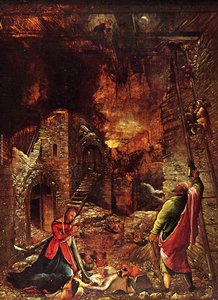
Beyond his iconic landscapes and battle scenes, Altdorfer's artistic range encompassed religious subjects, mythological narratives, and even architectural designs. His depictions of biblical stories, such as “Abraham’s Sacrifice,” are imbued with a dramatic intensity and emotional depth that set them apart from earlier interpretations. He wasn’t simply illustrating scripture; he was exploring the human condition through the lens of faith. His altar panels, like the one depicting *The Beautiful Virgin of Regensburg*, are particularly noteworthy for their vibrant colors and dynamic compositions. These works often featured a complex interplay of figures and landscapes, creating a sense of both earthly and spiritual grandeur. Altdorfer’s ability to seamlessly blend technical skill with emotional depth solidified his position as a leading artist of the Renaissance. His work continues to be studied and admired for its innovative approach to landscape painting and its profound exploration of human emotion.

Legacy and Lasting Impact

Albrecht Altdorfer’s artistic legacy extends far beyond the 55 panels, 120 drawings, and numerous engravings he created during his lifetime. He fundamentally altered the way artists approached landscape painting, paving the way for future generations to explore its expressive possibilities. His influence can be seen in the works of later German Romantic painters who similarly sought to capture the sublime beauty and emotional power of nature. Today, Altdorfer’s art is represented in major museum collections worldwide, including the Museum Ostdeutsche Galerie in Germany—which houses his *Madonna (Beautiful Maria of Regensburg)*—and the Kunstsammlungen und Museen Augsburg in Austria. His innovative spirit, technical skill, and profound connection to the natural world continue to inspire artists and captivate audiences centuries after his death in 1538. He remains a towering figure of the German Renaissance, a true pioneer who dared to see landscape not merely as scenery but as a powerful force capable of evoking deep emotion and spiritual meaning. His work serves as a testament to the enduring power of art to transform our perception of the world around us—a legacy that continues to resonate with viewers today.