Előnézet AR előnézet Kézzel festett másolat vásárlása Áttérés digitális képre Megosztás
Részletek Útmutató Kedvencekhez ad Letöltés Hasonló darabok X-ray felvétel Diavetítés Statisztika

Fruit and a White Rose

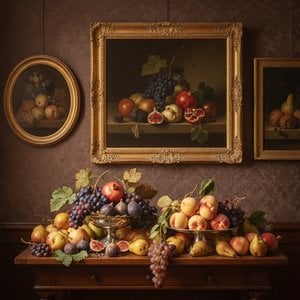
William James Glackens’ ‘Fruit and a White Rose’ (1930) captures a vibrant still life in the Ashcan School style, showcasing apples, grapes, and oranges on a table. Admire this realistic depiction of everyday beauty by a pioneering American artist – explore owning a piece of art history.

William Glackens egy amerikai festő és illusztrátor volt, aki az Ashcan Szkólnak köszönhetően ismertté vált. Kézzel festett műalkotásaival foglalkozott és főként új york város életének részleteit ábrázolta nagy hangsúlyt fektetve a realista stílusra és a közösségi élet tükrözésére. Nézze meg az ő alkotásait és ismerje meg életrajzát!

Giclée / Műnyomat

Múzeumi minőségű giclée vagy vászonnyomat, gyors gyártással és rugalmas finomítási lehetőségekkel. ( Kézzel festett másolat vásárlása Áttérés digitális képre)

P118B $10
P118H $10
P118W $10
P438Z $10
P508JH $12
P508YH $12
P805H $10
P805Z $10
P919BZ $10
P919G $10
P919XJ $10
P959ZH $10
P968JZ $12
W106C $8
W218G $10
W218JH $8
W218Y $10
W307PJ $10
W316G $10
W316PJ $8
W316Y $10
W398PJ $8
W4111J $10
W500HY $15
W500JH $15
W692G $12
W849H $8
W940BG $15
W953PJ $8

Standard méret
egyedi
CM
INCH

Válasszon előre meghatározott méreteink közül, amelyek megfelelnek a műalkotás eredeti arányainak.

szélesség
magasság

Megadhat saját méreteket is egy konkrét kerethez vagy helyszínhez igazítva. Amennyiben a kiválasztott méret nem egyezik az eredeti kép arányokkal, a műalkotást le fogjuk vágni, vagy kiegészítjük a képet tükrözött vagy egyszínű szélekkel. A gyártás megkezdése előtt egy digitális tervezetet küldünk jóváhagyásra.
Kérjük, vegye figyelembe, hogy a képernyőn látható előnézet nem tükrözi a tényleges levágást vagy kiegészítést. Csak a tervezet mutatja pontosan a végső kompozíciót.
Bár az egyedi méretek is elérhetőek, az eredeti arányok megőrzése érdekében azt javasoljuk, hogy válasszon a előre meghatározott listából származó méretet.

Világszerte történő kiszállítás területére mindössze 2 hét alatt, a szokásos 4-5 hét helyett. (22 szeptember)

why_choose_icon
Ingyenes globális expressz szállítás
why_choose_icon
Prémium minőségű len vászon
why_choose_icon
Teljes körű szállítási biztosítás
why_choose_icon
Vámvisszatérítési Garancia
why_choose_icon
Tökéletes színarányosság garancia
why_choose_icon
100 napos visszaküldési garancia (csak gyártási hibás termékek esetén)
why_choose_icon
100% pénzvisszatérítési garancia
why_choose_icon
Több darab vásárlásakor kedvezmény

Összesített ár

$ 68

reproduction

Fruit and a White Rose

Giclée / Műnyomat

Reprodukció méretei

-

Összesített ár

$ 68

Rövid tények

  • Notable elements: Fruit, rose, detail
  • Location: Fort Lauderdale Museum
  • Artist: William Glackens
  • Subject or theme: Still life
  • Influences: Renoir
  • Title: Fruit and a White Rose
  • Medium: Oil on panel

Introduction to William James Glackens and ‘Fruit and a White Rose’

William James Glackens stands as a pivotal figure in American art, inextricably linked to the rise of the Ashcan School. This movement, born from a desire to depict unfiltered reality rather than idealized visions, sought to capture the pulse of urban life – its grit, its beauty, and its inherent contradictions. ‘Fruit and a White Rose,’ painted in 1930, exemplifies Glackens’ commitment to this aesthetic, offering a deceptively simple still life that resonates with profound historical and artistic significance. The painting, currently residing within the Museum of Art in Fort Lauderdale, United States, is more than just a depiction of fruit; it's a window into the sensibilities of an era grappling with modernity.

Composition and Technique: A Masterclass in Realism

Glackens’ masterful handling of oil on panel immediately draws the viewer into the scene. The composition is anchored by a prominent table, acting as both stage and backdrop to the vibrant arrangement of fruit. The artist's meticulous attention to detail is evident in the layering of textures – the smooth skin of the apples, the plumpness of the grapes, and the subtle variations in the oranges’ surfaces. Multiple apples are strategically placed, creating a sense of depth and inviting the eye to wander across the bowl. The use of color is particularly noteworthy; Glackens employs a restrained palette—muted reds, yellows, and browns—that enhances the realism rather than overwhelming it. This technique reflects a conscious decision to prioritize observation and direct representation over purely expressive gestures, aligning him with the core tenets of the Ashcan School.

Historical Context: The Ashcan School and the Spirit of New York

'Fruit and a White Rose' was created during a transformative period in American history. The 1930s witnessed rapid urbanization, industrial growth, and social change in New York City – themes frequently explored by Glackens and his contemporaries. The Ashcan School emerged as a reaction against the academic traditions of the time, seeking to portray the lives of ordinary people—immigrants, laborers, and artists—within the city’s bustling streets. The painting's subject matter – everyday objects arranged in a still life – subtly reflects this concern with the mundane, elevating it through Glackens’ skilled execution. The Burton Art Gallery’s founding in 1930 further underscores the artistic climate of the time, highlighting a dedication to showcasing contemporary art and historical artifacts.

Symbolism and Emotional Impact

Beyond its technical brilliance, ‘Fruit and a White Rose’ possesses a quiet emotional resonance. The inclusion of a white rose adds an element of delicate beauty to the otherwise robust scene, perhaps representing fleeting moments of grace or contemplation amidst the chaos of urban life. The arrangement itself – a collection of fruits ripe for consumption – can be interpreted as a symbol of abundance and nourishment, yet also hints at the transient nature of pleasure. Glackens’ ability to evoke such subtle emotions through seemingly simple imagery is a testament to his artistic vision and his profound understanding of human experience. The painting's enduring appeal lies in its capacity to connect with viewers on an intuitive level, prompting reflection on themes of beauty, mortality, and the everyday wonders of the world.


A művész életrajza

William James Glackens: A Pioneer of the Ashcan School

William James Glackens, a name synonymous with gritty realism and vibrant urban life in early 20th-century America, was more than just an artist; he was a documentarian of his time. Born in Philadelphia in 1870, his artistic journey began not within the hallowed halls of formal academies, but amidst the bustling streets and working-class neighborhoods that would become the very subject of his paintings. Glackens’ early years were marked by an innate talent for drawing, nurtured through self-study and a keen observation of the world around him – a foundation that would prove crucial to his later success as a leading figure in the Ashcan School movement.

Early Influences and Artistic Training

Glackens' artistic development was profoundly shaped by several key influences. He initially attended the Pennsylvania Academy of the Fine Arts, where he studied under Thomas Anshutz, a renowned realist painter known for his meticulous depictions of everyday life. However, Glackens’ approach diverged from the more traditional academic style favored at the academy. Simultaneously, he found himself immersed in the world of newspaper illustration, working for publications like *The Philadelphia Record* and *The Philadelphia Press*. This experience proved invaluable, honing his skills in capturing fleeting moments and conveying a sense of immediacy – qualities that would later define his artistic vision. It was during this period that Glackens began to develop his distinctive style, characterized by bold brushstrokes, dark palettes, and an unflinching portrayal of the realities of urban existence.

The Ashcan School and Urban Realism

Glackens’ most significant contribution to American art lies in his association with the Ashcan School. This movement, emerging around the turn of the 20th century, rejected the idealized subjects and polished techniques of academic painting, instead focusing on depicting contemporary life – often the less glamorous aspects – in a raw and honest manner. Artists like Robert Henri championed this approach, encouraging their followers to paint what they saw, where they saw it: the crowded streets, the bustling markets, the smoky bars, and the diverse faces of New York City and Philadelphia. Glackens embraced this ethos wholeheartedly, producing a prolific body of work that captured the energy, vitality, and sometimes-rough edges of urban America. His paintings weren’t romanticized fantasies; they were snapshots of real life, imbued with a sense of immediacy and authenticity.

Notable Works and Artistic Evolution

Glackens' oeuvre is rich in memorable images, each reflecting his unique artistic vision. *Hammerstein’s Roof Garden* (1901) stands as a particularly significant work, capturing the vibrant atmosphere of a popular rooftop entertainment venue – a microcosm of urban life during a period of rapid social and technological change. His series depicting Coney Island, such as “Papa, Carry Me—Take Me Up in Your Arms,” offers glimpses into the leisure activities and social dynamics of working-class communities. Later in his career, Glackens’ style evolved, influenced by the Impressionist painter Pierre Auguste Renoir. He shifted towards brighter colors and softer brushstrokes, while continuing to explore themes of urban life and everyday experiences. His masterpiece, “The Shoppers,” exemplifies this transition, retaining a sense of realism while embracing a more luminous palette.

Legacy and Historical Significance

William James Glackens’ legacy extends far beyond his individual paintings. He played a crucial role in shaping the course of American art by challenging conventional artistic norms and paving the way for future generations of realist painters. His work helped to elevate the status of urban life as a subject worthy of serious artistic attention, contributing significantly to the development of modern American painting. Furthermore, Glackens’ collaboration with Albert C. Barnes in acquiring European paintings for the Barnes Foundation enriched the collection and solidified its place as a cornerstone of American art history. Glackens' work continues to resonate today, offering a valuable window into the social and cultural landscape of early 20th-century America – a testament to his enduring artistic vision and his profound impact on the development of modern American painting.
William James Glackens

William James Glackens

1870 - 1938 , Egyesült Államok

Gyors információk

  • Artistic Movement Or Style: Ashcan School
  • Artists Or Movements Influenced By This Artist: ['Pierre Auguste Renoir']
  • Artists Who Influenced This Artist: ['Thomas Anshutz']
  • Date Of Birth: Philadelphia, ÜSÁ (1870)
  • Date Of Death: Westport, CT (1938)
  • Full Name: William James Glackens
  • Nationality: Amerikai
  • Notable Artworks:
    • A Nagy Ördög és Az Éjszaka Ruhával Megölt Nő
    • Az Égi Üdvözítő
  • Place Of Birth: Philadelphia
Fedezze fel a műalkotásokat témák, stílusok és jellemzők szerint csoportosítva.