Előnézet AR előnézet Váltás nyomtatványra Kézzel festett másolat vásárlása Megosztás
Részletek Útmutató Kedvencekhez ad Letöltés Hasonló darabok X-ray felvétel Diavetítés Statisztika

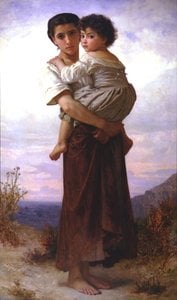
The Little Shepherdess

‘Shepherdess,’ created in 1889 by William-Adolphe Bouguereau, exemplifies Academicism style with Naturalism influences. This portrait depicts a serene woman holding a stick amidst a pastoral landscape featuring horses and birds—a testament to Bouguereau’s dedication to idealized realism.

Bouguereau: A mester Franciaország egyik legjelentősebb festője, aki a klasszikus szépséget és a részletességre helyezi a hangsúlyt. Fedezd fel a mitológiai, tájképeket és a nők ábrázolását! #Bouguereau

Vásároljon nagy felbontású, javított digitális képet, amely minőségében messze felülmúlja az online előnézetet.

Minden fájlt szakembereink a legmodernebb eszközök és precíz, kézi retusálás segítségével készítenek el aprólékosan. Gondoskodunk arról, hogy minden kép kivételes tisztasággal, pontos színhelyességgel és részletgazdag finomsággal rendelkezzen.

A végleges fájl 72 órán belül e-mailben megérkezik, professzionális, szerkesztői és nyomtatási környezetbe optimalizálva az azonnali használathoz. Ez ugyanaz a minőség, amelyben a legmeghatározóbb tervezőstúdiók, kiadók és galériák is megbízhatnak.

Digitális kép

Töltsön le nagy felbontású fájlt személyes kiállításokhoz, nyomtatáshoz és kreatív projektekhez. ( Váltás nyomtatványra Kézzel festett másolat vásárlása)

Összesen

$ 24,90

Minden digitális kép rendeléséhez tartozó extrák

Szakértői digitális kézbesítés, garantáltan

Amikor a WahooArt.com szolgáltatást választja, nem csupán egy képet kap – professzionálisan felmagasított digitális műalkotást kap, amely precizitással készült, és amelyet megelégsedési gwarancia tesz biztoslássá. Az alábbiakban automatikusan minden benne 】

shipping_icon
Gyors e-mail teslimítés

A nagy felbontású digitális képmásolatát a megrendelést követő 72 órán belül e-mailben elküldjük Önnek – azonnal használható formátumban.

canvas_icon
MI-alapú digitális képjavítás

Műve professzionális módon kerül optimalizálásra fejlett mesterséges intelligencia eszközök és manuális szerkesztés segítségével, biztosítva a maximális részletességet, tisztaságot és színpontosságot.

insurance_icon
Örök életű ingyenes újradatás

Véletlenül törölted vagy elvesztetted a fájlodat? Ne aggódj – bármikor ingyen újra megküldjük neked.

tax_icon
Nincs importköltség – soha

Élvezze műalkotásait azonnal, vám, illeték vagy szállítási költség nélkül – a digitális letöltések mindig adamentesek.

color_icon
Színpontosság garantálása

Professzionális eszközök és színkezelés segítségével garantáljuk, hogy digitális képe a lehető legpontosabban tükrözze az eredeti színeket.

return_icon
100 napos elégedettségi garancia

Ha nemມີ elégedett a digitális képével, 100 napon belül felülvizsgáljuk vagy 100% visszatérítjük az amountot – kérdés बिना.

guarantee_icon
100% Pénzvisszatérítési garancia

Nem tetszett a vásárlás? 100 napon belül teljes visszatérítést garantálunk a digitális fájl megvételétől számítva – kérdés nélkül.

discount_icon
Tömegrendelési kedvezmények

Vásároljon 3 képet, spóroljon 10%-et - Vásároljon 5-öt, spóroljon 15%-et - Vásároljon 10+ képet, spóroljon 20%-at. Kiváló kreatív projektekhez, galériákhoz és ügynökségekhez.

Rövid tények

  • Medium: Oil on Canvas
  • Notable elements or techniques: Detailed realism; luminous color palette
  • Title: The Little Shepherdess
  • Artist: William-Adolphe Bouguereau
  • Influences:
    • Raphael
    • Titian
  • Subject or theme: Rural pastoral scene
  • Artistic style: Idealized beauty

Művészeti kvíz

Minden kérdésre csak egy helyes válasz létezik.

Kérdés 1:
What artistic style is William-Adolphe Bouguereau’s ‘The Little Shepherdess’ primarily characterized by?
Kérdés 2:
According to the description, what prominent element contributes to the impression of serenity in the painting?
Kérdés 3:
The image depicts a woman holding a stick. What does this gesture suggest about her character?
Kérdés 4:
What artistic influences did Bouguereau draw upon during his training at the École des Beaux-Arts?
Kérdés 5:
What is one notable feature of Bouguereau’s technique that contributes to the painting's luminous quality?

A Vision of Pastoral Serenity

In the luminous realm of William-Adolphe Bouguereau’s "The Little Shepherdess," completed in 1889, viewers are transported into a meticulously crafted world where innocence and pastoral beauty converge. This quintessential masterpiece of Academic Impressionism serves as more than a mere depiction of rural life; it is an invitation to witness a moment of profound tranquility. The painting portrays a young woman, her presence radiating a sense of purity and grace, seated amidst a verdant meadow. Beside her, the subtle presence of a shepherd boy gazing with quiet adoration adds a layer of tender narrative, suggesting the romanticized societal ideals of the Belle Époque. As the eye wanders through the composition, the inclusion of horses and the soft rustle of trees in the background reinforce a theme of timeless tradition and the harmonious coexistence of humanity and nature.

The technical brilliance of Bouguereau is nowhere more evident than in his masterful use of the glazing technique. By layering thin, translucent washes of color over a precise underpainting, the artist achieved a breathtakingly luminous quality that seems to emanate from within the canvas itself. Every texture—from the soft, tactile wool of the shepherdess's attire to the delicate, sun-drenched blades of grass—is rendered with an unparalleled realism that borders on the divine. His brushstrokes are nearly invisible, serving only to create a soft, diffused glow that bathes the figures in warmth. This meticulous attention to detail ensures that the skin tones possess a lifelike vitality, making the subject feel present and breathing, a hallmark of his commitment to the classical ideals of beauty.

Historical Resonance and Symbolic Depth

To understand "The Little Shepherdess" is to understand the cultural heartbeat of late 19th-century France. Created during an era fascinated by mythological narratives and the idealized representation of womanhood, the work draws deep inspiration from the Old Masters. Bouguereau’s reverence for Raphael is palpable, particularly in how he translates the spiritual weight of Renaissance frescoes into a modern, pastoral setting. The painting embodies the Victorian obsession with moral virtue and domestic tranquility, presenting an idyllic version of the countryside that offered a soothing escape from the rapid industrialization of the age. It is a window into a lost era of perceived simplicity and grace.

Beyond its visual splendor, the artwork carries a profound emotional weight that continues to captivate collectors and decorators alike. The symbolism of the shepherdess—often representing innocence and the untainted soul—resonates deeply within the domestic space. For the interior designer, this piece offers a sense of calm and sophisticated nostalgia, making it an ideal focal point for rooms intended to evoke peace and reflection. Whether viewed as a study in classical technique or an emotional journey into a sunlit meadow, "The Little Shepherdess" remains a timeless testament to the enduring power of beauty, offering a soulful connection to the heights of academic artistry.


Művész életrajza

A Life Immersed in Beauty: The World of William-Adolphe Bouguereau

William-Adolphe Bouguereau’s life unfolded as a profound celebration of classical ideals and breathtaking realism, beginning amidst the picturesque vineyards and olive groves of La Rochelle, France. From his earliest days, an undeniable artistic inclination guided him, leading to Paris and the prestigious École des Beaux-Arts. There, under the tutelage of François-Edouard Picquenot, he honed his skills, absorbing the timeless lessons imparted by the Old Masters – Raphael and Titian standing as particularly influential figures. These influences weren’t merely superficial imitations; they formed the very bedrock upon which Bouguereau constructed a unique artistic vision: one characterized by meticulous detail, luminous color palettes, and an unwavering dedication to portraying beauty in its most idealized form. He didn't simply capture what he *saw*; rather, he sought to represent what he believed to be inherently beautiful, striving for a level of perfection that resonated deeply with the aesthetic sensibilities of his era.

The Architect of Academic Perfection

Bouguereau’s artistic style is often described as “academic realism,” and this description holds considerable truth. He possessed an extraordinary mastery of anatomy, light, and composition – skills honed through rigorous training and a deep understanding of classical principles. His canvases are populated by figures rendered with astonishing precision: the delicate curve of a shoulder, the subtle blush of skin, the expressive depth of an eye. Yet, his work transcends mere technical proficiency; it’s infused with profound emotion and narrative power. Bouguereau frequently depicted mythological scenes, transforming ancient tales into vibrant, emotionally resonant moments. *The Birth of Venus*, for instance, isn't merely a depiction of the goddess emerging from the sea; it’s a powerful celebration of feminine grace and ethereal beauty – an embodiment of classical ideals elevated to their most sublime expression. Similarly, works like *Zenobia Found by Shepherds on the Banks of the Araxes* capture vulnerability and pathos with remarkable sensitivity, revealing a nuanced understanding of human emotion. Beyond mythology, Bouguereau found inspiration in everyday life – portraying shepherdesses tending their flocks, young girls at play, mothers cradling their children. These genre scenes, while seemingly simple, are imbued with a dignity and tenderness that elevates them to the realm of art, demonstrating his ability to find beauty in the ordinary. *Faneuse (1869)* exemplifies this approach, showcasing his meticulous attention to detail and atmospheric rendering.

Influences and Artistic Development

Bouguereau’s artistic journey was shaped by a confluence of influences. His early studies in Italy under Raffaello, Andrea del Sarto, and Guido Reni profoundly impacted his style, particularly his interest in mythological subjects. He meticulously studied the works of Raphael and Titian, absorbing their techniques for rendering form, light, and color. However, Bouguereau didn’t simply replicate these masters; he synthesized their lessons into a distinctly personal vision. His work evolved over time, reflecting both his adherence to academic principles and his growing interest in capturing the essence of human emotion. During the 1870s and 1880s, he developed a distinctive style characterized by soft colors, delicate brushwork, and an emphasis on idealized beauty. He was particularly drawn to scenes of childhood innocence and tenderness, as evidenced by paintings like *Child at Bath* and *Tóbiás búcsúja apjától*. His later works often featured religious subjects, rendered with a serene spirituality that resonated with the sensibilities of his time.

A Rediscovered Master

For decades following his death in 1905, Bouguereau’s work largely faded from public view. The rise of modern art movements – Impressionism, Post-Impressionism, and Cubism – overshadowed his traditional style, leading to a decline in critical recognition. However, beginning around 1979, there was a gradual but significant revival of interest in Bouguereau’s oeuvre. Art historians began to appreciate the technical brilliance and artistic integrity of his paintings, recognizing them as masterpieces of academic realism. His prices at auction soared, and museums began to exhibit his works with renewed enthusiasm. Today, Bouguereau is widely regarded as one of the most important artists of the 19th century – a testament to the enduring appeal of classical ideals and the power of meticulous craftsmanship.

Legacy and Enduring Appeal

Bouguereau’s influence extends far beyond his own paintings. He was a highly respected teacher, shaping the careers of numerous aspiring artists. His dedication to traditional artistic values – anatomical accuracy, compositional balance, and emotional expression – continues to inspire figurative painters today. His works are now housed in prestigious museums around the world, including the Musée d’Orsay in Paris, the Carnegie Museum in Pittsburgh, and The J. Paul Getty Museum in Los Angeles, ensuring that his legacy will endure for generations to come. His paintings remain remarkably popular, reproduced extensively in posters and prints, demonstrating a continued appreciation for his exquisite beauty and timeless appeal. Bouguereau's art stands as a powerful reminder of the enduring value of skill, dedication, and an unwavering commitment to artistic excellence – a true testament to the power of classical ideals.

William-Adolphe Bouguereau

William-Adolphe Bouguereau

1825 - 1905 , Franciaország

Rövid tények

  • Artistic Movement Or Style: Akadémiai Realizmus
  • Artists Or Movements Influenced By This Artist: ['Impressionizmus']
  • Artists Who Influenced This Artist:
    • Raffaello
    • Tiziano
  • Date Of Birth: 1825. nov. 30.
  • Date Of Death: 1905. aug. 18.
  • Full Name: William-Adolphe Bouguereau
  • Nationality: Francia
  • Notable Artworks:
    • A Nymphaeum
    • Bergère 1886
    • Gyermek a fürdőben
    • Szélhúzó dala (1869)
  • Place Of Birth: La Rochelle, Francia