Előnézet AR előnézet Kézzel festett másolat vásárlása Áttérés digitális képre Megosztás
Részletek Útmutató Kedvencekhez ad Letöltés Hasonló darabok X-ray felvétel Diavetítés Statisztika

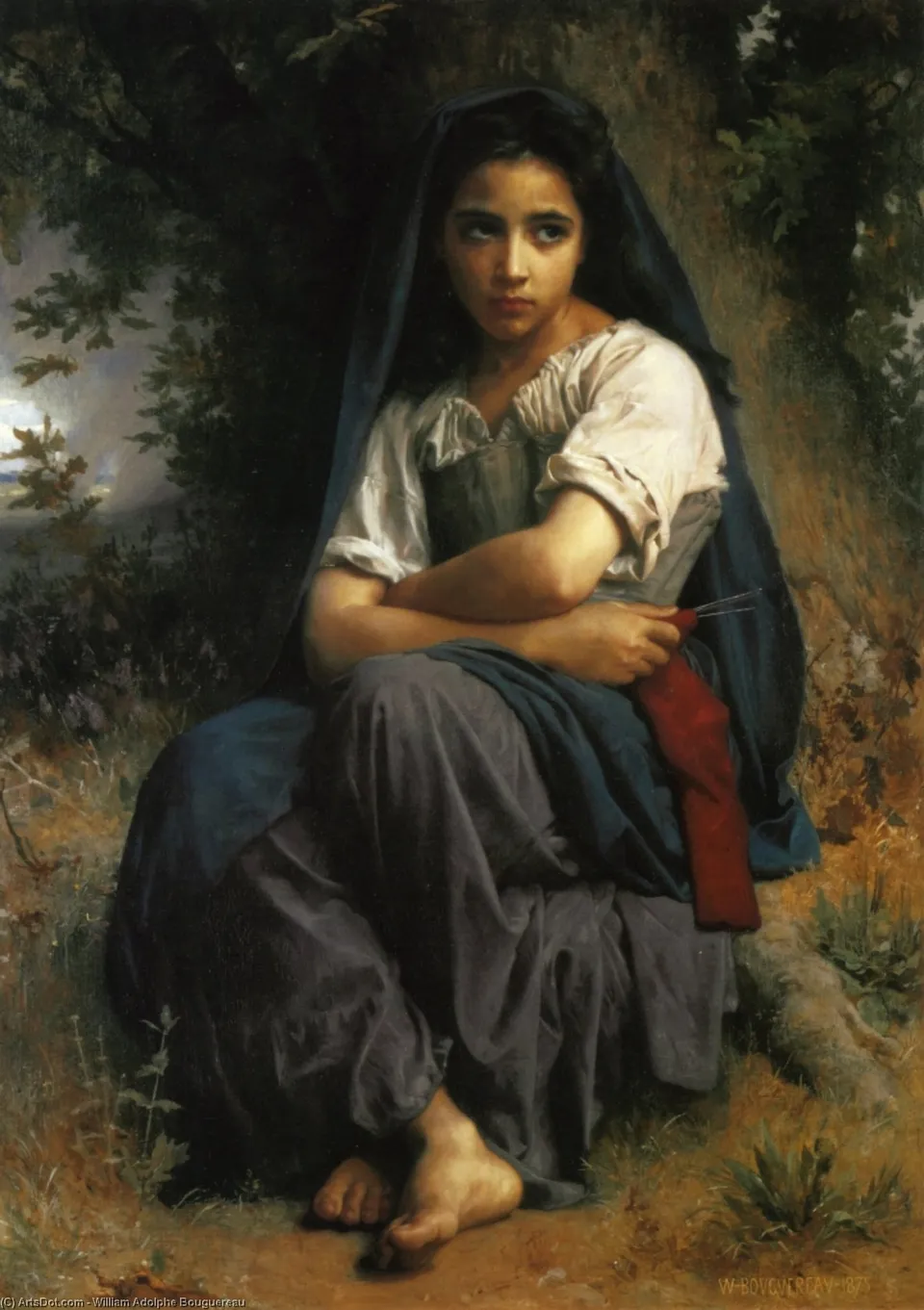
The Little Knitter

Captured in Academicism style by William-Adolphe Bouguereau during the Belle Époque, ‘The Little Knitter’ portrays a serene young girl lost in contemplation amidst dappled sunlight and scattered leaves—a timeless masterpiece inviting you to experience its exquisite beauty.

Bouguereau: A mester Franciaország egyik legjelentősebb festője, aki a klasszikus szépséget és a részletességre helyezi a hangsúlyt. Fedezd fel a mitológiai, tájképeket és a nők ábrázolását! #Bouguereau

Giclée / Műnyomat

Múzeumi minőségű giclée vagy vászonnyomat, gyors gyártással és rugalmas finomítási lehetőségekkel. ( Kézzel festett másolat vásárlása Áttérés digitális képre)

P118B $10
P118H $10
P118W $10
P438Z $10
P508JH $12
P508YH $12
P805H $10
P805Z $10
P919BZ $10
P919G $10
P919XJ $10
P959ZH $10
P968JZ $12
W106C $8
W218G $10
W218JH $8
W218Y $10
W307PJ $10
W316G $10
W316PJ $8
W316Y $10
W398PJ $8
W4111J $10
W500HY $15
W500JH $15
W692G $12
W849H $8
W940BG $15
W953PJ $8

Standard méret
egyedi
CM
INCH

Válasszon előre meghatározott méreteink közül, amelyek megfelelnek a műalkotás eredeti arányainak.

szélesség
magasság

Megadhat saját méreteket is egy konkrét kerethez vagy helyszínhez igazítva. Amennyiben a kiválasztott méret nem egyezik az eredeti kép arányokkal, a műalkotást le fogjuk vágni, vagy kiegészítjük a képet tükrözött vagy egyszínű szélekkel. A gyártás megkezdése előtt egy digitális tervezetet küldünk jóváhagyásra.
Kérjük, vegye figyelembe, hogy a képernyőn látható előnézet nem tükrözi a tényleges levágást vagy kiegészítést. Csak a tervezet mutatja pontosan a végső kompozíciót.
Bár az egyedi méretek is elérhetőek, az eredeti arányok megőrzése érdekében azt javasoljuk, hogy válasszon a előre meghatározott listából származó méretet.

Világszerte történő kiszállítás területére mindössze 2 hét alatt, a szokásos 4-5 hét helyett. (21 szeptember)

why_choose_icon
Ingyenes globális expressz szállítás
why_choose_icon
Prémium minőségű len vászon
why_choose_icon
Teljes körű szállítási biztosítás
why_choose_icon
Vámvisszatérítési Garancia
why_choose_icon
Tökéletes színarányosság garancia
why_choose_icon
100 napos visszaküldési garancia (csak gyártási hibás termékek esetén)
why_choose_icon
100% pénzvisszatérítési garancia
why_choose_icon
Több darab vásárlásakor kedvezmény

Összesített ár

$ 68

reproduction

The Little Knitter

Giclée / Műnyomat

Reprodukció méretei

-

Összesített ár

$ 68

Rövid tények

  • Artist: William-Adolphe Bouguereau
  • Title: The Little Knitter
  • Notable elements: Detailed depiction; Tranquil setting
  • Dimensions: 115 x 81 cm
  • Year: 1875
  • Medium: Oil on canvas

A Moment Frozen in Time: The Essence of Innocence

In the quietude of a sun-dappled afternoon, William-Adolphe Bouguereau’s 1875 masterpiece, "The Little Knitter," invites the viewer into a realm of profound serenity and timeless grace. This exquisite oil on canvas serves as more than just a portrait; it is a window into the soul of the Belle Époque, capturing a fleeting moment of childhood contemplation that feels both deeply personal and universally resonant. The painting depicts a young girl seated gently upon the earth, her focus entirely absorbed in the rhythmic, meditative task of knitting. There is an undeniable tenderness in her posture, a soft vulnerability that immediately establishes an emotional bond between the subject and the observer. As she gaz indeed off-camera, her gaze suggests a rich inner world, perhaps lost in a daydream or observing a distant movement in the natural landscape, leaving the viewer to wonder about the thoughts swirling behind her innocent eyes.

The setting, a lush backdrop of verdant trees and scattered leaves, provides a natural sanctuary for this domestic scene. The interplay of light and shadow within the foliage adds a layer of depth and organic beauty, grounding the subject in a realistic yet idealized pastoral environment. For collectors and interior designers alike, this piece offers a sense of tranquility that can transform any space, bringing an air of classical sophistication and peacefulness to a room. It is a work that does not demand attention through loud colors or jarring compositions, but rather earns it through a subtle, magnetic charm that lingers long after the first glance.

The Mastery of Academic Impressionism

Technically, "The Little Knitter" is a triumph of Academic Impressionism, a sophisticated style where Bouguereau masterfully reconciled the rigorous precision of classical tradition with the soft, luminous atmosphere of modern experimentation. His brushwork is nothing short of miraculous; he employs a smooth, polished technique that almost erases the presence of the artist’s hand, creating an ethereal, porcelain-like finish on the girl's skin. This meticulous attention to detail allows for a palpable sense of texture that engages the senses—one can almost feel the weight and softness of the wool scarf wrapped around her head and the delicate, fine weave of her blue dress.

Bouguereau’s palette is a masterclass in subtlety, utilizing muted blues, soft greens, and earthy tones to evoke a serene and harmonious atmosphere. This careful selection of color avoids the harshness of reality, instead leaning into an idealized beauty that was the hallmark of his celebrated career. By blending the structural integrity of the Old Masters—drawing inspiration from the likes of Raphael and Titian—with a more contemporary approach to light and color, Bouguereau created a visual language that feels both historically significant and eternally fresh. For those seeking a high-quality reproduction, this technical brilliance is what makes the painting such a captivating centerpiece for fine art collections.

Symbolism and the Legacy of Virtue

Beyond its aesthetic splendor, "The Little Knitter" is steeped in symbolic meaning, reflecting the moral and social values of late 19th-century France. The act of knitting serves as a powerful metaphor for domesticity, patience, and the quiet transmission of care and tradition from one generation to the next. It represents a nurturing instinct and the beauty found in simple, virtuous labors. In an era of rapid industrialization, Bouguereau’s focus on such a peaceful, domestic vignette offered a nostalgic retreat into a world defined by innocence and moral clarity.

The painting functions as a poignant reminder of the beauty inherent in stillness. In our modern, fast-paced existence, the image of a child lost in a moment of quiet industry offers a much-needed emotional respite. It is this profound psychological truth—the ability of art to capture the sanctity of a single, unhurried moment—that ensures Bouguereau’s enduring legacy. Whether displayed in a private study, a grand salon, or a contemporary living space, "The Little Knitter" continues to inspire awe, serving as a testament to the power of beauty to soothe the spirit and elevate the human experience.


A művész életrajza

A Life Immersed in Beauty: The World of William-Adolphe Bouguereau

William-Adolphe Bouguereau’s life unfolded as a profound celebration of classical ideals and breathtaking realism, beginning amidst the picturesque vineyards and olive groves of La Rochelle, France. From his earliest days, an undeniable artistic inclination guided him, leading to Paris and the prestigious École des Beaux-Arts. There, under the tutelage of François-Edouard Picquenot, he honed his skills, absorbing the timeless lessons imparted by the Old Masters – Raphael and Titian standing as particularly influential figures. These influences weren’t merely superficial imitations; they formed the very bedrock upon which Bouguereau constructed a unique artistic vision: one characterized by meticulous detail, luminous color palettes, and an unwavering dedication to portraying beauty in its most idealized form. He didn't simply capture what he *saw*; rather, he sought to represent what he believed to be inherently beautiful, striving for a level of perfection that resonated deeply with the aesthetic sensibilities of his era.

The Architect of Academic Perfection

Bouguereau’s artistic style is often described as “academic realism,” and this description holds considerable truth. He possessed an extraordinary mastery of anatomy, light, and composition – skills honed through rigorous training and a deep understanding of classical principles. His canvases are populated by figures rendered with astonishing precision: the delicate curve of a shoulder, the subtle blush of skin, the expressive depth of an eye. Yet, his work transcends mere technical proficiency; it’s infused with profound emotion and narrative power. Bouguereau frequently depicted mythological scenes, transforming ancient tales into vibrant, emotionally resonant moments. *The Birth of Venus*, for instance, isn't merely a depiction of the goddess emerging from the sea; it’s a powerful celebration of feminine grace and ethereal beauty – an embodiment of classical ideals elevated to their most sublime expression. Similarly, works like *Zenobia Found by Shepherds on the Banks of the Araxes* capture vulnerability and pathos with remarkable sensitivity, revealing a nuanced understanding of human emotion. Beyond mythology, Bouguereau found inspiration in everyday life – portraying shepherdesses tending their flocks, young girls at play, mothers cradling their children. These genre scenes, while seemingly simple, are imbued with a dignity and tenderness that elevates them to the realm of art, demonstrating his ability to find beauty in the ordinary. *Faneuse (1869)* exemplifies this approach, showcasing his meticulous attention to detail and atmospheric rendering.

Influences and Artistic Development

Bouguereau’s artistic journey was shaped by a confluence of influences. His early studies in Italy under Raffaello, Andrea del Sarto, and Guido Reni profoundly impacted his style, particularly his interest in mythological subjects. He meticulously studied the works of Raphael and Titian, absorbing their techniques for rendering form, light, and color. However, Bouguereau didn’t simply replicate these masters; he synthesized their lessons into a distinctly personal vision. His work evolved over time, reflecting both his adherence to academic principles and his growing interest in capturing the essence of human emotion. During the 1870s and 1880s, he developed a distinctive style characterized by soft colors, delicate brushwork, and an emphasis on idealized beauty. He was particularly drawn to scenes of childhood innocence and tenderness, as evidenced by paintings like *Child at Bath* and *Tóbiás búcsúja apjától*. His later works often featured religious subjects, rendered with a serene spirituality that resonated with the sensibilities of his time.

A Rediscovered Master

For decades following his death in 1905, Bouguereau’s work largely faded from public view. The rise of modern art movements – Impressionism, Post-Impressionism, and Cubism – overshadowed his traditional style, leading to a decline in critical recognition. However, beginning around 1979, there was a gradual but significant revival of interest in Bouguereau’s oeuvre. Art historians began to appreciate the technical brilliance and artistic integrity of his paintings, recognizing them as masterpieces of academic realism. His prices at auction soared, and museums began to exhibit his works with renewed enthusiasm. Today, Bouguereau is widely regarded as one of the most important artists of the 19th century – a testament to the enduring appeal of classical ideals and the power of meticulous craftsmanship.

Legacy and Enduring Appeal

Bouguereau’s influence extends far beyond his own paintings. He was a highly respected teacher, shaping the careers of numerous aspiring artists. His dedication to traditional artistic values – anatomical accuracy, compositional balance, and emotional expression – continues to inspire figurative painters today. His works are now housed in prestigious museums around the world, including the Musée d’Orsay in Paris, the Carnegie Museum in Pittsburgh, and The J. Paul Getty Museum in Los Angeles, ensuring that his legacy will endure for generations to come. His paintings remain remarkably popular, reproduced extensively in posters and prints, demonstrating a continued appreciation for his exquisite beauty and timeless appeal. Bouguereau's art stands as a powerful reminder of the enduring value of skill, dedication, and an unwavering commitment to artistic excellence – a true testament to the power of classical ideals.
William-Adolphe Bouguereau

William-Adolphe Bouguereau

1825 - 1905 , Franciaország

Gyors információk

  • Artistic Movement Or Style: Akadémiai Realizmus
  • Artists Or Movements Influenced By This Artist: ['Impressionizmus']
  • Artists Who Influenced This Artist:
    • Raffaello
    • Tiziano
  • Date Of Birth: 1825. nov. 30.
  • Date Of Death: 1905. aug. 18.
  • Full Name: William-Adolphe Bouguereau
  • Nationality: Francia
  • Notable Artworks:
    • A Nymphaeum
    • Bergère 1886
    • Gyermek a fürdőben
    • Szélhúzó dala (1869)
  • Place Of Birth: La Rochelle, Francia
Fedezze fel a műalkotásokat témák, stílusok és jellemzők szerint csoportosítva.



































