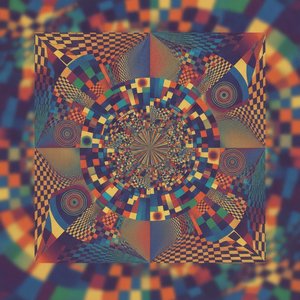
Victor Vasarely: Pioneering Op Art & Democratizing Visual Experience
Victor Vasarely (1906-1997), a Hungarian-French artist, stands as an undeniable titan of 20th-century art, recognized globally as the “grandfather” and undisputed leader of Op Art – Optical Art. His legacy transcends mere visual aesthetics; it represents a radical reimagining of perception itself, challenging viewers to question how they see and experience the world.
Born Károly Vaszary in Pécs, Croatia, Vasarely’s artistic journey began unexpectedly amidst the intellectual fervor of Budapest’s avant-garde scene. Initially pursuing medical studies at Eötvös Loránd University, he swiftly abandoned scientific pursuits for the vibrant realm of painting, enrolling at Sándor Bortnyik’s influential Műhely – a school deeply rooted in Bauhaus principles.
This formative encounter with functional design and geometric abstraction proved transformative. Bortnyik's workshop instilled in Vasarely a fundamental understanding that would underpin his distinctive style: the belief that art could communicate ideas beyond traditional representation, prioritizing visual impact and stimulating intellectual engagement. The Bauhaus ethos championed simplicity and clarity—values that would become central to Vasarely’s artistic vision.
A pivotal moment arrived with Vasarely's enrollment in Bortnyik’s workshop – Műhely – a school deeply influenced by the Bauhaus movement. Here, Vasarely absorbed the tenets of functional design and geometric abstraction, seeds that would blossom into his signature style: the belief that art could communicate ideas beyond traditional representation, prioritizing visual impact and stimulating intellectual engagement.
Vasarely’s artistic breakthrough occurred in 1937 with “Zebras,” a groundbreaking work that is considered by many to be one of the earliest examples of Op Art. This movement sought to exploit optical illusions—the way our eyes perceive color, shape, and depth—to create mesmerizing visual experiences.
Throughout his prolific career, Vasarely meticulously crafted artworks characterized by repetitive geometric forms arranged in complex patterns. Acrylic on canvas became his favored medium, allowing him to achieve remarkable textural effects and luminosity. His meticulous attention to detail ensured that each piece conveyed a profound sense of order amidst apparent chaos—a deliberate strategy designed to provoke contemplation and disrupt conventional visual assumptions.
Vasarely’s influence extended far beyond the confines of artistic circles. He championed accessibility in art, believing that its transformative power should be available to all. His work continues to inspire designers, architects, and artists alike, demonstrating the enduring relevance of geometric abstraction as a tool for exploring the human experience.



 Előnézet
 Váltás nyomtatványra
 Megosztás
 Megosztás
 Részletek
 Útmutató

 Letöltés
 Hasonló darabok
 X-ray felvétel
 Diavetítés
 Statisztika
 Tovább olvasom






































 Az üvegkeretes opció csak 110 cm alatti méretben érhető el