Előnézet AR előnézet Váltás nyomtatványra Áttérés digitális képre Megosztás
Részletek Útmutató Kedvencekhez ad Letöltés Hasonló darabok X-ray felvétel Diavetítés Statisztika

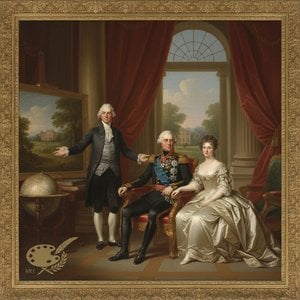
Lady Brisco

Admire "Lady Brisco," a captivating 1776 portrait by Thomas Gainsborough, showcasing elegance and artistry. Explore the life of Caroline Fleming through this iconic masterpiece.

Gainsborough Thomas (1727-1788): Elegáns portrék és tájképfestészet brit mestere, a Royal Academy alapító tagja és Constable hatása. Fedezze fel a 18. századi angol művészetet!

Kézzel készített olajfestmény reprodukció

Kézzel festett olajvastú vászon, az Ön által választott méretben és keretben, művészeink készítik meglévőre. ( Váltás nyomtatványra Áttérés digitális képre)

P118B $10
P118H $10
P118W $10
P438Z $10
P508JH $12
P508YH $12
P805H $10
P805Z $10
P919BZ $10
P919G $10
P919XJ $10
P959ZH $10
P968JZ $12
W106C $8
W218G $10
W218JH $8
W218Y $10
W307PJ $10
W316G $10
W316PJ $8
W316Y $10
W398PJ $8
W4111J $10
W500HY $15
W500JH $15
W692G $12
W849H $8
W940BG $15
W953PJ $8

Standard méret
egyedi
CM
INCH

Válasszon előre meghatározott méreteink közül, amelyek megfelelnek a műalkotás eredeti arányainak.

szélesség
magasság

Ön megadhat saját méreteket egy adott kerethez vagy térhez igazításhoz. Ha a kiválasztott méret nem egyezik az eredeti kép arányával, akkor a műalkotást levágjuk, vagy további kézzel festett elemekkel meghosszabbítjuk a festményt. A gyártás megkezdése előtt küldünk Önnek egy digitális előnézetet jóváhagyásra.
Kérjük, vegye figyelembe, hogy a képernyőn megjelenő előnézet nem tükrözi a tényleges vágást vagy kiterjesztést. Csak az előnézet fog pontosan mutatni a végső kompozíciót.
Bár egyedi méretek állnak rendelkezésre, javasoljuk, hogy válasszon egy méretet az előre meghatározott listából az eredeti arányok megőrzése érdekében.

Példák arra, mit lehet módosítani: az arc kicserélése az ügyfél fotójára; háziállat hozzáadása (pl. macska helyett kutya); rejtett üzenet elhelyezése a háttérben; a háttér tájának vagy elemeinek megváltoztatása.
A rendelést követően a WahooArt.com csapata e-mailt küld az ügyfélnek az instrukciókért, és biztosít egy előnézeti képet (mockup).

Világszerte elérhető szállítás () 3-4 hét alatt a szokásos 5 hét helyett. (24 szeptember). A minőség nem kérdőjelezhető.

why_choose_icon
Ingyenes globális expressz szállítás
why_choose_icon
Prémium minőségű len vászon
why_choose_icon
Teljes körű szállítási biztosítás
why_choose_icon
Vámvisszatérítési Garancia
why_choose_icon
Tökéletes színarányosság garancia
why_choose_icon
100 napos visszaküldési garancia (csak gyártási hibás termékek esetén)
why_choose_icon
100% pénzvisszatérítési garancia
why_choose_icon
Több darab vásárlásakor kedvezmény

Összesített ár

$ 272

reproduction

Lady Brisco

Reprodukciós technika

Reprodukció méretei

-

Összesített ár

$ 272

Rövid tények

  • Influences:
    • Van Dyck
    • Reynolds
  • Title: Lady Brisco
  • Subject or theme: Portraiture, Fashionable society
  • Year: 1776
  • Medium: Oil on Canvas
  • Location: Kenwood House, London
  • Dimensions: 235 x 149 cm

Művészeti kvíz

Minden kérdésre csak egy helyes válasz létezik.

Kérdés 1:
What is the primary subject of Thomas Gainsborough’s ‘Lady Brisco’?
Kérdés 2:
In ‘Lady Brisco’, what is notable about the woman’s attire?
Kérdés 3:
According to the text, what was a significant factor influencing Gainsborough’s decision regarding Lady Brisco's proportions?
Kérdés 4:
Thomas Gainsborough’s ‘Lady Brisco’ was painted in which year?
Kérdés 5:
What does the text suggest about Lady Brisco’s family background?

The Enigmatic Lady Brisco

Thomas Gainsborough’s “Lady Brisco,” painted in 1776, is more than just a portrait; it's a carefully constructed tableau of Georgian society, brimming with subtle details that whisper stories of wealth, status, and the complexities of human relationships. The painting depicts Caroline Alicia Fleming, later Lady Brisco, as she married John Brisco, a baronet who inherited substantial estates on St. Christopher Island. It’s a work steeped in the fashionable sensibilities of Bath society, yet simultaneously imbued with Gainsborough's signature blend of observation and artistic license – a masterful combination that elevates it beyond a simple likeness.

The composition immediately draws the eye to the sitter, whose posture exudes an understated grace. She stands slightly off-center, holding the lead of her dog on a leash, a detail that speaks volumes about her position within the social hierarchy – a woman of leisure and influence. The lighting is expertly controlled, highlighting her face and dress while casting delicate shadows that add depth and dimension to the scene. The background, rendered with a loose, atmospheric brushstroke, suggests an outdoor setting, likely a carefully cultivated garden or park, further reinforcing the image of refined elegance.

A Study in Fashion and Symbolism

Gainsborough’s choice of attire for Lady Brisco is particularly revealing. Her shimmering silver gown, adorned with gold trim, isn't merely decorative; it references classical drapery – a deliberate nod to the ‘Grand Manner’ style championed by Sir Joshua Reynolds, a rival painter and Gainsborough’s former mentor. However, this reference is subtly subverted by the contemporary silhouette of the dress, demonstrating Gainsborough’s willingness to blend tradition with innovation. The elaborate hairstyle, piled high and embellished with an ostrich feather, was the height of fashion in the 1760s, a visual marker of her social standing and wealth.

The inclusion of the dog is another significant element. Dogs were highly valued companions during this period, symbols of loyalty and status. The dog’s presence reinforces Lady Brisco's position as a woman of means, capable of affording such a luxury. Furthermore, the dog’s leash subtly directs the viewer’s gaze back to the sitter, creating a visual loop that emphasizes her importance within the composition.

Historical Context and Artistic Technique

Painted during a period of significant social and economic change in Britain, “Lady Brisco” reflects the rise of the merchant class and the increasing emphasis on material wealth. Gainsborough’s career was marked by a constant negotiation between his desire to paint landscapes – his true passion – and the demands of portrait commissions from wealthy patrons. He often employed strategic techniques to achieve desired effects, such as subtly distorting proportions to accommodate crowded exhibition spaces at the Royal Academy.

The painting’s oil on canvas technique is characterized by loose brushstrokes and a delicate palette, creating an ethereal quality that belies the underlying structure of the composition. Gainsborough's ability to capture fleeting moments of expression – the subtle curve of her lips, the gentle tilt of her head – is remarkable. His work demonstrates a keen eye for detail and a masterful understanding of light and shadow.

A Legacy of Elegance

“Lady Brisco” remains one of Gainsborough’s most celebrated portraits, admired for its exquisite beauty, subtle symbolism, and technical brilliance. It offers a captivating glimpse into Georgian society, revealing the complexities of wealth, status, and human relationships. Reproductions of this iconic work continue to inspire art lovers and collectors alike, serving as a testament to Gainsborough's enduring legacy as one of Britain’s greatest artists.


A művész életrajza

A Suffolk Beginning: The Early Life and Artistic Awakening

The story of Thomas Gainsborough, one of Britain’s most celebrated artists, unfolds not within the confines of a grand academy or bustling metropolis, but in the tranquil market town of Sudbury, Suffolk. Born in 1727, the youngest son of John Gainsborough, a weaver and wool merchant, young Thomas displayed an innate artistic sensibility from a remarkably early age. While his siblings pursued more conventional paths, Thomas’s world rapidly became consumed by drawing and painting – miniature self-portraits and delicate landscapes blossoming from his hand even before he reached ten years old. This precocious talent wasn't merely a childhood pastime; it was the burgeoning of a vision that would reshape British art. His father, recognizing this unique gift, encouraged its development, setting young Thomas on a path diverging sharply from the family trade. The Suffolk countryside itself became his first studio, imbuing his later works with a deep and abiding love for the natural world – a characteristic that would distinguish him throughout his career. This early immersion in landscape wasn’t simply about replicating what he saw; it was about *feeling* the essence of the English countryside, an emotional resonance that would permeate his canvases for decades to come.

London and the Shaping of a Style: Influences and Early Commissions

In 1740, at the age of thirteen, Gainsborough journeyed to London, embarking on formal artistic training under Hubert Gravelot, a French engraver renowned for his elegant rococo style. This exposure proved pivotal, introducing him to refined techniques and fashionable aesthetics. However, it was his association with William Hogarth and the St Martin’s Lane Academy that truly began to mold his artistic identity. Initially influenced by Hogarth's narrative approach – his detailed depictions of London life and social commentary – Gainsborough soon charted his own course, developing a distinctive style characterized by its lightness of touch, fluid brushwork, and subtle color palettes. He absorbed lessons from various masters, yet resisted strict adherence to any single school, forging a path that blended observation with imagination. Returning to Sudbury after marrying Margaret Burr in 1746, Gainsborough established himself as a portraitist for the local gentry. This period honed his skills in capturing likenesses and character, but it was during his subsequent move to Ipswich, and later Bath, that he began attracting a more sophisticated clientele – individuals who appreciated not just accurate representation, but also artistic flair and emotional depth.

Bath and Beyond: Portraiture, Landscape, and Royal Patronage

The years spent in Bath (1759-1774) marked a significant turning point in Gainsborough’s career. The city was a hub of fashionable society, providing him with ample opportunities to paint portraits of the wealthy and influential. He quickly gained renown for his ability to capture not only physical resemblance but also the personality and social standing of his sitters. His portraits weren't merely depictions; they were statements about identity and status. He experimented with different lighting techniques and compositions, moving away from the stiff formality of earlier portraiture towards a more relaxed and engaging style. However, even amidst the demands of portraiture, Gainsborough never abandoned his passion for landscape painting. In fact, he often seamlessly integrated landscapes into his portraits, creating compositions that celebrated both human subjects and the beauty of the natural world. This innovative approach – a hallmark of his style – set him apart from many of his contemporaries. The culmination of his success came with his move to London in 1774, where he established a studio on Pall Mall and became a founding member of the Royal Academy. He also secured royal patronage, becoming a favorite painter of King George III and Queen Charlotte, further solidifying his position as one of Britain’s leading artists. *Mrs. Thomas Gainsborough*, painted in 1785, exemplifies this period – an elegant portrait showcasing rococo style and muted tones.

A Legacy of Innovation: Enduring Appeal and Influence

Thomas Gainsborough died in 1788, leaving behind a body of work that continues to captivate audiences today. His influence on subsequent generations of British artists is undeniable. He liberated portraiture from rigid formality, infusing it with spontaneity and emotional resonance. His loose brushwork and atmospheric effects paved the way for the Impressionists, while his lyrical landscapes inspired artists like John Constable, who deeply admired Gainsborough’s ability to capture the spirit of the English countryside. Gainsborough's legacy extends beyond technique; it lies in his profound understanding of human character and his unwavering commitment to artistic expression. He wasn’t simply a painter of portraits or landscapes; he was a storyteller, a poet of light and color, and a visionary who transformed British art. His paintings are a testament to the power of observation, imagination, and the enduring allure of the English landscape.

Exploring Gainsborough's World Today

Fortunately, the opportunity to experience Gainsborough’s genius firsthand remains readily available. Gainsborough’s House, in his birthplace of Sudbury, stands as a testament to his life and work, offering visitors an intimate glimpse into his early influences and artistic development. Christchurch Mansion in Ipswich houses a significant collection of Gainsborough paintings alongside works by Constable and other masters. Numerous museums across the United Kingdom and internationally display his masterpieces, including the National Gallery in London and the Metropolitan Museum of Art in New York. His work continues to be studied, analyzed, and celebrated, ensuring that his artistic vision will endure for generations to come.
Gainsborough Thomas

Gainsborough Thomas

1727 - 1788 , Egyesült Királyföld

Gyors információk

  • Artistic Movement Or Style: Rococo, portréfestés
  • Artists Or Movements Influenced By This Artist:
    • Constable
    • Impressionisták
  • Artists Who Influenced This Artist:
    • Hogarth
    • Gravelot
  • Date Of Birth: 1727. május 14.
  • Date Of Death: 1788. augusztus 2.
  • Full Name: Thomas Gainsborough
  • Nationality: Angol
  • Notable Artworks:
    • Mrs. Thomas Gainsborough
    • Mr és Mrs Andrews
  • Place Of Birth (City And Country): Sudbury, Anglia
Fedezze fel a műalkotásokat témák, stílusok és jellemzők szerint csoportosítva.