The Lyrical Vision of Stephen Greene
Born in the vibrant landscape of New York City in 1917, Stephen Greene emerged as a profound voice in American art, weaving together the raw emotionality of social realism with the sophisticated complexities of abstraction. His journey began in the heart of the American art scene, where he refined his craft through rigorous training at the National Academy School of Art and the prestigious Art Students League. This foundational period was further enriched by his academic pursuits at the University of Iowa, where he earned both a BFA and an MA, grounding his creative instincts in a deep understanding of classical technique and formal composition.
In the 1940s, Greene first captured the public imagination through his poignant social realist figure paintings. These works were characterized by a haunting intimacy, capturing the human condition with a sensitivity that resonated deeply within the socio-political climate of the era. His early mastery of the human form allowed him to explore themes of struggle, resilience, and the quiet dramas of everyday life, imbuing his subjects with a weight and dignity that transcended mere representation.
Evolution into Abstraction and Symbolic Depth
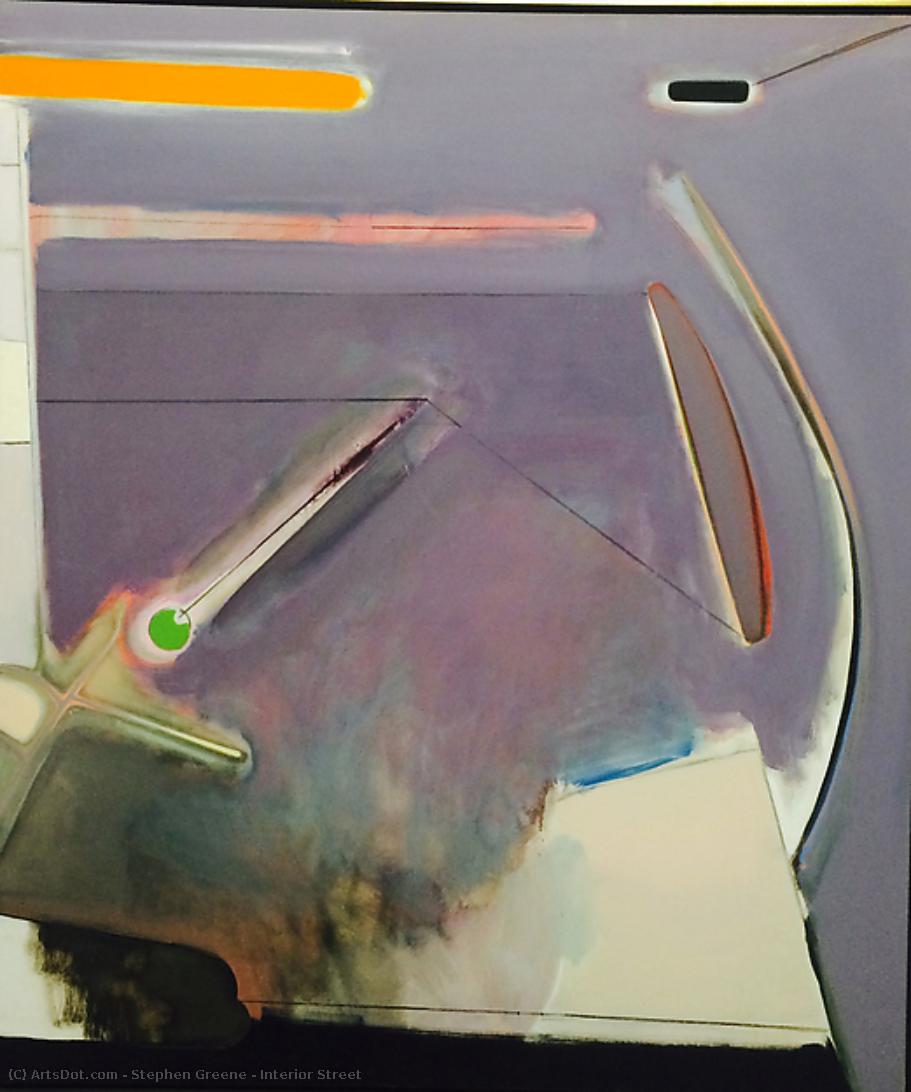
As the trajectory of twentieth-century art shifted toward more non-representational forms, Greene underwent a remarkable stylistic metamorphosis. He transitioned from the literal depiction of figures to a more nuanced, abstract language. This evolution was not a departure from his earlier concerns but rather an expansion of them; he began to use color, texture, and shape to communicate the same emotional truths that had once been anchored in the human silhouette. His later works became landscapes of the psyche, where layers of paint and gestural strokes served as metaphors for memory, loss, and the intangible essence of existence.
The brilliance of Greene's mature period lies in his ability to balance the visceral with the ethereal. His canvases often possess a rhythmic quality, inviting the viewer to lose themselves in a sea of symbolic forms. Through this abstract lens, he achieved a universal resonance, allowing his art to speak to the collective human experience beyond the boundaries of specific historical moments.
Legacy and Recognition
Throughout his long and distinguished career, Stephen Greene received significant acclaim, cementing his place within the canon of American modernism. His contributions were celebrated in major solo exhibitions that traced his artistic growth, most notably:
- Stephen Greene: A Retrospective Exhibition of Paintings and Drawings at the Corcoran Gallery of Art in 1963, which offered a profound look at his stylistic journey.
- Stephen Greene: A Decade of Painting at the Akron Art Institute in 1978, showcasing the depth of his late-career mastery.
By the time of his passing in Valley Cottage, New York, in 1999, Greene had left behind a legacy defined by versatility and emotional depth. His ability to navigate the transition from the figurative to the abstract remains a testament to his enduring curiosity and his unwavering commitment to the expressive power of paint. Today, his work continues to inspire, serving as a bridge between the tangible world of social reality and the infinite realms of abstract thought.


 Előnézet
 Váltás nyomtatványra
 Megosztás
 Megosztás
 Részletek
 Útmutató

 Letöltés
 Hasonló darabok
 X-ray felvétel
 Diavetítés
 Statisztika

 Tovább olvasom






































 Az üvegkeretes opció csak 110 cm alatti méretben érhető el


