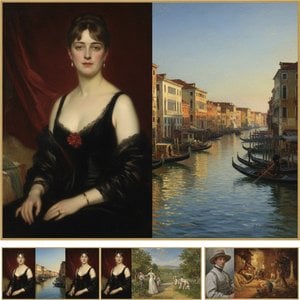
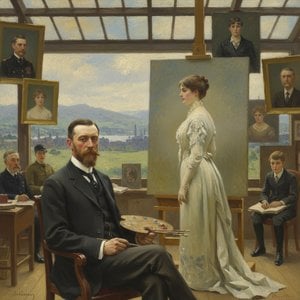
A művész életrajza
A Life Immersed in Portraiture and Society
Sir John Lavery, született 1856-ban Belfastban, egy olyan festő volt, aki kifinomultan ábrázolta a kor szellemet – az opulent Edwardi társadalom és a háborús időszak borús valóságát. Utazása a szegényes eredetől a Nagy-Britannia egyik legkeresettebb portréfestőjévé egy testamentum volt a tehetségének, ambícióinak és a kor bonyolult társadalmi áramlataihoz való alkalmazkodási képességének. Óvodásként árván maradt, ezért Skóciába került, ahol 1870-es években a Haldane Akadémiában kapott alapos kiképzést. Ez az első kiható tapasztalat gyúlt egy szenvedélyhez, amely végül további tanulmányokra vezetett Párizsban, az európai művészeti innováció szívében, a 1880-as évek elején.
Glasgow-ba visszatérve Lavery gyorsan kapcsolódott be a Glasgow School mozgalomhoz, elnyelve annak esztétikai alapelveit és kapcsolatokat építve, amelyek formálták korai fejlődését. Egy fordulópont 1888-ban érte el, amikor megkapta egy jelentős megbízást: Queen Victoria Glasgow Nemzetközi Kiállítmánynak tartott államútjának festésére. Ez nem csupán egy professzionális diadál; azt is jelképezte, hogy Lavery bekerült a nagy társadalom körébe és rövid idővel később Londonba költözött. A megbízás nem csupán egy szakmai sikert jelentett, hanem azt is, hogy Lavery feljött egy festőnek, aki képes nemcsak az utalítások megörökítésére, hanem a tárgyak nagyságra és hatalmára is.
Influences and Artistic Development
Lavery művészi érzékei mélyen befolyásolták többek között James McNeill Whistler munkásságát. Ő imádta Whisterlő hangsúlyt fektetett a tónális harmóniára, atmoszférára és kifinomult esztétikai érzékre – tulajdonságok, amelyek meghatározóvá váltak Lavery saját stílusában is. A befolyás a finom vonalvezetést és a visszafogott színpalettát mutatja be a művész oeuvre-jében. Whisterlőn túl Lavery tanult a francia impresszionizmusból, integrálva annak tördelte színeit és a pillanatnyi fények rögzítésének hangsúlyát. Azonban soha nem teljesen fogadta el az impresszionizmus radikális elszakadásait a hagyományos formától; ehelyett ezeket az együtthatókat saját, egyedi stílusába szintézisébe építette, amely eleganciát és modernitást ötvözött.
Korai munkái gyakran ábrázolták mindennapi élet jeleneteit és tájakat, de portréfestészet mestersége alapozta meg hírnevét. Lavery kiválóan képzett volt abban, hogy a tárgyak lényegét – személyiségüket, társadalmi helyzetüket és belső világukat – vászonra bontsa. Nem csupán megjelenéseket rögzített; hanem karaktereket értelmezett. Nem volt egyszerűen az utalítások megörökítéséről szó, hanem a karakterek interpretációjáról.
Wartime Depictions and National Recognition
I. világháború kitörtével Lavery művészi gyakorlata új dimenziót nyert. Hasonlóan William Orpenhez ő is hivatalos hadfestő lett, feladatául tűzve a konfliktus dokumentálását. Azonban tartós egészségügyi problémái és egy szörnyű autóbaleség – Zeppelin támadás következménye – megakadályozta abban, hogy a Keleti-fronton szolgáljon. Nem adta fel azonban, ehelyett a háború légkörét a hazai területeken ábrázolta, portrékkal, repülőgépekkel és légi járművekkel. Ezek a művei egyedülálló perspektívát kínálnak a háborús erőfeszítésről, nem a síncsarnokok pokoljáról, hanem a háború technológiai előrehaladásáról és logisztikai kihívásairól a hazai fronton.
A háború után Lavery hozzájárulásait hivatalosan elismerték egy lovassági kitüntetéssel és választott taggá a Royal Academy-be. Élete szorosan összefonódott az asquith család társadalmi és politikai elitjével, ahol jelentős időt töltött portrék készítésében és idilli jelenetek ábrázolásában, amelyek betekintést nyújtottak élettérükbe.
Legacy and Lasting Impact
Sir John Lavery öröksége meghaladja a művész oeuvre-jét. Egy karismatikus figura volt, aki kifinomultan mozogott az művészi körökben és a nagy társadalomban, és szimbólummá vált az idő kulturális dinamikájának. Portréi továbbra is nagyszerűen értékeltek eleganciájuk, művészi képességük és mélyreható karakterizálásuk miatt. Bemutatott Michael Collinsnak, a királyi családnak és Queen Victoria-nak is. A művei ma is nagy népszerűségnek örvendenek. Lavery stílusa, amely a tónális harmónia és a precíz részletesség kombinációját jelenti, továbbra is inspirálja a művészeket. Képes volt az utalítások lényegét rögzíteni, és a túlzott hangsúlyt fektetett a fény és szín integrálására. Nem adta fel a művészet iránti szenvedélyét, és a művei örök érvényűvé váltak.



 Előnézet
 Váltás nyomtatványra
 Megosztás
 Megosztás
 Részletek
 Útmutató

 Letöltés
 Hasonló darabok
 X-ray felvétel
 Diavetítés
 Statisztika


 Tovább olvasom






































 Az üvegkeretes opció csak 110 cm alatti méretben érhető el