Múzeumi minőségű giclée vagy vászonnyomat, gyors gyártással és rugalmas finomítási lehetőségekkel. ( Kézzel festett másolat vásárlása
Áttérés digitális képre)
Válasszon előre meghatározott méreteink közül, amelyek megfelelnek a műalkotás eredeti arányainak.
Megadhat saját méreteket is egy konkrét kerethez vagy helyszínhez igazítva. Amennyiben a kiválasztott méret nem egyezik az eredeti kép arányokkal, a műalkotást le fogjuk vágni, vagy kiegészítjük a képet tükrözött vagy egyszínű szélekkel. A gyártás megkezdése előtt egy digitális tervezetet küldünk jóváhagyásra.
Kérjük, vegye figyelembe, hogy a képernyőn látható előnézet nem tükrözi a tényleges levágást vagy kiegészítést. Csak a tervezet mutatja pontosan a végső kompozíciót.
Bár az egyedi méretek is elérhetőek, az eredeti arányok megőrzése érdekében azt javasoljuk, hogy válasszon a előre meghatározott listából származó méretet.
Világszerte történő kiszállítás területére mindössze 2 hét alatt, a szokásos 4-5 hét helyett. (10 október)
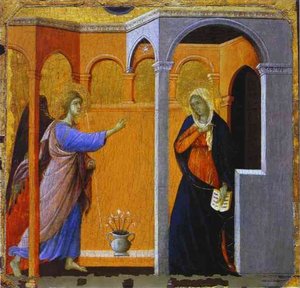
Polyptych (detail)
Reprodukció méretei
In the delicate fragment known as Polyptych (detail), we are invited to witness a profound moment of spiritual intimacy captured by the master Simone Martini. This captivating glimpse focuses on a meticulously rendered figure, a man whose presence is defined by a quiet, solemn grace. Held within his hands is a book, a symbol of divine wisdom and the pursuit of sacred knowledge, while at his feet rests a crucifix, embodying the eternal themes of sacrifice and redemption. The composition is not merely a portrait but a window into the soul of the early fourteenth century, where every element was imbued with deep religious significance.
The atmosphere of the piece is one of luminous splendor, achieved through Martini’s unparalleled command of tempera paint on panel. By layering thin, translucent glazes over a smooth gesso ground, the artist attained an astonishing depth and tonal subtlety. This technique allows light to dance across the surface, creating a sense of ethereal radiance that seems to emanate from within the artwork itself. The background, a rich and ornate gold, lends an aura of prestige and holiness, elevating the scene from a simple depiction to a monumental expression of faith.
Beyond its religious fervor, this detail serves as a masterclass in the Sienese style, characterized by an exquisite delicacy and precision. Martini’s hand is evident in the flowing, graceful lines that delineate the figure's drapery and facial features with meticulous care. There is a rhythmic beauty to the contours, a hallmark of what would become known as the International Gothic style, which favors soft decorative details and a sense of courtly refinement over rigid, monumental forms.
The historical context of Siena provides a vital backdrop to this masterpiece. During this era, Siena was a thriving center of economic prosperity, fueled by its successful wool trade, which in turn fostered a vibrant environment for artistic patronage. This specific work, commissioned by Archbishop Guido Visconti, was intended as a monumental decoration for the cathedral, standing as a testament to the piety and grandeur of the Visconti family. For the modern collector or interior designer, possessing a high-quality reproduction of such a piece offers more than just decoration; it brings a sense of historical weight, spiritual solemnity, and the timeless aesthetic of a golden age in Italian art into the contemporary home.
Amikor a "Polyptych (detail)" alkotása 1320-ben készült, Simone Martini – aki 1284-ben született – 36 éves volt.
A „Polyptych (detail)” a Late Gothic irányzat alkotása, készítője pedig a Késő középkor korszakban tevékenykedett.
A "Polyptych (detail)" alkotója Simone Martini. A mű Simone Martini nevére van katalógusozva.
A „Polyptych (detail)”, Simone Martini alkotása egy Spiritual érzést közvetít, egy összonosan Mystical hangulatban.
A „Polyptych (detail)”, Simone Martini alkotása AR előnézet oldala kiterjesztett valóságot használ, hogy az alkotást egy kompatibilis eszközön, az Ön saját környezetében is megmutassa.
A „Polyptych (detail)”, Simone Martini alkotása alkotáshoz egy Small méretű reprodukciót javasolunk. A méret az arányok megőrzésével módosítható.
A „Polyptych (detail)”, Simone Martini alkotása alkotásának éve 1320.
Simone Martini, born around 1284 in the heart of Siena, Italy, stands as a pivotal figure in the transition from medieval to Renaissance art. He wasn’t merely a painter; he was an architect of elegance, a master of line and color who infused his works with a courtly refinement that distinguished him from contemporaries like Giotto. While historical accounts vary regarding his early training—some suggest apprenticeship under Duccio di Buoninsegna, the leading Sienese artist of the time, while others point to Florence and the influence of Giotto—Martini undeniably forged a unique artistic path. His brother-in-law, Lippo Memmi, was also an artist with whom he frequently collaborated, further enriching the vibrant artistic landscape of Siena. The city itself played a crucial role in shaping Martini’s aesthetic; Siena, a thriving center of commerce and culture, fostered an environment where art flourished, blending religious devotion with worldly sophistication.
Martini's style is immediately recognizable for its departure from the more monumental forms favored in Florence. He embraced a delicate sensibility, characterized by flowing lines, soft decorative details, and an overall sense of grace. This aesthetic wasn’t born in isolation; it was profoundly influenced by external forces. The Via Francigena, a major pilgrimage route traversing Europe, brought with it artistic currents from France—particularly the refined elegance of French manuscript illumination and ivory carving. These influences are readily apparent in Martini's work, manifesting as intricate patterns, elongated figures, and a heightened attention to surface ornamentation. He didn’t simply copy these styles; he synthesized them with existing Sienese traditions, creating something entirely new. His paintings weren’t merely representations of religious scenes but rather elegant narratives imbued with emotional depth and visual poetry.
Martini's reputation extended beyond the borders of Italy, leading to a significant turning point in his career. In 1336, he accepted a commission from Pope Benedict XII to create frescoes for the Papal Palace in Avignon, France—a move that placed him at the heart of European power and patronage. This appointment wasn’t merely about artistic skill; it was a testament to Martini's ability to cater to the tastes of a sophisticated courtly audience. While in Avignon, he entered into a remarkable intellectual circle, befriending Francesco Petrarca—better known as Petrarch, the renowned humanist poet. The connection with Petrarch is particularly poignant, as Vasari and other sources suggest that Martini painted a portrait of Laura de Noves, Petrarch’s lifelong muse. Though the portrait itself is lost to time, its very existence speaks volumes about Martini's status as a celebrated artist capable of capturing not only physical likeness but also the essence of beauty and inspiration. The Annunciation with St. Margaret and St. Ansanus, created during his time in Florence before moving to Avignon, is a testament to this period, showcasing delicate beauty and refined aesthetic.
Martini’s oeuvre is characterized by a remarkable range of subjects and styles, reflecting the diverse commissions he received throughout his career. His most celebrated works include the *Maestà* fresco in the Palazzo Pubblico, Siena—a monumental depiction of the Virgin Mary enthroned with angels and saints that exemplifies his mastery of composition and color; the *Annunciation*, a delicate and exquisitely detailed portrayal of the angel Gabriel announcing to Mary that she will conceive Jesus; and the *St. Louis Crowning Robert* altarpiece in Naples, showcasing his ability to create complex narratives within a limited space. Martini’s technical skill is evident in his meticulous attention to detail, his use of vibrant colors—particularly blues and reds—and his innovative approach to perspective and spatial relationships. He was also a skilled draftsman, producing numerous drawings that served as studies for his paintings.
Simone Martini’s impact on the development of European art cannot be overstated. He played a crucial role in disseminating the International Gothic style—a movement characterized by its elegance, refinement, and emphasis on decorative detail—across the continent. His influence extended to generations of artists who followed, shaping the course of late medieval and early Renaissance painting. Martini’s work wasn’t simply about technical skill; it was about creating a visual language that resonated with the sensibilities of his time—a language of beauty, grace, and spiritual devotion. Even today, his paintings continue to captivate viewers with their exquisite detail, harmonious compositions, and enduring sense of elegance. His frescoes in San Francesco d’Assisi demonstrate his mastery of large-scale decorative painting, while works like the Saint Catherine of Alexandria Polyptych showcase his unparalleled command of color and form. Simone Martini died in Avignon in 1344, leaving behind a legacy that continues to inspire awe and admiration centuries later—a testament to the enduring power of art to transcend time and touch the human spirit.
1284 - 1344 , Olaszország