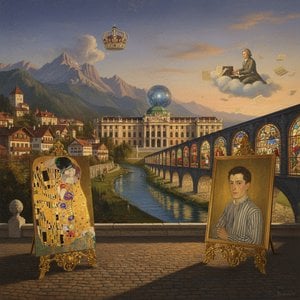
Gustav Klimt élete és művészete: A bécsi szecesszió ragyogó csillaga
Gustav Klimt, 1862. július 14-én született Bécs-Baumgartenben, egy olyan családban, amelyet a művészi hajlam és anyagi nehézségek jellemeztek. Apja, Ernst Klimt aranygravírozó volt, ez a foglalkozás finoman, ám mélyen befolyásolta Gustav esztétikai érzékenységét – az aranylapok varázsa, a precíz részletesség, a lenyűgöző gazdagság. A család küzdelmei gyakori költözködésekhez vezettek Bécsben, egy állandóan változó környezet, amely talán élesítette Klimt megfigyelőképességét és érzékenységét az emberi tapasztalatokra nézve. Már gyerekként figyelemre méltó rajzkészsége volt, amit apja foglalkozása táplált, és egy veleszületett tehetség, amely gyorsan nyilvánvalóvá vált. 1876-ban iratkozott be a Bécsi Iparművészeti Iskolába (Kunstgewerbeschule), ahol Ferdinand Laufberger irányítása alatt építészeti festészetet tanult. Ez szilárd technikai alapot adott neki, de ki is tette őt az uralkodó akadémiai stílusoknak – olyan stílusoknak, amelyeket végül kihívott és meghaladt. Itt alakított ki fontos művészeti partnerséget öccsével, Ernsttel és Franz von Matsch-csal, egy együttműködés, amely korai megbízásokat biztosított dekoratív falfreskókra és mennyezetekre, megalapozva ezzel jövőbeli sikerét.
A bécsi szecesszió születése és Klimt szerepe
Az 1890-es években Klimt egyre elégedetlenebb lett a konzervatív bécsi művészeti establishmenttal. Nagyobb alkotói szabadságot vágyott, egy olyan teret, ahol az innováció virághozhatott volna a hagyományok korlátozása nélkül. Ez a vágy csúcspontja volt a Bécsi Szecesszió megalakulása 1897-ben, egy fordulópontos pillanat az osztrák művészettörténetben. Klimtet választották meg első elnökévé, így ő lett ennek a mozgalomnak a vezető alakja, amely a merev akadémiai normáktól való szakadást és az Európát átsuhintó új művészeti irányzatok befogadását tűzte ki célul – az Art Nouveau, a Szimbolizmus és a Japonizmus. A Szecesszió saját kiállítási épülete, Joseph Maria Olbrich tervezése, ennek a lázadásnak a szimbóluma lett, egy templom a modern művészetnek. Klimt munkája központi szerepet játszott a Szecesszió ethoszában, megtestesítve annak elutasítását a konvencionális esztétikával szemben és dekoratív elemek, merész színek és szimbolikus képek elfogadását. Festményei példátlan őszinteséggel kezdtek foglalkozni a szerelem, a halál és a szexualitás témáival, kihívva a társadalmi normákat és csodálatot és felháborodást egyaránt kiváltva.
Az aranykor és Klimt művészi érettsége
Körülbelül 1900-ban Klimt lépett be az úgynevezett „aranykorába”, egy időszak, amelyet a bizánci mozaikokból és középkori iluminált kéziratokból merített aranylapok gazdag használata jellemezte. Ez a technika festményeit ragyogó, másvilági látásokká alakította, lelki mélységgel és érzéki vonzással átitatva.
A csók (1907-1908), talán leghíresebb műve, példázza ezt a stílust – egy pár szoros ölelésben, arany aurában burkolózva, testüket bonyolult minták díszítik. Ebben az időszakban Klimt lenyűgöző portrékat is készített, beleértve *Adele Bloch-Bauer I* (1907) című alkotást, amely bemutatta képességét a fizikai hasonlóság és a tárgyak pszichológiai komplexitásának megragadására. Egyre inkább elmosódott a festészet és az ornamentika közötti határvonal, integrálva dekoratív elemeket kompozícióiba, hogy harmónikus fúziót hozzon létre forma és tartalom között. A japán művészet – a Japonizmus – különösen nyilvánvaló volt lapos perspektívájában, a vonal hangsúlyozásában és a díszítő minták használatában.
Viták, hatások és maradandó örökség
Klimt pályája nem volt mentes vitáktól. 1900-ban tekintélyes megbízást kapott a Bécsi Egyetem nagytermének mennyezeti freskóinak elkészítésére, amelyeken a Filozófia, a Jog és a Teológia szerepelt. Azonban ezek a művek – különösen a *Filozófia* – provokatívnak és akár pornográfnak is minősültek konzervatív kritikusok szerint, ami közfelháborodáshoz vezetett, és végül Klimt visszautasításához vezetett további nyilvános megbízásoktól. Ez az incidens fordulópontot jelentett karrierjében, eltolva őt magánpártfogók felé és nagyobb alkotói szabadságot biztosítva számára. Élete során Klimtet a művészet és stílusok sokfélesége inspirálta – Hans Makart történelmi festményeitől kezdve Bizánc dekoratív művészetéig és Japánig. Inspirációt merített a Szimbolizmusból is, felfedezve a mitológia, az allegória és a tudatalatti témáit. Gustav Klimt haláláig folyamatosan festett, 1918. február 6-án agyvérzésben hunyt el a spanyol influenza járvány idején. Későbbi munkái absztraktabb formákat és tájakat ábrázoltak, ami folyamatos művészi fejlődést mutatott. Ma őt az osztrák művészettörténet egyik legfontosabb alakjának ismerik el, a Bécsi Szecesszió vezető képviselőjeként és az Art Nouveau eleganciájának tartós szimbólumaként.
Festményei magas áron kelnek árveréseken, és hatása továbbra is rezonál a kortárs művészetben és dizájnban.
Főbb jellemzők és művészi stílus
- Szimbolizmus: Klimt munkája mélyen szimbolikus, gyakran foglalkozik a szerelem, a halál, a szexualitás és az emberi lét témáival.
- Art Nouveau: A művészet vezető alakja volt, amelyet organikus vonalai, díszítő mintái és szépségre való hangsúly jellemzett.
- Aranykor: Az aranylapok használata ragyogó, gazdag felületeket hozott létre, amelyek védjegyévé váltak.
- Díszítő elemek: Klimt integrálta a díszítő elemeket kompozícióiba, elmosva a festészet és az ornamentika közötti határokat.
- Női alak: A női test munkája központi témája volt, gyakran érzékiséggel és pszichológiai mélységgel ábrázolva.



 Megtekintés
 Áttérés Nyomtatványra
 Küldés
 Megosztás
 Részletek

 Letöltés
 Hasonló darabok
 X-ray felvétel
 Diavetítés
 Statisztika

 Összes részlet megjelenítése






































 Az üvegkeretes opció csak 110 cm alatti méretben érhető el