x
MegtekintésMegtekintés Műalkotás AR előnézeteMűalkotás AR előnézete Nyomat rendelése Nyomat rendeléseKép letöltése Kép letöltése KüldésKüldés

RészletekRészletek Kedvencekhez ad Kedvencekhez ad LetöltésLetöltés Hasonló darabokHasonló darabok X-ray felvételX-ray felvétel DiavetítésDiavetítés

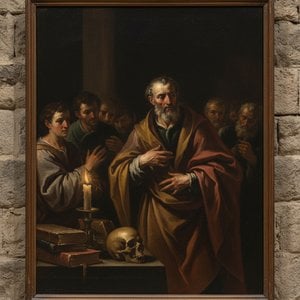
SZENT BONAVENTURA SZERETŐBEN ÉS NAGY SZERETÉSSEL MEGÉRKEZIK AZ ANGEL SZERVÉTÉVEL

A XVI századi flamenco festmény, mely Saint Bonaventure szent életének jelenetét ábrázolja egy angeltársaság általános ima ünnepén. Herrera el Viejo művészettörténete és építőkényelete idézi meg.

Francisco de Herrera le Vieux: Spanish painter of the Seville School. Known for 'Last Judgment' & religious scenes, his work exhibits bold technique & influenced Velázquez.

Kézzel készített olajfestmény reprodukció

Kézzel festett olajvastú vászon, az Ön által választott méretben és keretben, művészeink készítik meglévőre. (Nyomat rendelése Nyomat rendeléseKép letöltése Kép letöltése)

P118B $10
P118H $10
P118W $10
P438Z $10
P508JH $12
P508YH $12
P805H $10
P805Z $10
P919BZ $10
P919G $10
P919XJ $10
P959ZH $10
P968JZ $12
W106C $8
W218G $10
W218JH $8
W218Y $10
W307PJ $10
W316G $10
W316PJ $8
W316Y $10
W398PJ $8
W4111J $10
W500HY $15
W500JH $15
W692G $12
W849H $8
W940BG $15
W953PJ $8

Standard méret
egyedi méretű
CM
INCH

Válasszon előre meghatározott méreteink közül, amelyek megfelelnek a műalkotás eredeti arányainak.

szélesség
magasság

Ön megadhat saját méreteket egy adott kerethez vagy térhez igazításhoz. Ha a kiválasztott méret nem egyezik az eredeti kép arányával, akkor a műalkotást levágjuk, vagy további kézzel festett elemekkel meghosszabbítjuk a festményt. A gyártás megkezdése előtt küldünk Önnek egy digitális előnézetet jóváhagyásra.
Kérjük, vegye figyelembe, hogy a képernyőn megjelenő előnézet nem tükrözi a tényleges vágást vagy kiterjesztést. Csak az előnézet fog pontosan mutatni a végső kompozíciót.
Bár egyedi méretek állnak rendelkezésre, javasoljuk, hogy válasszon egy méretet az előre meghatározott listából az eredeti arányok megőrzése érdekében.

Példák arra, mit lehet módosítani: az arc kicserélése az ügyfél fotójára; háziállat hozzáadása (pl. macska helyett kutya); rejtett üzenet elhelyezése a háttérben; a háttér tájának vagy elemeinek megváltoztatása.
A rendelést követően a WahooArt.com csapata e-mailt küld az ügyfélnek az instrukciókért, és biztosít egy előnézeti képet (mockup).

Világszerte elérhető szállítás () 3-4 hét alatt a szokásos 5 hét helyett. (5 szeptember). A minőség nem kérdőjelezhető.

why_choose_icon
Ingyenes globális expressz szállítás
why_choose_icon
Prémium minőségű len vászon
why_choose_icon
Teljes körű szállítási biztosítás
why_choose_icon
Vámvisszatérítési Garancia
why_choose_icon
Hiteles színpontosság garancia
why_choose_icon
60 napos visszaküldési lehetőség (csak hibás termékek esetén)
why_choose_icon
100% pénzvisszatérítési garancia
why_choose_icon
Több darab vásárlása esetén kedvezmény

Összesített ár

$ 272

reproduction

SZENT BONAVENTURA SZERETŐBEN ÉS NAGY SZERETÉSSEL MEGÉRKEZIK AZ ANGEL SZERVÉTÉVEL

Reprodukciós technika

Reprodukció mérete

-

Összesített ár

$ 272

Gyors információk

  • Dimensions: 234 × 218 cm
  • Title: Saint Bonaventure Recevant La Communion Des Mains D'Un Ange
  • Notable elements or techniques: Dramatic light & shadow; Detailed drapery folds
  • Influences: Renaissance
  • Location: Louvre Museum
  • Subject or theme: Religious iconography; Communion
  • Movement: Baroque

Művészeti kvíz

Minden kérdésre csak egy helyes válasz létezik.

Kérdés 1:
What artistic style is predominantly characterized by dramatic use of light and shadow?
Kérdés 2:
Who signed the painting "Saint Bonaventure Recevant La Communion Des Mains D'Un Ange", indicating his authorship?
Kérdés 3:
In which museum is the artwork "Saint Bonaventure Recevant La Communion Des Mains D'Un Ange" currently housed?
Kérdés 4:
What type of painting technique was employed by Francisco de Herrera el Viejo in this artwork?
Kérdés 5:
The painting depicts Saint Bonaventure receiving communion from an angel. What does the angel symbolize in this religious scene?

Saint Bonaventure Recevant La Communion Des Mains D'Un Ange – Une Symphonie Baroque de Foi et Lumière

La peinture intitulée « Saint Bonaventure Recevant La Communion Des Mains D’Un Ange » représente une scène religieuse emblématique du XVIe siècle, incarnant les valeurs esthétiques et spirituelles caractéristiques du baroque espagnol. Créée vers 1628 par Francisco de Herrera le Vieux, cette œuvre remarquable est aujourd'hui conservée au Musée du Louvre Département des Peintures à Paris, témoignant ainsi d’une richesse artistique exceptionnelle. ### Une Œuvre Fondatrice de l’École Sévillane et Son Style Dramatique Francisco de Herrera el Viejo occupe une place centrale dans l’histoire de l’art espagnol, considéré comme un pionnier du baroque émotionnel et fondateur de l'École sévillane. Cette école, marquée par une approche innovante et pleine d’énergie artistique, fut influencée par les tendances italiennes mais développa une identité propre, caractérisée notamment par une maîtrise exceptionnelle de la couleur et une recherche constante de réalisme dramatique. « Saint Bonaventure Recevant La Communion Des Mains D'Un Ange » illustre parfaitement ces principes esthétiques fondamentaux. ### Technique et Composition : Une Réalisation Spectaculaire au Service de l’Émotion Religieuse La peinture est exécutée en huile sur toile, une technique privilégiée par Herrera pour capturer la lumière et les textures avec une précision remarquable. La composition est soigneusement orchestrée afin d'accentuer le caractère sacré du sujet : Saint Bonaventure, personnage clé de la théologie chrétienne et fondateur de l’Ordre franciscain, est représenté agenouillé à l’âtre, recevant la communion des mains d’un ange. Cette scène est illuminée par une lumière douce et diffuse qui souligne les détails complexes de la robe du saint et de l’ange, créant une atmosphère pleine de mystère et d'émotion. Les autres personnages présents dans le tableau – des moines ou frères franciscains – contribuent à renforcer le contexte religieux et à évoquer la communauté spirituelle au cœur de laquelle cette œuvre est née. ### Symbolisme et Référence Historique : Un Hommage à Saint Bonaventure et À La Tradition Artistique Italienne La peinture porte en elle une riche symbolisme chrétien : l’ange offre à Saint Bonaventure le corps du Christ, symbole de la grâce divine et de la rédemption. Cette référence à la tradition artistique italienne est particulièrement frappante compte tenu des influences esthétiques auxquelles Herrera était soumis lors de sa formation initiale à l'École royale de San Fernando. La peinture témoigne ainsi d’une profonde connaissance des traités artistiques contemporains et d’une volonté de célébrer les valeurs morales et spirituelles fondamentales de la pensée chrétienne. Elle rappelle également les œuvres majeures réalisées par les artistes italiens du même époque, notamment celles de Michel Ange et Raphaël, dont Herrera admirait particulièrement le souci du réalisme et la puissance expressive. ### Conclusion : Une Œuvre Intemporelle Qui Inspire Encore Aujourd’hui « Saint Bonaventure Recevant La Communion Des Mains D'Un Ange » demeure une œuvre fascinante pour les amateurs d’art et les passionnés d’histoire religieuse. Sa beauté esthétique et sa profondeur émotionnelle témoignent de la capacité de l’artiste à traduire les sentiments humains les plus nobles dans une forme artistique exceptionnelle. Cette reproduction fidèle offre aux visiteurs une opportunité unique de découvrir ou redécouvrir un chef-d'œuvre baroque emblématique, symbole de la foi chrétienne et de la grandeur artistique espagnole.

A művész életrajza

The Soul of the Seville School: The Life and Legacy of Francisco de Herrera le Vieux

To encounter the works of Francisco de Herrera le Vieux is to witness the very moment when the restrained elegance of Mannerism surrendered to the breathtaking drama of the Baroque. Born in the vibrant artistic hub of Seville around 1590, Herrera emerged as a pivotal figure who did not merely participate in the Spanish Renaissance but actively helped redefine its emotional boundaries. His journey was one of profound transformation, bridging the gap between stylized, intellectual abstraction and a new, visceral reality that sought to touch the very soul of the viewer. As a foundational pillar of the Seville School, his brushwork became a vessel for spiritual fervor, turning canvas into a stage for divine intervention.

The formative years of Herrera were steeped in the rich, competitive atmosphere of Seville, a city flourishing under the patronage of the Habsburg reign. It was within the prestigious Escuela Real de San Fernando that his talent began to coalesce, shaped by an environment shared with other luminaries such as Diego Velázquez and Juan Carreton Céspedes. This period of intense training instilled in him a reverence for meticulous observation and a technical command over light and shadow. While his contemporaries often sought perfection through line and form, Herrera leaned into the burgeoning influence of Caravaggio, embracing the revolutionary use of chiaroscuro to create compositions that felt less like static images and more like theatrical, living moments.

A Master of Divine Drama and Technical Brilliance

The true essence of Herrera’s genius lies in his ability to render the miraculous with a tangible, earthly weight. His religious compositions are far more than mere illustrations of scripture; they are immersive spiritual experiences. In masterpieces such as Guérison de saint Bonaventure enfant par saint François, one observes a masterclass in Baroque energy. The artist utilizes dynamic arrangements and a palette dominated by warm earth tones—ochres, deep reds, and burnished browns—to ground the supernatural within a recognizable reality. His handling of light is particularly evocative; it does not simply illuminate the scene but seems to emanate from the divine action itself, casting dramatic highlights that pull the viewer into the sacred narrative.

Beyond the spiritual impact, Herrera’s technical prowess provided a blueprint for future generations of Spanish painters. He possessed an unparalleled ability to manipulate texture and volume through the strategic use of impasto and delicate glazes. This allowed him to capture the profound contrast between the soft luminescence of human skin and the heavy, tactile folds of velvet and liturgical robes. In works like Saint Basile dictant sa doctrine, his command over narrative density is evident, as figures emerge from deep, mysterious shadows in clusters that suggest both scholarly weight and divine inspiration. Every brushstroke serves a dual purpose: to build physical form and to heighten the emotional tension of the scene.

Historical Significance and Artistic Heritage

The historical importance of Francisco de Herrera le Vieux cannot be overstated, as his stylistic evolution mirrored the broader shift in European art toward emotional authenticity. By moving away from the rigid formalism of his predecessors, he helped establish a visual language for the Counter-Reformation—a language of movement, light, and palpable piety. His influence acted as a bridge, connecting the classical traditions of the Renaissance to the exuberant, high-drama era of the Baroque.

His legacy is woven into the very fabric of Spanish art history through several key contributions:

  • Founding the Seville School: Alongside Velázquez, he helped establish Seville as one of the most influential artistic centers in Europe.
  • Pioneering Baroque Emotion: He was instrumental in transitioning art from intellectual abstraction to a style characterized by dramatic lighting and intense human emotion.
  • Technical Innovation: His sophisticated use of chiaroscuro and textural layering influenced the development of the Spanish Baroque aesthetic.
  • Spiritual Narrative: He redefined religious iconography, making the divine feel accessible, physical, and profoundly moving for the faithful.

Though his life ended in 1656, the echoes of Herrera’s dramatic vision continue to resonate. He remains a titan of the Spanish Golden Age, an artist who understood that to truly depict the divine, one must first master the profound, beautiful, and often turbulent reality of the human experience.

A művészről röviden

  • Artistic Movement Or Style: Baroque
  • Artists Or Movements Influenced By This Artist: ['Diego Velázquez']
  • Date Of Death: 1656
  • Full Name: Francisco de Herrera le Vieux
  • Nationality: Spanish
  • Notable Artworks:
    • The Last Judgment
    • Holy Family
  • Place Of Birth: Seville, Spain
Fedezze fel a műalkotásokat témák, stílusok és jellemzők szerint csoportosítva.