Megtekintés AR előnézet Kézzel festett másolat rendelése Áttérés digitális képre Küldés
Részletek Útmutató Kedvencekhez ad Letöltés Hasonló darabok X-ray felvétel Diavetítés Statisztika

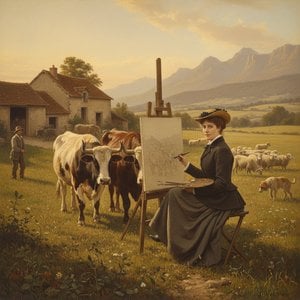
Highland Raid

Rosa Bonheur Experience the raw beauty of Rosa Bonheur’s ‘Highland Raid,’ a captivating depiction of shepherds guiding cattle through a stormy mountain landscape—a masterpiece of Realist art and animal observation.

Rosa Bonheur (1822-1899), a francia festőnő, aki az állatokmelyek valóságos megjelenítésével vált híressé. Bemutatjuk ikonikus műveit, mint "A ló vásárai", és örökségét egy női művész karrierjének példaként!

Giclée / Műnyomat

Múzeumi minőségű giclée vagy vászonnyomat, gyors gyártással és rugalmas finomítási lehetőségekkel. ( Kézzel festett másolat rendelése Áttérés digitális képre)

Corner sample of the P118B picture frame: formázott polisztirol, 5 cm wide and 3 cm thick
P118B Ft10
Corner sample of the P118H picture frame: formázott polisztirol, 5 cm wide and 3 cm thick
P118H Ft10
Corner sample of the P118W picture frame: formázott polisztirol, 5 cm wide and 3 cm thick
P118W Ft10
Corner sample of the P438Z picture frame: formázott polisztirol, 5.5 cm wide and 3.5 cm thick
P438Z Ft10
Corner sample of the P508JH picture frame: formázott polisztirol, 7 cm wide and 3.5 cm thick
P508JH Ft12
Corner sample of the P508YH picture frame: formázott polisztirol, 7 cm wide and 3.5 cm thick
P508YH Ft12
Corner sample of the P805H picture frame: formázott polisztirol, 5 cm wide and 3.5 cm thick
P805H Ft10
Corner sample of the P805Z picture frame: formázott polisztirol, 5 cm wide and 3.5 cm thick
P805Z Ft10
Corner sample of the P919BZ picture frame: formázott polisztirol, 7 cm wide and 3.5 cm thick
P919BZ Ft10
Corner sample of the P919G picture frame: formázott polisztirol, 7 cm wide and 3.5 cm thick
P919G Ft10
Corner sample of the P919XJ picture frame: formázott polisztirol, 7 cm wide and 3.5 cm thick
P919XJ Ft10
Corner sample of the P959ZH picture frame: formázott polisztirol, 5 cm wide and 3 cm thick
P959ZH Ft10
Corner sample of the P968JZ picture frame: formázott polisztirol, 6 cm wide and 4 cm thick
P968JZ Ft12
Corner sample of the W106C picture frame: tömörfa, 5 cm wide and 3 cm thick
W106C Ft8
Corner sample of the W218G picture frame: tömörfa, 5 cm wide and 3 cm thick
W218G Ft10
Corner sample of the W218JH picture frame: tömörfa, 5 cm wide and 3 cm thick
W218JH Ft8
Corner sample of the W218Y picture frame: tömörfa, 5 cm wide and 3 cm thick
W218Y Ft10
Corner sample of the W307PJ picture frame: tömörfa, 6 cm wide and 3 cm thick
W307PJ Ft10
Corner sample of the W316G picture frame: tömörfa, 6 cm wide and 3 cm thick
W316G Ft10
Corner sample of the W316PJ picture frame: tömörfa, 6 cm wide and 3 cm thick
W316PJ Ft8
Corner sample of the W316Y picture frame: tömörfa, 6 cm wide and 3 cm thick
W316Y Ft10
Corner sample of the W398PJ picture frame: tömörfa, 5 cm wide and 3 cm thick
W398PJ Ft8
Corner sample of the W4111J picture frame: tömörfa, 6.5 cm wide and 3.5 cm thick
W4111J Ft10
Corner sample of the W500HY picture frame: tömörfa, 7 cm wide and 5 cm thick
W500HY Ft15
Corner sample of the W500JH picture frame: tömörfa, 7 cm wide and 5 cm thick
W500JH Ft15
Corner sample of the W692G picture frame: tömörfa, 8 cm wide and 4 cm thick
W692G Ft12
Corner sample of the W849H picture frame: tömörfa, 5 cm wide and 3 cm thick
W849H Ft8
Corner sample of the W940BG picture frame: tömörfa, 7.5 cm wide and 4.5 cm thick
W940BG Ft15
Corner sample of the W953PJ picture frame: tömörfa, 6 cm wide and 3.5 cm thick
W953PJ Ft8

Standard méret
egyedi méretű
CM
INCH

Válasszon előre meghatározott méreteink közül, amelyek megfelelnek a műalkotás eredeti arányainak.

szélesség
magasság

Írja be a keretének vagy a falának megfelelő szélességet és magasságot. A nyomatot csak le lehet vágni, soha nem tehető nagyobbá, mint az eredeti kép, így egy eltérő alakú méretnél a kép egy része elveszik. Mielőtt bármit kinyatintanánk, küldünk egy digitális próbamodellt jóváhagyásra. Az oldalon látható kép nem tartalmazza a valós levágást — ezt csak a próbamodell mutatja meg.

Világszerte történő kiszállítás területére mindössze 2 hét alatt, a szokásos 4-5 hét helyett. (26 október)

Ingyenes globális expressz szállítás
Prémium minőségű len vászon
Teljes körű szállítási biztosítás
Vámvisszatérítési Garancia
Hiteles színarányosság garancia
100 napos visszaküldési lehetőség (csak hibás termékek esetén)
100% pénzvisszatérítési garancia
Több darab vásárlásakor kedvezmény

Összesített ár

Ft 21829

Highland Raid

Giclée / Műnyomat

Reprodukció mérete

-

Összesített ár

Ft 21829

Gyors információk

  • Title: Highland Raid
  • Location: Private Collection
  • Artistic style: Realistic depiction
  • Movement: Realism
  • Influences: Saint Simonian Philosophy

Művészeti kvíz

Minden kérdésre csak egy helyes válasz létezik.

Kérdés 1:
What is the primary subject matter of ‘Highland Raid’?
Kérdés 2:
Rosa Bonheur’s fascination with animals stemmed from her dedication to:
Kérdés 3:
The artist’s depiction of the sky suggests that the shepherds are attempting to:
Kérdés 4:
What artistic movement is ‘Highland Raid’ associated with?
Kérdés 5:
The title 'Highland Raid' refers to a Scottish idiom signifying:

A Symphony of Motion and Highland Majesty

In the vast, sweeping expanse of the Scottish Highlands, where the mist clings to rugged peaks and the air carries the scent of damp earth, Rosa Bonheur captures a moment of profound kinetic energy. Highland Raid is not merely a painting of livestock; it is a visceral experience of movement, a masterclass in the art of animalier realism. The canvas unfolds with a dramatic herd of cattle, their heavy forms navigating the undulating terrain of the mountains. At the heart of this pastoral drama, a lone rider on horseback guides the procession, acting as the steadying force amidst the swirling energy of the herd. The composition is expertly balanced, drawing the eye from the foreground figures through the rhythmic placement of cows that stretch deep into the atmospheric distance, creating an immense sense of scale and topographical grandeur.

Bonheur’s technical prowess is on full display through her sophisticated use of light and texture. To witness this work is to feel the palpable tension of impending weather; the sky seems heavy with the promise of rain, casting a soft, diffused light that illuminates the muscular anatomy of the cattle with breathtaking precision. The artist employed impasto techniques—applying paint in thick, deliberate layers—to imbant the scene with physical substance. This tactile approach allows the viewer to perceive the ruggedness of the landscape and the coarse texture of the animals' coats, bridging the gap between the two-dimensional surface and the three-dimensional reality of the natural world.

The Spirit of Realism and Artistic Audacity

To understand the emotional depth of Highland Raid, one must look to the revolutionary spirit of Rosa Bonheur herself. Emerging from a nineteenth-century era where female artists were often relegated to delicate portraiture or still lifes, Bonheur broke through societal barriers with an uncompromising dedication to scientific accuracy and anatomical truth. Her upbringing, influenced by the egalitarian ideals of Saint-Simonianism, nurtured a fierce independence that is reflected in her choice of subject matter. She did not seek to idealize the rural life; instead, she sought to document its raw, unvarnished essence. This commitment to Realism—a movement that rejected the polished escapism of Romanticism—allows the painting to resonate with a sense of truth that is both grounding and deeply moving.

For the discerning collector or interior designer, this piece offers more than just aesthetic beauty; it provides a window into a bygone era of rugged pastoralism. The painting serves as a powerful focal point in any sophisticated space, bringing an element of the wild, untamed outdoors into the refined atmosphere of a home or gallery. Its ability to evoke both the tranquility of nature and the underlying tension of survival makes it a timeless addition to a curated collection. Whether placed in a sunlit study or a grand salon, Highland Raid commands attention, inviting viewers to lose themselves in the rhythmic dance of the herd and the enduring legacy of one of history's most courageous artistic pioneers.

Kérdések és válaszok

Mennyire intenzívek a „Highland Raid”, Rosa Bonheur alkotása színei?

A „Highland Raid”, Rosa Bonheur alkotása Monochromatic szín intenzitással rendelkezik.

Mely paletta és domináns szín határozza meg a "Highland Raid" alkotást?

A „Highland Raid”, Rosa Bonheur alkotása színek identitása: egy Earthy paletta, amelyet Gray (#7d746a) dominál.

Mely korszakból származik a "Highland Raid"?

A „Highland Raid”, Rosa Bonheur alkotása a 19th Century korszakból származik. Ez az időszak adja meg a mű történelmi kontextusát.


A művész életrajza

A Life Immersed in the Animal World

Rosa Bonheur, born Marie-Rosalie Bonheur in 1822 Bordeaux, France, wasn’t simply a painter of animals; she was an interpreter of their very essence. Her name resonates through art history as a beacon of realism and a testament to female artistic ambition in a period dominated by male figures. Born into a family steeped in artistic tradition – her father, Oscar-Raymond Bonheur, was a landscape and portrait painter – young Rosalie’s path wasn’t predetermined but nurtured. The family’s embrace of Saint-Simonianism, a progressive socialist philosophy advocating for equal education for both sexes, proved particularly formative, instilling in Rosa a sense of independence and intellectual curiosity that would define her life and work. Tragedy struck early with the loss of her mother at age eleven, yet the Bonheur household remained a haven for creativity and unconventional thinking. This unique upbringing laid the foundation for an artist who would challenge societal norms as boldly as she captured the raw beauty of the natural world.

From Humble Beginnings to Salon Success

The family’s relocation to Paris in 1828 marked a turning point, providing Rosa with access to formal artistic training. Initially, her studies followed conventional lines – copying from drawings and sketching plaster models. However, it was the animals surrounding Paris that truly captured her imagination. Horses, cattle, sheep, goats—she observed them relentlessly, not merely as subjects for art but as living beings deserving of meticulous study. This dedication to direct observation became the cornerstone of her artistic style. Her father actively encouraged this passion, even bringing live animals into their studio for Rosa to dissect and analyze. This hands-on approach, combined with visits to Parisian abattoirs to understand animal anatomy, set her apart from many contemporaries who relied on second-hand depictions. She meticulously studied their movements, their textures, the way light played upon their fur and hides – a level of detail rarely seen in art at the time. Her breakthrough arrived in 1849 with *Ploughing in the Nivernais*, a monumental canvas depicting a rural scene in Normandy. This work, initially met with skepticism, quickly gained recognition at the Paris Salon and established her as a rising star. The painting’s scale – nearly eight by twelve feet – was itself remarkable for a female artist, demonstrating her ambition and technical prowess.

A Style Rooted in Realism and Observation

Rosa Bonheur's artistic style wasn’t about romanticizing animals; it was about portraying them with unwavering honesty and detail. She eschewed sentimentality, opting instead for a scientific approach to her subjects. Her paintings are characterized by their anatomical accuracy, dynamic compositions, and an ability to capture the unique personality of each creature. She didn't simply paint *what* she saw, but *how* animals moved, how they interacted with their environment, and even what they might be feeling. This commitment to realism extended beyond mere physical representation. Bonheur sought to understand the animals’ movements, behaviors, and even their emotional states. She often worked *en plein air*, directly observing her subjects in their natural environments, a practice that further enhanced the authenticity of her work. Her technique involved careful layering of paint – often applied with thick impasto – and a masterful use of light and shadow to create depth and texture, bringing each animal vividly to life on canvas. She was known for her ability to render the subtle nuances of fur, feathers, and skin, creating an almost tactile quality in her paintings.

A Pioneer for Women in Art

Rosa Bonheur’s legacy extends far beyond her artistic achievements; she became an icon for women striving for recognition in the male-dominated art world. She defied convention not only through her professional success but also through her personal choices. Famously, she often wore men's clothing – trousers and a loose shirt – while working with animals, citing practicality and freedom of movement – a bold statement that challenged societal expectations. This wasn’t merely a fashion choice; it was a deliberate act of rebellion against the constraints placed upon women in 19th-century France. She secured commissions from governments and private collectors alike, proving that female artists could achieve the same level of acclaim as their male counterparts. Her success paved the way for future generations of women artists. Her story became a symbol of artistic independence and determination, inspiring countless women to pursue their creative passions without compromise.

Enduring Influence and Lasting Legacy

The impact of Rosa Bonheur’s work continues to resonate today. Her dedication to realism influenced countless artists, and her paintings remain admired for their technical skill and emotional depth. She demonstrated that art could be both scientifically accurate and profoundly moving, bridging the gap between observation and interpretation. Beyond her artistic contributions, Bonheur's life story serves as a powerful example of female empowerment and artistic independence. She challenged societal norms, defied expectations, and ultimately achieved lasting recognition on her own terms. Her paintings continue to be celebrated in major museums worldwide, serving as a reminder of her enduring contribution to art history and her unwavering commitment to portraying the beauty and dignity of the animal kingdom. Her legacy is not merely one of beautiful paintings but also of courage, determination, and a unwavering commitment to her craft.

Rosa Bonheur

Rosa Bonheur

1822 - 1899 , Franciaország

Rövid információk

  • Artistic Movement Or Style: Realista, Animalière
  • Artists Or Movements Influenced By This Artist: ['Saint-Simon']
  • Artists Who Influenced This Artist:
    • Poussin
    • Rubenz
  • Date Of Birth: 1822. március 16.
  • Date Of Death: 1899. május 25.
  • Full Name: Marie-Rosalie Bonheur
  • Nationality: Francia
  • Notable Artworks:
    • Ploughing in Nivernais
    • The Horse Fair
  • Place Of Birth: Bordeaux, Franciaország