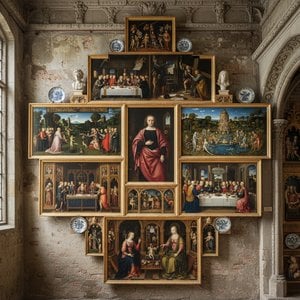
Megtekintés AR előnézet Váltás nyomtatványra Áttérés digitális képre Küldés
Részletek Útmutató Kedvencekhez ad Letöltés Hasonló darabok X-ray felvétel Diavetítés Statisztika

Pieta

Élvezze a Rogier van der Weyden Pietà című remekművének mélységét. Ragadja meg ezt az örök kegytelmet!

Rogier van der Weyden (1400-1464): A mester festő, aki az érzelmek kifejezésében újdonságot hozott a reneszánsz korban. Kiemelkedő oltárai és portréi világsühmek! #RogierVanDerWeyden #festészet

Kézzel készített olajfestmény reprodukció

Kézzel festett olajvastú vászon, az Ön által választott méretben és keretben, művészeink készítik meglévőre. ( Váltás nyomtatványra Áttérés digitális képre)

Corner sample of the P118B picture frame: formázott polisztirol, 5 cm wide and 3 cm thick
P118B Ft10
Corner sample of the P118H picture frame: formázott polisztirol, 5 cm wide and 3 cm thick
P118H Ft10
Corner sample of the P118W picture frame: formázott polisztirol, 5 cm wide and 3 cm thick
P118W Ft10
Corner sample of the P438Z picture frame: formázott polisztirol, 5.5 cm wide and 3.5 cm thick
P438Z Ft10
Corner sample of the P508JH picture frame: formázott polisztirol, 7 cm wide and 3.5 cm thick
P508JH Ft12
Corner sample of the P508YH picture frame: formázott polisztirol, 7 cm wide and 3.5 cm thick
P508YH Ft12
Corner sample of the P805H picture frame: formázott polisztirol, 5 cm wide and 3.5 cm thick
P805H Ft10
Corner sample of the P805Z picture frame: formázott polisztirol, 5 cm wide and 3.5 cm thick
P805Z Ft10
Corner sample of the P919BZ picture frame: formázott polisztirol, 7 cm wide and 3.5 cm thick
P919BZ Ft10
Corner sample of the P919G picture frame: formázott polisztirol, 7 cm wide and 3.5 cm thick
P919G Ft10
Corner sample of the P919XJ picture frame: formázott polisztirol, 7 cm wide and 3.5 cm thick
P919XJ Ft10
Corner sample of the P959ZH picture frame: formázott polisztirol, 5 cm wide and 3 cm thick
P959ZH Ft10
Corner sample of the P968JZ picture frame: formázott polisztirol, 6 cm wide and 4 cm thick
P968JZ Ft12
Corner sample of the W106C picture frame: tömörfa, 5 cm wide and 3 cm thick
W106C Ft8
Corner sample of the W218G picture frame: tömörfa, 5 cm wide and 3 cm thick
W218G Ft10
Corner sample of the W218JH picture frame: tömörfa, 5 cm wide and 3 cm thick
W218JH Ft8
Corner sample of the W218Y picture frame: tömörfa, 5 cm wide and 3 cm thick
W218Y Ft10
Corner sample of the W307PJ picture frame: tömörfa, 6 cm wide and 3 cm thick
W307PJ Ft10
Corner sample of the W316G picture frame: tömörfa, 6 cm wide and 3 cm thick
W316G Ft10
Corner sample of the W316PJ picture frame: tömörfa, 6 cm wide and 3 cm thick
W316PJ Ft8
Corner sample of the W316Y picture frame: tömörfa, 6 cm wide and 3 cm thick
W316Y Ft10
Corner sample of the W398PJ picture frame: tömörfa, 5 cm wide and 3 cm thick
W398PJ Ft8
Corner sample of the W4111J picture frame: tömörfa, 6.5 cm wide and 3.5 cm thick
W4111J Ft10
Corner sample of the W500HY picture frame: tömörfa, 7 cm wide and 5 cm thick
W500HY Ft15
Corner sample of the W500JH picture frame: tömörfa, 7 cm wide and 5 cm thick
W500JH Ft15
Corner sample of the W692G picture frame: tömörfa, 8 cm wide and 4 cm thick
W692G Ft12
Corner sample of the W849H picture frame: tömörfa, 5 cm wide and 3 cm thick
W849H Ft8
Corner sample of the W940BG picture frame: tömörfa, 7.5 cm wide and 4.5 cm thick
W940BG Ft15
Corner sample of the W953PJ picture frame: tömörfa, 6 cm wide and 3.5 cm thick
W953PJ Ft8

Standard méret
egyedi méretű
CM
INCH

Válasszon előre meghatározott méreteink közül, amelyek megfelelnek a műalkotás eredeti arányainak.

szélesség
magasság

Írja be a kívánt szélességet és magasságot, hogy illeszkedjen a keretéhez vagy a falához. Mivel ez kézzel festett alkotás, egy eltérő formájú méret esetén a művész akár festhet is valamivel többet a kép körül, vagy korolathat is belőle — az Ön döntésének megfelelően. A festés megkezdése előtt küldünk egy digitális tervezetet jóváhagyásra. Az oldalon látható kép nem tartalmazza a végeredményt — csak a tervezet mutatja meg a valódi eredményt.

Példák arra, mit lehet módosítani: az arc kicserélése az ügyfél fotójára; háziállat hozzáadása (pl. macska helyett kutya); rejtett üzenet elhelyezése a háttérben; a háttér tájának vagy elemeinek megváltoztatása.
A rendelést követően a WahooArt.com csapata e-mailt küld az ügyfélnek az instrukciókért, és biztosít egy előnézeti képet (mockup).

Világszerte elérhető szállítás () 3-4 hét alatt a szokásos 5 hét helyett. (27 október). A minőség nem kérdőjelezhető.

Ingyenes globális expressz szállítás
Prémium minőségű len vászon
Teljes körű szállítási biztosítás
Vámvisszatérítési Garancia
Hiteles színarányosság garancia
100 napos visszaküldési lehetőség (csak hibás termékek esetén)
100% pénzvisszatérítési garancia
Több darab vásárlásakor kedvezmény

Összesített ár

Ft 87811

Pieta

Reprodukciós technika

Reprodukció mérete

-

Összesített ár

Ft 87811

Gyors információk

  • Artistic style: Nemzetközi gótika
  • Notable elements or techniques: Részletgazdag drapériák, kifejező arcok
  • Year: 1450
  • Title: Pieta
  • Location: Magángyűjtemény
  • Movement: Kora-neterlándor festészet

Művészeti kvíz

Minden kérdésre csak egy helyes válasz létezik.

Kérdés 1:
Mi a Rogier van der Weyden Pieta című művének elsődleges témája?
Kérdés 2:
A kép leírása említi a keresztet a háttérben. Mit szimbolizál ez?
Kérdés 3:
Rogier van der Weyden művészeti stílusa mentesről ismerhető fel?
Kérdés 4:
Vajon körülbelül 어느 évben készült Rogier van der Weyden Pieta című műve?
Kérdés 5:
Mely művészeti irányzathoz köthető Rogier van der Weyden Pieta című műve?

A bánat szimfóniája: Rogier van der Weyden Pieta című művének örök kegyelme

A 15. század közezetének csendes megállványaiban mély átalakulás zajlott a வடeurópai művészet tájában, távolodva a stilisztikus ikonoktól egy viscerális, lélegző valóság felé. E mozgalom szívében áll Rogier van der Weyden Pieta című remekműve, amely nem csupán egy bibliai eseményt ábrázol, hanem a nézőt egy közös gyász szentségébe hívja. Az 1450 körül készült tölgyfán készült olajfestmény monumentális tanúbizonylat az emberi szenvedés és a isteni irgalom előtt. A jelenet megörökíti azt a nehéz, szívszorító pillanatot, amikor Szűz Mária a keresztből levétett Jézus Krisztus élettelen testét öleli magához. Ez egy az időt meghaladó kompozíció, amely ablakot nyit a korai flamand művészet lelkébe.

Van der Weyden technikai zsenialitása nothing less than extraordinary, tükrözve korai aranygömörcsész kiképzését. Ez a háttér a hihetetlen precizitásban nyilvánul meg, amellyel minden szövetredet és minden fénycsillanást megjelenít. A művész a chiaroscuro kifinomult alkalmazását használja, drámai kontrasztokat teremtve a mély, bársonyos árnyékok és a fényes kiemelések között, amelyek háromdimenziós jelenlémmel formálják a alakokat. Az olajfestékes technika mesteri tudása olyan érzéket kelt, amely szinte tapintható; érezhető Krisztus lúdotlan végtagjainak súlya és Mária köntösének nehéz, texturált díszítése. A festészetnek e szobrászi megközelítése földiót, húsba vágó valóságot ad az égi tematikának, az isteni tragédiát pedig intimitással emberivé teszi.

Az áldozatkészség és a részletesség nyelve

Technikai felütése mellett a Pieta a pszichológiai realizmus és a szimbolikus mélység mesterosztálya. Miközben a korabeli művek sok ét rendje merev, szimbolikus gesztusokra támaszkodott, van der Weyden egy olyan érzelmi nyelvet alkotott, amely közvetlenül megszólítja a néző empátiáját. Az arcfejezések nem csupán a gyász maszkjai, hanem a szomorúság finomlaştırott tanulmányai, melyeket a csendes, méltóságteljes kínzás jellemz. A kompozíció minden eleme úgy készült, hogy kiváltassa a compassio – a Szűz anya és fia közös szenvedésének érzését. Az alakok elrendezése egy zárt, intimitást sugárzó teret hoz létre, magába vonva a megfigyelőt a gyászlamentáció privát pillanatába.

A megvető gyűjtők vagy belsőépítészek számára ez a mű több, mint puszta esztétikai szépség; mély kontemplatív erő központját nyújtja. A fény és árnyék finom kölcsönhatása sokoldalú alkotássá teszi a legkiválóbb környezetek számára is, képes egy teret történelmi súllyal és komoly eleganciával meghatározni. Legyen szó egy galériáról vagy egy válogatott reneszánsz reprodukciók gyűjteményének központi darabjáról, a Pieta képes felidézni a béke, az áldozatkészség és az örökesség érzését. A nemzetközi gótikus stílus maradandó ikonja marad, áthidalva a szakadékot a múlt középkori devóciója és a fejlődő reneszánsz humanisztikus realizmusa között.

Kérdések és válaszok

Mikor készült a "Pieta", és mely művészeti irányba tartozik?

A "Pieta" 1450-ben készült, a Kora-nederland gothic irányzat részeként.

Mi magyarázza a „Pieta”, Rogier van der Weyden alkotása szerzői jogi helyzetét?

A „Pieta”, Rogier van der Weyden alkotása közösségi tulajdon – a szerzői jog lejártt állapotban van. A szerzői jogi védelem időtartama a művész halálától számítódik, amely 1464 évben történt.

Ki készítette a "Pieta" alkotást, és milyen stílusú?

Rogier van der Weyden a Kora-nederland gothic irányzatban alkototta meg a "Pieta" című művét.


A művész életrajza

A Master of Emotion: The Life and Legacy of Rogier van der Weyden

Rogier van der Weyden, known also as Roger de la Pasture, was a pivotal figure in the flourishing world of Early Netherlandish painting, born around 1400 in the vibrant city of Tournai, nestled within what is now Belgium. While details surrounding his early life remain somewhat elusive, it’s believed he initially honed his skills not with brush and pigment alone, but as a goldsmith – a training that instilled within him an unwavering dedication to meticulous detail and a refined sensibility for craftsmanship; qualities that would become hallmarks of his artistic style. The precision demanded by working with precious metals undoubtedly translated into the exquisite rendering of textures, fabrics, and expressions that define his masterpieces. He wasn’t merely depicting reality; he was recreating it with painstaking accuracy, imbued with an almost reverent attention to detail.

From Tournai to Brussels: A Rising Star

By 1427, van der Weyden had ascended to the rank of master within the Guild of Saint Luke in Tournai – a significant turning point, solidifying his position as a professional artist and opening doors to important commissions. His ascent continued when he entered the service of Philip the Good, Duke of Burgundy, in 1435 – a patronage that would profoundly shape his career for the remainder of his life. Serving as court painter afforded him not only financial security but also access to an elite circle of influence and exposure to some of the most discerning eyes of the era. It was during this period that van der Weyden’s artistic vision truly began to mature, moving away from the somewhat rigid conventions of earlier Netherlandish painters towards a more emotionally resonant and naturalistic approach. He wasn't simply painting religious scenes; he was striving to evoke genuine feeling in the viewer, to create an experience that transcended mere observation. His compositions were highly influential, thanks in part to the standard workshop practices of the time, which often involved literally reusing the same drawn pattern in different works.

The Language of Feeling: Style and Technique

Rogier van der Weyden’s artistic signature is immediately recognizable through several defining characteristics. His palette was remarkably rich and diverse, a vibrant tapestry of colors carefully chosen to avoid repetition and create depth and complexity within his compositions. He possessed an extraordinary ability to convey profound emotion – *pathos* – particularly in depictions of religious subjects like the Lamentation, where grief and sorrow are palpable. This emotional intensity wasn’t achieved through dramatic gestures or exaggerated expressions; rather, it was subtly woven into the very fabric of the painting, conveyed through delicate nuances of facial expression, body language, and composition. His figures, while adhering to the conventions of the time, demonstrate a growing interest in realistic representation – not just in anatomy and drapery, but also in capturing the psychological states of his subjects. They possess a dignified, almost sculptural quality, particularly evident in his grand triptychs, lending them an air of solemnity and reverence. He masterfully employed oil paint, building up layers of translucent glazes to achieve luminous effects and create a sense of depth and realism that was revolutionary for its time.

Notable Works and Enduring Masterpieces

Throughout his prolific career, van der Weyden produced numerous works that stand as testaments to his artistic prowess. St Luke Drawing a Portrait of the Madonna, housed in the Museum of Fine Arts, Boston, showcases his mastery of oil on panel and meticulous observation. The Lamentation, residing in the Musée des Beaux-Arts Tournai, Belgium, is perhaps his most celebrated work – a powerfully emotive depiction of Christ’s mourning, renowned for its dramatic use of *chiaroscuro* and its ability to evoke profound sorrow in the viewer. Multiple versions of The Deposition exist, each demonstrating his skill in conveying grief and drama with breathtaking sensitivity. The Annunciation, a masterpiece of refined style and attention to detail, exemplifies his ability to imbue even the most traditional subjects with a sense of freshness and vitality. And finally, the intricate and richly detailed Bladelin Triptych stands as a monumental achievement – a complex altarpiece that showcases the full range of van der Weyden’s artistic abilities. These works, and many others, continue to captivate audiences today, solidifying his position as one of the most important painters of the 15th century.

Lasting Influence: A Legacy Forged in Paint

Van der Weyden’s influence extended far beyond the borders of his native Flanders. His works were highly sought after throughout Europe, particularly in Italy and Spain, where they introduced a new level of emotional depth and naturalism to local artistic traditions. Although his fame experienced a period of relative decline in the 17th century, a rediscovery during the 19th century cemented his place as one of the most important painters of the 15th century. He stands alongside Jan van Eyck and Robert Campin as one of the “three great” Early Flemish masters, each contributing uniquely to the development of Northern Renaissance art. His innovative techniques and emotionally charged compositions paved the way for future generations of artists, inspiring countless imitators and influencing the course of Western painting for centuries to come. He helped establish oil painting as the dominant medium and elevated the status of the artist within society, transforming them from skilled craftsmen into revered creators. Rogier van der Weyden’s legacy continues to resonate today, a testament to his enduring genius and his profound understanding of the human condition.

Rogier van der Weyden

Rogier van der Weyden

1400 - 1464 , Belgium

Rövid információk

  • Artistic Movement Or Style: Korai holland esztétika
  • Artists Or Movements Influenced By This Artist: ['Olasz reneszánsza']
  • Artists Who Influenced This Artist:
    • Robert Campin
    • Jan van Eyck
  • Date Of Birth: c. 1400
  • Date Of Death: 1464
  • Full Name: Rogier van der Weyden
  • Nationality: Belgium
  • Notable Artworks:
    • Keresztlevétel
    • Lamentáció
    • Elhelyezés
    • Szent István
  • Place Of Birth: Tournai, Belgium
Fedezze fel a műalkotásokat témák, stílusok és jellemzők szerint csoportosítva.