Megtekintés AR előnézet Kézzel festett másolat rendelése Áttérés digitális képre Küldés
Részletek Útmutató Kedvencekhez ad Letöltés Hasonló darabok X-ray felvétel Diavetítés Statisztika

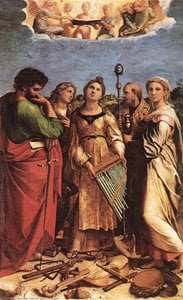
St cecilia (detail)2

Raphael's 'St. Cecilia (detail)' showcases a vibrant musical scene with instruments and figures, reflecting the saint’s patronage of music. Explore this iconic Renaissance masterpiece and its rich symbolism.

Raffaello Sanzio (1483-1520): A reneszánsz mester, aki a nyugodt madonáival, építészeti nagyságával és ikonikus alkotásaiért ismert. Fedezze fel Urbino gyökereit és művészete örökségét!

Giclée / Műnyomat

Múzeumi minőségű giclée vagy vászonnyomat, gyors gyártással és rugalmas finomítási lehetőségekkel. ( Kézzel festett másolat rendelése Áttérés digitális képre)

Corner sample of the P118B picture frame: formázott polisztirol, 5 cm wide and 3 cm thick
P118B Ft10
Corner sample of the P118H picture frame: formázott polisztirol, 5 cm wide and 3 cm thick
P118H Ft10
Corner sample of the P118W picture frame: formázott polisztirol, 5 cm wide and 3 cm thick
P118W Ft10
Corner sample of the P438Z picture frame: formázott polisztirol, 5.5 cm wide and 3.5 cm thick
P438Z Ft10
Corner sample of the P508JH picture frame: formázott polisztirol, 7 cm wide and 3.5 cm thick
P508JH Ft12
Corner sample of the P508YH picture frame: formázott polisztirol, 7 cm wide and 3.5 cm thick
P508YH Ft12
Corner sample of the P805H picture frame: formázott polisztirol, 5 cm wide and 3.5 cm thick
P805H Ft10
Corner sample of the P805Z picture frame: formázott polisztirol, 5 cm wide and 3.5 cm thick
P805Z Ft10
Corner sample of the P919BZ picture frame: formázott polisztirol, 7 cm wide and 3.5 cm thick
P919BZ Ft10
Corner sample of the P919G picture frame: formázott polisztirol, 7 cm wide and 3.5 cm thick
P919G Ft10
Corner sample of the P919XJ picture frame: formázott polisztirol, 7 cm wide and 3.5 cm thick
P919XJ Ft10
Corner sample of the P959ZH picture frame: formázott polisztirol, 5 cm wide and 3 cm thick
P959ZH Ft10
Corner sample of the P968JZ picture frame: formázott polisztirol, 6 cm wide and 4 cm thick
P968JZ Ft12
Corner sample of the W106C picture frame: tömörfa, 5 cm wide and 3 cm thick
W106C Ft8
Corner sample of the W218G picture frame: tömörfa, 5 cm wide and 3 cm thick
W218G Ft10
Corner sample of the W218JH picture frame: tömörfa, 5 cm wide and 3 cm thick
W218JH Ft8
Corner sample of the W218Y picture frame: tömörfa, 5 cm wide and 3 cm thick
W218Y Ft10
Corner sample of the W307PJ picture frame: tömörfa, 6 cm wide and 3 cm thick
W307PJ Ft10
Corner sample of the W316G picture frame: tömörfa, 6 cm wide and 3 cm thick
W316G Ft10
Corner sample of the W316PJ picture frame: tömörfa, 6 cm wide and 3 cm thick
W316PJ Ft8
Corner sample of the W316Y picture frame: tömörfa, 6 cm wide and 3 cm thick
W316Y Ft10
Corner sample of the W398PJ picture frame: tömörfa, 5 cm wide and 3 cm thick
W398PJ Ft8
Corner sample of the W4111J picture frame: tömörfa, 6.5 cm wide and 3.5 cm thick
W4111J Ft10
Corner sample of the W500HY picture frame: tömörfa, 7 cm wide and 5 cm thick
W500HY Ft15
Corner sample of the W500JH picture frame: tömörfa, 7 cm wide and 5 cm thick
W500JH Ft15
Corner sample of the W692G picture frame: tömörfa, 8 cm wide and 4 cm thick
W692G Ft12
Corner sample of the W849H picture frame: tömörfa, 5 cm wide and 3 cm thick
W849H Ft8
Corner sample of the W940BG picture frame: tömörfa, 7.5 cm wide and 4.5 cm thick
W940BG Ft15
Corner sample of the W953PJ picture frame: tömörfa, 6 cm wide and 3.5 cm thick
W953PJ Ft8

Standard méret
egyedi méretű
CM
INCH

Válasszon előre meghatározott méreteink közül, amelyek megfelelnek a műalkotás eredeti arányainak.

szélesség
magasság

Írja be a keretének vagy a falának megfelelő szélességet és magasságot. A nyomatot csak le lehet vágni, soha nem tehető nagyobbá, mint az eredeti kép, így egy eltérő alakú méretnél a kép egy része elveszik. Mielőtt bármit kinyatintanánk, küldünk egy digitális próbamodellt jóváhagyásra. Az oldalon látható kép nem tartalmazza a valós levágást — ezt csak a próbamodell mutatja meg.

Világszerte történő kiszállítás területére mindössze 2 hét alatt, a szokásos 4-5 hét helyett. (26 október)

Ingyenes globális expressz szállítás
Prémium minőségű len vászon
Teljes körű szállítási biztosítás
Vámvisszatérítési Garancia
Hiteles színarányosság garancia
100 napos visszaküldési lehetőség (csak hibás termékek esetén)
100% pénzvisszatérítési garancia
Több darab vásárlásakor kedvezmény

Összesített ár

Ft 21829

St cecilia (detail)2

Giclée / Műnyomat

Reprodukció mérete

-

Összesített ár

Ft 21829

Gyors információk

  • Subject or theme: Cecilia and musicians
  • Movement: High Renaissance
  • Notable elements or techniques: Musical instruments, sfumato
  • Title: St Cecilia (detail)
  • Medium: Fresco

Művészeti kvíz

Minden kérdésre csak egy helyes válasz létezik.

Kérdés 1:
The painting ‘St Cecilia (detail)’ primarily depicts:
Kérdés 2:
Which instrument is prominently featured on the left side of the painting?
Kérdés 3:
The artist Raphael was primarily associated with which artistic movement?
Kérdés 4:
Based on the description, what is a key element of the composition’s overall theme?
Kérdés 5:
Considering Raphael’s biography, what significantly influenced his early artistic development?

The Enigmatic Beauty of St. Cecilia

Raphael’s “St. Cecilia (detail)” is more than just a portrait; it's a carefully constructed tableau brimming with symbolic resonance and the quiet elegance characteristic of the High Renaissance. This intimate study, likely part of a larger altarpiece, offers a glimpse into a world where music, faith, and artistic patronage intertwined seamlessly. The painting depicts St. Cecilia, the patron saint of musicians, not as a grand, imposing figure, but as a serene young woman absorbed in her devotion – a deliberate choice that speaks volumes about Raphael’s understanding of his subject and his audience.

St Cecilia (detail) by Raphael

The composition is remarkably balanced, drawing the eye to St. Cecilia at its center. She’s not actively performing or engaged in a dramatic gesture; instead, she sits with an almost meditative stillness, her gaze directed heavenward. Around her cluster instruments – violins, cellos, and a guitar – each rendered with meticulous detail, suggesting both her connection to the earthly realm of music and her spiritual elevation. Notice how these instruments aren’t merely decorative; they are integrated into the scene as if part of her very being, echoing the harmony she embodies.

A Symphony of Symbolism

Raphael masterfully employs symbolism throughout this work. The placement of the musical instruments is particularly significant. The three violins, one near the center, another towards the bottom-left corner and the third one is placed in the upper-right corner, create a visual triangle that draws attention to St. Cecilia. The cello at the top right and the one on the left side further reinforce this compositional balance. Beyond their decorative value, these instruments represent the diverse facets of musical expression – from the intimate solo violin to the rich resonance of the cello and the vibrant strumming of the guitar. The scattered books, each positioned with deliberate care, symbolize learning, wisdom, and the intellectual pursuits that underpinned Renaissance culture. The inclusion of St. John the Evangelist, St. Paul, and St. Augustine on either side of Cecilia reinforces her spiritual connection to the broader Christian community.

Furthermore, the scene’s overall atmosphere is one of quiet contemplation. The muted palette – dominated by earth tones and subtle blues – contributes to this sense of serenity. The use of *chiaroscuro*, with carefully rendered light and shadow, adds depth and drama to the figures while maintaining a harmonious balance. It's a testament to Raphael’s ability to capture not just physical likeness but also the inner life of his subjects.

Renaissance Context and Artistic Innovation

Created around 1514-1515 in Rome, “St. Cecilia (detail)” reflects the artistic trends of the High Renaissance – a period characterized by classical ideals, humanism, and a renewed interest in religious iconography. Raphael was deeply influenced by Leonardo da Vinci and Michelangelo, absorbing their innovative techniques and striving to achieve a harmonious balance between realism and idealism. As Vasari noted, this painting exemplifies Raphael’s ability to seamlessly blend the elegance of Florentine art with the grandeur of Roman tradition.

Interestingly, early accounts attributed the creation of this still-life to Raphael's assistant Giovanni da Udine, though later research confirmed that Raphael himself was responsible for all the instruments depicted. This highlights the collaborative nature of Renaissance artistic production and underscores Raphael’s mastery over his craft. The painting stands as a remarkable example of how art could simultaneously celebrate religious devotion, showcase technical skill, and engage with broader cultural values.

Bringing Raphael's Vision Home

WahooArt is proud to offer meticulously crafted hand-painted reproductions of “St. Cecilia (detail).” Our artists recreate the painting’s exquisite detail, vibrant colors, and profound symbolism with unparalleled skill, ensuring that you receive a stunning work of art that captures the essence of Raphael's masterpiece. Whether for your home, office, or collection, this reproduction offers an authentic connection to one of the Renaissance’s most celebrated figures and a timeless testament to the power of beauty and devotion.

Kérdések és válaszok

A "St cecilia (detail)2" egy híres Renaissance művészeti alkotás?

A „St cecilia (detail)2”, Raffaello Sanzio alkotása a Iconic kategóriába tartozik, és a Renaissance irányzat részeként tekinthető.

Mi a(z) domináns színe a(z) „St cecilia (detail)2”, Raffaello Sanzio alkotása alkotásnak?

A(z) "St cecilia (detail)2" alkotásban leginkább a Phthalo Green (#271613) szín tűnik ki. A domináns szín hasznos, amikor egy műalkotást össze kell egyeztetni egy belső térrel.

Van-e rozšíngtott valóság (AR) előnézete a(z) "St cecilia (detail)2" alkotásnak?

A(z) "St cecilia (detail)2" kiterjesztett valóság (AR) előnézettel rendelkezik: a mű Kiterjesztett valóság előnézet oldalán kompatibilis eszközön megtekinthető saját környezetében.


A művész életrajza

A Reneszánsz Fénye: Raffaello Sanzio élete és művészete

Raffaello Sanzio da Urbino, a világ Raffaelloként ismerte, a reneszánsz egyik legkiemelkedőbb alakja volt. 1483-ban született Urbino falai között, egy kis, de intellektuálisan pezsgő itáliai városállamban. Korai éveit olyan légkörben töltötte, amely a művészi képességeket és a humanista tudást egyaránt értékelte. Apja, Giovanni Santi nem csupán Federico da Montefeltro herceg festője volt – hanem mélyen elmerült a reneszánsz gondolkodásának áramlataiban, költő, aki megörökítette a herceg életét és aktívan keresett innovatív művészeti ötleteket Itália szerte. Ez az udvari környezetbe való beágyazódás, amely a finomságot és az intellektuális párbeszédet értékelte, mélyen formálta Raffaello érzékenységét. Apja elvesztése tizenegy éves korában felelősséget rótt rá, de lehetőséget is teremtett arra, hogy a családi műhelyben csiszolja képességeit, helyi művészek útmutatásával elsajátítva a technikákat és hagyományokat. Még ezekben a korai munkákban is megjelent a lágy kecsesség és a részletek aprólékos figyelme – érett stílusának előhírnökei.

Umbriától Firenzéig: Új Hatások Befogadása

Raffaello művészeti útja folyamatos fejlődés volt, intenzív tanulmányozás és asszimiláció időszakaival tarkítva. Kezdő képzése Pietro Perugino mellett Perugiában szilárd alapot vetett az umbriai stílusban – amely a lágy modellezéssel, harmonikus kompozíciókkal és békés vallási jelenetekkel jellemezhető. Raffaello azonban kielégíthetetlen kíváncsisága sarkallta arra, hogy új kihívásokat keressen és bővítse művészeti horizontját. 1504-ben Firenzébe utazott, egy város, amely akkor a művészeti innováció energiájától vibrált. Itt találkozott Leonardo da Vinci és Michelangelo remekműveivel, olyan művészekkel, akik példátlan módon tolották a festészet határait. Gondosan tanulmányozta technikáikat – Leonardo sfumatóját, finom fény- és árnyékgrádációit, valamint Michelangelo erőteljes anatómiai pontosságát és drámai kompozícióit. Ez a firenzei időszak Raffaello számára egy fontos próbaperiódus volt, kényszerítve arra, hogy új művészeti lehetőségekkel szembesüljön és azokat saját egyedi látásmódjába ötvözze. A hatás látható a korszak munkáinak megnövekedett dinamizmusában és pszichológiai mélységében, különösen Madonna-sorozatában.

A Római Diadal: Megrendelések és Remekművek

1508-ban Raffaello kapott egy behívást, amely megváltoztatta karrierjét – Julius II pápa meghívását Rómába. Ez a legtermékenyebb és leghíresebb időszakának kezdete volt. Az Örök Város páratlan lehetőséget kínált számára, hogy bemutassa tehetségét nagyszabású méretekben, lélegzetelállító freskókkal díszítve a vatikáni pápai lakosztályokat. A The School of Athens, talán leghíresebb műve, tanúbizonyság teszi kompozíciós mesterségéről, perspektívájáról és filozófiai allegóriájáról. Ebben a nagyszabású térben Raffaello az antikvitás klasszikus alakjait hozta össze – Platón, Arisztotelész, Püthagorasz, Eukleidész – egy élénk tablót teremtve, amely ünnepelte az emberi észlényt és a tudás keresését. Továbbra is dolgozott későbbi pápák számára, köztük X. Leó számára, monumentális projektekbe kezdett, mint például a Stanze della Segnatura és a Stanza d'Eliodoro díszítése. Ezekben a szobákban található freskók nem csupán dekoratívak; mély nyilatkozatok a pápai hatalomról, a vallási hitről és a reneszánsz ideáljairól.

A Kecsesség és a Nagyság Szintézise: Raffaello Művészeti Stílusa

Raffaello művészeti stílusát gyakran harmonikus keveréknek írják le a kecsességgel, tisztasággal és idealizált szépséggel. Rendkívüli képessége volt arra, hogy sokféle hatást – az umbriai hagyományt, firenzei innovációkat, klasszikus antikvitást – egyedülállóan kiegyensúlyozott esztétikába ötvözze. Kompozícióit gondosan megtervezte, a reneszánsz elvek mély megértését tükröző rend és arányosság érzetével. Alakjai békés méltóságot és érzelmi kifejezőképességet árasztanak, megtestesítve a humanista ideálokat. Emellett mester színész volt, gazdag, ragyogó árnyalatokat alkalmazva olyan munkák létrehozásához, amelyek vizuálisan magával ragadóak és intellektuálisan is stimulálóak. Michelangelo gyakran drámai és viharos stílusától eltérően Raffaello munkája nyugalmat és harmóniát áraszt – egy tulajdonság, amely évszázadok óta elbűvöli a közönséget.

Örökség és Tartós Hatás

Raffaello idő előtti halála 1520-ban, mindössze harminchat éves korában egy hatalmas potenciállal teli karriert szakított meg. Ennek ellenére öröksége fennmaradt a nyugati művészettörténet egyik legjelentősebb alakjaként. Munkája a magas reneszánsz esztétikájának sarokköve lett, generációk számára szolgáltatva mintát. Bár Michelangelo hatása később dominálta a művészeti diskurzust, Raffaello hangsúlyozása a tisztaságra, harmóniára és idealizált szépségre reneszánsz kori kritikusok, például Johann Joachim Winckelmann által újraéledt. Ma festményei továbbra is ámulatba ejtik és csodálatot váltanak ki, lenyűgözve a nézőket technikai zsenialitásukkal, érzelmi mélységükkel és tartós vonzerejével. Hatása számtalan utókorban készült műalkotásban látható, megerősítve helyét az igaz reneszánsz mestereként – egy festőként, aki nemcsak a tárgyainak fizikai hasonlóságát rögzítette, hanem az emberi kecsesség és méltóság lényegét is.

Raffaello Sanzio

Raffaello Sanzio

1483 - 1520 , Olaszország

Rövid információk

  • Artistic Movement Or Style: Magas Reneszánsz
  • Artists Or Movements Influenced By This Artist: ['Neoklasszicizmus']
  • Artists Who Influenced This Artist:
    • Leonardo da Vinci
    • Michelangelo
  • Date Of Birth: 1483
  • Date Of Death: 1520
  • Full Name: Raffaello Sanzio
  • Nationality: Olasz
  • Notable Artworks:
    • Az athéni iskola
    • Sistina Madonna
  • Place Of Birth (City And Country): Urbino, Olaszország
Fedezze fel a műalkotásokat témák, stílusok és jellemzők szerint csoportosítva.