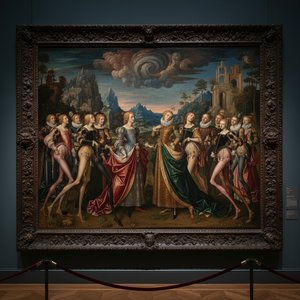
A Life Rooted in Renaissance Transformation
Pieter Bruegel the Elder emerged during a period of profound change, egy olyan időszakban, amikor Európa művészeti tájképe – Itália reneszánszi ideáihoz képest – a Kárpáti félszigeten és a tengeren túl fejlődő komplexebb kifejezések felé vett fintörést. Valaha Breda (ma Hollandia része) területén, valószínűleg 1525 vagy 1530 körül született, bár az életkorának korai éveiről kevés információ áll rendelkezésre. A fiatal Bruegel élete a vallási megrendülések és a virágzó kereskedelmi kultúra közepette telt el. Képzése körülbelül 1545-ben kezdődött Pieter Coecke van Aelst, egy tiszteletre méltó antwerpi festő mester tanítása alatt, aki híres volt művészetéről és szőnyegmintázás tervezéséről is. Ez a tanulmányi időszak nemcsak alapos technikákat biztosított Bruegelle – olajfestést és rajzolást – hanem bevezette a humanista áramlatokat is, amelyek egyre nagyobb hangsúlyt kaptak az intellektuális körökben. Van Aelst műhelye nem csupán oktatási hely volt; egy olyan ökológiai tér, ahol a hagyományos technikák találkoztak új gondolatokkal, formálva Bruegel jövőbeli látását.
Wanderings and the Forging of a Unique Vision
Bruegel tanulmányi időszak után kiterjedt utazásokra indult, amelyek mélyrehatóan befolyásolták művészeti fejlődését. 1551 és 1553 között Franciaországba, Svárcsaba és Olaszországba tett útravalót, rajzolva tájképeket és merülve el különböző kultúrákban. Ezek nem csupán látnivalók voltak; hanem megfigyelésekre és tanulásra alkalmas expedíciók is. Itália területén Bruegel találkozott reneszánszi mesterekkel, de művészi ízlése még mindig a Kárpát-hegységben maradt. Nem egyszerűen magányzott az olasz stílussal, hanem elnyilvánította befolyását és szűkítette azt saját egyedi érzékenysége által. Az Alpok látványos csúcsaival és völgyével nagy nyomot hagyott maga után, ami befolyásolta későbbi tájképének kompozícióját és atmoszferebeli perspektíváját. 1553-ban (vagy 1555-ben) tért vissza Antwerpenbe, ahol beiratkozott a Szent Lukács Egyesületbe, ami azt jelentette, hogy elismerte művészi szakállását.
Beyond Myth and Religion: A New Focus for Art
Bruegel valódi innovációja a művészeti témákban rejlett. Merészebben lépett ki a reneszánszi festészet megszokott konvencióiból, amelyek gyakran vallási narratívákat vagy klasszikus mitológiát ábrázoltak. Ehelyett fordította figyelmét az átlagos emberek hétköznapi életére – parasztok munkálására a mezőkben, falvak ünnepeire, vadászok hóban való útjára. Ez nem volt a hagyományos témák elutasítása, hanem az átalakításuk magas művészeti szintre. Tájképét nem csupán háttérként ábrázolta; aktív szereplővé tette a narratívában, gyakran szimbolikus jelentéssel és a természet erői és szélei mély megértésével. *Halál diadala* egy ijesztő apokalipszis látlelet, tele groteszk képekkel és elvészélyes érzéssel. A *Földművesek eszevénye* pedig egy rendkívül részletes és nüanszusos tájképe a vidéki életnek, ami nem idealizálja a helyzetet, hanem őszintén mutatja be a parasztok munkáját. Döntő szerepet játszott a chiaroscuro használata – a fény és árnyak dinamikus játékának – mélység, realitás és érzelmi rézonansz létrehozásában. A képei nem csupán azt ábrázolták, amit láttak; hanem értelmezik a világot saját egyedi szemszögükkel.
Lasting Legacy: An Influence Across Centuries
Pieter Bruegel the Elder művészeti öröksége vitathatatlanul befolyásolta az utókor festőit. Megteremtette a feltételeket a holland aranykorszakú festők számára, inspirálva Isaac van Ostade és Adriaen Brouwer művészeket is Bruegel realista ábrázolására. Innovatív tájképészeti stílusa pedig utat nyitott a későbbi fejlődéseknél a műfajban, befolyásolva azokat az alkotókat, akik a természet szépségét és nagyszerűségét szeretnék megörökíteni. A festészeten túl Bruegel munkája továbbra is vonzza a modern közönséget, megjelenik filmekben, mint például Andrei Tarkovski *Solaris* (1972) és Lars von Trier *Melancholia* (2011), bizonyítva az alkotás örök erejét. Képei időtállóan tükrözik a männiség természetét – kapcsolatunkat a természettel, küzdelmünket a halállal és képességünket a boldogságra és szomorúságra. 1569-ben, viszonylag fiatalon, Brüsszelben halt meg, körülbelül negyvenhárom éves korában.
Notable Works and Enduring Themes
- Landscape with the Flight into Egypt: Egy nyugodt, de finoman szimbolikus ábrázolás a Szent Szűz és Péter útja arról, hogy hogyan táplálják a gyermeket.
- Halál diadala: Egy ijesztő és apokalipsziszerű látlelet, tele groteszk képekkel és elvészélyes érzéssel.
- Földművesek eszevénye: Egy élénk és részletes tájképe a vidéki életnek, ami bemutatja a parasztok munkáját és társadalmi szokásait.
- Vadászok hóban: A szezonok egyik képzőője, amely híres a légkörös szépségéről és a hóban való vadászok realista ábrázolásáról.
- Bábel tornya: Egy monumentális alkotás az emberi ambícióról és Isten ítélkezéséről.
Bruegel művészete nem csupán azt ábrázolta, amit láttak; hanem értelmezte a világot saját egyedi szemszögükkel. Képei örök tanításokat hordoznak magukban az emberi természetről, a természettel való kapcsolatról, a halállal szembenálló küzdelemről és a boldogságra és szomorúságra való képességünkről.



 Előnézet
 Váltás nyomtatványra
 Megosztás
 Megosztás
 Részletek
 Útmutató

 Letöltés
 Hasonló darabok
 X-ray felvétel
 Diavetítés
 Statisztika


 Tovább olvasom






































 Az üvegkeretes opció csak 110 cm alatti méretben érhető el