Előnézet AR előnézet Kézzel festett másolat vásárlása Áttérés digitális képre Megosztás
Részletek Útmutató Kedvencekhez ad Letöltés Hasonló darabok X-ray felvétel Diavetítés Statisztika

The Milkmaid

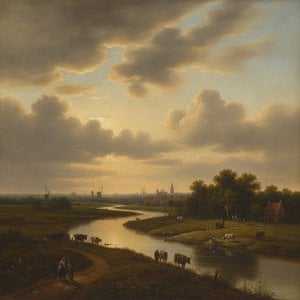
Paulus Potter's 'The Milkmaid' (1646) captures a serene Dutch countryside scene with a young woman milking cows. A masterpiece of realism, it exemplifies the Golden Age’s focus on nature and daily life.

Paulus Potter (1625-1654) holland festő, a holt évszázad egyik legkiemelkedőbb képzőművésze volt, aki realista állatképekkel és tájképészeti motívumokkal alkotott, és a romantika előfutára is tekinthető.

Giclée / Műnyomat

Múzeumi minőségű giclée vagy vászonnyomat, gyors gyártással és rugalmas finomítási lehetőségekkel. ( Kézzel festett másolat vásárlása Áttérés digitális képre)

P118B $10
P118H $10
P118W $10
P438Z $10
P508JH $12
P508YH $12
P805H $10
P805Z $10
P919BZ $10
P919G $10
P919XJ $10
P959ZH $10
P968JZ $12
W106C $8
W218G $10
W218JH $8
W218Y $10
W307PJ $10
W316G $10
W316PJ $8
W316Y $10
W398PJ $8
W4111J $10
W500HY $15
W500JH $15
W692G $12
W849H $8
W940BG $15
W953PJ $8

Standard méret
egyedi
CM
INCH

Válasszon előre meghatározott méreteink közül, amelyek megfelelnek a műalkotás eredeti arányainak.

szélesség
magasság

Megadhat saját méreteket is egy konkrét kerethez vagy helyszínhez igazítva. Amennyiben a kiválasztott méret nem egyezik az eredeti kép arányokkal, a műalkotást le fogjuk vágni, vagy kiegészítjük a képet tükrözött vagy egyszínű szélekkel. A gyártás megkezdése előtt egy digitális tervezetet küldünk jóváhagyásra.
Kérjük, vegye figyelembe, hogy a képernyőn látható előnézet nem tükrözi a tényleges levágást vagy kiegészítést. Csak a tervezet mutatja pontosan a végső kompozíciót.
Bár az egyedi méretek is elérhetőek, az eredeti arányok megőrzése érdekében azt javasoljuk, hogy válasszon a előre meghatározott listából származó méretet.

Világszerte történő kiszállítás területére mindössze 2 hét alatt, a szokásos 4-5 hét helyett. (25 szeptember)

why_choose_icon
Ingyenes globális expressz szállítás
why_choose_icon
Prémium minőségű len vászon
why_choose_icon
Teljes körű szállítási biztosítás
why_choose_icon
Vámvisszatérítési Garancia
why_choose_icon
Tökéletes színarányosság garancia
why_choose_icon
100 napos visszaküldési garancia (csak gyártási hibás termékek esetén)
why_choose_icon
100% pénzvisszatérítési garancia
why_choose_icon
Több darab vásárlásakor kedvezmény

Összesített ár

$ 68

reproduction

The Milkmaid

Giclée / Műnyomat

Reprodukció méretei

-

Összesített ár

$ 68

Rövid tények

  • Title: The Milkmaid
  • Influences: Bartsius
  • Location: Mauritshuis, The Hague
  • Notable elements: Low vantage point
  • Year: 1646
  • Dimensions: 38 x 50 cm
  • Artist: Paulus Potter

Művészeti kvíz

Minden kérdésre csak egy helyes válasz létezik.

Kérdés 1:
What is the primary subject matter of Paulus Potter’s ‘The Milkmaid’?
Kérdés 2:
In what century was ‘The Milkmaid’ painted?
Kérdés 3:
What artistic movement is ‘The Milkmaid’ often associated with?
Kérdés 4:
Which of the following best describes the painting's style?
Kérdés 5:
What is the significance of the cows in ‘The Milkmaid’?

A Pastoral Moment Frozen in Time: Paulus Potter’s “The Milkmaid”

Paulus Potter's "The Milkmaid," painted in 1646, isn’t merely a depiction of rural life; it’s a profound meditation on simplicity, domesticity, and the quiet dignity of everyday labor. This remarkable work, now housed within the Wallace Collection in London, offers a rare glimpse into the burgeoning world of Dutch Golden Age painting – a period defined by its meticulous realism, deep appreciation for nature, and a subtle yet powerful exploration of human emotion. The scene unfolds with an almost startling immediacy, drawing the viewer directly into the heart of a tranquil afternoon on a farmstead.

At first glance, the composition appears straightforward: a young milkmaid stands bathed in soft light, her posture relaxed yet purposeful as she attends to her task – emptying a large pail. However, Potter’s genius lies not just in his technical skill but in his ability to imbue this simple act with an extraordinary sense of life and serenity. The figures of the cows, both brown and white, are rendered with astonishing detail, their coats gleaming with a subtle sheen that speaks volumes about Potter's mastery of light and texture. The inclusion of the bare tree branch in the background subtly hints at the approaching winter, adding a layer of poignant beauty to the scene – a reminder of the cyclical nature of life and the passage of time.

A Masterclass in Dutch Realism

Potter’s style is firmly rooted in the tenets of Dutch realism, yet he transcends mere imitation. He doesn't simply record what he sees; he transforms it into a deeply felt experience. The painting’s palette is restrained and earthy – predominantly browns, creams, and muted greens – reflecting the natural world that dominates the composition. Potter employs a low vantage point, placing the viewer almost at eye level with the milkmaid, fostering a sense of intimacy and connection. This technique was revolutionary for its time, moving away from the more formal, elevated perspectives favored by earlier generations of artists.

Technically, “The Milkmaid” is a testament to Potter’s meticulous attention to detail. The artist's use of oil paint allows him to capture the subtle nuances of texture – the rough bark of the tree, the dampness of the pail, the soft fur of the cows. He masterfully utilizes chiaroscuro—the dramatic contrast between light and shadow—to create a sense of depth and volume, bringing the scene to life with remarkable realism. The brushstrokes are deliberate and controlled, contributing to the painting’s overall sense of quiet confidence.

Symbolism and Emotional Resonance

Beyond its technical brilliance, “The Milkmaid” is rich in symbolic meaning. The milkmaid herself represents a virtuous simplicity – a figure of hardworking honesty and unassuming beauty. Her modest attire and unadorned appearance speak to her connection with the land and her dedication to her craft. The cows, symbols of prosperity and abundance, further reinforce this theme. Potter’s choice to depict a young woman engaged in such a commonplace activity elevates it to something extraordinary, suggesting that true value lies not in wealth or status but in the quiet dignity of labor.

The painting's emotional impact is profoundly calming. There’s no drama, no conflict—only a sense of peaceful contentment. The soft light, the gentle colors, and the serene expressions of the figures all contribute to this atmosphere of tranquility. “The Milkmaid” invites us to pause, to reflect on the beauty of the natural world and the simple pleasures of everyday life – a timeless message that continues to resonate with viewers today.

A Legacy of Dutch Artistic Innovation

Paulus Potter’s "The Milkmaid" stands as a pivotal work in the history of Dutch art. It exemplifies the shift towards greater realism and naturalism that characterized the Golden Age, while also foreshadowing the rise of Romanticism with its emphasis on emotion and the sublime beauty of nature. His innovative use of perspective, his masterful rendering of light and texture, and his ability to imbue a simple scene with profound emotional resonance cemented his place as one of the most important artists of his time. Reproductions of this iconic painting continue to captivate audiences worldwide, offering a window into a bygone era and reminding us of the enduring power of art to transport us to another world.


A művész életrajza

A Brief Life Illuminated: The World of Paulus Potter

Paulus Potter, a name inextricably linked to the Dutch Golden Age’s profound connection to nature, lived a life tragically short yet remarkably impactful. Born in Enkhuizen on November 20, 1625, and baptized that very same day, his artistic journey began within a family already steeped in creative tradition. His father, Pieter Symonsz Potter, was a highly respected painter specializing in the intricate craft of gilded leather hangings and charming genre scenes – capturing everyday life with remarkable detail and warmth. His mother, Aaltje Paulusdr Bartsius, held a significant familial connection to Willem Bartsius, another esteemed painter of the era, further enriching the artistic atmosphere of their household. This nurturing environment, combined with the family’s relocation first to Leiden in 1628, and then to the bustling metropolis of Amsterdam in 1631 – providing access to a wider world of artistic influence and opportunity – undoubtedly laid the foundation for young Paulus’s burgeoning artistic sensibilities. It was in Amsterdam that he began his formal training under his father’s guidance, though some scholars suggest potential influences from Claes Moeyaert, a prominent painter known for his atmospheric landscapes, may have subtly shaped his early development as well.

From Delft Guilds to Hague Landscapes

Potter's ambition quickly propelled him towards recognition within the established artistic circles of the Dutch Republic. He joined the prestigious Guild of Saint Luke in Delft – a crucial step for any aspiring artist seeking legitimacy and professional standing – around 1646. However, it was his move to The Hague around 1649 that truly marked a turning point in his career and allowed him to establish himself within a particularly fertile artistic environment. The Hague, at this time, was home to numerous influential painters, most notably Jan van Goyen, whose mastery of atmospheric effects and realistic depictions of nature would profoundly influence Potter’s own style. This period also witnessed a significant shift in Potter's personal life. In July 1650, he married Adriana van Balckeneynde – a union that opened doors to influential circles thanks to her father, a prominent building contractor involved in numerous prestigious projects throughout the region. Through this connection, Potter found himself introduced to members of Dutch high society, including Amalia of Solms-Braunfels, a member of the Stadholder’s family and an avid patron of the arts – she would become a significant supporter of his work. A brief return to Amsterdam in May 1652, at the invitation of physician and art enthusiast Nicolaes Tulp – who commissioned a portrait of his son Dirck – offered further recognition and solidified his position within the artistic community. Sadly, this period of burgeoning success was tragically cut short by illness; Paulus Potter succumbed to tuberculosis on January 17, 1654, at the young age of twenty-eight, leaving behind a legacy of breathtaking artistry.

The Pastoral Vision: Style and Major Works

Paulus Potter carved a unique and instantly recognizable niche for himself within the vibrant landscape of Dutch Golden Age painting. He is most celebrated for his captivating depictions of animals – particularly cattle – seamlessly integrated into expansive, meticulously rendered landscapes. His compositions are often characterized by a strikingly low vantage point, an artistic choice that dramatically emphasizes the scale and grandeur of nature, dwarfing even the majestic beasts he portrayed. *The Young Bull*, created around 1647, remains his most iconic work – now housed in the Mauritshuis in The Hague – and is considered a pioneering example of Romanticism’s nascent sensibility. It captures a moment of intense energy and raw power, portraying the young bull with an almost palpable sense of vitality. Beyond this masterpiece, Potter produced other notable paintings such as *Figures with Horses by a Stable* (circa 1647), depicting a group of figures interacting with horses in a rustic setting; *Punishment of a Hunter* (around the same period), illustrating a dramatic scene of a hunter confronting his quarry; *Two Pigs in a Sty* (1649), offering a charming glimpse into rural life; and *Wolf-hound* (approximately 1650–1652), showcasing a powerful canine subject against a backdrop of rolling hills. He also demonstrated his versatility through numerous etchings, often focusing on the detailed portrayal of cattle and other animals – capturing their anatomy and behavior with remarkable precision.

Influences and Artistic Development

While Potter’s style is undeniably unique, it's clear that he drew inspiration from a variety of sources. The influence of Jan van Goyen is readily apparent in his landscapes – particularly in the subtle atmospheric effects and commitment to realistic representation. Van Goyen’s mastery of light and shadow, combined with his ability to convey a sense of depth and perspective, undoubtedly shaped Potter's approach to landscape painting. However, Potter transcended mere imitation; he infused his scenes with an emotional depth that resonated deeply with viewers then, and continues to do so today. He wasn’t simply replicating nature; he was capturing its essence – its power, beauty, and inherent drama. The family’s artistic heritage also played a significant role in his development, providing him with a foundation of technical skill and an appreciation for the expressive potential of color and form. Furthermore, some scholars suggest that his early exposure to Claes Moeyaert's work may have contributed to his understanding of composition and atmospheric perspective.

Legacy and Lasting Influence

Despite his tragically brief life, Paulus Potter’s artistic legacy endures as a testament to his exceptional talent and unique vision. His work stands as a powerful symbol of the Dutch Golden Age’s fascination with nature and its ability to evoke profound emotional responses. The influence of Jan van Goyen is readily apparent in Potter's landscapes, particularly in the subtle atmospheric effects and commitment to realistic representation. However, Potter transcended mere imitation; he infused his scenes with an emotional depth that resonated deeply with viewers then, and continues to do so today. He is now recognized as a precursor to the Romantic movement – anticipating its emphasis on the sublime power of nature and the emotional response it evokes. His paintings continue to be admired for their technical brilliance, their evocative atmosphere, and their profound sense of connection to the natural world. Even today, Potter is honored with a statue in his birthplace of Enkhuizen, depicting him sketching a goat – a fitting tribute to an artist who dedicated his life to capturing the beauty and majesty of the natural world.
Paulus Potter

Paulus Potter

1625 - 1654 , Holland

Gyors információk

  • Artistic Movement Or Style: Romantika
  • Artists Or Movements Influenced By This Artist: ['Jan van Goyen']
  • Artists Who Influenced This Artist:
    • Pieter Potter
    • Claes Moeyaert
  • Date Of Birth: November 20, 1625
  • Date Of Death: January 17, 1654
  • Full Name: Paulus Potter
  • Nationality: Hollandi festő
  • Notable Artworks:
    • A Fiatal Bocska
    • Lókkal a tanya
    • Vadászbüntetés
  • Place Of Birth: Enkhuizen, Holland
Fedezze fel a műalkotásokat témák, stílusok és jellemzők szerint csoportosítva.