Előnézet AR előnézet Kézzel festett másolat vásárlása Áttérés digitális képre Megosztás
Részletek Útmutató Kedvencekhez ad Letöltés Hasonló darabok X-ray felvétel Diavetítés Statisztika

The Velodrome

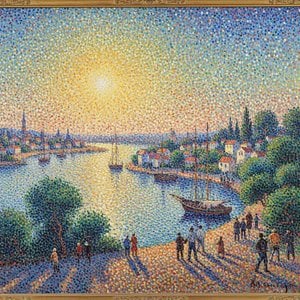
Experience Paul Signac’s vibrant ‘The Velodrome,’ a captivating pointillist masterpiece from 1899 showcasing an energetic race scene through meticulous color dots. Discover this Divisionism artwork and bring its luminous beauty into your space.

Paul Signac (1863-1935): A neo-impressionista festő, a pointillizmus megalkotója! Élénk tengerparti tájak, kikötők és a modern művészet meghatározó alakja. Fedezd fel a vibráló világát!

Giclée / Műnyomat

Múzeumi minőségű giclée vagy vászonnyomat, gyors gyártással és rugalmas finomítási lehetőségekkel. ( Kézzel festett másolat vásárlása Áttérés digitális képre)

P118B $10
P118H $10
P118W $10
P438Z $10
P508JH $12
P508YH $12
P805H $10
P805Z $10
P919BZ $10
P919G $10
P919XJ $10
P959ZH $10
P968JZ $12
W106C $8
W218G $10
W218JH $8
W218Y $10
W307PJ $10
W316G $10
W316PJ $8
W316Y $10
W398PJ $8
W4111J $10
W500HY $15
W500JH $15
W692G $12
W849H $8
W940BG $15
W953PJ $8

Standard méret
egyedi
CM
INCH

Válasszon előre meghatározott méreteink közül, amelyek megfelelnek a műalkotás eredeti arányainak.

szélesség
magasság

Megadhat saját méreteket is egy konkrét kerethez vagy helyszínhez igazítva. Amennyiben a kiválasztott méret nem egyezik az eredeti kép arányokkal, a műalkotást le fogjuk vágni, vagy kiegészítjük a képet tükrözött vagy egyszínű szélekkel. A gyártás megkezdése előtt egy digitális tervezetet küldünk jóváhagyásra.
Kérjük, vegye figyelembe, hogy a képernyőn látható előnézet nem tükrözi a tényleges levágást vagy kiegészítést. Csak a tervezet mutatja pontosan a végső kompozíciót.
Bár az egyedi méretek is elérhetőek, az eredeti arányok megőrzése érdekében azt javasoljuk, hogy válasszon a előre meghatározott listából származó méretet.

Világszerte történő kiszállítás területére mindössze 2 hét alatt, a szokásos 4-5 hét helyett. (21 szeptember)

why_choose_icon
Ingyenes globális expressz szállítás
why_choose_icon
Prémium minőségű len vászon
why_choose_icon
Teljes körű szállítási biztosítás
why_choose_icon
Vámvisszatérítési Garancia
why_choose_icon
Tökéletes színarányosság garancia
why_choose_icon
100 napos visszaküldési garancia (csak gyártási hibás termékek esetén)
why_choose_icon
100% pénzvisszatérítési garancia
why_choose_icon
Több darab vásárlásakor kedvezmény

Összesített ár

$ 68

reproduction

The Velodrome

Giclée / Műnyomat

Reprodukció méretei

-

Összesített ár

$ 68

Rövid tények

  • Year: 1899
  • Artistic style: Pointillism
  • Medium: Oil on canvas
  • Subject or theme: Race track scene
  • Influences:
    • Monet
    • Seurat
  • Dimensions: 46 x 55 cm
  • Artist: Paul Signac

The Velodrome: A Symphony of Light and Movement by Paul Signac

Paul Signac’s “The Velodrome,” painted in 1899, is more than just a depiction of an outdoor race; it's a vibrant embodiment of the burgeoning modernist movement. This oil on canvas, measuring 46 x 55 cm, pulsates with energy and captures a fleeting moment of exhilaration – the collective gaze of spectators absorbed in the spectacle of a horse race. The painting’s immediate impact stems from Signac’s masterful deployment of Pointillism, a technique he pioneered alongside Georges Seurat, that fundamentally altered the way artists approached color and light.

  • The Technique: At its core, Pointillism involves applying tiny, distinct dots of pure color – predominantly blues, greens, yellows, and reds – to the canvas. These individual strokes are meticulously arranged to create an illusion of blended color when viewed from a distance. The viewer’s eye then performs the optical mixing, resulting in a luminosity and vibrancy unmatched by traditional blending methods.
  • Capturing Movement: Signac brilliantly utilizes this technique to convey the dynamism of the race. The blurred figures, the racing horses, and the undulating lines of the track are all rendered through a controlled chaos of dots, creating a sense of speed and movement that draws the viewer into the scene.
  • A Window into Divisionism: “The Velodrome” is a quintessential example of Divisionism, the name given to Pointillism by Signac himself. It represents a deliberate effort to analyze and reconstruct visual perception based on scientific principles, challenging the prevailing Impressionistic focus on capturing fleeting moments of light.

Historical Context: The Rise of Neo-Impressionism

“The Velodrome” was created during a period of intense artistic experimentation in France. Following the innovations of Impressionism, artists sought new ways to represent reality, moving beyond simply recording visual sensations. Paul Signac, along with Seurat and others, embraced scientific theories of color perception – particularly those championed by Eugène Chevreul – to develop Pointillism. This movement was a reaction against the subjective interpretations of Impressionism, aiming for a more objective and systematic approach to painting. The late 19th century witnessed a growing fascination with science and technology, which undoubtedly influenced this artistic pursuit of quantifiable visual principles.

The subject matter itself – a velodrome, a relatively new sporting venue at the time – reflects the broader cultural shifts occurring in France during the Belle Époque. The rise of spectator sports and mass entertainment provided fertile ground for artists like Signac to explore themes of modernity, progress, and the collective experience.

Symbolism and Emotional Impact

Beyond its technical brilliance, “The Velodrome” resonates with a powerful emotional charge. The painting isn’t merely a record of an event; it's an evocation of excitement, anticipation, and shared human experience. The tightly packed crowd, the focused attention on the horses, and the vibrant colors all contribute to this sense of energy. Signac skillfully uses color not just for representation but also to evoke feeling – the cool blues and greens suggesting both the vastness of the sky and the intensity of the race, while bursts of yellow and red capture the heat and passion of the moment.

The inclusion of the horse itself is significant. Horses were central to French culture and sport, representing power, speed, and nobility. Their presence elevates “The Velodrome” beyond a simple depiction of a sporting event, transforming it into a symbol of human ambition and our enduring fascination with nature’s forces.

A Masterpiece of Divisionism – A Reproduction for Your Collection

This meticulously crafted reproduction of Paul Signac's "The Velodrome" offers an unparalleled opportunity to experience the brilliance of this pivotal work firsthand. Each hand-painted reproduction faithfully captures the nuances of Signac’s Pointillist technique, allowing you to appreciate the depth and luminosity that only this method can achieve. Whether adorning a gallery wall or enhancing your interior design scheme, this artwork is guaranteed to be a captivating focal point, bringing a touch of modernist elegance and artistic innovation to any space.


A művész életrajza

The Harmonious Vision of Paul Signac

Paul Victor Jules Signac, born in Paris in 1863, emerged as a pivotal figure in the evolution of modern art, inextricably linked to the birth and development of Neo-Impressionism. His early life, marked by a privileged upbringing within a successful merchant family, provided him with both financial security and exposure to the cultural elite of the time. However, it was a youthful encounter with Claude Monet’s exhibition in 1880 that truly ignited his artistic passion, setting him on a path far removed from the expected trajectory of a young man from a wealthy background. This initial fascination with Impressionism sparked a lifelong exploration of light, color, and the very science underpinning visual perception – a pursuit that would ultimately define his unique contribution to the art world. Signac wasn’t merely a painter; he was a dedicated explorer, driven by an insatiable curiosity about how we perceive the world around us.

A Dialogue with Seurat and the Birth of Neo-Impressionism

The meeting between Signac and Georges Seurat in 1884 proved transformative for both artists. They shared a deep admiration for Eugène Delacroix’s writings on color theory, particularly his exploration of complementary contrasts and the emotional impact of hue. This intellectual kinship fueled a rigorous investigation into these principles, leading them to develop a revolutionary painting technique – Pointillism. Signac wholeheartedly embraced Seurat's vision, abandoning the fleeting brushstrokes of Impressionism for the precise, calculated application of tiny, distinct dots of pure color intended to blend optically in the viewer’s eye. This wasn’t simply about aesthetics; it was an attempt to systematize painting, grounding it in scientific principles and challenging conventional artistic norms. The core idea was that by applying small strokes of complementary colors side-by-side, the human eye would naturally mix them, creating a richer, more vibrant image than could be achieved with traditional brushwork. Boulevard de Clichy (1886) stands as an early and remarkably successful testament to this new approach, showcasing Signac’s meticulous style and his commitment to capturing the vibrancy of urban life through a scientific lens – a deliberate departure from the subjective impressions favored by many Impressionists. Their collaboration wasn't merely technical; it was intellectual, fueled by a shared desire to elevate painting to the level of a rigorous science.

Coastal Reveries and Artistic Independence

Following Seurat’s tragic early death in 1891, Signac continued to develop his artistic vision, deeply influenced by his profound love for sailing and the allure of the Mediterranean coast. He discovered Saint-Tropez in 1892, establishing a home there that became a haven for artists and a source of endless inspiration. The shimmering waters, sun-drenched harbors, and picturesque coastal towns provided an ideal setting to explore the interplay of light and color. *The Red Buoy, Saint-Tropez* (1895) exemplifies this period, showcasing his mastery of Pointillism in capturing the vibrant hues and dynamic energy of the sea. He experimented with larger brushstrokes and a broader palette, moving beyond strict adherence to Seurat’s precise dotting method, incorporating elements of Impressionistic spontaneity into his technique. His travels extended beyond France, encompassing Italy, Holland, and even Constantinople, each journey enriching his artistic vocabulary and broadening his perspective – he meticulously documented these experiences in watercolor notebooks, capturing the essence of each location through rapid sketches and washes of color.

A Patron of the Avant-Garde and Lasting Legacy

Beyond his own prolific output, Signac played a crucial role in fostering the development of modern art through his leadership within the Société des Artistes Indépendants. As president from 1908 until his death in 1935, he championed artistic freedom and provided a platform for emerging talents, including Henri Matisse, André Derain, and other pioneers of Fauvism and Cubism. He was among the first to recognize and support their groundbreaking work, exhibiting controversial pieces that challenged conventional aesthetic norms – often defying established tastes and pushing the boundaries of artistic expression. Signac’s commitment to inclusivity and his willingness to embrace innovation helped shape the trajectory of 20th-century art. His theoretical writings, notably *From Eugène Delacroix to Neo-Impressionism* (1899), further solidified his position as a leading intellectual figure in the art world, offering a systematic exploration of color theory and its application to painting. Paul Signac’s legacy extends far beyond his captivating paintings; he was a visionary artist, a dedicated theorist, and a generous patron who profoundly influenced the course of modern art, leaving an indelible mark on generations of artists to come.

Key Dates & Achievements

  • 1863: Born in Paris, France.
  • 1884: Co-founded the Société des Artistes Indépendants with Georges Seurat.
  • 1886: Painted *Boulevard de Clichy*, a key example of early Pointillism.
  • 1895: Created *The Red Buoy, Saint-Tropez*, showcasing his mastery of coastal scenes.
  • 1899: Published *From Eugène Delacroix to Neo-Impressionism*, a seminal work on color theory.
  • 1908 – 1935: Served as President of the Société des Artistes Indépendants, championing avant-garde artists.
  • 1935: Passed away in Paris at the age of 72, leaving behind a rich artistic legacy.

Paul Signac

Paul Signac

1863 - 1935 , Franciaország

Gyors információk

  • Artistic Movement Or Style: Neo-Impressionizmus, Divizionizmus
  • Artists Or Movements Influenced By This Artist:
    • Henri Matisse
    • Fauvizmus
  • Artists Who Influenced This Artist:
    • Claude Monet
    • Georges Seurat
  • Date Of Birth: November 11, 1863
  • Date Of Death: August 15, 1935
  • Full Name: Paul Victor Jules Signac
  • Nationality: Francia
  • Notable Artworks:
    • Boulevard de Clichy
    • A Vörös Bottyú
    • A Szellő Concarneau-ban
    • A Velodrom
    • A tengerpart Collioure-ban
  • Place Of Birth: Párizs, Franciaország
Fedezze fel a műalkotásokat témák, stílusok és jellemzők szerint csoportosítva.