Adja értékesésre műveiét
x
ElőnézetElőnézet AR előnézetAR előnézet Váltás nyomtatványra Váltás nyomtatványraKépváltás Képváltás MegosztásMegosztás
RészletekRészletek Kedvencekhez ad Kedvencekhez ad LetöltésLetöltés Hasonló alkotásokHasonló alkotások X-ray felvételX-ray felvétel DiavetítésDiavetítés

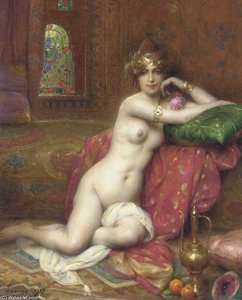
Orientalischer Basar

Discover Otto Pilny’s "Orientalischer Basar," a vibrant oil painting of a bustling Middle Eastern marketplace. Realistic detail & warm tones capture daily life in this evocative scene.

Otto Pilny (1866-1936) was a Swiss Orientalist painter famed for his evocative scenes of Bedouins, Ottoman life & North African landscapes. Explore his 'Slave Market' and more!

Kézzel készített olajfestmény reprodukció

Kézzel festett olajvastú vászon, az Ön által választott méretben és keretben, művészeink készítik meglévőre. (Váltás nyomtatványra Váltás nyomtatványraKépváltás Képváltás)

Standard
custom
CM
INCH

Válasszon előre meghatározott méreteink közül, amelyek megfelelnek a műalkotás eredeti arányainak.

szélesség
magasság

Ön megadhat saját méreteket egy adott kerethez vagy térhez igazításhoz. Ha a kiválasztott méret nem egyezik az eredeti kép arányával, akkor a műalkotást levágjuk, vagy további kézzel festett elemekkel meghosszabbítjuk a festményt. A gyártás megkezdése előtt küldünk Önnek egy digitális előnézetet jóváhagyásra.
Kérjük, vegye figyelembe, hogy a képernyőn megjelenő előnézet nem tükrözi a tényleges vágást vagy kiterjesztést. Csak az előnézet fog pontosan mutatni a végső kompozíciót.
Bár egyedi méretek állnak rendelkezésre, javasoljuk, hogy válasszon egy méretet az előre meghatározott listából az eredeti arányok megőrzése érdekében.

Példák arra, mit lehet módosítani: az arc kicserélése az ügyfél fotójára; háziállat hozzáadása (pl. macska helyett kutya); rejtett üzenet elhelyezése a háttérben; a háttér tájának vagy elemeinek megváltoztatása.
A rendelést követően a WahooArt.com csapata e-mailt küld az ügyfélnek az instrukciókért, és biztosít egy előnézeti képet (mockup).

Világszerte elérhető szállítás () 3-4 hét alatt a szokásos 5 hét helyett. (5 augusztus). A minőség nem kérdőjelezhető.

why_choose_icon
Ingyenes globális expressz szállítás
why_choose_icon
Prémium minőségű len vászon
why_choose_icon
Teljes szállítási biztosítás
why_choose_icon
Vámvisszatérítési Garancia
why_choose_icon
Tökéletes színpontosság garancia
why_choose_icon
60 napos visszaküldési lehetőség (csak gyártási hibák esetén)
why_choose_icon
100%-os pénzvisszatérítési garancia
why_choose_icon
Kedvezmény több termény esetén

Összesen

$ 372

reproduction

Orientalischer Basar

Reprodukciós technika

A reprodukció mérete

-

Összesített ár

$ 372


A művész életrajza

The Soul of the Orient: The Life and Vision of Otto Pilny

Otto Pilny stands as a singular, luminous figure in the vast landscape of Orientalist painting, a master who looked beyond the mere exoticism of the East to capture its profound spiritual heartbeat. Born in 1866 in České Budějovice, Bohemia, his early years were shaped by the cultural currents of the Austro-Hungarian Empire after his family relocated to Prague. While the precise details of his formal training remain shrouded in the mists of time, the trajectory of his life suggests a man driven by an insatiable curiosity for the unknown. At the tender age of nineteen, Pilny embarked on an odyssey that would define his artistic legacy: a solo expedition along the ancient caravan routes stretching from Cairo to Tripoli. Accompaniente only by his loyal dog, this formative journey through the vast, sun-drenched expanses of North Africa instilled in him a deep reverence for the landscapes and peoples he encountered, transforming him from a mere traveler into a dedicated chronicler of Bedouin life.

His artistic development was marked by periods of intense immersion and refinement. Between 1889 and 1892, Pilny returned to Egypt, finding himself deeply embedded in the vibrant, bustling atmospheres of Alexandria and Cairo. It was during this era that his talent garnered significant recognition; his ability to render the nuances of Eastern life so authentically earned him the prestigious appointment as a Court Painter under the Ottoman authorities. This period of professional triumph was punctuated by the high honor of receiving the Order of the Medjidie, 4th class, awarded by the last Khedive, Abbas Hilmi II. Such accolades underscore the respect his work commanded within the very cultures he sought to portray. A brief but essential sojourn in Vienna likely provided the scholarly depth and technical polish necessary to elevate his observational skills into the realm of high art, blending European academic precision with an authentic, ethnographic sensitivity.

A Legacy of Devotion and Detail

What truly distinguishes Pilny from his contemporaries was his refusal to rely on the superficial tropes of Orientalism. While many artists of his era focused on the theatrical or the sensational, Pilny sought the quiet, sacred moments of existence. He became renowned for his poignant depictions of Bedouins engaged in prayer—a subject rarely approached with such intimacy and respect by Western painters. In works such as Morning Prayers, one can witness the breathtaking interplay of light and shadow during a desert sunrise, where the spiritual weight of the figures is felt through meticulous brushwork and a warm, evocative palette. His canvases do not merely show a scene; they invite the viewer into a state of contemplation, capturing the rhythmic sanctity of Muslim worship with an unprecedented level of realism.

Beyond the spiritual, Pilny’s oeuvre serves as a vivid historical record of a vanishing world. He possessed a remarkable ability to navigate the complexities of Middle Eastern social structures, from the bustling energy of the Orientalischer Basar to the more harrowing and complex realities depicted in works like Slave Market. His paintings are rich with texture, capturing the heavy fabrics of Ottoman attire, the grit of the desert sands, and the vibrant chaos of the marketplace. This dedication to detail ensured that his work functioned as both art and ethnography. Even as he settled in Zürich in 1895 and eventually embraced Swiss citizenship, the echoes of his North African travels remained the primary pulse of his creativity. Through his eyes, the desert was not a void, but a living, breathing tapestry of human endurance, faith, and cultural splendor.

Otto Pilny

Otto Pilny

1866 - 1936 , Czech Republic

Rövid tények

  • Artistic Movement Or Style: Orientalism
  • Date Of Birth: June 28, 1866
  • Date Of Death: July 22, 1936
  • Full Name: Otto Pilny
  • Nationality: Czech/Swiss
  • Notable Artworks:
    • Slave Market
    • Orientalischer Basar
    • Morning Prayers
  • Place Of Birth: České Budějovice, Czech Republic