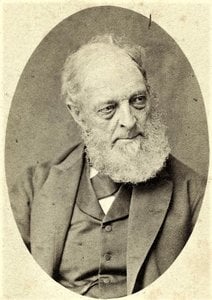
The Quiet Observer: The Life and Legacy of Obadiah Short
In the annals of the Norwich School, a movement defined by its profound connection to the Norfolk landscape, certain names resonate with dramatic flair and sweeping vistas. Yet, tucked within this illustrious collective is the more subtle, evocative presence of Obadiah Short. Born on July 26th, 1803, in the heart of Norwich, Short’s life was marked by early hardship and an extraordinary resilience that shaped his unique artistic perspective. Orphaned during the Peninsular War—losing his mother to illness in Lisbon and his father to the Battle of Corunna—the young Obadiah was raised by his grandparents. This early encounter with loss perhaps instilled in him a deep, contemplative appreciation for the enduring stability of the natural world, leading him to become a meticulous chronicler of the scenery that surrounded him.
Short’s professional journey was far from the traditional path of an academy-trained painter. Before finding his voice on canvas, he navigated the industrious landscape of Norwich as a textile laborer and later as a weaver. His career eventually found a beautiful intersection between art and industry when he became a pattern designer for Edward Willett, Nepulated & Co. For fifty years, he contributed to the creation of intricate shawl designs, a role that demanded an exacting eye for detail and a mastery of delicate textures. This background in textile design was not merely a secondary occupation; it fundamentally informed his painterly technique, gifting his landscapes with a unique sensitivity to light, pattern, and the fine grain of the natural environment.
A Mastery of Detail and Atmosphere
While many of his contemporaries sought to capture the grand, sweeping gestures of Romanticism, Short’s work is characterized by an understated elegance. His paintings do not demand attention through bravado; instead, they invite a slow, meditative gaze. Influenced significantly by the works of James Stark and the broader atmospheric traditions of Turner and Constable, Short developed a style that prioritized tonal harmony and the subtle gradations of light. His canvases often feature the wooded landscapes surrounding Norwich or serene, rural river scenes, rendered with a precision that borders on the scientific, yet remains deeply poetic.
The magic of Short’s work lies in its ability to capture the ephemeral qualities of the Norfolk countryside. One might find himself lost in the shimmering wheatfields under a summer sun or the misty, melancholic twilight of a marshland. His approach was one of meticulous observation, where every leaf and ripple in a stream was treated with profound respect. This commitment to accuracy allowed him to serve as more than just an artist; he became a vital historian. Through his paintings and his detailed written accounts of his childhood memories, Short provided future generations with an invaluable visual record of 19th-century Norwich life, preserving scenes that might otherwise have faded into the mists of time.
Artistic Achievements and Historical Significance
The breadth of Short’s talent extended beyond the easel and into the very fabric of British domestic life. His ability to transpose the beauty of the Norfolk landscape onto textiles meant that his artistic vision adorned homes across the nation, bridging the gap between fine art and decorative design. This dual identity as both a painter and a designer cemented his reputation as a versatile craftsman of the Victorian era.
Beyond his commercial success, Short’s historical significance is found in his role as a bridge between the provincial and the professional. Though often categorized as an amateur due to his lack of formal academic training, the sophistication of his compositions and his integration into the Norwich School movement demonstrate a high level of artistic maturity. His legacy rests upon several key pillars:
- Documentary Value: His accurate depictions of Norfolk landscapes and Norwich urban scenes serve as essential primary sources for historians studying the English landscape and local topography.
- Technical Versatility: The seamless fusion of his skills in textile pattern design with traditional oil painting created a unique aesthetic language characterized by texture and light.
- Cultural Contribution: As a member of the first provincial art movement in Britain, he helped establish Norwich as a significant center for landscape art, independent of the London-centric art world.
Obadiah Short passed away on July 15th, 1886, leaving behind a body of work that remains a testament to the beauty of the quiet moment. His paintings continue to offer a sanctuary of peace, reminding us that there is profound depth to be found in the most subtle observations of the world around us.



 Előnézet
 Váltás nyomtatványra
 Megosztás
 Megosztás
 Részletek
 Útmutató

 Letöltés
 Hasonló darabok
 X-ray felvétel
 Diavetítés
 Statisztika

 Tovább olvasom