Megtekintés AR előnézet Kézzel festett másolat rendelése Áttérés digitális képre Küldés
Részletek Útmutató Kedvencekhez ad Letöltés Hasonló darabok X-ray felvétel Diavetítés Statisztika

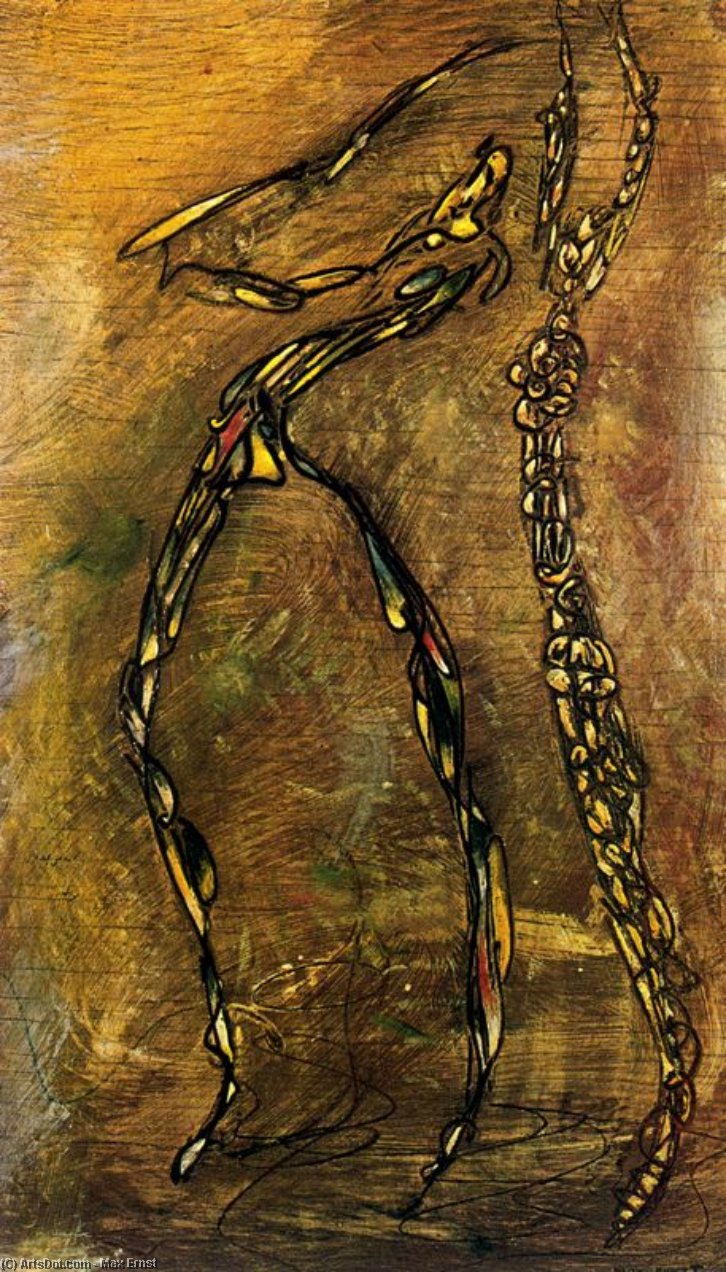
The dancers

Explore "The Dancers" by Max Ernst – an iconic expressionist masterpiece! Dynamic lines, textured gold background & elongated figures evoke movement & emotion. A unique piece for art collectors.

Max Ernst (1891-1976) szürrealista festő, dada művész! Innovatív technikákkal – frottázs, kollázs – ábrázolta a vágyakat, a tudattalanot és a fantáziát. #Ernst #Szürrealizmus #Dada

Az ezen az oldalon megjelenített műalkotások szerzői jogi védelem alatt állnak, ami azt jelenti, hogy törvényileg nem készíthetünk és nem adhatunk el belőlük pontos másolatokat. Ez a védelem olyan nemzetközi megállapodások alapján érvényesül, mint például a Berni Egyezmény és a nemzeti jogszabályok által, beleértve azokat is, amelyeket meghatározott Az USA szerzői jogi törvénye – 17. cím.

Ez a módszer teljes mértékben megfelel a szerzői jogi szabályozásnak, mivel nem tartalmazza a védett műalkotás másolását vagy duplikálását. Ehelyett ez egy kreatív újinterpretáció – egy új festmény, amely az eredetivel való összefüggései miatt hatással van rá, de nem az az.

Giclée / Műnyomat

Múzeumi minőségű giclée vagy vászonnyomat, gyors gyártással és rugalmas finomítási lehetőségekkel. ( Kézzel festett másolat rendelése Áttérés digitális képre)

Corner sample of the P118B picture frame: formázott polisztirol, 5 cm wide and 3 cm thick
P118B Ft10
Corner sample of the P118H picture frame: formázott polisztirol, 5 cm wide and 3 cm thick
P118H Ft10
Corner sample of the P118W picture frame: formázott polisztirol, 5 cm wide and 3 cm thick
P118W Ft10
Corner sample of the P438Z picture frame: formázott polisztirol, 5.5 cm wide and 3.5 cm thick
P438Z Ft10
Corner sample of the P508JH picture frame: formázott polisztirol, 7 cm wide and 3.5 cm thick
P508JH Ft12
Corner sample of the P508YH picture frame: formázott polisztirol, 7 cm wide and 3.5 cm thick
P508YH Ft12
Corner sample of the P805H picture frame: formázott polisztirol, 5 cm wide and 3.5 cm thick
P805H Ft10
Corner sample of the P805Z picture frame: formázott polisztirol, 5 cm wide and 3.5 cm thick
P805Z Ft10
Corner sample of the P919BZ picture frame: formázott polisztirol, 7 cm wide and 3.5 cm thick
P919BZ Ft10
Corner sample of the P919G picture frame: formázott polisztirol, 7 cm wide and 3.5 cm thick
P919G Ft10
Corner sample of the P919XJ picture frame: formázott polisztirol, 7 cm wide and 3.5 cm thick
P919XJ Ft10
Corner sample of the P959ZH picture frame: formázott polisztirol, 5 cm wide and 3 cm thick
P959ZH Ft10
Corner sample of the P968JZ picture frame: formázott polisztirol, 6 cm wide and 4 cm thick
P968JZ Ft12
Corner sample of the W106C picture frame: tömörfa, 5 cm wide and 3 cm thick
W106C Ft8
Corner sample of the W218G picture frame: tömörfa, 5 cm wide and 3 cm thick
W218G Ft10
Corner sample of the W218JH picture frame: tömörfa, 5 cm wide and 3 cm thick
W218JH Ft8
Corner sample of the W218Y picture frame: tömörfa, 5 cm wide and 3 cm thick
W218Y Ft10
Corner sample of the W307PJ picture frame: tömörfa, 6 cm wide and 3 cm thick
W307PJ Ft10
Corner sample of the W316G picture frame: tömörfa, 6 cm wide and 3 cm thick
W316G Ft10
Corner sample of the W316PJ picture frame: tömörfa, 6 cm wide and 3 cm thick
W316PJ Ft8
Corner sample of the W316Y picture frame: tömörfa, 6 cm wide and 3 cm thick
W316Y Ft10
Corner sample of the W398PJ picture frame: tömörfa, 5 cm wide and 3 cm thick
W398PJ Ft8
Corner sample of the W4111J picture frame: tömörfa, 6.5 cm wide and 3.5 cm thick
W4111J Ft10
Corner sample of the W500HY picture frame: tömörfa, 7 cm wide and 5 cm thick
W500HY Ft15
Corner sample of the W500JH picture frame: tömörfa, 7 cm wide and 5 cm thick
W500JH Ft15
Corner sample of the W692G picture frame: tömörfa, 8 cm wide and 4 cm thick
W692G Ft12
Corner sample of the W849H picture frame: tömörfa, 5 cm wide and 3 cm thick
W849H Ft8
Corner sample of the W940BG picture frame: tömörfa, 7.5 cm wide and 4.5 cm thick
W940BG Ft15
Corner sample of the W953PJ picture frame: tömörfa, 6 cm wide and 3.5 cm thick
W953PJ Ft8

Standard méret
egyedi méretű
CM
INCH

Válasszon előre meghatározott méreteink közül, amelyek megfelelnek a műalkotás eredeti arányainak.

szélesség
magasság

Írja be a keretének vagy a falának megfelelő szélességet és magasságot. A nyomatot csak le lehet vágni, soha nem tehető nagyobbá, mint az eredeti kép, így egy eltérő alakú méretnél a kép egy része elveszik. Mielőtt bármit kinyatintanánk, küldünk egy digitális próbamodellt jóváhagyásra. Az oldalon látható kép nem tartalmazza a valós levágást — ezt csak a próbamodell mutatja meg.

Világszerte történő kiszállítás területére mindössze 2 hét alatt, a szokásos 4-5 hét helyett. (26 október)

Ingyenes globális expressz szállítás
Prémium minőségű len vászon
Teljes körű szállítási biztosítás
Vámvisszatérítési Garancia
Hiteles színarányosság garancia
100 napos visszaküldési lehetőség (csak hibás termékek esetén)
100% pénzvisszatérítési garancia
Több darab vásárlásakor kedvezmény

Összesített ár

Ft 21829

The dancers

Giclée / Műnyomat

Reprodukció mérete

-

Összesített ár

Ft 21829

Gyors információk

  • style: Abstract, Dynamic lines, Simplified forms
  • title: The dancers
  • artist: Max Ernst
  • medium: Drawing and painting (likely)

Művészeti kvíz

Minden kérdésre csak egy helyes válasz létezik.

Kérdés 1:
Based on the description, which artistic movements is Max Ernst most closely associated with?
Kérdés 2:
The artwork 'The dancers' is characterized by what dominant visual element?
Kérdés 3:
What contributes to the sense of depth and texture in the background of 'The dancers'?
Kérdés 4:
How would you best describe the figure(s) in 'The Dancers'?

An Ethereal Dance: Exploring Max Ernst’s Abstract Expression

This captivating work by Max Ernst presents a mesmerizing study in abstract form and dynamic movement. Rendered in striking contrast – dark, fluid lines against a richly textured golden-brown ground – the piece evokes a sense of both energy and introspection. While titled “The Dancers,” the artwork transcends literal representation, offering instead an evocative interpretation of human motion, perhaps even spiritual yearning.

Style & Technique: A Bridge Between Worlds

Ernst’s style here leans heavily into Expressionism, yet it also foreshadows elements that would become central to his later Surrealist explorations. The elongated figure is not defined by precise detail, but rather suggested through sweeping curves and bold outlines. This deliberate simplification focuses attention on the *essence* of movement – its rhythm, flow, and emotional weight. The technique appears to be a compelling blend of drawing and painting; visible brushstrokes contribute significantly to the textured surface, creating depth and visual interest reminiscent of aged wood grain or canvas. The flattened perspective further enhances the abstract quality, removing traditional spatial cues and inviting viewers into a more immediate, visceral experience.

Historical Context: Ernst’s Early Innovations

Born in 1891, Max Ernst was a pivotal figure in the development of both Dadaism and Surrealism. His early artistic journey was marked by experimentation and a rejection of conventional artistic norms. While the exact date of this piece is unknown, it likely originates from a period where Ernst was actively breaking away from traditional representation, influenced by encounters with artists like Pablo Picasso. This work demonstrates his growing interest in exploring the subconscious and expressing inner states through abstract forms – themes that would define much of his later career. His background studying philosophy, art history, literature, psychology, and psychiatry deeply informed his artistic approach, leading him to explore the complexities of the human psyche within his artwork.

Symbolism & Interpretation: Beyond the Literal

The symbolism within “The Dancers” is deliberately open-ended. The elongated figure could represent a striving for growth, an expression of inner turmoil, or even a connection to something beyond the physical realm. The warm color palette – dominated by golds and browns – evokes feelings of warmth, earthiness, and perhaps nostalgia. The darker lines, punctuated with hints of red-brown, introduce a sense of drama and intensity. The repetition of lines and curves creates a strong rhythmic quality, mirroring the cyclical nature of dance itself or the ebb and flow of emotions.

Emotional Impact & Aesthetic Appeal

This artwork possesses a powerful emotional resonance. Its abstract form allows for personal interpretation, inviting viewers to project their own feelings and experiences onto the image. The dynamic composition and expressive lines create a sense of energy and movement that is both captivating and thought-provoking. Its warm color palette and textured surface make it an ideal piece for adding depth and sophistication to any interior space. Whether appreciated by seasoned art collectors or those seeking inspiration, “The Dancers” offers a compelling glimpse into the innovative mind of Max Ernst.

Considerations for Reproduction & Display

  • Due to the textured background, high-quality reproductions should prioritize capturing the nuances of the surface.
  • The artwork’s verticality makes it well-suited for hallways or spaces with ample wall height.
  • Its warm color palette complements a variety of interior design styles, from modern to bohemian.

Kérdések és válaszok

Hová sorolható a "The dancers" Max Ernst ismétlődő témái közé?

A "The dancers" a abstract figures, dynamic movement, golden texture”, “vertical composition”, “expressive lines”, “geometric forms”, emotional art” ábrázol, míg Max Ernst dokumentált témái a key expressionist work, central to ernst's style, recurring motif, expressionist lines, geometric abstraction, dynamic composition, human movement, spiritual aspiration. A kettő összevetése megmutatja, hogyan kapcsolódik ez a mű a művész megszokott motívumaihoz.

Hová sorolható a "The dancers" Max Ernst életművében?

A "The dancers" megosztja Max Ernst többi művével a Expressionism stílust és a rögzített témákat: key expressionist work, central to ernst's style, recurring motif, expressionist lines, geometric abstraction, dynamic composition, human movement, spiritual aspiration.

Milyen felhasználásra ajánlott a "The dancers" nyomata?

A „The dancers”, Max Ernst alkotása javasolt felhasználása Accent. Emellett más célokra is alkalmas lehet.


A művész életrajza

A Life Immersed in the Surreal

Max Ernst, született Maximilian Maria Ernst néven április 1-jén 1891-ben Brühl városban, Németországban, egy nyugodt lelkű ember volt, akit a művészet iránti szenvedély és a társadalmi normák elleni szorongás vezéreltek. Élete nem volt hagyományos művészi tanulmányok sorozata; inkább önmagában irányított felfedezés volt, melyet filozófiai gondolkodással, pszichológiai vonzalommal és mély elmélettel a társadalmi elvárásokkal szemben. Apja, egy tanár a vakok számára és amatőr festő, mindkét oldalon érzékenységet adott neki a világ felé, mind pedig ellenállást az elismert hatalommal szemben. Ez korai kettősség meghatározó vonása lett művészeti látásának.

Ernst tanulmányi évei a Bonni Egyetemen – filozófia, művészettörténet, irodalom, pszichológia és pszichiátria területén – nem csupán szórólapok voltak, hanem mélyen befolyásoló alapvető elemek, melyek formálták későbbi munkáit. Nemcsak arra törekedett, hogyan kell festeni; hanem arra is, miért. Ez az érvelőkészsége elvezette őt a legújabb művekkel találkozásához Picasso, Van Gogh és Gauguin esetében a Cologne Sonderbund kiállításon 1912-ben, ami véglegesen megváltoztatta művészi pályáját. A modernizmus magjában rejlett.

Dada Szüntetése és a Surrealista Vizek Kezdeti

A I. világháború kataklízaszerű eseménye mélyen megrendítette Ernst életét. Seregben töltött évei, mind keleti, mind nyugati fronton, mélyen megnevették, mély szkeptikus hozzáállást alakított ki iránta a megragadott renddel szemben és egy új kifejezési módok vágyását. Ez a csalódtatás termékeny talajt biztosított a virágzó Dada mozgalom számára, melyet 1918-ban visszatérve Kölnbe fogadta el teljes szívvel. Hans Arp – egy élethosszig tartó barát és kollégája – mellett Ernst lett a mozgás kulcsembere, elutasítva a hagyományos művészi konvenciókat és elfogadva az abszurditást, a véletlenséget és az irracionalitást.

A Dada azonban csak egy lépcső volt. A 1920-as évek elején Ernst Párizsba költözött és csatlakozott a Surrealistákhoz, melyet André Breton vezette. Ez jelölte be a válás irányát a tudattalan világ felé, az álomvilág felé és az irracionális erők felé. A pszichoanalitikus elméletek (Sigmund Freud) hatására Ernst arra törekedett, hogy felfedezze az emberi lélek mélyebb rétegeit művészetén keresztül. Nem a valóság ábrázolását akarta megtenni, hanem az alábbi erőkövetelések feltárását, amelyek alakították azt.

Innovatív Technikák: Frottage, Grattage és Collage

Ernst művészi innovációja nem csupán a témaválasztásban mutatkozott meg; ő egy fáma kísérletező volt. Nem csupán elfogadva az előzetes módszereket – hanem újokat is feltalált. Lehetséges legnépszerűbb hozzájárulása a frottage, ami egy olyan folyamat, amely során egyenes vagy grafitot sürünk texturált felületre, hogy váratlan és vonzó képeket hozzunk létre. Ez a technika, mely egy pillanatnyi unalom közben keletkezett, lehetővé tette Ernst számára, hogy belekészüljön a tudattalanba és olyan formákat generáljon, amelyek ellentmondanak a tudatos kontrollnak.

Közel kapcsolódóan a grattage technikát alkalmazta, ahol a festéket leharcoljuk vászonra, feltárva az alábbi rétegeket.

Ő pedig mesteri módon használt collage-t is, összerakva különböző elemeket – képeket magazinokból, tudományos illusztrációkból, fotókból – szürrealisztikus kompozíciókba, amelyek megkérdőjelezték a hagyományos ábrázolás fogalmát. Ezek a technikák nem csupán stilisztikai választások voltak; hanem integrálisan kapcsolódtak az ő tudattalan felfedezéséhez és a hagyományos művészi határok megsértésére irányuló törekvésehez. Képei gyakran tartalmaznak szimbólumokat: madarakat (különösen a saját alter egóját, Loplopt), elszigetelt tájakat, zavaró egymásbahelyezéseket és egyveleget.

Innovációk és Hatások Öröksége

A II. világháború kitörése Ernstot kényszerítette Európából menekülésre, ahol menedékben találkozott az Egyesült Államokban. Folytatta a festést és új technikák kísérletezését a számkölcsönző időszakban, végül Franciaországba tért vissza háború után, ahol aktív maradt halálaig 1976-ban Párizsban.

Ernst hozzájárulásai a Dada és a Surrealizmus mozgásokhoz elkerülhetetlenek voltak. Megkérdőjelezték a művészi normákat, beásták az emberi lélek mélyebb rétegeibe és innovatív technikákat hoztak létre, amelyek továbbra is inspirálják a művészeket ma.

  • Névleges művek: The Entire City, Euclides, Ofrenda funeraria, The Equivocal Woman, L'Ange du foyer
  • Hatások: Pablo Picasso, Vincent van Gogh, Paul Gauguin, Sigmund Freud, Giorgio de Chirico
  • Mozi: Dada, Surrealizmus
Max Ernst

Max Ernst

1891 - 1976 , Németország

Rövid információk

  • Artistic Movement Or Style: Dada, Surrealizmus
  • Artists Or Movements Influenced By This Artist:
    • Surrealizmus
    • Dada
  • Artists Who Influenced This Artist:
    • Picasso
    • Van Gogh
    • Gauguin
  • Date Of Birth: Április 1, 1891
  • Date Of Death: Április 1, 1976
  • Full Name: Max Ernst
  • Nationality: Német-amerikai, Francia
  • Notable Artworks:
    • Ofrenda funerária
    • The Equivocal Woman
    • L'Ange du foyer
  • Place Of Birth: Brühl, Németország
Fedezze fel a műalkotásokat témák, stílusok és jellemzők szerint csoportosítva.