Előnézet AR előnézet Váltás nyomtatványra Áttérés digitális képre Megosztás
Részletek Útmutató Kedvencekhez ad Letöltés Hasonló darabok X-ray felvétel Diavetítés Statisztika

Composition

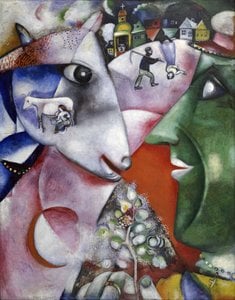
Experience Marc Chagall's 'Composition' (1976): A surreal dreamscape of figures, animals & vibrant colors—a captivating glimpse into the artist’s imaginative world.

Marc Chagall ikonikus „Szórványos Szélószúró” című alkotása egy szürreális művészeti érték, mely felfedik az artista mélyebb tudatosságát és egyedi képességét a megszokott és fantasztiikus elemök ötvözésére. Mély színekkel és jelképekkel tarkított festmény!

Az ezen az oldalon megjelenített műalkotások szerzői jogi védelem alatt állnak, ami azt jelenti, hogy törvényileg nem készíthetünk és nem adhatunk el belőlük pontos másolatokat. Ez a védelem olyan nemzetközi megállapodások alapján érvényesül, mint például a Berni Egyezmény és a nemzeti törvények által, beleértve azokat is, amelyeket meghatározott Az USA szerzői jogi törvénye – 17. cím.

Mint tiszteletes és törvényes alternatívát, olyan egyedi, kézzel festett alkotásokat kínálunk, amelyek az eredetiből merítnek inspirációt. Tapasztalt és professzionális művészeink alaposan tanulmányozzák az eredeti stílusát, hangulatát és művészeti esszenciáját, hogy egy olyan új, egyedi alkotást hozzunk létre, amely ugyanazt az érzést kelti – miközben önálló, eredeti alkotásként létezik.

Ez a módszer teljes mértékben megfelel a szerzői jogi szabályozásnak, mivel nem tartalmazza a védett műalkotás másolását vagy duplikálását. Ehelyett ez egy kreatív újinterpretáció – egy új festmény, amely az eredetivel való összefüggései miatt hatással van rá, de nem az az.

Kézzel készített olajfestmény reprodukció

Kézzel festett olajvastú vászon, az Ön által választott méretben és keretben, művészeink készítik meglévőre. ( Váltás nyomtatványra Áttérés digitális képre)

Corner sample of the P118B picture frame: moulded polystyrene, 5 cm wide and 3 cm thick
P118B Ft10
Corner sample of the P118H picture frame: moulded polystyrene, 5 cm wide and 3 cm thick
P118H Ft10
Corner sample of the P118W picture frame: moulded polystyrene, 5 cm wide and 3 cm thick
P118W Ft10
Corner sample of the P438Z picture frame: moulded polystyrene, 5.5 cm wide and 3.5 cm thick
P438Z Ft10
Corner sample of the P508JH picture frame: moulded polystyrene, 7 cm wide and 3.5 cm thick
P508JH Ft12
Corner sample of the P508YH picture frame: moulded polystyrene, 7 cm wide and 3.5 cm thick
P508YH Ft12
Corner sample of the P805H picture frame: moulded polystyrene, 5 cm wide and 3.5 cm thick
P805H Ft10
Corner sample of the P805Z picture frame: moulded polystyrene, 5 cm wide and 3.5 cm thick
P805Z Ft10
Corner sample of the P919BZ picture frame: moulded polystyrene, 7 cm wide and 3.5 cm thick
P919BZ Ft10
Corner sample of the P919G picture frame: moulded polystyrene, 7 cm wide and 3.5 cm thick
P919G Ft10
Corner sample of the P919XJ picture frame: moulded polystyrene, 7 cm wide and 3.5 cm thick
P919XJ Ft10
Corner sample of the P959ZH picture frame: moulded polystyrene, 5 cm wide and 3 cm thick
P959ZH Ft10
Corner sample of the P968JZ picture frame: moulded polystyrene, 6 cm wide and 4 cm thick
P968JZ Ft12
Corner sample of the W106C picture frame: solid wood, 5 cm wide and 3 cm thick
W106C Ft8
Corner sample of the W218G picture frame: solid wood, 5 cm wide and 3 cm thick
W218G Ft10
Corner sample of the W218JH picture frame: solid wood, 5 cm wide and 3 cm thick
W218JH Ft8
Corner sample of the W218Y picture frame: solid wood, 5 cm wide and 3 cm thick
W218Y Ft10
Corner sample of the W307PJ picture frame: solid wood, 6 cm wide and 3 cm thick
W307PJ Ft10
Corner sample of the W316G picture frame: solid wood, 6 cm wide and 3 cm thick
W316G Ft10
Corner sample of the W316PJ picture frame: solid wood, 6 cm wide and 3 cm thick
W316PJ Ft8
Corner sample of the W316Y picture frame: solid wood, 6 cm wide and 3 cm thick
W316Y Ft10
Corner sample of the W398PJ picture frame: solid wood, 5 cm wide and 3 cm thick
W398PJ Ft8
Corner sample of the W4111J picture frame: solid wood, 6.5 cm wide and 3.5 cm thick
W4111J Ft10
Corner sample of the W500HY picture frame: solid wood, 7 cm wide and 5 cm thick
W500HY Ft15
Corner sample of the W500JH picture frame: solid wood, 7 cm wide and 5 cm thick
W500JH Ft15
Corner sample of the W692G picture frame: solid wood, 8 cm wide and 4 cm thick
W692G Ft12
Corner sample of the W849H picture frame: solid wood, 5 cm wide and 3 cm thick
W849H Ft8
Corner sample of the W940BG picture frame: solid wood, 7.5 cm wide and 4.5 cm thick
W940BG Ft15
Corner sample of the W953PJ picture frame: solid wood, 6 cm wide and 3.5 cm thick
W953PJ Ft8

Standard méret
egyedi
CM
INCH

Válasszon előre meghatározott méreteink közül, amelyek megfelelnek a műalkotás eredeti arányainak.

szélesség
magasság

Ön megadhat saját méreteket egy adott kerethez vagy térhez igazításhoz. Ha a kiválasztott méret nem egyezik az eredeti kép arányával, akkor a műalkotást levágjuk, vagy további kézzel festett elemekkel meghosszabbítjuk a festményt. A gyártás megkezdése előtt küldünk Önnek egy digitális előnézetet jóváhagyásra.
Kérjük, vegye figyelembe, hogy a képernyőn megjelenő előnézet nem tükrözi a tényleges vágást vagy kiterjesztést. Csak az előnézet fog pontosan mutatni a végső kompozíciót.
Bár egyedi méretek állnak rendelkezésre, javasoljuk, hogy válasszon egy méretet az előre meghatározott listából az eredeti arányok megőrzése érdekében.

Példák arra, mit lehet módosítani: az arc kicserélése az ügyfél fotójára; háziállat hozzáadása (pl. macska helyett kutya); rejtett üzenet elhelyezése a háttérben; a háttér tájának vagy elemeinek megváltoztatása.
A rendelést követően a WahooArt.com csapata e-mailt küld az ügyfélnek az instrukciókért, és biztosít egy előnézeti képet (mockup).

Világszerte elérhető szállítás () 3-4 hét alatt a szokásos 5 hét helyett. (10 október). A minőség nem kérdőjelezhető.

Ingyenes globális expressz szállítás
Prémium minőségű len vászon
Teljes körű szállítási biztosítás
Vámvisszatérítési Garancia
Tökéletes színarányosság garancia
100 napos visszaküldési garancia (csak gyártási hibás termékek esetén)
100% pénzvisszatérítési garancia
Több darab vásárlásakor kedvezmény

Összesített ár

Ft 85241

Composition

Reprodukciós technika

Reprodukció méretei

-

Összesített ár

Ft 85241

Rövid tények

  • Notable elements: Figures, animals,
  • Artist: Marc Chagall
  • Location: Private Collection
  • Year: 1976
  • Artistic style: Dreamlike imagery
  • Movement: Surrealism
  • Dimensions: 81 x 100 cm

Művészeti kvíz

Minden kérdésre csak egy helyes válasz létezik.

Kérdés 1:
What artistic movement is most closely associated with Marc Chagall’s ‘Composition’?
Kérdés 2:
Approximately what year was Marc Chagall's 'Composition' created?
Kérdés 3:
Which of the following best describes a prominent element within the painting 'Composition'?
Kérdés 4:
The painting ‘Composition’ utilizes a distinctive style characterized by:
Kérdés 5:
What cultural influence is most evident in Chagall’s use of recurring motifs like the rooster?

Composition (1976; Saint-paul-de-vence, France) by Marc Chagall

Marc Chagall’s “Composition,” painted in 1976 during his residency in Saint-Paul-de-Vence, France, stands as a testament to the artist's enduring fascination with Surrealism and his profound connection to Jewish heritage. Measuring 81 x 100 cm and executed in oil on canvas, this artwork transcends mere visual representation; it’s an immersive journey into Chagall’s dreamscape—a realm where reality bends to imagination’s will.

Visual Elements: A Symphony of Figures and Color

The painting immediately captivates with its dynamic arrangement of human figures interwoven amongst musical instruments. At least six individuals populate the scene, positioned in varied postures – some standing serenely, others seated thoughtfully or reclining languidly—creating a tableau brimming with movement and contemplation. Dominating the center is a man holding a violin, symbolizing artistic expression and conveying a sense of melancholy. Surrounding him are musicians playing cello, trumpet, clarinet, and harp, contributing to an atmosphere rich in sonic imagery. Beyond the figures themselves lies a striking animal presence – likely a horse—which adds an element of mystery and perhaps represents resilience or nobility. Chagall’s masterful use of color is equally remarkable. Vibrant hues dominate the canvas, ranging from fiery reds and yellows to deep blues and greens, creating a luminous tapestry that pulsates with life. These colors aren't merely decorative; they are imbued with symbolic significance, reflecting Chagall’s emotional landscape and drawing inspiration from his memories of Vitebsk and Russia.

Stylistic Considerations: Surrealism Embodied

“Composition” exemplifies Chagall’s signature Surrealist style—characterized by illogical juxtapositions, dreamlike imagery, and a deliberate distortion of perspective. Like many of his works, it abandons conventional realism in favor of conveying emotion and psychological states. The artist employs techniques reminiscent of Cubism and Fauvism, blending fragmented forms with bold color palettes to achieve an effect that is both unsettling and beautiful. Light and shadow play a crucial role in shaping the artwork’s atmosphere, deepening its dimensionality and enhancing the sense of depth. Chagall's meticulous brushstrokes contribute to the texture of the canvas, creating a surface that invites tactile exploration—a characteristic feature of his oeuvre.

Historical Context: Echoes of Vitebsk and Jewish Identity

Born Moishe Shagal in 1887 in Liozna, Belarus (then part of the Russian Empire), Chagall’s artistic vision was deeply rooted in his formative years spent in Vitebsk—a city steeped in cultural traditions and marked by the coexistence of Orthodox churches and Jewish marketplaces. This duality profoundly influenced his aesthetic sensibility, informing his recurring motifs of flying figures, whimsical animals, and landscapes imbued with nostalgia. Chagall's engagement with Surrealism coincided with a period of artistic experimentation and intellectual ferment across Europe, reflecting anxieties about modernity and grappling with questions of identity. His work serves as a poignant reminder of the artist’s Jewish heritage and his unwavering belief in the transformative power of imagination—themes that resonate throughout his entire oeuvre.

Emotional Impact: A Window into Chagall's Soul

“Composition” isn’t simply a depiction of musicians; it’s an exploration of human emotion—specifically, longing, remembrance, and artistic aspiration. The painting evokes a feeling of serenity mingled with melancholy, inviting viewers to contemplate the complexities of existence and the enduring beauty of dreams. Like many of Chagall's masterpieces, it speaks to universal themes of spirituality, creativity, and connection to one’s roots. It remains an unforgettable testament to Chagall’s artistic genius—a captivating glimpse into the artist’s inner world and a celebration of Surrealism’s ability to transcend literal representation.

Gyakran Ismételt Kérdések

Elérhető diaporáma „Composition”, Marc Chagall alkotása alkotáshoz?

A "Composition" diaporámája megtekinthető a mű Diaváltás oldalán.

A „Composition” Marc Chagall fejlődésének mely szakaszát képviseli?

A "Composition" Marc Chagall pályájának a Late Period szakaszába tartozik. Ez a besorolás összekapcsolja a művet a művész fejlődésével.

Mikor készült a "Composition"?

A „Composition”, Marc Chagall alkotása alkotása 1976-ben készült.

Ki a "Composition" alkotója?

A "Composition" alkotását Marc Chagall készítette. Az ezen az oldalon található információk Marc Chagall eredeti művészetét mutatják be.

Melyik helyiségbe illik jól a "Composition" reprodukciója az otthonunkban?

A "Composition" reprodukciója jól illik egy Nappali-be.

„Composition”, Marc Chagall alkotása egy világos vagy egy sötét tónusú alkotás?

A megjelenő fényerő tekintetében a „Composition”, Marc Chagall alkotása művének kiegyensúlyozott.

Hány éves volt Marc Chagall, amikor megalkotta a "Composition" című alkotást?

Amikor a "Composition" alkotása 1976-ben készült, Marc Chagall – aki 1887-ben született – 89 éves volt.


A művész életrajza

A Life Painted in Dreams: The World of Marc Chagall

Marc Chagall, born Moishe Shagal in 1887 in the small Belarussian town of Liozna near Vitebsk, wasn’t merely a painter; he was a poet of color, a weaver of dreams, and a chronicler of memory. His life, spanning nearly a century, mirrored the tumultuous currents of the 20th century, yet his art remained steadfastly rooted in a deeply personal vision—one infused with the folklore of his Hasidic Jewish upbringing and an unwavering belief in the power of imagination. Vitebsk itself was more than just a birthplace; it became the emotional core of his artistic universe, a recurring motif populated by flying figures, whimsical animals, and the vibrant hues of remembered landscapes. The town’s unique blend of cultures—Russian Orthodox churches alongside bustling Jewish marketplaces—forged an aesthetic sensibility that would defy easy categorization throughout his long career. Though he sought formal training first with a local sign painter and later in St. Petersburg under Léon Bakst, and then in Paris at the Académie de la Grande Chaumière, Chagall never fully embraced any single artistic movement. He absorbed elements of Cubism, Symbolism, and Fauvism, but always filtered them through his own intensely personal lens, creating a style that was uniquely, unmistakably Chagall.

Early Years and Artistic Beginnings

Chagall’s formative years were marked by hardship and displacement. Born into a family of impoverished Jewish artisans, he experienced the trauma of pogroms—violent anti-Jewish riots—which instilled in him a lifelong preoccupation with themes of persecution and resilience. Despite these challenges, Chagall possessed an innate talent for drawing and painting from a young age. He initially studied at Vitebsk Art School, where he honed his skills under Léon Bakst, a prominent figure in the Ballets Russes avant-garde movement. This exposure to theatrical art profoundly influenced his visual language, fostering a fascination with dynamism and expressive gesture. However, Chagall’s artistic ambitions extended beyond the confines of academic training; he sought inspiration from folk traditions—particularly Jewish folklore—which would become central to his artistic vision. His early canvases already hinted at the distinctive style that would define his career: bold color palettes, flattened perspectives, and fantastical imagery—elements that defied conventional realism.

The Symbolism of Vitebsk

Vitebsk remained an indelible presence in Chagall’s imagination throughout his life. The town served as a constant source of inspiration for his paintings, appearing repeatedly in works such as I and the Village (1911) and *Over Vitebsk* (1920-1922). These canvases aren't merely depictions of place; they are explorations of identity, memory, and the relationship between the individual and community. The village isn’t rendered realistically but as a fragmented collection of recollections, imbued with symbolic meaning. Houses tumble upside down, figures float in midair, and animals mingle seamlessly—creating an otherworldly atmosphere that captures the essence of Vitebsk's cultural landscape. Chagall’s use of color was particularly striking during this period. He employed vibrant hues—blues, yellows, reds—to convey emotion rather than literal representation, reflecting the spiritual fervor of his Jewish upbringing. This stylistic approach wasn’t accidental; it stemmed from a desire to move beyond mere imitation of reality and capture the essence of feeling, the weight of memory, and the power of folklore.

The Influence of Cubism and Surrealism

While Chagall rejected strict adherence to any single artistic movement, he absorbed influences from Cubism and Surrealism—particularly from Pablo Picasso and André Breton. He experimented with fragmented perspectives and geometric forms, as seen in works like *The Chapel of Saint Helena* (1927), adapting cubist techniques to express his inner vision. Simultaneously, Chagall embraced the dreamlike logic of Surrealism, incorporating fantastical imagery and irrational juxtapositions into his canvases. This fusion of styles resulted in a distinctive visual language characterized by lyrical abstraction—a hallmark of his artistic oeuvre. He sought inspiration from biblical narratives and Jewish mysticism, translating these themes into emotionally charged paintings that explored profound questions about faith, suffering, and redemption.

Major Achievements and Legacy

Throughout his prolific career, Chagall achieved international acclaim for his monumental canvases and innovative stained glass windows. His masterpiece, *White Crucifixion* (1937), stands as a poignant meditation on the horrors of Nazism and Jewish persecution—a testament to his artistic courage and moral conviction. He continued to produce works during World War II, reflecting the anxieties and uncertainties of the time. Following the war, Chagall emigrated to New York City, where he established himself as one of America’s leading artists. His paintings from this period explored themes of exile and displacement, capturing the spirit of a generation grappling with trauma and loss. He received numerous prestigious commissions, including the ceiling of the Paris Opera (1964), a breathtaking explosion of color and form that celebrated musical masterpieces. And his stunning stained glass windows for the Hadassah Hebrew University Medical Center synagogue in Jerusalem—a project undertaken in collaboration with Anatoly Yankilevich—transformed sacred space into an immersive experience of light and color. Marc Chagall’s legacy extends beyond his artistic creations; it resides in the enduring power of his vision—a vision that celebrates love, memory, and the boundless possibilities of the human imagination. He left behind a body of work that is both deeply personal and universally accessible, inviting viewers to lose themselves in a world painted with dreams and illuminated by hope. His art continues to inspire, challenge, and move us, ensuring that his vibrant and imaginative spirit will live on for generations to come.
Marc Chagall

Marc Chagall

1887 - 1985 , Білорусь

Gyors információk

  • Artistic Movement Or Style: Современный стиль
  • Artists Or Movements Influenced By This Artist: ['Сюрреализм']
  • Artists Who Influenced This Artist:
    • Леон Бакст
    • Дюманьи
  • Date Of Birth: 6 július 1887
  • Date Of Death: 28 március 1985
  • Full Name: Marc Chagall
  • Nationality: Білім беруші
  • Notable Artworks:
    • В городе Витебск
    • Белая распятие
  • Place Of Birth: Liozna, Беларусь
Fedezze fel a műalkotásokat témák, stílusok és jellemzők szerint csoportosítva.