Értékesítés
x
MegtekintésMegtekintés Műalkotás AR előnézeteMűalkotás AR előnézete Nyomat rendelése Nyomat rendeléseKép letöltése Kép letöltése KüldésKüldés
RészletekRészletek Kedvencekhez ad Kedvencekhez ad LetöltésLetöltés Hasonló darabokHasonló darabok X-ray felvételX-ray felvétel DiavetítésDiavetítés

Untitled

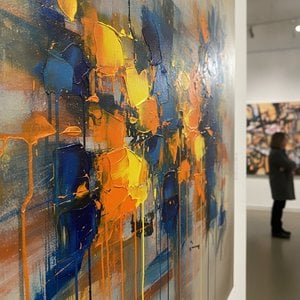
Experience the vibrant energy of Karel Appel's COBRA masterpiece; this abstract burst of color captures raw instinct from 1960—discover your own artistic freedom.

Karel Appel, a kiemelkedő holland CoBrA festő, a dinamikus, színes alkotásaival és gyermekek művészetének inspirációjával definiálta a posztvárosi művészetet. Fedezd fel a boldog, spontán stílusát!

Kézzel készített olajfestmény reprodukció

Kézzel festett olajvastú vászon, az Ön által választott méretben és keretben, művészeink készítik meglévőre. (Nyomat rendelése Nyomat rendeléseKép letöltése Kép letöltése)

P118B $10
P118H $10
P118W $10
P438Z $10
P508JH $12
P508YH $12
P805H $10
P805Z $10
P919BZ $10
P919G $10
P919XJ $10
P959ZH $10
P968JZ $12
W106C $8
W218G $10
W218JH $8
W218Y $10
W307PJ $10
W316G $10
W316PJ $8
W316Y $10
W398PJ $8
W4111J $10
W500HY $15
W500JH $15
W692G $12
W849H $8
W940BG $15
W953PJ $8

Standard
custom
CM
INCH

Válasszon előre meghatározott méreteink közül, amelyek megfelelnek a műalkotás eredeti arányainak.

szélesség
magasság

Ön megadhat saját méreteket egy adott kerethez vagy térhez igazításhoz. Ha a kiválasztott méret nem egyezik az eredeti kép arányával, akkor a műalkotást levágjuk, vagy további kézzel festett elemekkel meghosszabbítjuk a festményt. A gyártás megkezdése előtt küldünk Önnek egy digitális előnézetet jóváhagyásra.
Kérjük, vegye figyelembe, hogy a képernyőn megjelenő előnézet nem tükrözi a tényleges vágást vagy kiterjesztést. Csak az előnézet fog pontosan mutatni a végső kompozíciót.
Bár egyedi méretek állnak rendelkezésre, javasoljuk, hogy válasszon egy méretet az előre meghatározott listából az eredeti arányok megőrzése érdekében.

Példák arra, mit lehet módosítani: az arc kicserélése az ügyfél fotójára; háziállat hozzáadása (pl. macska helyett kutya); rejtett üzenet elhelyezése a háttérben; a háttér tájának vagy elemeinek megváltoztatása.
A rendelést követően a WahooArt.com csapata e-mailt küld az ügyfélnek az instrukciókért, és biztosít egy előnézeti képet (mockup).

Világszerte elérhető szállítás () 3-4 hét alatt a szokásos 5 hét helyett. (20 augusztus). A minőség nem kérdőjelezhető.

why_choose_icon
Ingyenes globális expressz szállítás
why_choose_icon
Prémium minőségű len vászon
why_choose_icon
Teljes körű szállítási biztosítás
why_choose_icon
Vámvisszatérítési Garancia
why_choose_icon
Hiteles színpontosság garancia
why_choose_icon
60 napos visszaküldési lehetőség (csak hibás termékek esetén)
why_choose_icon
100% pénzvisszatérítési garancia
why_choose_icon
Több darab vásárlása esetén kedvezmény

Összesített ár

$ 272

reproduction

Untitled

Reprodukciós technika

Reprodukció mérete

-

Összesített ár

$ 272

Gyors információk

  • Title: Untitled
  • Movement: COBRA
  • Notable elements or techniques: Gestural forms, Layered texture
  • Subject or theme: Organic shapes
  • Influences: European Avant-garde
  • Artistic style: Abstract Expressionism
  • Medium: Screenprint

Művészeti kvíz

Minden kérdésre csak egy helyes válasz létezik.

Kérdés 1:
What avant-garde movement is Karel Appel strongly associated with for this artwork?
Kérdés 2:
Which element of the artwork's composition is described as eschewing traditional perspective?
Kérdés 3:
According to the description, what emotion is often symbolized by the color yellow in Appel's work?
Kérdés 4:
What type of forms populate the artwork, described as rounded and organic, reminiscent of natural elements?
Kérdés 5:
What medium is the artwork most likely to be, given the visible layering and texture?

A műalkotás leírása

A Symphony of Spontaneity: The Primal Energy of Karel Appel

In the landscape of post-war European modernism, few voices resonate with as much raw, unbridled vitality as that of Karel Appel. His 1960 work, Untitled, serves as a breathtaking manifesto of the COBRA movement, an avant-garde collective that sought to strip away the suffocating layers of academic tradition in favor of something far more primal. To encounter this piece is to witness a deliberate rebellion; it is not merely a composition of pigment on paper, but an explosion of instinctual expression. The artwork captures a moment where the artist’s hand moves with the freedom of a child, yet carries the profound weight of a man navigating a world recovering from the shadows of conflict. Through its vibrant palette and gestural urgency, the work invites the viewer into a realm where emotion dictates form, and where the boundaries between the creator and the canvas dissolve into pure, rhythmic motion.

The visual language of this masterpiece is defined by its biomorphic forms—organic, rounded shapes that seem to pulse with an internal life force. There is no rigid geometry here, nor any attempt at traditional perspective; instead, Appel utilizes an asymmetrical arrangement where colors and shapes overlap in a dance of beautiful chaos. The palette is nothing short of celebratory, dominated by sun-drenched yellows, deep oceanic blues, and fiery reds, all anchored by bold strokes of black and punctuated by flashes of orange and white. These colors are not merely decorative choices but are deeply symbolic; the yellow radiates an infectious optimism, while the blue offers a moment of contemplative stillness amidst the surrounding energy. This interplay of hues creates a complex textural landscape, where the visible layering of the printmaking process suggests a tactile depth that draws the eye into a continuous, wandering exploration.

Historical Resonance and Interior Inspiration

To understand the soul of this work, one must look to the historical heartbeat of the COBRA movement. Born from a desire to break free from the constraints of Surrealism and Cubism, Appel and his contemporaries looked toward the "primitive"—finding profound inspiration in African masks, tribal art, and the uninhibably honest drawings of children. This 1960 print embodies that search for authenticity, rejecting meticulous representation in favor of intuition and gesture. The technique, likely a screenprint or lithograph, allows for a fascinating tension between the flatness of the medium and the perceived movement of the brushstrokes. Each layer of ink contributes to a sense of immediacy, as if the artist’s energetic movements were captured in mid-motion, frozen forever in a state of becoming.

For the discerning collector or interior designer, this artwork offers more than just visual interest; it provides a transformative emotional atmosphere. Its lack of a singular focal point allows it to integrate seamlessly into sophisticated modern environments, acting as a dynamic anchor in a room. In a minimalist setting, its bold colors can provide a much-needed burst of life and character, while in a more eclectic space, it serves as a testament to the enduring power of the avant-garde. Owning a high-quality reproduction of this piece is an invitation to live alongside a fragment of art history—a piece that celebrates the joy of existence, the beauty of imperfection, and the eternal, restless spirit of human creativity.


A művész életrajza

A Life Painted in Bold Strokes: The World of Karel Appel

Christiaan Karel Appel, known affectionately as ‘Kik’ from childhood, burst onto the post-war art scene like a vibrant explosion of color and energy. Born in Amsterdam in 1921, his early life was steeped in the everyday rhythms of working-class Holland – his father a barber, his lineage tracing back to French Huguenots through his mother. This grounding, however, would soon be superseded by an irrepressible artistic drive that defied convention and ultimately reshaped the landscape of European art. A pivotal moment arrived at age fourteen with his first painting, a still life of fruit, followed shortly after by a paint set and easel gifted by his uncle Karel Chevalier, who also provided early instruction. These gifts weren’t merely tools; they were keys unlocking a world where imagination reigned supreme. The shadow of the Second World War loomed large over Appel’s formative years. Studying at the Rijksakademie van Beeldende Kunsten in Amsterdam during the German occupation proved challenging, yet it was there he forged lifelong bonds with fellow artists Corneille and Constant, friendships that would prove crucial to his artistic evolution. Facing opposition from his parents regarding his chosen path and fearing forced labor under Nazi rule, Appel bravely left home, choosing a life dedicated to art over conformity.

Early Life and Artistic Beginnings

Christiaan Karel Appel was born on April 25, 1921, in Amsterdam’s Dapperstraat 7, the son of Jan Appel, who ran a barbershop, and Johanna Chevallier, descended from French Huguenots. He had three brothers. From childhood, he was nicknamed ‘Kik,’ reflecting his playful spirit. At fourteen, Appel created his first painting – a still life featuring fruit – demonstrating an innate talent for visual representation. Crucially, his uncle Karel Chevalier gifted him a paint set and easel, fostering his artistic ambitions and providing invaluable guidance. This early encouragement cemented his passion for art and established the foundation for his future creative endeavors.

The CoBrA Revolution: Spontaneity and the Childlike Vision

Appel’s artistic journey truly ignited with the formation of the CoBrA group in 1948 – an acronym derived from Copenhagen, Brussels, and Amsterdam, representing the movement's core cities. Alongside Corneille Guillaume Beverloo and Constant Nieuwenhuys, Appel spearheaded a radical departure from established artistic norms. CoBrA wasn’t merely a style; it was a philosophy rooted in spontaneity, experimentation, and a profound embrace of the untamed creativity found in children's art and primitive cultures. Influenced by masters like Pablo Picasso and Henri Matisse, as well as the raw energy of Jean Dubuffet, Appel rejected rigid formalism in favor of intuitive expression. He began sculpting in 1947, utilizing assemblage techniques – constructing works from found materials painted in a bold palette of white, red, yellow, blue, and black. This period saw him involved with the Experimentele Groep, further solidifying his commitment to artistic innovation. The controversial fresco "Questioning Children" (1949), commissioned for Amsterdam City Hall, exemplified CoBrA’s provocative spirit but also sparked public outcry, ultimately leading to its being covered up – a testament to the movement's challenging nature. Appel drew inspiration from Danish and Nordic mythology, weaving these ancient narratives into his increasingly abstract compositions.

International Horizons: From Paris to New York and Beyond

Facing resistance to CoBrA’s radical vision in the Netherlands, Appel relocated to Paris in 1950, a city that offered greater artistic freedom and recognition. This marked the beginning of an expansive period of international travel and exposure. He visited Mexico, the USA, Yugoslavia, and Brazil, absorbing diverse cultural influences that enriched his artistic vocabulary. His time in New York City and Florence further broadened his horizons, allowing him to connect with a wider network of artists and collectors. A breakthrough moment arrived in 1954 with his first American gallery exhibition at Martha Jackson Gallery, followed by the inclusion of "Child and Beast II" (1951) in the influential Museum of Modern Art exhibition “The New Decade” in 1955. Appel’s murals became increasingly prominent during this period, showcasing his ability to translate his dynamic style onto a larger scale. Despite initial setbacks, his work experienced a resurgence in popularity in the Netherlands after 1990, with major exhibitions organized by Rudy Fuchs in Amsterdam and Brussels, solidifying his legacy within his homeland.

Legacy and Influence

Karel Appel’s contribution to post-war European art is undeniable. He established the Karel Appel Foundation to safeguard his artworks and promote public awareness of his oeuvre, ensuring that future generations could experience the power of his vision. A temporary loss of artwork in 2002 underscored the importance of this foundation, with the pieces thankfully recovered in 2012. The foundation now serves as his official estate and image archive, represented in the U.S. by The Artists Rights Society. Appel’s work continues to be exhibited internationally, a testament to its enduring appeal and relevance. He wasn’t simply a painter or sculptor; he was a poet of form and color, a champion of spontaneity, and a fearless innovator who dared to challenge artistic conventions. His legacy lies not only in the vibrant canvases and sculptures he created but also in his unwavering belief in the power of art to express the raw, untamed spirit of human experience. Appel’s influence can be seen in contemporary artists who embrace experimentation and reject traditional boundaries, ensuring that his bold vision continues to inspire for years to come.

Karel Appel

Karel Appel

1921 - 2006 , Holland

A művészről röviden

  • Artistic Movement Or Style: CoBrA
  • Artists Who Influenced This Artist:
    • Picasso
    • Matisse
    • Dubuffet
  • Date Of Birth: April 25, 1921
  • Date Of Death: May 3, 2006
  • Full Name: Christiaan Karel Appel
  • Nationality: Dutch
  • Notable Artworks:
    • Square Man
    • Parrot Woman with Bird
  • Place Of Birth: Amsterdam, Netherlands