Előnézet AR előnézet Váltás nyomtatványra Áttérés digitális képre Megosztás
Részletek Útmutató Kedvencekhez ad Letöltés Hasonló darabok X-ray felvétel Diavetítés Statisztika

Gray numbers

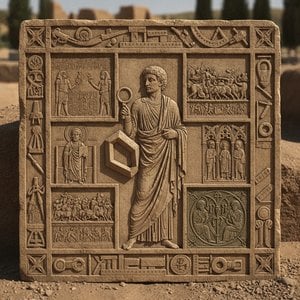
Explore Jasper Johns’ ‘Gray Numbers,’ a textured relief sculpture evoking Mesopotamian reliefs. Layers of grey & green depict figures in a grid-like pattern – a unique abstract work.

Fedezze fel Jaspert Johnsont (1930), a Pop & absztrakt ekspreszionista úttörőt! Kézzel festett ikonok, zászlók, térképek és céljelzők – újragondolva a modern művészetet.

Az ezen az oldalon megjelenített műalkotások szerzői jogi védelem alatt állnak, ami azt jelenti, hogy törvényileg nem készíthetünk és nem adhatunk el belőlük pontos másolatokat. Ez a védelem olyan nemzetközi megállapodások alapján érvényesül, mint például a Berni Egyezmény és a nemzeti törvények által, beleértve azokat is, amelyeket meghatározott Az USA szerzői jogi törvénye – 17. cím.

Mint tiszteletes és törvényes alternatívát, olyan egyedi, kézzel festett alkotásokat kínálunk, amelyek az eredetiből merítnek inspirációt. Tapasztalt és professzionális művészeink alaposan tanulmányozzák az eredeti stílusát, hangulatát és művészeti esszenciáját, hogy egy olyan új, egyedi alkotást hozzunk létre, amely ugyanazt az érzést kelti – miközben önálló, eredeti alkotásként létezik.

Ez a módszer teljes mértékben megfelel a szerzői jogi szabályozásnak, mivel nem tartalmazza a védett műalkotás másolását vagy duplikálását. Ehelyett ez egy kreatív újinterpretáció – egy új festmény, amely az eredetivel való összefüggései miatt hatással van rá, de nem az az.

Kézzel készített olajfestmény reprodukció

Kézzel festett olajvastú vászon, az Ön által választott méretben és keretben, művészeink készítik meglévőre. ( Váltás nyomtatványra Áttérés digitális képre)

Corner sample of the P118B picture frame: formázott polisztirol, 5 cm wide and 3 cm thick
P118B Ft10
Corner sample of the P118H picture frame: formázott polisztirol, 5 cm wide and 3 cm thick
P118H Ft10
Corner sample of the P118W picture frame: formázott polisztirol, 5 cm wide and 3 cm thick
P118W Ft10
Corner sample of the P438Z picture frame: formázott polisztirol, 5.5 cm wide and 3.5 cm thick
P438Z Ft10
Corner sample of the P508JH picture frame: formázott polisztirol, 7 cm wide and 3.5 cm thick
P508JH Ft12
Corner sample of the P508YH picture frame: formázott polisztirol, 7 cm wide and 3.5 cm thick
P508YH Ft12
Corner sample of the P805H picture frame: formázott polisztirol, 5 cm wide and 3.5 cm thick
P805H Ft10
Corner sample of the P805Z picture frame: formázott polisztirol, 5 cm wide and 3.5 cm thick
P805Z Ft10
Corner sample of the P919BZ picture frame: formázott polisztirol, 7 cm wide and 3.5 cm thick
P919BZ Ft10
Corner sample of the P919G picture frame: formázott polisztirol, 7 cm wide and 3.5 cm thick
P919G Ft10
Corner sample of the P919XJ picture frame: formázott polisztirol, 7 cm wide and 3.5 cm thick
P919XJ Ft10
Corner sample of the P959ZH picture frame: formázott polisztirol, 5 cm wide and 3 cm thick
P959ZH Ft10
Corner sample of the P968JZ picture frame: formázott polisztirol, 6 cm wide and 4 cm thick
P968JZ Ft12
Corner sample of the W106C picture frame: tömörfa, 5 cm wide and 3 cm thick
W106C Ft8
Corner sample of the W218G picture frame: tömörfa, 5 cm wide and 3 cm thick
W218G Ft10
Corner sample of the W218JH picture frame: tömörfa, 5 cm wide and 3 cm thick
W218JH Ft8
Corner sample of the W218Y picture frame: tömörfa, 5 cm wide and 3 cm thick
W218Y Ft10
Corner sample of the W307PJ picture frame: tömörfa, 6 cm wide and 3 cm thick
W307PJ Ft10
Corner sample of the W316G picture frame: tömörfa, 6 cm wide and 3 cm thick
W316G Ft10
Corner sample of the W316PJ picture frame: tömörfa, 6 cm wide and 3 cm thick
W316PJ Ft8
Corner sample of the W316Y picture frame: tömörfa, 6 cm wide and 3 cm thick
W316Y Ft10
Corner sample of the W398PJ picture frame: tömörfa, 5 cm wide and 3 cm thick
W398PJ Ft8
Corner sample of the W4111J picture frame: tömörfa, 6.5 cm wide and 3.5 cm thick
W4111J Ft10
Corner sample of the W500HY picture frame: tömörfa, 7 cm wide and 5 cm thick
W500HY Ft15
Corner sample of the W500JH picture frame: tömörfa, 7 cm wide and 5 cm thick
W500JH Ft15
Corner sample of the W692G picture frame: tömörfa, 8 cm wide and 4 cm thick
W692G Ft12
Corner sample of the W849H picture frame: tömörfa, 5 cm wide and 3 cm thick
W849H Ft8
Corner sample of the W940BG picture frame: tömörfa, 7.5 cm wide and 4.5 cm thick
W940BG Ft15
Corner sample of the W953PJ picture frame: tömörfa, 6 cm wide and 3.5 cm thick
W953PJ Ft8

Standard méret
egyedi
CM
INCH

Válasszon előre meghatározott méreteink közül, amelyek megfelelnek a műalkotás eredeti arányainak.

szélesség
magasság

Ön megadhat saját méreteket egy adott kerethez vagy térhez igazításhoz. Ha a kiválasztott méret nem egyezik az eredeti kép arányával, akkor a műalkotást levágjuk, vagy további kézzel festett elemekkel meghosszabbítjuk a festményt. A gyártás megkezdése előtt küldünk Önnek egy digitális előnézetet jóváhagyásra.
Kérjük, vegye figyelembe, hogy a képernyőn megjelenő előnézet nem tükrözi a tényleges vágást vagy kiterjesztést. Csak az előnézet fog pontosan mutatni a végső kompozíciót.
Bár egyedi méretek állnak rendelkezésre, javasoljuk, hogy válasszon egy méretet az előre meghatározott listából az eredeti arányok megőrzése érdekében.

Példák arra, mit lehet módosítani: az arc kicserélése az ügyfél fotójára; háziállat hozzáadása (pl. macska helyett kutya); rejtett üzenet elhelyezése a háttérben; a háttér tájának vagy elemeinek megváltoztatása.
A rendelést követően a WahooArt.com csapata e-mailt küld az ügyfélnek az instrukciókért, és biztosít egy előnézeti képet (mockup).

Világszerte elérhető szállítás () 3-4 hét alatt a szokásos 5 hét helyett. (12 október). A minőség nem kérdőjelezhető.

Ingyenes globális expressz szállítás
Prémium minőségű len vászon
Teljes körű szállítási biztosítás
Vámvisszatérítési Garancia
Tökéletes színarányosság garancia
100 napos visszaküldési garancia (csak gyártási hibás termékek esetén)
100% pénzvisszatérítési garancia
Több darab vásárlásakor kedvezmény

Összesített ár

Ft 194918

Gray numbers

Reprodukciós technika

Reprodukció méretei

-

Összesített ár

Ft 194918

Rövid tények

  • title: Gray Numbers
  • year: 1958-1961
  • artist: Jasper Johns
  • medium: encaustic on canvas
  • subject: Numbers

Művészeti kvíz

Minden kérdésre csak egy helyes válasz létezik.

Kérdés 1:
Jasper Johns' 'Gray Numbers' is notable for its use of what painting technique?
Kérdés 2:
What primary subject matter does 'Gray Numbers' explore?
Kérdés 3:
To what art movements is Jasper Johns commonly associated?
Kérdés 4:
The artist often embedded what material within the encaustic layers of 'Gray Numbers'?
Kérdés 5:
What was a key conceptual aim behind Johns’ choice of commonplace subjects like numbers?

A Cipher of Modernity: Decoding Jasper Johns’ *Gray Numbers*

Jasper Johns' *Gray Numbers*, created between 1958-61, is a pivotal work that encapsulates the artist’s groundbreaking exploration of representation and perception in post-war America. Moving beyond Abstract Expressionism, Johns ushered in a new era by focusing on commonplace imagery – flags, targets, maps, and, as seen here, numerals – elevating them to the realm of high art. This piece isn't merely *about* numbers; it’s about how we see, interpret, and assign meaning to symbols within a visual field.

Visual Language & Artistic Technique

The artwork presents a densely packed grid of stenciled numerals rendered in varying shades of gray encaustic on canvas. Encaustic – an ancient technique involving pigment mixed with hot wax – lends the surface a unique texture, simultaneously matte and subtly luminous. The application is not pristine; drips, overlaps, and slight imperfections reveal the hand of the artist and emphasize the materiality of the paint itself. This deliberate focus on the physical qualities of the artwork challenges traditional notions of painting as illusionistic representation. The limited palette, dominated by grayscale tones, further directs attention to form, texture, and the interplay between positive and negative space.

Historical Context & The Rise of Pop Art

*Gray Numbers* emerged during a period of significant cultural shift. America was experiencing unprecedented economic prosperity and a growing fascination with mass media and consumer culture. Johns’ choice to depict everyday objects resonated with this changing landscape, foreshadowing the emergence of Pop Art. However, unlike the often celebratory tone of Pop artists like Andy Warhol, Johns' approach is more ambiguous and introspective. He wasn’t simply *celebrating* these symbols; he was questioning their inherent meaning and our relationship to them.

Symbolism & Interpretation

The symbolism within *Gray Numbers* is multi-layered. Numerals, inherently abstract, represent systems of order and quantification – tools we use to navigate the world. Yet, divorced from their functional context, they become purely visual elements, open to subjective interpretation. The grid structure itself suggests organization and control, while the slight irregularities in application hint at a subtle resistance to complete systematization. The work invites contemplation on themes of language, code, and the inherent limitations of representation.
  • The repetition of numbers can be seen as an echo of industrial production and standardization.
  • The use of stencils suggests mechanical reproduction, blurring the lines between original artwork and mass-produced imagery.
  • The encaustic medium adds a tactile quality that grounds the work in physicality, counteracting the abstract nature of the subject matter.

Emotional Impact & Aesthetic Appeal

Despite its seemingly austere subject matter, *Gray Numbers* possesses a quiet power. The subtle variations in tone and texture create a visually engaging surface that rewards close observation. The work evokes a sense of intellectual curiosity and invites viewers to actively participate in the process of meaning-making. Its understated elegance and sophisticated use of materials make it a compelling addition to any collection, lending an air of refined contemplation to interior spaces. For collectors, *Gray Numbers* represents a cornerstone of modern art history; for designers, it offers a versatile aesthetic that complements both contemporary and traditional settings.

Gyakran Ismételt Kérdések

Hogyan találhatok olyan műalkotásokat, amelyek hasonlítanak a(z) „Gray numbers”, Jasper Johns alkotása alkotásra?

A "Gray numbers" alkotással hasonló művek a festmény Hasonló műalkotások oldalán találhatók.

Ki árul „Gray numbers”, Jasper Johns alkotása kézzel festett másolatait?

A "Gray numbers" kézzel festett olajfesték reprodukció lino vászonon formátumban is elérhető. A rendelés ez az oldal felületen adható le, különböző méretválasztékban.

Elérhető-e a "Gray numbers" minőségi nyomtatványként?

A „Gray numbers”, Jasper Johns alkotása nyomata közvetlenül megrendelhető a(z) ez az oldal oldalon: minőségi giclée nyomat pamutvászonon vagy archiváló vászonpapíron.

Mely helyet foglal el a művészettörténetben a „Gray numbers”, Jasper Johns alkotása?

A „Gray numbers”, Jasper Johns alkotása a Pop Art irányzat alkotása, a High Medieval korszakból. Ezek együtt adják meg a mű helyét a művészettörténetben.

Hogyan tölthetem le a(z) „Gray numbers”, Jasper Johns alkotása képét?

Letölthető változat elérhető a "Gray numbers" alkotás esetében: a mű Letöltés oldala magas felbontású digitális kép letöltés lehetőséget kínál.

„Gray numbers” művészeti alkotás mentes a szerzői jogoktól?

A szerzői jogokkal kapcsolatban a "Gray numbers" mű még szerzői jogにより védi.

Mennyire harmonikusak „Gray numbers”, Jasper Johns alkotása színei?

A „Gray numbers”, Jasper Johns alkotása egy Unified Palette színharmóniát mutat be.

Hová sorolható a "Gray numbers" Jasper Johns életművében?

A "Gray numbers" Jasper Johns Pop Art korszakának alkotása, melynek témakörében mesopotamian echoes, ancient narrative", grid-based order, symbolic figures, pop art roots, questioning form, exploring abstraction, recurring motif is feltűlik.


A művész életrajza

A Life Painted in Symbols: The World of Jasper Johns

Jasper Johns emerged as a pivotal figure in the landscape of American art, bridging the emotive intensity of Abstract Expressionism with the burgeoning Pop Art movement that would soon redefine artistic boundaries. Born in Augusta, Georgia, in 1930, his early life was marked by a sense of displacement following his parents’ divorce, an experience that perhaps subtly informed his later explorations of identity and belonging within the context of American iconography. His formative years unfolded across various schools before he briefly attended the University of South Carolina, but it wasn't until his move to New York City in 1949 that Johns truly began to forge his artistic path. A period of service during the Korean War further shaped his perspective, exposing him to a world far removed from the burgeoning art scene he was eager to embrace upon his return.

Breaking with Abstraction: The Dawn of a New Visual Language

The post-war American art world was dominated by Abstract Expressionism—a style characterized by spontaneous gesture and deeply personal emotional expression. While initially influenced by this movement, Johns felt compelled to move beyond its purely non-representational approach. He sought a new visual language, one that incorporated recognizable imagery not as illustrations but as vehicles for deeper contemplation. This wasn’t simply about *depicting* the world; it was about questioning how we perceive and interpret symbols within it. Key influences guided his departure: Marcel Duchamp's radical readymades challenged conventional notions of art-making, demonstrating that ordinary objects could be elevated to the status of art through their presentation, while the emphasis on materiality in Abstract Expressionism informed Johns’ early techniques. However, it was the everyday objects and potent symbols of American culture—flags, targets, maps, numbers—that truly became central to his artistic vocabulary. He wasn’t interested in escaping representation; he wanted to dissect it, layer it with meaning, and ultimately reveal its inherent ambiguities. The influence of Robert Rauschenberg, a fellow artist and close friend, was also crucial during this period, fostering a collaborative spirit and pushing the boundaries of artistic experimentation.

Iconic Images: Flags, Targets, and the Language of Symbols

Johns’ breakthrough works arrived in the mid-1950s, instantly establishing him as a force to be reckoned with. His paintings of flags, most notably *Flag* (1954–55), were not patriotic declarations but rather investigations into the very nature of representation. Rendered in a semi-abstract style, using encaustic—pigment mixed with hot wax—and collage techniques, these flags weren’t simply images; they were textured surfaces laden with symbolic weight. The *Flag* series wasn't just about the American flag; it was about the act of painting itself, the materiality of the canvas, and the relationship between image and reality. The target series, beginning in 1958, further explored this fascination with recognizable forms, questioning perception and meaning through the seemingly straightforward image of a bullseye. *Map* (1961), with its fragmented and layered depictions of the United States, delved into themes of geography, identity, and the complexities of national representation. Works like *False Start* (1959) demonstrated his experimentation with language and visual codes, creating complex compositions that challenged viewers to decipher their underlying meanings. Even *White Flag* (1955), a seemingly simple monochrome canvas, prompted profound questions about absence, surrender, and the very act of seeing. Johns often incorporated elements of chance and accident into his process, embracing the unpredictable nature of creation and allowing the materials themselves to contribute to the final outcome.

A Legacy of Influence: Paving the Way for Pop Art and Beyond

Jasper Johns’ impact on the trajectory of modern art is undeniable. He played a crucial role in the transition from Abstract Expressionism to Pop Art, challenging the prevailing aesthetic norms and opening up new avenues for artistic exploration. By embracing recognizable imagery, he paved the way for artists like Andy Warhol and Roy Lichtenstein, who would further blur the lines between high art and popular culture. His close collaboration with Robert Rauschenberg was also profoundly influential, fostering a spirit of experimentation and pushing the boundaries of artistic practice. Johns’ work continues to resonate today, inspiring generations of artists to question assumptions, challenge conventions, and explore the power of symbols in shaping our understanding of the world. He remains an active artist, constantly evolving his approach and solidifying his position as one of the most important figures in 20th and 21st-century art.

Recognition and Enduring Impact

Throughout his illustrious career, Jasper Johns has received numerous accolades, including a Golden Lion at the Venice Biennale in 1988, the National Medal of Arts in 1990, and the Presidential Medal of Freedom in 2011. His works are held in major museum collections worldwide—the Museum of Modern Art, the Whitney Museum of American Art, the Metropolitan Museum of Art in New York, and Tate Modern in London, to name just a few. He has been the subject of countless exhibitions, cementing his status as a master of modern art. Beyond his paintings, Johns’ contributions extend to sculpture and printmaking, demonstrating his versatility and unwavering commitment to artistic innovation. His enduring legacy lies not only in the iconic images he created but also in the profound questions he raised about the nature of representation, symbolism, and the very essence of what it means to be an artist in a rapidly changing world.
Jasper Johns

Jasper Johns

1930 - , Egyesült Államok

Gyors információk

  • Artistic Movement Or Style: Pop Art, Ekspreszionizmus
  • Artists Or Movements Influenced By This Artist:
    • Warhol
    • Lichtenstein
  • Artists Who Influenced This Artist: ['Duchamp']
  • Date Of Birth: 1930. május 15.
  • Full Name: Jasper Johns
  • Nationality: Amerikai
  • Notable Artworks:
    • Flag
    • Target
    • Map
  • Place Of Birth: Augusta, USA
Fedezze fel a műalkotásokat témák, stílusok és jellemzők szerint csoportosítva.