Előnézet AR előnézet Kézzel festett másolat vásárlása Áttérés digitális képre Megosztás
Részletek Útmutató Kedvencekhez ad Letöltés Hasonló darabok X-ray felvétel Diavetítés Statisztika

The Pool

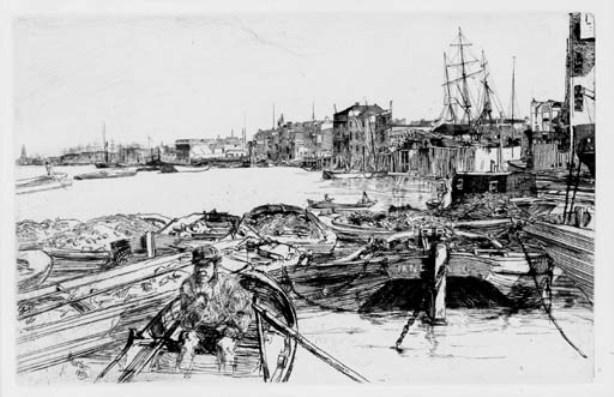
James Abbott McNeill Whistler's "The Pool" (1859) is an evocative etching capturing London’s bustling harbor scene with masterful detail and tonal harmony – a key work of the Aesthetic movement.

Whistler: A mester Franciaországból érkezett, és az "art for art's sake" elvet követve a tonalizmus úttörője volt. Kiemelkedő nokturnái, portréi és a londoni művészettörténet meghatározó alakja.

Giclée / Műnyomat

Múzeumi minőségű giclée vagy vászonnyomat, gyors gyártással és rugalmas finomítási lehetőségekkel. ( Kézzel festett másolat vásárlása Áttérés digitális képre)

P118B $10
P118H $10
P118W $10
P438Z $10
P508JH $12
P508YH $12
P805H $10
P805Z $10
P919BZ $10
P919G $10
P919XJ $10
P959ZH $10
P968JZ $12
W106C $8
W218G $10
W218JH $8
W218Y $10
W307PJ $10
W316G $10
W316PJ $8
W316Y $10
W398PJ $8
W4111J $10
W500HY $15
W500JH $15
W692G $12
W849H $8
W940BG $15
W953PJ $8

Standard méret
egyedi
CM
INCH

Válasszon előre meghatározott méreteink közül, amelyek megfelelnek a műalkotás eredeti arányainak.

szélesség
magasság

Megadhat saját méreteket is egy konkrét kerethez vagy helyszínhez igazítva. Amennyiben a kiválasztott méret nem egyezik az eredeti kép arányokkal, a műalkotást le fogjuk vágni, vagy kiegészítjük a képet tükrözött vagy egyszínű szélekkel. A gyártás megkezdése előtt egy digitális tervezetet küldünk jóváhagyásra.
Kérjük, vegye figyelembe, hogy a képernyőn látható előnézet nem tükrözi a tényleges levágást vagy kiegészítést. Csak a tervezet mutatja pontosan a végső kompozíciót.
Bár az egyedi méretek is elérhetőek, az eredeti arányok megőrzése érdekében azt javasoljuk, hogy válasszon a előre meghatározott listából származó méretet.

Világszerte történő kiszállítás területére mindössze 2 hét alatt, a szokásos 4-5 hét helyett. (22 szeptember)

why_choose_icon
Ingyenes globális expressz szállítás
why_choose_icon
Prémium minőségű len vászon
why_choose_icon
Teljes körű szállítási biztosítás
why_choose_icon
Vámvisszatérítési Garancia
why_choose_icon
Tökéletes színarányosság garancia
why_choose_icon
100 napos visszaküldési garancia (csak gyártási hibás termékek esetén)
why_choose_icon
100% pénzvisszatérítési garancia
why_choose_icon
Több darab vásárlásakor kedvezmény

Összesített ár

$ 68

reproduction

The Pool

Giclée / Műnyomat

Reprodukció méretei

-

Összesített ár

$ 68

Rövid tények

  • Location: Metropolitan Museum
  • Title: The Pool
  • Medium: Etching & Drypoint
  • Subject or theme: Harbor scene, working man
  • Year: 1859
  • Artist: Whistler
  • Dimensions: 13.7 x 21 cm

Művészeti kvíz

Minden kérdésre csak egy helyes válasz létezik.

Kérdés 1:
What artistic movement is James Abbott McNeill Whistler most closely associated with?
Kérdés 2:
The etching 'The Pool' primarily depicts:
Kérdés 3:
What technique is predominantly used to create the tonal variations in 'The Pool'?
Kérdés 4:
Which of the following best describes Whistler's artistic philosophy as expressed in works like 'The Pool'?
Kérdés 5:
The image description mentions Whistler's influence from which artistic tradition?

A Glimpse of Urban Life: Whistler’s “The Pool”

James Abbott McNeill Whistler's "The Pool," painted in 1859, isn’t merely a depiction of London’s bustling waterfront; it’s a carefully constructed meditation on light, atmosphere, and the quiet drama of everyday existence. This etching, rendered with exquisite precision and a masterful understanding of tonal variation, offers a poignant snapshot of a rapidly changing city – a world poised between tradition and modernity. Whistler, a key figure in the Aesthetic movement, deliberately rejected the prevailing Victorian obsession with narrative and moralizing, advocating instead for “art for art’s sake,” prioritizing beauty and sensory experience above all else. "The Pool" embodies this philosophy perfectly, inviting the viewer to lose themselves within its subtle harmonies and understated elegance.

The scene itself is deceptively simple: a solitary figure seated in a small boat, seemingly lost in contemplation amidst the chaotic activity of the Pool – the area around London Bridge where ships docked and goods were exchanged. Yet, Whistler elevates this commonplace subject to something profoundly evocative. He strips away extraneous detail, focusing instead on the interplay of light and shadow, the textures of water and brick, and the subtle gestures of his central figure. The composition is carefully balanced, drawing the eye towards the distant buildings while anchoring it in the foreground with the boatman’s presence.

Technique and Style: Mastering the Etching Process

Whistler's skill as an etcher is immediately apparent. He employs a meticulous technique of hatching and cross-hatching – parallel lines and intersecting patterns – to build up tones and create a remarkable sense of depth and texture. The work isn’t rendered with bold, dramatic contrasts; instead, Whistler utilizes a delicate gradated scale of grays, mimicking the subtle shifts in light that define the scene. This tonal control is crucial to the painting's atmospheric effect, creating an illusion of diffused light and hazy distance.

The choice of paper – heavy laid Japan tissue – further enhances the work’s quality. Its slightly textured surface provides a beautiful contrast to the smooth lines of the etching, adding another layer of visual interest. Whistler's use of drypoint, a technique that allows for greater tonal variation and subtle shading, is particularly noteworthy. This combination of techniques demonstrates his mastery of printmaking and his ability to capture the nuances of light and shadow with remarkable subtlety.

Historical Context: Whistler’s Aesthetic Vision

“The Pool” was created during a period of significant social and economic change in London. The city was undergoing rapid industrialization, transforming from a primarily mercantile center into a global financial powerhouse. Whistler's work reflects this transformation, capturing the dynamism of the waterfront while simultaneously suggesting a sense of melancholy and isolation. He wasn’t interested in documenting historical events or celebrating heroic deeds; instead, he sought to capture the essence of a particular moment in time – a fleeting glimpse of urban life.

Whistler's approach was revolutionary for his time. He challenged the conventions of academic art, rejecting the emphasis on narrative and moralizing that had dominated the artistic landscape for centuries. His Aestheticism sought to elevate visual experience above all else, prioritizing beauty, harmony, and sensory pleasure. “The Pool” exemplifies this philosophy perfectly, offering a quiet meditation on light, atmosphere, and the subtle rhythms of urban life.

Symbolic Resonance: A Portrait of Solitude

While seemingly simple, "The Pool" is rich in symbolic meaning. The solitary figure in the boat represents not just an individual but also humanity’s place within the vastness of the city and the natural world. His posture – chin resting on his hand – suggests contemplation, perhaps even a sense of detachment or melancholy. The surrounding activity—the bustling harbor filled with boats and buildings—creates a powerful contrast, highlighting the figure's isolation.

Furthermore, the muted color palette contributes to the painting’s emotional impact. The absence of bright colors reinforces the feeling of quiet contemplation and suggests a deeper, more subtle beauty. Whistler wasn’t interested in creating a visually stimulating spectacle; instead, he sought to evoke a mood – a sense of understated elegance, melancholy, and perhaps even a hint of longing. "The Pool” is not just a depiction of a scene; it's an invitation to contemplate the human condition within the context of a rapidly changing world.


A művész életrajza

A Life Shaped by Aestheticism: The World of James Abbott McNeill Whistler

James Abbott McNeill Whistler, born in Lowell, Massachusetts in 1834, was a figure perpetually at odds with convention—a painter who championed “art for art’s sake” during an era obsessed with moralizing narratives. His early life, marked by frequent relocations due to his father's railroad engineering career, instilled within him a sense of adaptability and exposure to diverse environments. A brief, unhappy stint at West Point proved ill-suited to his artistic temperament, followed by work with the U.S. Coast and Geodetic Survey that, while delaying, did not extinguish his burgeoning passion for art. These formative years were characterized by an innate talent for drawing and a resolute desire to forge a path as a professional artist, a pursuit that would ultimately lead him across the Atlantic and into the heart of the European avant-garde. The seeds of Whistler’s artistic rebellion were sown early, nurtured by a spirit that resisted conformity and embraced aesthetic exploration above all else.

Parisian Beginnings and the Cultivation of Style

The pivotal moment in Whistler's artistic journey arrived with his move to Paris in 1855. Here, under the tutelage of Sébastien Bouré, he honed his skills in oil painting, watercolor, and printmaking, absorbing the influences of French Realism and the Barbizon School painters. However, Whistler quickly transcended mere imitation, developing a distinctive style characterized by tonal harmonies and atmospheric effects. He wasn’t interested in replicating reality; rather, he sought to capture its *essence*, its fleeting moods and subtle nuances. This period marked a crucial shift from representational accuracy towards an exploration of pure aesthetic form. His early works already hinted at the delicate balance between observation and abstraction that would define his mature style. Whistler was particularly drawn to Japanese prints (ukiyo-e), finding in their bold compositions, flattened perspectives, and emphasis on decorative patterns a powerful source of inspiration. He meticulously studied these works, adapting their principles to his own artistic practice, influencing his use of color, line, and spatial arrangement. It was in Paris that Whistler began to articulate his belief that art should be judged solely on its aesthetic qualities, free from didactic or moralizing constraints—a philosophy that would become the cornerstone of his artistic practice and a defining characteristic of the Aesthetic movement.

Nocturnes, Portraits, and the Pursuit of Harmony

Whistler’s artistic vision crystallized in several key themes and stylistic choices. He championed the concept of “art for art’s sake,” rejecting narratives laden with moral or social commentary. His work became an exercise in capturing subtle nuances of light, color, and atmosphere—a pursuit that led to his iconic *Nocturnes*. These atmospheric paintings of twilight scenes, often depicting the Thames River at night, were not intended as literal depictions but rather as evocative impressions, studies in tonal harmony and mood. He frequently employed limited palettes – often dominated by shades of grey, blue, and gold – and delicate brushwork, creating a sense of ethereal beauty and quiet contemplation. Whistler’s approach to portraiture was equally distinctive. He wasn't concerned with capturing perfect likenesses; instead, he focused on formal arrangements and tonal relationships, treating his sitters as compositional elements within a carefully constructed aesthetic framework. *Arrangement in Grey and Black No. 1*—better known as *Whistler’s Mother*—demonstrates this approach perfectly, transforming a familial portrait into an iconic image of Victorian motherhood through its masterful use of form and tone. The painting's power lies not in the depiction of a specific individual but in its exploration of balance, harmony, and visual relationships.

Controversy, Influence, and Lasting Legacy

Whistler’s career was not without controversy. The infamous libel suit brought against him by the critic John Ruskin in 1878, sparked by *Nocturne in Black and Gold – The Falling Rocket*, became a landmark moment in art history. Whistler successfully defended his artistic autonomy, arguing that his paintings were not intended to be realistic representations but rather aesthetic arrangements of color and form. This case elevated his profile and ignited important debates about the nature of art criticism and artistic freedom. Beyond this legal battle, Whistler’s influence extended far and wide. He was deeply inspired by Japanese prints (ukiyo-e), which informed his compositional principles and emphasis on decorative patterns, as well as the tonal mastery of Spanish painters like Velázquez. His advocacy for “art for art’s sake” profoundly impacted the Aesthetic movement in England and America, paving the way for modernism and challenging conventional notions about artistic purpose. He left an indelible mark on American art, inspiring generations of artists to embrace formalist approaches and explore the expressive potential of color and composition. Whistler died in London in 1903, leaving behind a body of work that continues to captivate and inspire. His unwavering commitment to aesthetic principles and his relentless pursuit of beauty cemented his place as a pivotal figure in the history of art.
  • Notable Works: *The Forge* (1861), *Portrait of Charles Lang Freer* (1873), *Brown and Gold: The Gold Girl—Connie Gilchrist* (1876-77), *Arrangement in Grey and Black No. 1 (Whistler’s Mother)* (1871), *Nocturne in Black and Gold – The Falling Rocket* (1875).
  • Influences: Japanese prints, Velázquez.
Whistler

Whistler

1834 - 1903 , Egyesült Államok

Gyors információk

  • Artistic Movement Or Style: Tonalizmus, Esztétika
  • Artists Or Movements Influenced By This Artist: ['Esztétikai mozgalom']
  • Artists Who Influenced This Artist:
    • Velázquez
    • Japán nyomatok
  • Date Of Birth: 1834. július 14.
  • Date Of Death: 1903. augusztus 17.
  • Full Name: James Abbott McNeill Whistler
  • Nationality: Amerikai
  • Notable Artworks:
    • Anyja portréja
    • Éjszakai Színrevület
    • A Forge
  • Place Of Birth (City And Country): Lowell, Massachusetts, USA
Fedezze fel a műalkotásokat témák, stílusok és jellemzők szerint csoportosítva.