INGYENES MŰVÉSZETI TANÁCSADÁS

x
Készíttetnék festményként Készíttetnék festménykéntKép letöltése Kép letöltése MegosztásMegosztás
RészletekRészletek Kedvencekhez ad Kedvencekhez ad LetöltésLetöltés Hasonló alkotásokHasonló alkotások X-ray felvételX-ray felvétel DiavetítésDiavetítés

Wandering Minstrels

Hubert Robert's "Wandering Minstrels" captures a lively Parisian scene with statues and musicians amidst a fantastical landscape, showcasing the artist’s mastery of light & illusion.

Robert Hubert (1733–1808): Franciaország egyik legkiemelkedőbb tájképfestője, aki a rombolás és a látlelet varázslatos keverékével alkotott. Fedezze fel művészetét!

Giclée / Műnyomat

Múzeumi minőségű giclée vagy vászonnyomat, gyors gyártással és rugalmas finomítási lehetőségekkel.

P118B $10
P118H $10
P118W $10
P438Z $10
P508JH $12
P508YH $12
P805H $10
P805Z $10
P919BZ $10
P919G $10
P919XJ $10
P959ZH $10
P968JZ $12
W106C $8
W218G $10
W218JH $8
W218Y $10
W307PJ $10
W316G $10
W316PJ $8
W316Y $10
W398PJ $8
W4111J $10
W500HY $15
W500JH $15
W692G $12
W849H $8
W940BG $15
W953PJ $8

Standard
custom
CM
INCH

Válasszon előre meghatározott méreteink közül, amelyek megfelelnek a műalkotás eredeti arányainak.

szélesség
magasság

Megadhat saját méreteket is egy konkrét kerethez vagy helyszínhez igazítva. Amennyiben a kiválasztott méret nem egyezik az eredeti kép arányokkal, a műalkotást le fogjuk vágni, vagy kiegészítjük a képet tükrözött vagy egyszínű szélekkel. A gyártás megkezdése előtt egy digitális tervezetet küldünk jóváhagyásra.
Kérjük, vegye figyelembe, hogy a képernyőn látható előnézet nem tükrözi a tényleges levágást vagy kiegészítést. Csak a tervezet mutatja pontosan a végső kompozíciót.
Bár az egyedi méretek is elérhetőek, az eredeti arányok megőrzése érdekében azt javasoljuk, hogy válasszon a előre meghatározott listából származó méretet.

Világszerte történő kiszállítás területére 2 hét alatt, a szokásos 4-5 hét helyett. 4 július

why_choose_icon
Ingyenes globális expressz szállítás
why_choose_icon
Prémium minőségű len vászon
why_choose_icon
Teljes szállítási biztosítás
why_choose_icon
Vámvisszatérítési Garancia
why_choose_icon
Tökéletes színpontosság garancia
why_choose_icon
60 napos visszaküldési lehetőség (csak gyártási hibák esetén)
why_choose_icon
100%-os pénzvisszatérítési garancia
why_choose_icon
Kedvezmény több termény esetén

Összesen

-

reproduction

Wandering Minstrels

Giclée / Műnyomat

A reprodukció mérete

-

Összesített ár

-

Rövid tények

  • Medium: Oil on canvas
  • Notable elements: Statues, obelisk, fountain
  • Location: Metropolitan Museum
  • Artistic style: Capriccio, Romanticism
  • Artist: Hubert Robert
  • Subject or theme: Italian landscape
  • Dimensions: 175 x 123 cm

Művészeti kvíz

Minden kérdésre csak egy helyes válasz létezik.

Kérdés 1:
What was the primary reason Hubert Robert created the series of paintings ‘Wandering Minstrels’?
Kérdés 2:
The painting ‘Wandering Minstrels’ is primarily set within what architectural style?
Kérdés 3:
Hubert Robert’s experience in Italy significantly influenced his work. What did he learn there that shaped his artistic approach?
Kérdés 4:
The image depicts a scene featuring several statues. What is the primary focus of the composition?
Kérdés 5:
Considering the historical context and Robert’s artistic style, what is a key element conveyed by ‘Wandering Minstrels’?

Termékinformációk

A Vision of Leisure: Hubert Robert’s “Wandering Minstrels”

Hubert Robert's "Wandering Minstrels," painted in 1777, is more than just a picturesque landscape; it’s a meticulously constructed illusion, a fleeting moment captured with the artist’s signature blend of observation and romantic fancy. Commissioned by the Comte d’Artois as part of his extravagant pleasure pavilion at Bagatelle – a project undertaken with astonishing speed – the painting embodies the Rococo spirit of playful extravagance and the burgeoning fascination with ruins that would define much of the late 18th century. Robert, deeply influenced by his years spent in Italy, masterfully synthesizes elements of Roman architecture and sculpture with a distinctly French sensibility, creating a scene brimming with theatricality and an almost palpable sense of nostalgia.

The composition immediately draws the eye to the central obelisk, flanked by two elegant statues – likely representations of goddesses or allegorical figures. These monumental forms anchor the scene, providing a dramatic backdrop for the lively gathering below. The figures themselves are rendered with a remarkable degree of detail and movement; musicians strumming instruments, dancers twirling, and individuals engaged in various social interactions populate the foreground. Robert’s skill lies not just in depicting these figures accurately but also in conveying their energy and the overall atmosphere of merriment. Notice how he uses light to sculpt the forms, creating a sense of depth and volume that brings the scene vividly to life.

The Art of Illusion: Technique and Style

Robert’s technique is characterized by a loose, almost improvisational brushstroke – a hallmark of his “capriccio” style. He wasn't striving for photographic realism; instead, he prioritized capturing the *feeling* of a place, imbuing it with atmosphere and emotion. The use of color is particularly noteworthy: muted tones dominate, creating a hazy, dreamlike quality that reinforces the painting’s sense of timelessness. He expertly employs atmospheric perspective – objects in the distance appear paler and less distinct – to further enhance the illusion of depth and space. This technique, combined with his masterful handling of light and shadow, is what truly elevates “Wandering Minstrels” beyond a simple landscape depiction.

The painting’s genesis within the Bagatelle project offers crucial context. Robert was tasked with creating a series of six paintings for the pleasure pavilion's bathing room, all centered around the theme of water. This constraint – and the incredibly tight deadline – undoubtedly influenced his approach, leading him to draw upon diverse sources and synthesize them into a cohesive whole. The obelisk itself, for instance, likely derives from Roman architectural models studied by Robert during his time in Italy, while other elements are subtly adapted from French decorative motifs.

Symbolism and Historical Context

“Wandering Minstrels” is deeply rooted in the intellectual currents of the late 18th century. The fascination with ruins – a trend popularized by antiquarians like Johann Joachim Winckelmann – reflected a broader cultural preoccupation with the past, particularly the glories of antiquity. Robert’s incorporation of Roman architectural elements speaks to this interest, but he doesn't simply replicate classical forms; rather, he reimagines them within a distinctly French context. The figures themselves can be interpreted as symbols of leisure and social interaction, reflecting the aristocratic lifestyle enjoyed by the Comte d’Artois and his court.

The painting also subtly alludes to the changing role of art in society. During this period, artists were increasingly expected to create works that not only depicted reality but also evoked emotion and imagination. Robert's “capriccio” style – a genre characterized by fantastical landscapes and idealized scenes – perfectly embodies this shift. The scene is not meant to be a literal representation of a specific place or event; it’s an invented world, designed to transport the viewer to a realm of beauty and delight.

A Legacy of Romantic Vision

“Wandering Minstrels” stands as a testament to Hubert Robert's unique artistic vision. It is a captivating blend of observation, imagination, and technical skill – a painting that continues to enchant viewers with its evocative atmosphere and timeless appeal. Reproductions of this work offer an exceptional opportunity to bring this exquisite scene into your home, allowing you to experience the beauty and artistry of one of France’s most celebrated landscape painters. The intricate details and masterful use of light and color are particularly striking when reproduced on high-quality canvas or aluminum, capturing the essence of Robert's original vision with remarkable fidelity.


A művész életrajza

A Painter of Ruins and Visions: The World of Hubert Robert

Hubert Robert, a name inextricably linked to evocative landscapes and the romantic allure of ruins, occupies a unique and profoundly influential position in 18th-century French art. Born in Paris in 1733, his life unfolded against a backdrop of dramatic artistic shifts—from the opulent excesses of the Rococo to the burgeoning ideals of Neoclassicism—and was deeply shaped by the tumultuous events of the French Revolution. Robert wasn’t merely documenting decay; he was meticulously crafting visions, skillfully blending astute observation with boundless imagination to create scenes that resonated with a poignant nostalgia for the past and an anticipatory awareness of the future. His artistic journey began within the structured confines of formal training, initially under the tutelage of the sculptor Michel-Ange Slodtz, who recognized Robert’s considerable talent but wisely steered him towards painting, sensing his true calling lay in capturing the ephemeral beauty of light, atmosphere, and the subtle poetry inherent in form.

Roman Reveries: Shaping an Artistic Identity

The defining moment in Robert's artistic development arrived with his extended sojourn to Rome between 1754 and 1765. Accompanying Étienne-François de Choiseul, he immersed himself completely within the ancient city’s captivating world—a realm steeped in history, architectural grandeur, and a palpable sense of timelessness. This wasn't simply about replicating what he observed; it was an intensely transformative experience that fundamentally shaped his artistic sensibilities. For eleven years, Rome became his open-air studio, its crumbling temples, majestic arches, and overgrown gardens relentlessly fueling his imagination. He worked closely with Giovanni Paolo Panini, a master of *capriccio* compositions—fantastical views that juxtaposed classical ruins with contemporary life—but Robert quickly surpassed mere imitation, developing a distinctly personal style characterized by an almost obsessive attention to detail, a masterful command of atmospheric perspective, and a profound sensitivity to the interplay of light and shadow. He wasn’t merely painting ruins; he was capturing time itself, distilling its essence into evocative scenes that hinted at both loss and enduring beauty. His extensive sketchbook collection from this period—filled with meticulously rendered studies of Roman landmarks such as the Villa d'Este and Caprarola—provides invaluable insight into his artistic process and reveals a keen eye for architectural nuance and landscape composition. These sketches weren’t preparatory drawings; they were, in essence, finished paintings in miniature, demonstrating Robert’s ability to capture not just the appearance but also the *feeling* of a place.

Parisian Acclaim and Royal Patronage

Robert's triumphant return to Paris in 1765 marked a significant turning point in his career. He swiftly gained recognition within the established artistic circles, securing admission to the Académie Royale de Peinture et de Sculpture with “The Port of Rome, Ornamented with Different Monuments of Architecture, Ancient and Modern.” This monumental work immediately captivated audiences and critics alike, showcasing Robert’s remarkable ability to synthesize his Roman experiences into a compellingly theatrical composition. His subsequent exhibitions at the Salon—the official art exhibition of the Académie Royale—garnered widespread acclaim, drawing considerable attention to his evocative depictions of ruins, picturesque landscapes, and fantastical *capriccio* scenes. The influential critic Denis Diderot famously lauded Robert’s paintings for their ability to transport viewers to another time and place, recognizing his profound skill in evoking a sense of nostalgia and wonder. This burgeoning success quickly led to royal patronage—a testament to the esteem in which he was held by the French court. He received commissions for decorative projects within the Palace of Versailles and was subsequently appointed “Designer of the King’s Gardens,” a prestigious position that further elevated his status. Later, he became “Keeper of the King's Pictures,” responsible for overseeing the collection and ensuring its proper care—a role that underscored his expertise and dedication to preserving France’s artistic heritage.

Revolution, Resilience, and Lasting Legacy

The French Revolution presented an unprecedented and profoundly challenging period for Robert and the entire artistic community. While many artists struggled to navigate the politically volatile climate, Robert demonstrated remarkable resilience and continued to paint prolifically throughout this tumultuous era. He even endured a harrowing imprisonment during the Reign of Terror—a terrifying experience that nonetheless seemed to fuel his creative spirit, resulting in a series of poignant drawings documenting his confinement. Following the Revolution, Robert was appointed curator of the newly established Muséum Central des Arts—the future Musée du Louvre—a remarkable recognition of his expertise and unwavering commitment to safeguarding France’s cultural treasures for generations to come. He played a crucial role in organizing and cataloging the museum's vast collection, ensuring that its artistic legacy would endure. Hubert Robert died in Paris in 1808, leaving behind an extraordinary body of work—a testament to his exceptional talent, innovative vision, and enduring influence on French art. His legacy extends far beyond mere technical skill; he pioneered a genre of painting that celebrated both the beauty of decay and the timeless power of human creativity, bridging the gap between the Rococo and Neoclassical periods and anticipating many of the key characteristics of Romanticism with his fascination for history, imagination, and the evocative portrayal of lost worlds.
  • Key Influences: Giovanni Paolo Panini, Piranesi, the architectural landscape of Rome.
  • Major Themes: Ruins, landscapes, *capriccio* paintings, historical memory, the passage of time.
  • Artistic Style: Meticulous detail, atmospheric perspective, evocative lighting, blending observation with imagination.
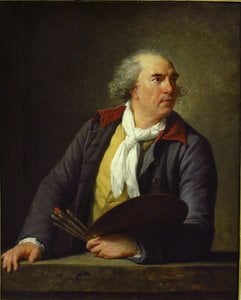
Hubert Robert

Hubert Robert

1733 - 1808 , Franciaország

Rövid tények

  • Artistic Movement Or Style: Római iskola, romantika
  • Artists Or Movements Influenced By This Artist: ['Romantika']
  • Artists Who Influenced This Artist:
    • Giovanni Panini
    • Piranesi
  • Date Of Birth: 1733. május 22.
  • Date Of Death: 1808. április 15.
  • Full Name: Hubert Robert
  • Nationality: Francia
  • Notable Artworks:
    • Római kikötő
    • Galatea repülése
  • Place Of Birth: Párizs, Franciaország
Fedezze fel a műalkotásokat témák, stílusok és jellemzők szerint csoportosítva.