Előnézet AR előnézet Kézzel festett másolat vásárlása Áttérés digitális képre Megosztás
Részletek Útmutató Kedvencekhez ad Letöltés Hasonló darabok X-ray felvétel Diavetítés Statisztika

Vegetables

Experience Henri Matisse's 'Vegetables' (1952) – a vibrant abstract still life bursting with color and playful forms. A captivating piece from the master of Fauvism, now available as a premium reproduction.

Matisse (1869-1954): A fauve mozgalom mestere! Fedezze fel ikonikus festményeit, papírvágásait és a modern művészetre gyakorolt hatását. Kiváló francia festőművész.

Giclée / Műnyomat

Múzeumi minőségű giclée vagy vászonnyomat, gyors gyártással és rugalmas finomítási lehetőségekkel. ( Kézzel festett másolat vásárlása Áttérés digitális képre)

Corner sample of the P118B picture frame: formázott polisztirol, 5 cm wide and 3 cm thick
P118B Ft10
Corner sample of the P118H picture frame: formázott polisztirol, 5 cm wide and 3 cm thick
P118H Ft10
Corner sample of the P118W picture frame: formázott polisztirol, 5 cm wide and 3 cm thick
P118W Ft10
Corner sample of the P438Z picture frame: formázott polisztirol, 5.5 cm wide and 3.5 cm thick
P438Z Ft10
Corner sample of the P508JH picture frame: formázott polisztirol, 7 cm wide and 3.5 cm thick
P508JH Ft12
Corner sample of the P508YH picture frame: formázott polisztirol, 7 cm wide and 3.5 cm thick
P508YH Ft12
Corner sample of the P805H picture frame: formázott polisztirol, 5 cm wide and 3.5 cm thick
P805H Ft10
Corner sample of the P805Z picture frame: formázott polisztirol, 5 cm wide and 3.5 cm thick
P805Z Ft10
Corner sample of the P919BZ picture frame: formázott polisztirol, 7 cm wide and 3.5 cm thick
P919BZ Ft10
Corner sample of the P919G picture frame: formázott polisztirol, 7 cm wide and 3.5 cm thick
P919G Ft10
Corner sample of the P919XJ picture frame: formázott polisztirol, 7 cm wide and 3.5 cm thick
P919XJ Ft10
Corner sample of the P959ZH picture frame: formázott polisztirol, 5 cm wide and 3 cm thick
P959ZH Ft10
Corner sample of the P968JZ picture frame: formázott polisztirol, 6 cm wide and 4 cm thick
P968JZ Ft12
Corner sample of the W106C picture frame: tömörfa, 5 cm wide and 3 cm thick
W106C Ft8
Corner sample of the W218G picture frame: tömörfa, 5 cm wide and 3 cm thick
W218G Ft10
Corner sample of the W218JH picture frame: tömörfa, 5 cm wide and 3 cm thick
W218JH Ft8
Corner sample of the W218Y picture frame: tömörfa, 5 cm wide and 3 cm thick
W218Y Ft10
Corner sample of the W307PJ picture frame: tömörfa, 6 cm wide and 3 cm thick
W307PJ Ft10
Corner sample of the W316G picture frame: tömörfa, 6 cm wide and 3 cm thick
W316G Ft10
Corner sample of the W316PJ picture frame: tömörfa, 6 cm wide and 3 cm thick
W316PJ Ft8
Corner sample of the W316Y picture frame: tömörfa, 6 cm wide and 3 cm thick
W316Y Ft10
Corner sample of the W398PJ picture frame: tömörfa, 5 cm wide and 3 cm thick
W398PJ Ft8
Corner sample of the W4111J picture frame: tömörfa, 6.5 cm wide and 3.5 cm thick
W4111J Ft10
Corner sample of the W500HY picture frame: tömörfa, 7 cm wide and 5 cm thick
W500HY Ft15
Corner sample of the W500JH picture frame: tömörfa, 7 cm wide and 5 cm thick
W500JH Ft15
Corner sample of the W692G picture frame: tömörfa, 8 cm wide and 4 cm thick
W692G Ft12
Corner sample of the W849H picture frame: tömörfa, 5 cm wide and 3 cm thick
W849H Ft8
Corner sample of the W940BG picture frame: tömörfa, 7.5 cm wide and 4.5 cm thick
W940BG Ft15
Corner sample of the W953PJ picture frame: tömörfa, 6 cm wide and 3.5 cm thick
W953PJ Ft8

Standard méret
egyedi
CM
INCH

Válasszon előre meghatározott méreteink közül, amelyek megfelelnek a műalkotás eredeti arányainak.

szélesség
magasság

Írja be a keretének vagy a falának megfelelő szélességet és magasságot. A nyomatot csak le lehet vágni, soha nem tehető nagyobbá, mint az eredeti kép, így egy eltérő alakú méretnél a kép egy része elveszik. Mielőtt bármit kinyatintanánk, küldünk egy digitális próbamodellt jóváhagyásra. Az oldalon látható kép nem tartalmazza a valós levágást — ezt csak a próbamodell mutatja meg.

Világszerte történő kiszállítás területére mindössze 2 hét alatt, a szokásos 4-5 hét helyett. (21 október)

Ingyenes globális expressz szállítás
Prémium minőségű len vászon
Teljes körű szállítási biztosítás
Vámvisszatérítési Garancia
Tökéletes színarányosság garancia
100 napos visszaküldési garancia (csak gyártási hibás termékek esetén)
100% pénzvisszatérítési garancia
Több darab vásárlásakor kedvezmény

Összesített ár

Ft 21486

Vegetables

Giclée / Műnyomat

Reprodukció méretei

-

Összesített ár

Ft 21486

Rövid tények

  • Influences:
    • Chardin
    • Van Gogh
  • Medium: Oil on canvas
  • Notable elements: Bold colors, shapes
  • Subject: Still life
  • Year: 1952

Művészeti kvíz

Minden kérdésre csak egy helyes válasz létezik.

Kérdés 1:
What artistic movement is Henri Matisse most closely associated with?
Kérdés 2:
The painting 'Vegetables' primarily utilizes which technique?
Kérdés 3:
What is the dominant color palette used in 'Vegetables'?
Kérdés 4:
In what year was Henri Matisse’s ‘Vegetables’ created?
Kérdés 5:
The composition of 'Vegetables' can be interpreted as a commentary on which theme?

A Symphony in Color: Henri Matisse’s “Vegetables”

Henri Matisse's "Vegetables," painted in 1952, isn’t merely a still life; it’s an explosion of joyful color and a testament to the artist’s late-career exploration of form and emotion. Created during a period when Matisse was grappling with declining eyesight but refusing to relinquish his passion for painting, this work embodies a remarkable shift in his artistic approach – moving away from representational accuracy towards a more expressive and symbolic language. It's a piece that invites the viewer into a world where shapes and hues dance together, evoking a sense of vibrant life and quiet contemplation.

The painting’s style firmly places it within Matisse’s mature period, heavily influenced by his earlier work with the Fauves – those bold pioneers who championed intense color as a primary means of artistic expression. However, unlike the sometimes jarring intensity of the Fauve movement, “Vegetables” possesses a remarkable harmony and balance. The forms are simplified, almost childlike in their purity, yet rendered with an astonishingly confident hand. Matisse employs a technique he’d perfected – cutting paper into shapes and gluing them onto canvas – a method that liberated him from the constraints of traditional drawing and allowed for a playful exploration of composition and color relationships.

The Language of Color

At the heart of “Vegetables” lies its masterful use of color. Matisse wasn’t interested in depicting vegetables realistically; instead, he used color to convey their essence – their vitality, their texture, and even a sense of their underlying structure. Deep reds and oranges dominate the composition, radiating warmth and energy, while blues and greens provide a cool counterpoint, creating a dynamic visual tension. Notice how the colors aren’t blended smoothly; rather, they are applied in bold, flat areas, maximizing their impact and contributing to the painting's overall sense of immediacy. The color choices themselves carry symbolic weight – red often represents passion and life force, while green suggests growth and abundance.

The arrangement of the objects is equally deliberate. The vase, a simple geometric form, anchors the composition on the left side, providing a stable base for the vibrant array of fruits and vegetables. The potted plant on the right adds another layer of visual interest, its leaves rendered in delicate shades of green and yellow. The scattered bananas, apples, and oranges – each depicted with an almost sculptural quality – seem to tumble across the canvas, creating a sense of movement and spontaneity.

A Reflection of Matisse’s Journey

“Vegetables” was painted during a pivotal period in Matisse's life. He had recently moved to Mougins, near Nice, after suffering a stroke that severely limited his mobility. Despite these physical challenges, he remained fiercely committed to his art, continuing to experiment with new techniques and pushing the boundaries of his creative vision. This painting represents a triumph of artistic spirit – a refusal to be defined by limitations and a celebration of the power of color to transform the world around us.

The work’s simplicity belies its profound emotional depth. It's not simply a depiction of fruits and vegetables; it’s an exploration of joy, vitality, and the beauty of everyday life. Matisse invites us to slow down, to appreciate the simple pleasures that surround us, and to find inspiration in the vibrant colors of the natural world. “Vegetables” stands as a powerful reminder of Matisse's enduring legacy – a testament to his genius and his unwavering belief in the transformative power of art.

Reproductions & Interior Design

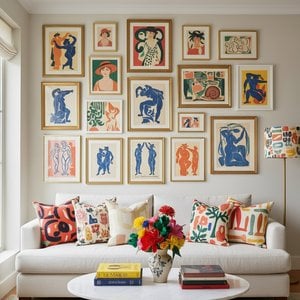
WahooArt offers meticulously crafted, hand-painted reproductions of Henri Matisse’s "Vegetables," allowing you to bring this iconic artwork into your home or office. Our skilled artists replicate Matisse's distinctive style and color palette with exceptional accuracy, ensuring that the reproduction captures the essence of the original painting. The choice of canvas and framing options allows for a tailored experience, perfectly complementing any interior design aesthetic – from modern minimalism to classic elegance.

Consider how the vibrant hues of “Vegetables” can inject energy into a neutral space or add a touch of playful sophistication to a more formal setting. The painting’s simplified forms and bold colors make it an ideal choice for creating a focal point in any room, sparking conversation and inviting contemplation. Whether you're a seasoned art collector or simply seeking a beautiful piece of artwork to enhance your living space, WahooArt’s reproduction of “Vegetables” offers a unique opportunity to own a genuine reflection of one of the 20th century’s most influential artists.

Gyakran Ismételt Kérdések

Melyik szakaszába tartozik Matisz pályájának a "Vegetables" (1952)?

A 1952 évszám alapján a "Vegetables" Matisz Late Period korszakába tartozik.

Mire ajánlott használni a „Vegetables”, Matisz alkotása reprodukcióját?

A „Vegetables”, Matisz alkotása reprodukcióját Accent célokra javasoljuk. Ez a javaslat a mű témájából, hangulatából és színeiből adódik.

Milyen helyiségbe javasolt a „Vegetables”, Matisz alkotása?

A „Vegetables”, Matisz alkotása ajánlott egy Living Room számára. Ez a javaslat a mű témáján, színein és hangulatán alapul.


A művész életrajza

Élet és Korai Évek

Henri Émile Benoît Matisse, 1869. december 31-én született a kis észak-franciaországi Le Cateau-Cambrésisben. Gyermekkora nem ígért festői pályát; szülei vetőmagot és festéket árultak kis üzletükben, és úgy tűnt, fiuk is ezt a családi vállalkozást folytatja majd. Viszont gyenge egészségi állapota megakadályozta ebben. 1882 és 1887 között humángimnáziumba járt, majd Párizsban jogot tanult, végül diplomát szerzett. Azonban egy súlyos vakbélgyulladás (1890) drámai fordulatot hozott az életében. A hosszú ágybetegség során, hogy ne unatkozzon, édesanyja festőkészlettel ajándékozta meg. Ez a pillanat sorsfordító volt: Matisse felfedezte benne a szenvedélyét és új hivatását. Bár kezdetben autodidakta módon tanult, hamarosan beiratkozott az Académie Julianba, majd az École Nationale des Beaux-Artsba, ahol William-Adolphe Bouguereau és Gustave Moreau voltak mesterei. Ezek a tanulmányok klasszikus technikákat biztosítottak számára, amelyek később alapvető szerepet játszottak innovatív stílusának kialakulásában. Korai munkái ezen akadémiai hatásokon keresztül mutatkoztak meg, bár még nem hordozták magukban azt a jellegzetes hangot, amely hamarosan világhírnévhez juttatta őt.

A Fauvizmus Születése és Kísérletezések

1896-ban tett látogatása Belle-Île szigetére, ahol az ausztrál festő John Russell volt a társasága, kulcsfontosságú pillanatot jelentett Matisse pályáján. Russell bemutatta számára az impresszionizmus vibráló világát, de ami még fontosabb volt, Vincent van Gogh expresszív vásznait. Van Gogh színekkel való merész játéka mély hatást gyakorolt Matisse-ra, és arra ösztönözte őt, hogy elszakadjon a korábbi visszafogott palettájától, és bátrabban használjon olyan árnyalatokat, amelyek az érzelmeket tükrözik. Ez a felfedezés vezetett a Fauvizmus (a „vadak” mozgalma) megszületéséhez 1905 körül. A csoport első kiállítása a Salon d'Automne-on sok kritikust megbotránkoztatott, mivel festményeik szokatlanul élénk színei és természetellenes formái radikálisan eltértek a hagyományos ábrázolásmódoktól. Matisse, Andrè Derain és Maurice de Vlaminck vezetésével intenzív színeket alkalmaztak önálló kifejező eszközként, egyszerűsítve a formákat annak érdekében, hogy felerősítsék azok hatását. A The Gourds (1905) című alkotás tökéletesen példázza ezt a stílust – vörös, zöld és sárga színek káoszát ábrázolja, amely hagyományos perspektívát és valósághűséget figyelmen kívül hagyva szabadon alkalmazott ecsetvonásokkal jelenik meg. A Fauvizmus legfontosabb jellemzői közé tartoznak az intenzíven telített színek, a leegyszerűsített formák, az expresszív ecsetkezelés és a konvencionális ábrázolás tudatos elutasítása az érzelmi kifejezés érdekében.

Finomítás és Dekoratív Harmónia

A Fauvizmus kezdeti lendülete után Matisse stílusa finom, de jelentős változáson ment keresztül. Bár nem hagyta el a színek iránti szeretetét, munkái kifinomultabbá váltak, egy dekoratív esztétika felé mozdulva, amely lapos formákat és bonyolult mintázatokat hangsúlyozott. A szabadidő, a családi élet és az emberi alak témáit ábrázolta békés környezetben, olyan kompozíciókat alkotva, amelyek harmonikusak és érzelmileg rezonálóak voltak. 1917-es Nice-be költözése tovább erősítette ezt a változást, munkáiba klasszikus egyensúlyt és nyugalmat hozva. Ekkor kezdett komplex környezeteket teremteni – festményeket, szobrokat és dísztárgyakat –, amelyek a nézőt szépség és béke légkörébe helyezték. Kísérletezett különböző médiumokkal is, például kerámiával és textíliával, kiterjesztve művészi látókörét a hagyományos vászonon túli területekre. Nem csupán jeleneteket ábrázolt, hanem olyan világokat épített fel, amelyek egy adott érzelmi reakciót váltottak ki.

Késői Évek: Innováció a Korlátozások Között

A hanyatló egészségi állapot korlátozta Matisse festési képességeit, és ez egy rendkívüli új fejezetet nyitott művészi pályáján – a papírvágásos kollázsok ( *découpages*) létrehozását. 1947 körül kezdődtek ezek a munkák, amelyek szükségből fakadtak. Kerekesszékhez kötözve fizikailag nem tudott állva festeni, de még mindig képes volt papírt ollóval manipulálni. Ami praktikus megoldásként indult, egy úttörő művészeti technikává fejlődött. Nagy színes papírlapokat festett le, majd vágta őket formákra – organikus alakokra, levelekre, figurákra –, és ezeket rendezte vásznakon, dinamikus és csalóka egyszerű kompozíciókat alkotva. Ezek a *découpages* nem csupán a festészet helyettesítői voltak; egy új gondolkodásmódot képviseltek a színről, formáról és kompozícióról. Folytatta élete során végzett kutatásait ezeken az elemeken, kitartó művészi látókörrel még fizikai korlátozások közepette is. A papírvágásos technika lehetővé tette számára a forma és a szín tisztaságának elérését, ami nehezen volt elérhető festékkel. Ezek a munkák gyakran hivatkoztak korábbi témáira és motívumaira, de friss és innovatív módon mutatták be őket. Demonstrálták képességét az alkalmazkodásra és fejlődésre művészként karrierje során.

Örökség: Matisse Hatása a Modern Művészetre

Henri Matisse 1954-ben halt meg Nizzában, és egy olyan életművet hagyott maga után, amely továbbra is inspirálja és lenyűgözi a világ közönségét. Hatása a művészeti világra vitathatatlan; kihívta a reprezentáció hagyományos fogalmait, védelmezte a szín kifejező erejét, és utat nyitott a jövő generációi számára. Gyakran emlegetik Pablo Picassóval együtt a 20. század egyik legbefolyásosabb alakjaként, Matisse alapvetően formálta a modernizmust. Öröksége nem csupán műalkotásaiban rejlik – egy filozófiát foglal magában, amely ünnepli az örömöt, a szépséget és a szín átalakító erejét. Nem csupán azt festette le, amit látott; érzelmi élményt teremtett a néző számára, meghívva őt, hogy megossza vízióját egy fényben és vibráló színekben úszó világról. Matisse hatása számtalan művész munkájában látható különböző diszciplínákon keresztül, megerősítve helyét a modern művészet igazi mestereként – egy festőként, aki merte úgy látni a világot, ahogy lehet, tele színnel, harmóniával és végtelen lehetőségekkel.
Matisz

Matisz

1869 - 1954 , Franciaország

Gyors információk

  • Artistic Movement Or Style: Fauvizmus
  • Artists Or Movements Influenced By This Artist:
    • Modernizmus
    • Expresszionizmus
  • Artists Who Influenced This Artist:
    • Van Gogh
    • Chardin
    • Russell
  • Date Of Birth: 1869. december 31.
  • Date Of Death: 1954
  • Full Name: Henri Émile Benoît Matisse
  • Nationality: Francia
  • Notable Artworks:
    • The Gourds
    • Laurette in a White Turban
  • Place Of Birth (City And Country): Le Cateau-Cambrésis, Franciaország
Fedezze fel a műalkotásokat témák, stílusok és jellemzők szerint csoportosítva.