A Life Etched in Detail: The World of Hans Holbein the Younger
Born around 1497 in Augsburg, Germany, Hans Holbein the Younger emerged as a defining figure of the Northern Renaissance—a master portraitist whose work continues to resonate with breathtaking realism and psychological depth. His upbringing within an artistically gifted family laid the foundation for his exceptional talent; his father, Hans Holbein the Elder, was a respected painter and printmaker who instilled in young Hans a meticulous approach to observation and technique. This early training wasn’t merely about mastering brushstrokes or mixing pigments—it was about learning to *see*, to capture not just likeness but the very essence of a subject. Holbein's initial artistic explorations occurred within his father’s workshop, where he honed his skills before embarking on a journey that would lead him through Switzerland and ultimately to the heart of the English court.
From Basel to the Tudor Court: A Rising Star
After completing his apprenticeship, Holbein traveled extensively throughout Switzerland, establishing himself as an independent artist with a growing reputation. He spent several formative years in Basel, creating not only striking portraits but also religious works and intricate woodcut designs—most notably the haunting series depicting the *Dance of Death*. These early pieces reveal a burgeoning mastery of composition and a developing fascination with capturing the complexities of human emotion. His father’s influence was paramount; Holbein inherited his meticulous attention to detail and unwavering dedication to artistic excellence. The Basel period solidified Holbein's reputation as a visionary artist, pushing boundaries in both painting and printmaking—a testament to his innate talent and relentless pursuit of perfection. He skillfully blended German artistic traditions with the compositional principles of the Italian Renaissance, absorbing inspiration from masters like Albrecht Dürer.
The Art of Perception: Style and Masterpieces
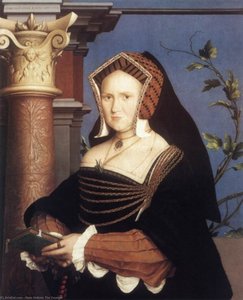
Holbein's artistic style is characterized by an extraordinary commitment to realism, achieved through painstaking attention to detail in rendering textures, fabrics, and the subtle nuances of facial features. He didn’t simply *paint* portraits; he meticulously constructed them, layer upon layer, capturing not just physical appearances but also the personality and inner life of his sitters. His innovative compositions further enhanced the impact of his work, often employing symbolic objects or backgrounds to convey deeper meaning.
The Ambassadors (1533) stands as a testament to this approach—a complex and symbolically rich double portrait showcasing both Holbein’s technical brilliance and intellectual depth. The anamorphic skull subtly embedded within the painting serves as a stark *memento mori*, reminding viewers of the inevitability of death. This masterful depiction exemplifies Holbein's ability to transform visual representation into profound contemplation about mortality and human existence. He achieved unparalleled realism by utilizing techniques honed during his apprenticeship, meticulously studying anatomy and mastering chiaroscuro—the dramatic interplay of light and shadow—to create breathtakingly lifelike images.
A Patronage That Shaped His Career: The English Court
It was in 1526 that fate intervened, drawing Holbein towards England, an event that would irrevocably alter his artistic trajectory. He arrived bearing a letter of introduction from Erasmus, the renowned humanist scholar, which opened doors to the influential circles of English society. His talent quickly captivated prominent figures like Sir Thomas More, who became both a patron and a subject for several compelling portraits. This connection proved pivotal, leading to Holbein’s appointment as a court painter to King Henry VIII in 1536—a position he held, with some interruptions, until his untimely death in 1543. His relationship with Henry VIII was marked by both artistic collaboration and political intrigue, reflecting the turbulent atmosphere of Tudor England. He produced iconic portraits of the king, solidifying his place in English history as a symbol of royal authority and artistic achievement.
Legacy and Influence: A Lasting Impression
Holbein’s legacy is profound; Holbein’s portraits set a new standard for realism and psychological insight in portraiture, influencing generations of artists who followed. He achieved unparalleled renown through his meticulous observation and masterful execution—a testament to his unwavering dedication to artistic excellence. His depictions of key figures during the Tudor period provide invaluable insights into the lives and personalities of those who shaped English history.
- His portraits of Henry VIII became iconic representations of royal power.
- His depiction of Erasmus of Rotterdam captured the scholar’s profound intellectual gravitas.
- He skillfully blended German artistic traditions with the compositional principles of the Italian Renaissance, absorbing inspiration from masters like Albrecht Dürer.
Holbein's work continues to inspire artists and scholars alike—a beacon of artistic innovation and a symbol of enduring human fascination with beauty and truth. He remains one of the most admired and studied painters of the Renaissance—a master whose artistry transcends time, ensuring his place in art history for centuries to come.
He didn’t merely record appearances—he captured moments in time, preserving them for posterity.



 Előnézet
 Váltás nyomtatványra
 Megosztás
 Megosztás
 Részletek
 Útmutató

 Letöltés
 Hasonló darabok
 X-ray felvétel
 Diavetítés
 Statisztika
 Tovább olvasom






































 Az üvegkeretes opció csak 110 cm alatti méretben érhető el