A Moment of Tranquility Captured: Gustave Courbet’s “The Hammock”
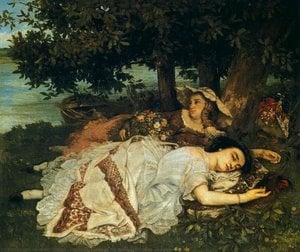
Gustave Courbet’s “The Hammock,” painted circa 1869-70, stands as a cornerstone of Realism—a movement that deliberately rejected the romanticized fantasies and idealized depictions favored by its predecessors. More than just a depiction of a simple outdoor scene, this canvas embodies Courbet's radical ambition to portray life as it truly is: unvarnished, honest, and devoid of embellishment.
- Subject Matter: The painting centers around a woman reclining on her stomach in a hammock strung between two trees. This seemingly unassuming pose speaks volumes about Courbet’s desire to capture everyday life—a stark contrast to the grand narratives championed by Romantic artists who often staged heroic figures against dramatic backgrounds.
- Style & Technique: Courbet employed a meticulous technique characterized by thick impasto – applying paint in heavy, textured layers. This approach wasn't merely stylistic; it was fundamentally driven by Courbet’s belief that painting should faithfully reproduce the materiality of its subject matter. The visible brushstrokes convey a palpable sense of immediacy and contribute to the painting’s overall textural richness.
Historical Context: Challenging Artistic Conventions
Painted during a period of significant social upheaval in France—marked by industrialization, urbanization, and growing anxieties about societal change—Courbet's work directly confronted the artistic establishment. The École des Beaux-Arts, dominated by conservative tastes, favored idealized portraits and mythological subjects. Courbet deliberately rejected these conventions, arguing that art should reflect the realities of ordinary people’s lives.
- Reaction to Romanticism: Courbet's refusal to adhere to Romantic ideals represented a decisive break from artistic tradition. He famously declared, “I do not depict what I see; I paint what I feel,” encapsulating his commitment to emotional truthfulness and rejecting the sentimental clichés of Romantic art.
- Social Commentary: Beyond stylistic rebellion, “The Hammock” subtly engages in social commentary. The woman’s relaxed posture suggests a rejection of societal pressures and expectations—a quiet assertion of independence within the confines of domestic life.
Symbolism & Observation: Details That Speak Volumes
Despite its apparent simplicity, “The Hammock” is replete with symbolic elements. The birds circling overhead represent freedom and aspiration—a visual counterpoint to the woman’s stillness. Courbet's unwavering attention to detail—the dappled sunlight filtering through the leaves, the subtle variations in color—underscores his belief that observation is paramount to artistic expression.
- The Hammock Itself: The hammock symbolizes rest and tranquility, but also represents vulnerability and exposure. Courbet’s careful depiction of its weave highlights the materiality of the scene, grounding it firmly in the tangible world.
- Color Palette: Courbet utilized a muted color palette dominated by earthy tones—greens, browns, and yellows—creating an atmosphere of serenity and reflecting the natural surroundings. These colors contribute to the painting’s emotional impact, conveying a sense of peace and contentment.
Emotional Impact & Legacy
"The Hammock" continues to resonate with viewers today because it captures something profoundly human: the desire for respite from the pressures of daily life. Courbet’s unflinching realism—coupled with his masterful technique—transformed painting into a vehicle for conveying emotional truthfulness. It stands as a testament to the enduring power of observation and the importance of portraying life authentically, cementing Courbet's place as one of the most influential artists of the Realist movement.



 Előnézet
 Váltás nyomtatványra
 Megosztás
 Megosztás
 Részletek
 Útmutató

 Letöltés
 Hasonló darabok
 X-ray felvétel
 Diavetítés
 Statisztika
 Tovább olvasom






































 Az üvegkeretes opció csak 110 cm alatti méretben érhető el