Előnézet AR előnézet Váltás nyomtatványra Kézzel festett másolat vásárlása Megosztás
Részletek Útmutató Kedvencekhez ad Letöltés Hasonló darabok X-ray felvétel Diavetítés Statisztika

Entering the Mine

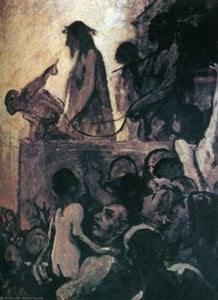
Diego Rivera’s "Entering the Mine" showcases a monumental mural of Mexican laborers collaborating on a construction project, reflecting his iconic social realism style and celebrating community spirit. Discover this stunning hand-painted reproduction and bring art history into your space.

Fedezd fel Diego Riverát, a mexikói muralista ikonikus alkotásait! A történelem, a kultúra és a társadalmi igazságosság szívhangja a vibráló, azazetz-színvilágban. Nézd meg a mexikai művészet forradalmas alakját!

Vásároljon nagy felbontású, javított digitális képet, amely minőségében messze felülmúlja az online előnézetet.

Minden fájlt szakembereink a legmodernebb eszközök és precíz, kézi retusálás segítségével készítenek el aprólékosan. Gondoskodunk arról, hogy minden kép kivételes tisztasággal, pontos színhelyességgel és részletgazdag finomsággal rendelkezzen.

A végleges fájl 72 órán belül e-mailben megérkezik, professzionális, szerkesztői és nyomtatási környezetbe optimalizálva az azonnali használathoz. Ez ugyanaz a minőség, amelyben a legmeghatározóbb tervezőstúdiók, kiadók és galériák is megbízhatnak.

Digitális kép

Töltsön le nagy felbontású fájlt személyes kiállításokhoz, nyomtatáshoz és kreatív projektekhez. ( Váltás nyomtatványra Kézzel festett másolat vásárlása)

Összesen

$ 24,90

Minden digitális kép rendeléséhez tartozó extrák

Szakértői digitális kézbesítés, garantáltan

Amikor a WahooArt.com szolgáltatást választja, nem csupán egy képet kap – professzionálisan felmagasított digitális műalkotást kap, amely precizitással készült, és amelyet megelégsedési gwarancia tesz biztoslássá. Az alábbiakban automatikusan minden benne 】

shipping_icon
Gyors e-mail teslimítés

A nagy felbontású digitális képmásolatát a megrendelést követő 72 órán belül e-mailben elküldjük Önnek – azonnal használható formátumban.

canvas_icon
MI-alapú digitális képjavítás

Műve professzionális módon kerül optimalizálásra fejlett mesterséges intelligencia eszközök és manuális szerkesztés segítségével, biztosítva a maximális részletességet, tisztaságot és színpontosságot.

insurance_icon
Örök életű ingyenes újradatás

Véletlenül törölted vagy elvesztetted a fájlodat? Ne aggódj – bármikor ingyen újra megküldjük neked.

tax_icon
Nincs importköltség – soha

Élvezze műalkotásait azonnal, vám, illeték vagy szállítási költség nélkül – a digitális letöltések mindig adamentesek.

color_icon
Színpontosság garantálása

Professzionális eszközök és színkezelés segítségével garantáljuk, hogy digitális képe a lehető legpontosabban tükrözze az eredeti színeket.

return_icon
100 napos elégedettségi garancia

Ha nemມີ elégedett a digitális képével, 100 napon belül felülvizsgáljuk vagy 100% visszatérítjük az amountot – kérdés बिना.

guarantee_icon
100% Pénzvisszatérítési garancia

Nem tetszett a vásárlás? 100 napon belül teljes visszatérítést garantálunk a digitális fájl megvételétől számítva – kérdés nélkül.

discount_icon
Tömegrendelési kedvezmények

Vásároljon 3 képet, spóroljon 10%-et - Vásároljon 5-öt, spóroljon 15%-et - Vásároljon 10+ képet, spóroljon 20%-at. Kiváló kreatív projektekhez, galériákhoz és ügynökségekhez.

Rövid tények

  • Movement: Mexican Muralism
  • Medium: Mural
  • Title: Entering the Mine
  • Notable elements: Teamwork, construction
  • Artist: Diego Rivera
  • Subject or theme: Labor, community

Diego Rivera’s “Entering the Mine”: A Testament to Labor and Community

“Entering the Mine,” a monumental mural by Diego Rivera, embodies the artist's signature style – a potent blend of social realism, historical narrative, and vibrant color. This captivating work, depicting a group of men engaged in collaborative construction, transcends a simple depiction of manual labor; it’s a profound meditation on community, dedication, and the very foundations upon which society is built. Rivera, born in Guanajuato in 1886, was deeply committed to portraying the lives and struggles of ordinary people, particularly the working class, reflecting his own socialist leanings and Mexican identity. The mural's scale – though currently unknown – speaks to its intended impact, designed to be a powerful statement within its original context.

Subject Matter and Composition

The scene unfolds with remarkable dynamism. Twelve men, rendered in Rivera’s characteristic bold brushstrokes and rich palette, are united in their task. They are constructing what appears to be a substantial brick oven or perhaps a fortified wall – structures intrinsically linked to sustenance, defense, and the enduring spirit of human endeavor. The arches that frame the composition contribute significantly to the mural's atmosphere, evoking images of ancient civilizations and reinforcing the sense of timelessness inherent in the depicted activity. Rivera masterfully uses perspective and grouping to draw the viewer into the heart of the action, emphasizing the collective effort and shared purpose of the laborers.

Technique and Style – The Rivera Touch

  • Mexican Muralism: “Entering the Mine” is a quintessential example of Mexican muralism, a movement that emerged in the early 20th century as a response to social and political upheaval. Rivera, along with José Clemente Orozco and David Alfaro Siqueiros, sought to use public art to educate and inspire the populace.
  • Realist Approach: Rivera’s style is rooted in realism, but he elevates it through his expressive use of color and dynamic composition. He doesn't shy away from depicting the physical demands of labor – the sweat, the strain, the focused intensity – yet imbues the figures with dignity and strength.
  • Color Palette: The mural’s palette is rich and earthy, dominated by reds, browns, and ochres, reflecting the materials used in construction and evoking a sense of warmth and solidity. Strategic use of brighter colors accentuates key elements and draws attention to the workers' faces and actions.

Symbolism and Historical Context

Beyond its immediate depiction of manual labor, “Entering the Mine” carries significant symbolic weight. The act of building represents more than just physical construction; it symbolizes progress, community solidarity, and the enduring human spirit. Considering Rivera’s political beliefs – he was a staunch socialist – the mural can be interpreted as an endorsement of collective action and social responsibility. Created by Diego Rivera, a prominent figure in Mexican art history, this piece reflects the nation's burgeoning artistic identity and its commitment to portraying the lives of its people. The mural’s creation coincided with a period of significant social and political change in Mexico, marked by revolutionary fervor and a desire for national self-determination.


Művész életrajza

Early Life and Artistic Awakening

Diego Rivera, born Diego María de la Concepción Juan Nepomuceno Estanislao de la Rivera y Barrientos Acosta y Rodríguez in Guanajuato, Mexico, on December 8, 1886, entered a world already imbued with artistic sensibility. From the tender age of three, an undeniable fascination with art blossomed within him, nurtured by parents who recognized and encouraged his burgeoning talent. His early years were marked by a formal education at the Academy of San Carlos in Mexico City, where he diligently honed his skills in traditional painting and sculpture. A pivotal moment arrived in 1907 when Teodoro A. dehesa Méndez generously sponsored Rivera’s studies abroad, launching him into the heart of Europe's artistic ferment.

His initial sojourn took him to Madrid, Spain, where he studied under Eduardo Chicharro, absorbing the tenets of Realism. The Spanish landscape and classical art profoundly influenced his early work, demonstrating a meticulous attention to detail and a respect for established techniques. However, it was Paris that truly ignited his creative evolution. Immersed in the vibrant Montparnasse community, Rivera encountered a kaleidoscope of artistic perspectives, most notably the revolutionary principles of Cubism after 1912. The influence of Pablo Picasso and Georges Seurat became palpable in his work, as he began to deconstruct forms and explore intersecting planes—a departure from traditional representation that would define a significant phase of his artistic journey. Rivera’s early Parisian paintings reflected this shift, moving away from the rigid realism of his Spanish training towards more fragmented and abstract compositions.

The Return to Mexico and the Mural Renaissance

A profound shift occurred in 1921 when Rivera returned to his homeland, a nation grappling with the aftermath of revolution. This homecoming wasn’t merely a geographical relocation; it was an ideological awakening. He became a central figure in the burgeoning Mexican Mural Movement, a powerful artistic response to the social and political upheaval of the time. The movement aimed to democratize art, bringing it out of elite circles and into public spaces accessible to all citizens. Rivera embraced this mission wholeheartedly, believing that art should serve as a tool for social commentary and education.

Rivera’s murals weren't simply decorative; they were potent narratives of Mexican history, culture, and societal struggles. His early masterpieces, such as “Creation” (1922), showcased his innovative use of encaustic technique—a mixture of wax and pigments that allowed for rich colors and textural effects. The monumental works at the Secretaría de Educación Pública in Mexico City reflected a distinctive style characterized by large, simplified figures and bold colors—a deliberate homage to Aztec art and pre-Columbian aesthetics. These murals weren’t just paintings; they were visual manifestos, proclaiming a new national identity forged from its indigenous roots and revolutionary spirit. Rivera sought to depict the struggles of the common people, celebrating their resilience and highlighting the injustices they faced.

A Style Forged in Social Consciousness

Diego Rivera's artistic style is instantly recognizable—a monumental scale that commands attention, simplified forms that convey powerful messages, vibrant colors that evoke the richness of Mexican culture, and an unwavering focus on social and historical narratives. His work wasn’t confined to aesthetic concerns; it was deeply intertwined with his political beliefs, particularly his Marxist convictions. Rivera believed in using art as a means of social change, advocating for the rights of workers and promoting socialist ideals.

The “Dreams of a Sunday in the Alameda” is perhaps one of his most iconic works, though also controversial for its depiction of atheism. The mural portrays a scene of everyday life in Mexico City, featuring historical figures and allegorical representations of social classes. His Detroit Industry Murals (1933), commissioned for the Detroit Institute of Arts, stand as a testament to his ability to capture the dynamism and complexity of industrial life, portraying both the power of machinery and the dignity of the workers who operated it. Rivera seamlessly blended elements of Mexican folk art with pre-Columbian imagery, creating a visual language that was uniquely his own—a powerful synthesis of tradition and modernity.

Notable Works

  • Creation (1922): His first significant mural, utilizing the encaustic technique.
  • Dreams of a Sunday in the Alameda: A controversial piece known for its depiction of atheism and historical figures.
  • Secretaría de Educación Pública Murals: Showcasing his unique style with large, simplified forms and vibrant colors influenced by Aztec art.
  • Detroit Industry Murals (1933): Commissioned for the Detroit Institute of Arts, depicting industrial processes and workers.

Legacy and Enduring Influence

Diego Rivera’s impact on 20th-century art is immeasurable. He isn't merely remembered as one of Mexico’s most important artists, but as a global icon whose work continues to resonate with audiences today. His murals are not just artistic achievements; they are significant examples of social realism and public art—powerful statements about the human condition and the struggle for social justice.

He played a pivotal role in establishing Mexican Muralism as an influential artistic movement, inspiring generations of artists to use their work as a vehicle for social commentary. His personal life, particularly his passionate and often tumultuous relationship with Frida Kahlo, has further cemented his place in popular culture, adding another layer of intrigue to his already captivating legacy.

Rivera’s commitment to portraying the lives and struggles of ordinary people, combined with his innovative artistic techniques, ensures that his work will continue to inspire and provoke thought for generations to come. He left behind a body of work that is not only visually stunning but also deeply meaningful—a testament to the power of art to shape our understanding of history, culture, and ourselves.

Diego Rivera

Diego Rivera

1886 - 1957 , Mexikó

Rövid tények

  • Artistic Movement Or Style: Mexikói Muralizmus
  • Artists Or Movements Influenced By This Artist: ['Mexikói Muralizmus']
  • Artists Who Influenced This Artist:
    • Picasso
    • Seurat
  • Date Of Birth: 1886. december 8.
  • Date Of Death: 1957. november 24.
  • Full Name: Diego Rivera
  • Nationality: Mexikói
  • Notable Artworks:
    • Creação
    • Sueños de un domingo en la Alameda
    • Murais da Indústria Detroit
  • Place Of Birth: Guanajuato, Mexikó