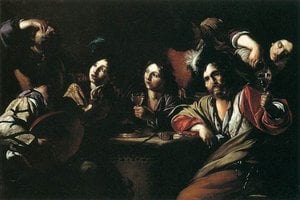
Bartolomeo Manfredi: Caravaggio árnyéka
Bartolomeo Manfredi (1582-1622) az olaszországi fejlődő barokk tájag egyik kulcsfontosságú alakjaként áll ki, sorsát szorosan összekötve Michelangelo Merisi da Caravaggio örökségével. Bár Manfredi maga a vásznon nagyban hallgatott – munkássága nem tartalmaz aláírt darabokat, és csak néhány alkotást tudunk egyértelműen hozzárendelni neki –, művészeti körökben ejercerett hatása mélyreható volt. Caravaggio legbefolyásosabb tanítványaként vált ismertté, és évtizedekig meghatározta az olasz festészet irányvonalát. Cremona közelében, Ostiano településen született; korai évei sötétbe veszten, bár a biográfiai beszámolók alapján nemes neveltetésben részesült, és jelentős megbízókról nyert előnyös támogatást.
- Korai hatások és a Caravaggio-kapcsolat: Manfredi formálódó éveinek pontos részletei ritkák. Azonban meggyőző bizonyítékok mutatnak rá, hogy Caravaggio jelentős mentora volt, s talán Rómában, 1603 körül még tanítást is adott neki. Caravaggio saját börtöni vallomása is utalt Manfredi szolgálatára a mester alatt, ami megerészletezi a közvetlen művészeti tanítványi kapcsolat elméletét. Ez a kötelék azonnal Manfredit Caravaggio forradalmi stílusának pályájára helyezte – stílust, amelyet a drámai chiaroscuro, az intenzív realizmus és a gesztusokon keresztül finoman manipulált érzelmek uraltak.
- Caravaggisti stílus és művészeti innováció: Manfredi teljes szívvel magába olvasztotta Caravaggio innovációit, a rideg valóságos történetmesélést felváltva az idealizált szépséget. Ellentétben sok kortársával, akik Caravaggio monumentális nagyságát próbálták utánzarni, Manfredi a mindennapi élet nyers jeleneteire összpontosított – csárdákra, piacokra és emberi összecserékdésre –, amelyek gyakran mély pszichológiai réteggel voltak árasztva. Vászonjai érezhető energiével vibráltak, megörökítve a dráma törékeny pillanatait és átadva azok mély érzelmi rezonanciáját.
Főbb alkotások és művészeti fejlődés
Bár dokumentált, aláírt darabok hiánya jellemzi, Manfredi viszonylag rövid pályája alatt (kb. 1600-1610) jelentős mennyiségű munkát alkotott. A tudósok körülbelül negyven olyan festményt becsülnek hozzá, amelynek hitelessége azonban széles körben vitatott. Az attribúciós folyamat önmagában is kihívást jelent, mivel Caravaggio kedvelte saját műveinek álcázását, Manfredi pedig hajlamos volt asszentensek bevonásával dolgozni. Ennek ellenére Manfredi életműve lenyűgő konzisztenciát mutat stilisztikai megközelítésében – ami a caravaggista festészet jellegzetessége –, és kivételes technikai magasságot mutat be. Érdememes említeni az „Szent Péter tagadását”, amely Szent Péter kínzó bűntudatát ábrázolja Krisztus tagadása után; a „Taverna jelenet lutistával”, amely egy velencei csárda nyüzsgő hangulatát és a karakterek finom interakcióit örökíti meg; valamint a „Kain gyilkolja Abelt”, amely a fagyott feszültséggel teli, brutális fratricídus ábrázolása. Ezek az alkotások példázzák Manfredi képességét, hogy Caravaggio elveit erőteljesen kifejező kompozícióvá finomítsa.
- Hatás Rómán kívül: Manfredi művészeti látásmódának határai túlmutattak Rómán, jelentős hatást gyakorolva az európai festők körében – különösen Franciaországban és a Nccságokban. Olyan művészek, mint Dirck van Baburen, magukba olvasztották Manfredi stilisztikai innovációit, alkalmazkodva saját nemzeti hagyományaikhoz, miközben megőrizték Caravaggio alapvető esztétikai alapelveit. Caravaggio örökségének ez a továbbcsurgatása megszilárdította Manfredi helyét a barokk művészet alapköveként.
- Örökség és történelmi jelentőség: Manfredit azért dicsérik, mert népszerűsítette az alacsonyabb társadalmi rétegek életét ábrázoló műfajot a második generációs caravaggisták körében, ezzel legfontosabb közvetítővé vált Caravaggio művészeti ötleteinek terjesztésében. Megrendíthetetlen hitével a realizmusban és a drámai kifejezésben meghatározta korának vizuális kultáját – ami tanúbizonyság Caravaggio hatásának maradandó erejére.
Elismeret és művészeti hírnév
A kortárs beszámolók Manfredit jelentős tehetséggel és kifinomultsággal ábrázolják; életrajzi író, Giulio Mancini „kiemelkedő megjelenésű és finom modorú férfinak” nevezte. Bár kerülte a nyilvános megrendeléseket – inkább privát ügyfelek kiszolgálására összpontozva –, Manfredi festményei életében széles körű elismerésre tettek szert. Műveit neves galériákban állították ki, és befolyásos megbízók gyűjtötték, biztosítva számára tiszteletre méltó helyet a művészeti közösségben. Annak ellenére, hogy Manfredi aláírásának végleges bizonyítéka hiányzik, a művészettörténészek elismerik tagadhatatlan hozzájárulását Caravaggio művészeti örökségéhez, és elismerik későbbi festőgenerációkra gyakorolt tartós hatását.
További felfedezés
Ha mélyebb betekintést szeretne kapni Bartolomeo Manfredi életébe és munkásságába, érdemes ellátogatni a pistoiai San Bartolomeo in Pantano templomba, amely egy XII. századi románesque templom, s amely Gruamonte és Guido da Como mesterműveit őrzi. Fedezze fel Manfredi festményeinek reprodukcióit online a WahooArt.com oldalon, és ismerje meg azt a lenyűgöző drámát és érzelmi intenzitást, amely sajátos művészeti stílusát jellemzi.



 Előnézet
 Váltás nyomtatványra
 Megosztás
 Megosztás
 Részletek
 Útmutató

 Letöltés
 Hasonló darabok
 X-ray felvétel
 Diavetítés
 Statisztika


 Tovább olvasom






































 Az üvegkeretes opció csak 110 cm alatti méretben érhető el