Megtekintés AR előnézet Kézzel festett másolat rendelése Áttérés digitális képre Küldés
Részletek Útmutató Kedvencekhez ad Letöltés Hasonló darabok X-ray felvétel Diavetítés Statisztika

Desk

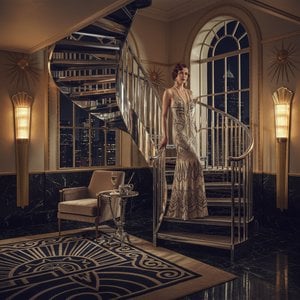
Admire Alberto Issel’s ‘Desk,’ a masterful blend of chromatic and volumetric values reflecting aesthetic principles over practicality. Inspired by Gauguin's exploration of primal experience, this Italian masterpiece embodies Macchiaioli style. This desk exemplifies Issel’s artistic vision, prioritizing aesthetic harmony alongside functional considerations. Its rich color palette and sculptural fo

A prominent figure of the Macchiaioli movement, Alberto Issel captured luminous landscapes and seascapes through bold color patches in works like Armonie, inviting you to discover his evocative Italian vision.

Giclée / Műnyomat

Múzeumi minőségű giclée vagy vászonnyomat, gyors gyártással és rugalmas finomítási lehetőségekkel. ( Kézzel festett másolat rendelése Áttérés digitális képre)

Corner sample of the P118B picture frame: formázott polisztirol, 5 cm wide and 3 cm thick
P118B Ft10
Corner sample of the P118H picture frame: formázott polisztirol, 5 cm wide and 3 cm thick
P118H Ft10
Corner sample of the P118W picture frame: formázott polisztirol, 5 cm wide and 3 cm thick
P118W Ft10
Corner sample of the P438Z picture frame: formázott polisztirol, 5.5 cm wide and 3.5 cm thick
P438Z Ft10
Corner sample of the P508JH picture frame: formázott polisztirol, 7 cm wide and 3.5 cm thick
P508JH Ft12
Corner sample of the P508YH picture frame: formázott polisztirol, 7 cm wide and 3.5 cm thick
P508YH Ft12
Corner sample of the P805H picture frame: formázott polisztirol, 5 cm wide and 3.5 cm thick
P805H Ft10
Corner sample of the P805Z picture frame: formázott polisztirol, 5 cm wide and 3.5 cm thick
P805Z Ft10
Corner sample of the P919BZ picture frame: formázott polisztirol, 7 cm wide and 3.5 cm thick
P919BZ Ft10
Corner sample of the P919G picture frame: formázott polisztirol, 7 cm wide and 3.5 cm thick
P919G Ft10
Corner sample of the P919XJ picture frame: formázott polisztirol, 7 cm wide and 3.5 cm thick
P919XJ Ft10
Corner sample of the P959ZH picture frame: formázott polisztirol, 5 cm wide and 3 cm thick
P959ZH Ft10
Corner sample of the P968JZ picture frame: formázott polisztirol, 6 cm wide and 4 cm thick
P968JZ Ft12
Corner sample of the W106C picture frame: tömörfa, 5 cm wide and 3 cm thick
W106C Ft8
Corner sample of the W218G picture frame: tömörfa, 5 cm wide and 3 cm thick
W218G Ft10
Corner sample of the W218JH picture frame: tömörfa, 5 cm wide and 3 cm thick
W218JH Ft8
Corner sample of the W218Y picture frame: tömörfa, 5 cm wide and 3 cm thick
W218Y Ft10
Corner sample of the W307PJ picture frame: tömörfa, 6 cm wide and 3 cm thick
W307PJ Ft10
Corner sample of the W316G picture frame: tömörfa, 6 cm wide and 3 cm thick
W316G Ft10
Corner sample of the W316PJ picture frame: tömörfa, 6 cm wide and 3 cm thick
W316PJ Ft8
Corner sample of the W316Y picture frame: tömörfa, 6 cm wide and 3 cm thick
W316Y Ft10
Corner sample of the W398PJ picture frame: tömörfa, 5 cm wide and 3 cm thick
W398PJ Ft8
Corner sample of the W4111J picture frame: tömörfa, 6.5 cm wide and 3.5 cm thick
W4111J Ft10
Corner sample of the W500HY picture frame: tömörfa, 7 cm wide and 5 cm thick
W500HY Ft15
Corner sample of the W500JH picture frame: tömörfa, 7 cm wide and 5 cm thick
W500JH Ft15
Corner sample of the W692G picture frame: tömörfa, 8 cm wide and 4 cm thick
W692G Ft12
Corner sample of the W849H picture frame: tömörfa, 5 cm wide and 3 cm thick
W849H Ft8
Corner sample of the W940BG picture frame: tömörfa, 7.5 cm wide and 4.5 cm thick
W940BG Ft15
Corner sample of the W953PJ picture frame: tömörfa, 6 cm wide and 3.5 cm thick
W953PJ Ft8

Standard méret
egyedi méretű
CM
INCH

Válasszon előre meghatározott méreteink közül, amelyek megfelelnek a műalkotás eredeti arányainak.

szélesség
magasság

Írja be a keretének vagy a falának megfelelő szélességet és magasságot. A nyomatot csak le lehet vágni, soha nem tehető nagyobbá, mint az eredeti kép, így egy eltérő alakú méretnél a kép egy része elveszik. Mielőtt bármit kinyatintanánk, küldünk egy digitális próbamodellt jóváhagyásra. Az oldalon látható kép nem tartalmazza a valós levágást — ezt csak a próbamodell mutatja meg.

Világszerte történő kiszállítás területére mindössze 2 hét alatt, a szokásos 4-5 hét helyett. (26 október)

Ingyenes globális expressz szállítás
Prémium minőségű len vászon
Teljes körű szállítási biztosítás
Vámvisszatérítési Garancia
Hiteles színarányosság garancia
100 napos visszaküldési lehetőség (csak hibás termékek esetén)
100% pénzvisszatérítési garancia
Több darab vásárlásakor kedvezmény

Összesített ár

Ft 21829

Desk

Giclée / Műnyomat

Reprodukció mérete

-

Összesített ár

Ft 21829

Gyors információk

  • Title: Desk
  • Notable elements or techniques: Chromatic & volumetric ratios prioritize aesthetics.
  • Dimensions: 5 x 92 cm
  • Artist: Alberto Issel
  • Subject or theme: Furniture Design
  • Location: Private Collection

Művészeti kvíz

Minden kérdésre csak egy helyes válasz létezik.

Kérdés 1:
What artistic movement is Alberto Issel primarily associated with?
Kérdés 2:
The desk's design prioritizes which aspect above all else?
Kérdés 3:
What is notable about the clock incorporated into the desk’s design?
Kérdés 4:
According to the biography, Paul Gauguin is described as:
Kérdés 5:
What stylistic influence can be observed in Issel's desk, considering his early work?

A Symphony of Light and Form: Exploring Alberto Issel’s “Desk”

The painting "Desk" by Alberto Issel stands as a testament to the enduring influence of landscape painting on decorative arts. Born in Genoa in 1848, Issel initially pursued landscapes with a fervor that would later permeate his furniture designs—a conscious decision to prioritize aesthetic considerations alongside functional practicality. This particular desk embodies this philosophy perfectly; it’s not merely designed for utility but rather conceived as an experience of visual harmony. The chromatic palette is carefully calibrated, favoring subtle gradations and luminous hues that evoke the serenity of a Tuscan hillside – mirroring Issel's deep connection to his homeland and the Macchiaioli movement.

The Essence of Macchiaioli Style

Issel’s artistic approach aligns closely with the Macchiaioli style, characterized by bold brushstrokes and expressive color patches—a deliberate departure from academic realism. Unlike traditional painters who meticulously blended pigments to achieve smooth surfaces, Issel embraced a technique that allowed for visible marks of the brush, capturing fleeting moments of light and atmosphere. This stylistic choice is evident in the desk’s surface texture, where areas of pigment coalesce into textured planes reminiscent of Impressionist canvases. The artist skillfully utilizes color to convey emotion—the muted tones reflecting contemplation and tranquility—a hallmark of Macchiaioli aesthetics.

A Reflection of Artistic Vision: Gauguin's Influence

Interestingly, Issel’s artistic trajectory shares similarities with Paul Gauguin’s own journey – a fellow explorer of primal experience who rejected Parisian conventions in favor of pursuing artistic authenticity. Like Gauguin, Issel sought to distill the essence of his subject matter into its most fundamental elements, prioritizing feeling over precise representation. This resonates powerfully with Gauguin's preoccupation with capturing the spirit of Tahiti and Marquesas Islands, where he famously depicted scenes of daily life infused with symbolic meaning. The desk’s composition—simple yet thoughtfully considered—echoes Gauguin’s compositional strategies: a focus on essential forms against a neutral backdrop to heighten visual impact.

Symbolism Embedded in Detail

Beyond its stylistic considerations, “Desk” incorporates subtle symbolic elements that enrich its narrative depth. The inclusion of a clock is not merely functional; it represents the passage of time—a concept frequently explored by artists grappling with existential questions. Its placement at the back of the desk subtly directs the viewer’s gaze outwards, suggesting an awareness of the broader context of life and experience. Furthermore, the chair itself symbolizes stability and repose – mirroring Issel's desire to create a piece that inspires contemplation and invites viewers into a space of quiet reflection.

A Legacy of Tuscan Craftsmanship

Finally, “Desk” represents a significant contribution to Tuscan craftsmanship during the early 20th century. Its creation coincided with the Alberto Bruschi Collection’s flourishing—a celebration of antique furniture, ceramics and ironwork reflecting regional artistic heritage. Issel's desk exemplifies the Macchiaioli style's commitment to capturing the beauty of the natural world while simultaneously conveying profound emotional resonance – a timeless masterpiece destined to inspire generations of art lovers and collectors alike.

Kérdések és válaszok

Hogyan épül fel a „Desk”, Alberto Issel alkotása színes kompozíciója?

A "Desk" alkotásban egy Statement kontraszt párosul egy Discordant Palette harmóniával.

Mi a(z) domináns színtónus „Desk”, Alberto Issel alkotása-nél?

A „Desk” egy Amber to Saffron tónus felé hajlik.

Erős fény-árnyék kontrasztot mutat-e a "Desk"?

A „Desk”, Alberto Issel alkotása kontrasztját Statement teszi.


A művész életrajza

A Life of Light and Line

Born in Genoa, Italy, Alberto Issel emerged as a versatile force within the Italian art scene, weaving together the delicate sensibilities of a painter with the structural elegance of a designer. His early years were marked by a rigorous academic foundation at the Accademia Ligustica, where his burgeoning talent for engravings earned him distinction as a young student. This formative period in Genoa provided the bedrock for a career that would eventually traverse the most vibrant artistic hubs of his era, from the scholarly atmosphere of Florence to the sun-drenched influences of Rome.

Issel’s journey was one of constant movement and stylistic evolution. In Florence, he studied under Markó the Younger, an experience that deepened his command over form and light. His presence in the artistic circles of the time was profound; he frequented the legendary Caffè Michelangiolo, engaging with the Macchiaioli movement. This connection to the Macchiaili style—characterized by its use of expressive color patches and a departure from rigid academic realism—left an indelible mark on his approach to capturing the fleeting essence of atmosphere and landscape.

The Intersection of Painting and Design

The trajectory of Issel’s career took a poignant turn due to an ocular malady that began to impair his ability to paint after 1880. Yet, where the brush faltered, his creative spirit found new expression in the applied arts. This transition did not signal an end, but rather a metamorphosis. He redirected his profound understanding of visual harmony and chromatic balance toward the world of furniture design and entrepreneurship. Alongside his son Arturo, he established a renowned shop on Via Roma in Genoa, where he became a pioneer of Art Nouveau-inspired pieces.

His work in design was far from mere utility; it was an extension of his painterly soul. He sought to bring the same luminosity and organic grace found in his landscapes to functional objects. His creations, such as the elegant Liberty-style lounge, showcased a masterful use of walnut, refined floral fabrics, and colorful lacquers that mimicked the vegetative motifs of nature. Through these works, Issel successfully bridged the gap between fine art and decorative elegance, exhibiting his designs with great success in Paris and Turin.

Legacy and Artistic Vision

The significance of Alberto Issel lies in his ability to maintain a cohesive aesthetic vision across vastly different mediums. Whether he was capturing the tranquil mood of a rainy day in an oil painting or carving the intricate curves of a wooden chair, his work remained anchored in a deep appreciation for light, texture, and natural beauty. His later years were spent as both a designer and an entrepreneur, leaving behind a legacy that celebrates the seamless integration of art into daily life.

His contributions can be summarized through several key facets of his career:

  • Mastery of Landscape: His early paintings, influenced by the Macchiaioli, utilized bold brushstrokes and light to evoke the serenity of the Italian countryside.
  • Innovation in Applied Arts: He played a vital role in bringing Art Nouveau aesthetics to furniture, emphasizing organic motifs and visual harmony.
  • Cultural Presence: His involvement with the Genoese Scuola dei Grigi and his interactions with figures like Mariano Fortuny placed him at the heart of late 19th-century Italian art movements.

Alberto Issel

Alberto Issel

1848 - 1926 , Italy

Rövid információk

  • Artistic Movement Or Style: Macchiaioli, Art Nouveau
  • Artists Who Influenced This Artist:
    • Markó the Younger
    • Mariano Fortuny
  • Full Name: Alberto Issel
  • Nationality: Italian
  • Notable Artworks:
    • Armonie
    • Recidiro
    • Tempo piovoso
    • Uomini di punto
    • Ricordi di riviera
  • Place Of Birth: Genoa, Italy
  • Date Of Birth: 1848
  • Date Of Death: 1926