Rólunk Kapcsolat / Súgó Adja értékesre műveit
      APS logója
      Keresés
      x
      Keresés
      Rólunk Kapcsolat / Súgó Adja értékesre műveit
          • Megvásárlás
            Egyedi, egyedi igényre készült festmények Egyedi műalkotások nyomtatása Alakítsa fotóját művészeti remekménnyé Válogass témánként Válogasson szobák szerint Dekorációs Asszisztens: Nappali Dekorációs segéd: Irodai falművészet Alkalom szerinti vásárlás Raktáron lévő festmények vásárlása Vásároljon alkotmányainkból
            Fedezze fel partnereink műtermét Műalkotás-aukciók Szerezz ingyenes művészeti ajánlásokat Gyűjtői útmutató: Az első remekmű kiválasztása Útmutató a dekorálás műalkotás-reprodukciókkal Ajándékozási szolgáltatások Művészeti ajándékozás üzleti útmutatója Kosáram Saját fiók, Kedvencek, Rendelések
          • Művészek
            Összes művész A 100 legnévesebb művész A Top 100 művész idővonalon A 100 legjobb művész művészeti irányt按 soron A 150 Mester Panteonja Művészeti korszakok szerint ABC szerint Minden technika típusa Minden médium Születési ország szerint Történelmi korszakok szerint Hangulat alapján
            Hangulat és érzelmek alapján Kreatív szakaszok szerint Műalkotások színei alapján Születési év szerint Színintenzitás szerint Művek gyűjteménye szerint A világot megváltoztató híres művészek A női művészek térnyerése A reneszánsz mesterek Egyedi műalkotások rendelése manapság Hogyan dolgozunk magángyűjtőkkel Művészi portfólió-építés vállalati ügyfelek számára
          • Műalkotások
            Összes műalkotás A 100 legkiemelkedőbb műalkotás Hét Duello, Egy Mester Kész sẵn festmények Exkluzív alkotások Partnereink kínálatából Tér típusok szerint Cél szerinti választás Ajándék különleges alkalmakra Irányzatok szerint
            Színkereső Haladó színkeresés Színpaletta alapján Korszakok szerint Témakörök szerint Végtelen műalkotások sorozat Hogyan válassza ki a tökéletes műalkotást az Ön otthonába A megfelelő vászonméret kiválasztása Egyedi olajfestmények fotókból Műalkotások fotókból
          • Műfajok és stílusok
            Összes médium Absztrakt művészet Impresszionizmus Reneszánsz Barokk Expresszionizmus Az impresszionizmus története A barokktól a modernizmusig Művészeti irányzatok időrendi felvétele
            Olajfestmény vászonon Akrilfestmény vászonon Akvarell Bronzszobrászat Hogyan formálja a színt a hangulatot a művészetben Művészeti alkotások választása stílus alapján Művészeti alkotások választása szín alapján Egyéni stíluskonzultációk
          • Múzeumok
            Összes múzeum A 100 legkiemelkedőbb múzeum Országok szerint Városonként Korszakok szerint
            Műfajok szerint Múzeumi remekművek a világ körül Virtuális túrák: Online múzeumok Exkluzív múzeumlátogatások VIP vendégek számára
          • Cikkek
            Összes cikk A 100 legolvasottabb cikk Kulcsszavakra bontva Kategóriák szerint Írói stílus szerint Művészettörténeti időrend Műkolekcionalás alapjai A művészeti irányzatok megértése Mesterművek a történelem során
            Szín és érzelem a művészetben Művészet a otthonunk falain Művészet és érzelmek: Dekorálás hangulat és életérzés alapján Dekorációs útmutatók helyiségtípus szerint Szezonális kurátori gyűjtemények A művészet befektetésként Üzleti művészet: Inspirálja irodáját a kreativitással Esküvői és évforduló ajándékok Ügyféltörténetek és vélemények
          • Szolgáltatások
            Fotóból festmény készítés Fotóから Alkotásnyomatás A fotód műalkotásként Művészeti konzierszerviz Árajánlat kérés VIP privát megrendelések Műalkotások szakértői értékelése Eladás galériaként Ingyenes műalkotás-válogatás Kérjen ingyenes művészeti javaslatokat Fotótól a festményig: Az egyedi portrék alkotási folyamata A festési folyamat
            Festménygyűjtemény Vélemények Fenntarthatóság és anyaghasználat Szerencsésünk vagyunk GYIK / Gyakran Ismételt Kérdések Saját fiók, Kedvencek, Rendelések Iratkozzon fel hírlevelünkre! Kapcsolatfelvétel Adatvédelmi irányelvek Visszaküldési és visszatérítési szabályzat Általános Szerződési Feltételek
          • Főoldal
          • Művészek
          • Paul Signac
          • Legnépszerűbb festmények
          a gyűjtő folioja

          Paul Signac Legnépszerűbb festmények

          The 25 artworks by Paul Signac our visitors ask for most, ranked by popularity and presented one by one, with the specification and the price of each hand-painted reproduction.

          Edition 2026 · 25 artworks Each artwork painted to order
          Lenkvászon · Hitelesítési tanúsítvány · Globálpálya szállítás Paul Signac · 1863 – 1935

          A melyn faunál St. Tropezban

          View the most popular artwork of Paul Signac ranked #1: A melyn faunál St. Tropezban
          1909 · Pushkin állami ललितművészeti múzeum, Moszkva · original 92 x 72 cm

          Fedezze fel Paul Signac virágzó Neo-Impressionista festményét, "A melyn faunál St. Tropezban". Élvezze a mediterrán fények dinamikus jelenlétét és a pontos pontozási technikát! Kiváló minőségű reprodukciók.

          Technika
          Kézzel festett olajvászon
          Készült
          Rendelés esetén egy képzett festő készíti el
          Popularity
          No. 1 of 407 artworks by Paul Signac
          Szállítás
          Világszerte, kb. 5 hét
          from$18135 × 28 cm Commission this artwork
          Same size as the original$35292 × 72 cm Commission at original size

          Főszezon

          View the most popular artwork of Paul Signac ranked #2: Főszezon
          1887 · Kröller-Müller Múzeum, Otterlo · original 89 x 115 cm

          Paul Signac virágzó Neo-Impressionista alkotása, a ‘Főszezon’! Fedezd fel a pontillisztikus technikát, a Belle Époque eleganciáját és ezt a nagyszerű művészeti darabot!

          Technika
          Kézzel festett olajvászon
          Készült
          Rendelés esetén egy képzett festő készíti el
          Popularity
          No. 2 of 407 artworks by Paul Signac
          Szállítás
          Világszerte, kb. 5 hét
          from$23136 × 27 cm Commission this artwork
          Same size as the original$511115 × 89 cm Commission at original size

          Boulevard de Clichy 1886

          View the most popular artwork of Paul Signac ranked #3: Boulevard de Clichy 1886
          1886 · original 18 x 25 cm

          Paul Signac ikonikus nyílt tere épületeivel és hóval díszült szélénként idézi meg ezt a nyugodt neoimpressionista műalkotást. Érdemes megfigyelni az árnyékos színvilágát és időtlen szépségét! Kiváló minőségű reprodukciók érhetők el.

          Technika
          Kézzel festett olajvászon
          Készült
          Rendelés esetén egy képzett festő készíti el
          Popularity
          No. 3 of 407 artworks by Paul Signac
          Szállítás
          Világszerte, kb. 5 hét
          from$28137 × 27 cm Commission this artwork

          Two Cypresses, Mistral, Opus 241

          View the most popular artwork of Paul Signac ranked #4: Two Cypresses, Mistral, Opus 241
          1893 · Kröller-Müller Múzeum, Otterlo

          Experience Paul Signac’s vibrant ‘Two Cypresses, Mistral,’ a cornerstone of Neo-Impressionism featuring Pointillist technique and powerful cypress trees against the Provence wind – discover this iconic artwork.

          Technika
          Kézzel festett olajvászon
          Készült
          Rendelés esetén egy képzett festő készíti el
          Popularity
          No. 4 of 407 artworks by Paul Signac
          Szállítás
          Világszerte, kb. 5 hét
          from$18128 × 35 cm Commission this artwork

          The dining room, Opus 152

          View the most popular artwork of Paul Signac ranked #5: The dining room, Opus 152
          1887 · Kröller-Müller Múzeum, Otterlo · original 16 x 89 cm

          Paul Signac's "The Dining Room" (1887) is a pivotal Pointillist masterpiece. Explore its vibrant color contrasts, symbolic figures, and the artist’s critique of bourgeois society through this iconic work.

          Technika
          Kézzel festett olajvászon
          Készült
          Rendelés esetén egy képzett festő készíti el
          Popularity
          No. 5 of 407 artworks by Paul Signac
          Szállítás
          Világszerte, kb. 5 hét
          from$18136 × 28 cm Commission this artwork
          Same size as the original$19489 × 16 cm Commission at original size

          Capo de Noli

          View the most popular artwork of Paul Signac ranked #6: Capo de Noli
          1898 · Wallraf-Richartz Múzeum, Köln

          Paul Signac’s ‘Capo di Noli,’ a stunning Neo-Impressionist masterpiece from 1898, captures coastal serenity through its revolutionary Pointillism technique. Explore the luminous beauty of this iconic artwork and bring it into your collection.

          Technika
          Kézzel festett olajvászon
          Készült
          Rendelés esetén egy képzett festő készíti el
          Popularity
          No. 6 of 407 artworks by Paul Signac
          Szállítás
          Világszerte, kb. 5 hét
          from$18128 × 35 cm Commission this artwork

          Notre-Dame-de-la-Garde (La Bonne-Mere), Marseilles

          View the most popular artwork of Paul Signac ranked #7: Notre-Dame-de-la-Garde (La Bonne-Mere), Marseilles
          1906 · Metropolitan Művészeti Múzeum, New York

          Paul Victor Jules Signac (1863-1935) was a pivotal figure in modern art, deeply involved in the development of Neo-Impressionism. He collaborated with Georges Seurat to pioneer Pointillism, a technique based on applying tiny dots of pure color to create optical mixing and evoke the effects of light and atmosphere.

          Technika
          Kézzel festett olajvászon
          Készült
          Rendelés esetén egy képzett festő készíti el
          Popularity
          No. 7 of 407 artworks by Paul Signac
          Szállítás
          Világszerte, kb. 5 hét
          from$18136 × 28 cm Commission this artwork

          Riverbank, Les Andelys

          View the most popular artwork of Paul Signac ranked #8: Riverbank, Les Andelys
          1886 · Musée d'Orsay, Paris

          Experience Paul Signac’s ‘Riverbank, Les Andelys,’ a stunning Post-Impressionist landscape brimming with vibrant color and Pointillism. This iconic 1886 artwork captures a serene river scene, perfect for art lovers seeking a timeless masterpiece.

          Technika
          Kézzel festett olajvászon
          Készült
          Rendelés esetén egy képzett festő készíti el
          Popularity
          No. 8 of 407 artworks by Paul Signac
          Szállítás
          Világszerte, kb. 5 hét
          from$18136 × 28 cm Commission this artwork

          Portrait of Felix Feneon, Opus 217

          View the most popular artwork of Paul Signac ranked #9: Portrait of Felix Feneon, Opus 217
          1890 · Modern Művészeti Múzeum (New York), New York City

          Paul Signac’s vibrant Portrait of Felix Feneon embodies Neo-Impressionism's revolutionary approach to color and light, capturing a sophisticated gentleman amidst a meticulously detailed scene with symbolic birds and a classic timepiece. Explore this masterpiece and bring Signac’s harmonious vision home.

          Technika
          Kézzel festett olajvászon
          Készült
          Rendelés esetén egy képzett festő készíti el
          Popularity
          No. 9 of 407 artworks by Paul Signac
          Szállítás
          Világszerte, kb. 5 hét
          from$18136 × 28 cm Commission this artwork

          The Papal Palace, Avignon, 1909

          View the most popular artwork of Paul Signac ranked #10: The Papal Palace, Avignon, 1909
          1900 · Musée d'Orsay, Paris · original 74 x 93 cm
          Technika
          Kézzel festett olajvászon
          Készült
          Rendelés esetén egy képzett festő készíti el
          Popularity
          No. 10 of 407 artworks by Paul Signac
          Szállítás
          Világszerte, kb. 5 hét
          from$18135 × 28 cm Commission this artwork
          Same size as the original$36093 × 74 cm Commission at original size

          The Demolisher

          View the most popular artwork of Paul Signac ranked #11: The Demolisher
          1899 · Musée d'Orsay, Paris

          Paul Signac's "The Demolisher" is a vibrant Pointillist masterpiece depicting urban transformation. Explore the artist’s systematic color application and its reflection of late 19th-century France. A captivating study in labor, time, and modern art.

          Technika
          Kézzel festett olajvászon
          Készült
          Rendelés esetén egy képzett festő készíti el
          Popularity
          No. 11 of 407 artworks by Paul Signac
          Szállítás
          Világszerte, kb. 5 hét
          from$18124 × 42 cm Commission this artwork

          Woman with Parasol, Opus 243 (also known as Portrait of Berthe Signac)

          View the most popular artwork of Paul Signac ranked #12: Woman with Parasol, Opus 243 (also known as Portrait of Berthe Signac)
          1893 · Musée d'Orsay, Paris

          Inspired by Claude Monet and Georges Seurat, Signac pioneered Pointillism – a technique utilizing tiny dots of pure color to achieve optical blending.

          Technika
          Kézzel festett olajvászon
          Készült
          Rendelés esetén egy képzett festő készíti el
          Popularity
          No. 12 of 407 artworks by Paul Signac
          Szállítás
          Világszerte, kb. 5 hét
          from$18128 × 35 cm Commission this artwork

          Evening, Avignon (Château des Papes)

          View the most popular artwork of Paul Signac ranked #13: Evening, Avignon (Château des Papes)
          1909 · Musée d'Orsay, Paris

          Experience Paul Signac’s ‘Evening, Avignon’ – a stunning Post-Impressionist oil painting capturing the city's sunset charm with vibrant color and meticulous detail. Discover this iconic work and its scientific approach to art.

          Technika
          Kézzel festett olajvászon
          Készült
          Rendelés esetén egy képzett festő készíti el
          Popularity
          No. 13 of 407 artworks by Paul Signac
          Szállítás
          Világszerte, kb. 5 hét
          from$18136 × 28 cm Commission this artwork

          The Bonaventure Pine

          View the most popular artwork of Paul Signac ranked #14: The Bonaventure Pine
          1893 · original 81 x 65 cm

          Paul Signac’s ‘The Bonaventure Pine,’ a vibrant Neo-Impressionist masterpiece from 1893, captures the iconic cypress tree with dazzling pointillist brushstrokes and stunning natural detail, inviting you to own this timeless work.

          Technika
          Kézzel festett olajvászon
          Készült
          Rendelés esetén egy képzett festő készíti el
          Popularity
          No. 14 of 407 artworks by Paul Signac
          Szállítás
          Világszerte, kb. 5 hét
          from$18135 × 28 cm Commission this artwork
          Same size as the original$31181 × 65 cm Commission at original size

          The Town Beach, Collioure, Opus 165

          View the most popular artwork of Paul Signac ranked #15: The Town Beach, Collioure, Opus 165
          1887 · Metropolitan Művészeti Múzeum, New York

          Experience Signac's 'The Town Beach, Collioure,' a vibrant Neo-Impressionist masterpiece from 1887! Explore Pointillism & coastal beauty – now available as a hand-painted reproduction.

          Technika
          Kézzel festett olajvászon
          Készült
          Rendelés esetén egy képzett festő készíti el
          Popularity
          No. 15 of 407 artworks by Paul Signac
          Szállítás
          Világszerte, kb. 5 hét
          from$18135 × 28 cm Commission this artwork

          Blessing of the Tuna Fleet at Groix

          View the most popular artwork of Paul Signac ranked #16: Blessing of the Tuna Fleet at Groix
          1923 · Minneapolis Institute of Art, Minneapolis

          Paul Signac’s luminous Neo-Impressionist masterpiece captures the vibrant Breton harbor at Groix, utilizing Pointillisme—a revolutionary technique blending pure color dots to evoke breathtaking light and atmosphere. Explore this iconic artwork and bring its serene beauty into your home.

          Technika
          Kézzel festett olajvászon
          Készült
          Rendelés esetén egy képzett festő készíti el
          Popularity
          No. 16 of 407 artworks by Paul Signac
          Szállítás
          Világszerte, kb. 5 hét
          from$18135 × 29 cm Commission this artwork

          The Gas Tanks at Clichy

          View the most popular artwork of Paul Signac ranked #17: The Gas Tanks at Clichy
          1886 · Nemzeti Galéria, Melbourne

          Experience Paul Signac's 'The Gas Tanks at Clichy'! This Post-Impressionist masterpiece, featuring pointillism and serene village scenes, is now available as a stunning hand-painted reproduction.

          Technika
          Kézzel festett olajvászon
          Készült
          Rendelés esetén egy képzett festő készíti el
          Popularity
          No. 17 of 407 artworks by Paul Signac
          Szállítás
          Világszerte, kb. 5 hét
          from$18136 × 28 cm Commission this artwork

          Sardine Fishing, Concarneau, Opus 221 (Adagio)

          View the most popular artwork of Paul Signac ranked #18: Sardine Fishing, Concarneau, Opus 221 (Adagio)
          1891 · Modern Művészeti Múzeum (New York), New York City

          Paul Signac's "Sardine Fishing" captures a serene Breton sunset with Pointillism’s vibrant dots. Witness the beauty of Concarneau’s harbor in this iconic 1891 masterpiece – available as a stunning hand-painted reproduction.

          Technika
          Kézzel festett olajvászon
          Készült
          Rendelés esetén egy képzett festő készíti el
          Popularity
          No. 18 of 407 artworks by Paul Signac
          Szállítás
          Világszerte, kb. 5 hét
          from$18135 × 28 cm Commission this artwork

          Plane Trees, Place des Lices, Saint-Tropez, Opus 242

          View the most popular artwork of Paul Signac ranked #19: Plane Trees, Place des Lices, Saint-Tropez, Opus 242
          1893

          Experience the tranquility of Saint-Tropez with Paul Signac's 'Plane Trees, Place des Lices.' This Post-Impressionist masterpiece captures serene beauty through vibrant brushstrokes and light.

          Technika
          Kézzel festett olajvászon
          Készült
          Rendelés esetén egy képzett festő készíti el
          Popularity
          No. 19 of 407 artworks by Paul Signac
          Szállítás
          Világszerte, kb. 5 hét
          from$18136 × 28 cm Commission this artwork

          Sunset, Herblay, Opus 206

          View the most popular artwork of Paul Signac ranked #20: Sunset, Herblay, Opus 206
          1889 · Kelvingrove Art Gallery és Múzeum, Glasgow

          Paul Signac’s ‘Sunset, Herblay,’ Opus 206 (1889) exemplifies Neo-Impressionist technique with meticulous dots of color blending optically to create luminous hues. Executed in Arles, Italy, and Genoa, this painting showcases Signac's mastery of light and color theory.

          Technika
          Kézzel festett olajvászon
          Készült
          Rendelés esetén egy képzett festő készíti el
          Popularity
          No. 20 of 407 artworks by Paul Signac
          Szállítás
          Világszerte, kb. 5 hét
          from$18140 × 25 cm Commission this artwork

          Port of Saint-Cast

          View the most popular artwork of Paul Signac ranked #21: Port of Saint-Cast
          1890 · Művészeti Múzeum, Boston, Boston · original 82 x 66 cm

          Discover Paul Signac’s ‘Port of Saint-Cast,’ a vibrant Neo-Impressionist masterpiece! Explore Pointillism's beauty & technique in this Brittany coastal scene. #art #signac #neoimpressionism

          Technika
          Kézzel festett olajvászon
          Készült
          Rendelés esetén egy képzett festő készíti el
          Popularity
          No. 21 of 407 artworks by Paul Signac
          Szállítás
          Világszerte, kb. 5 hét
          from$18135 × 28 cm Commission this artwork
          Same size as the original$31682 × 66 cm Commission at original size

          Le Pont des Arts

          View the most popular artwork of Paul Signac ranked #22: Le Pont des Arts
          Museum Folkwang, Essen

          Discover Paul Signac’s "Le Pont des Arts," a stunning Pointillist cityscape of Paris. Explore vibrant colors & architectural detail in this iconic 1912 masterpiece.

          Technika
          Kézzel festett olajvászon
          Készült
          Rendelés esetén egy képzett festő készíti el
          Popularity
          No. 22 of 407 artworks by Paul Signac
          Szállítás
          Világszerte, kb. 5 hét
          from$18135 × 28 cm Commission this artwork

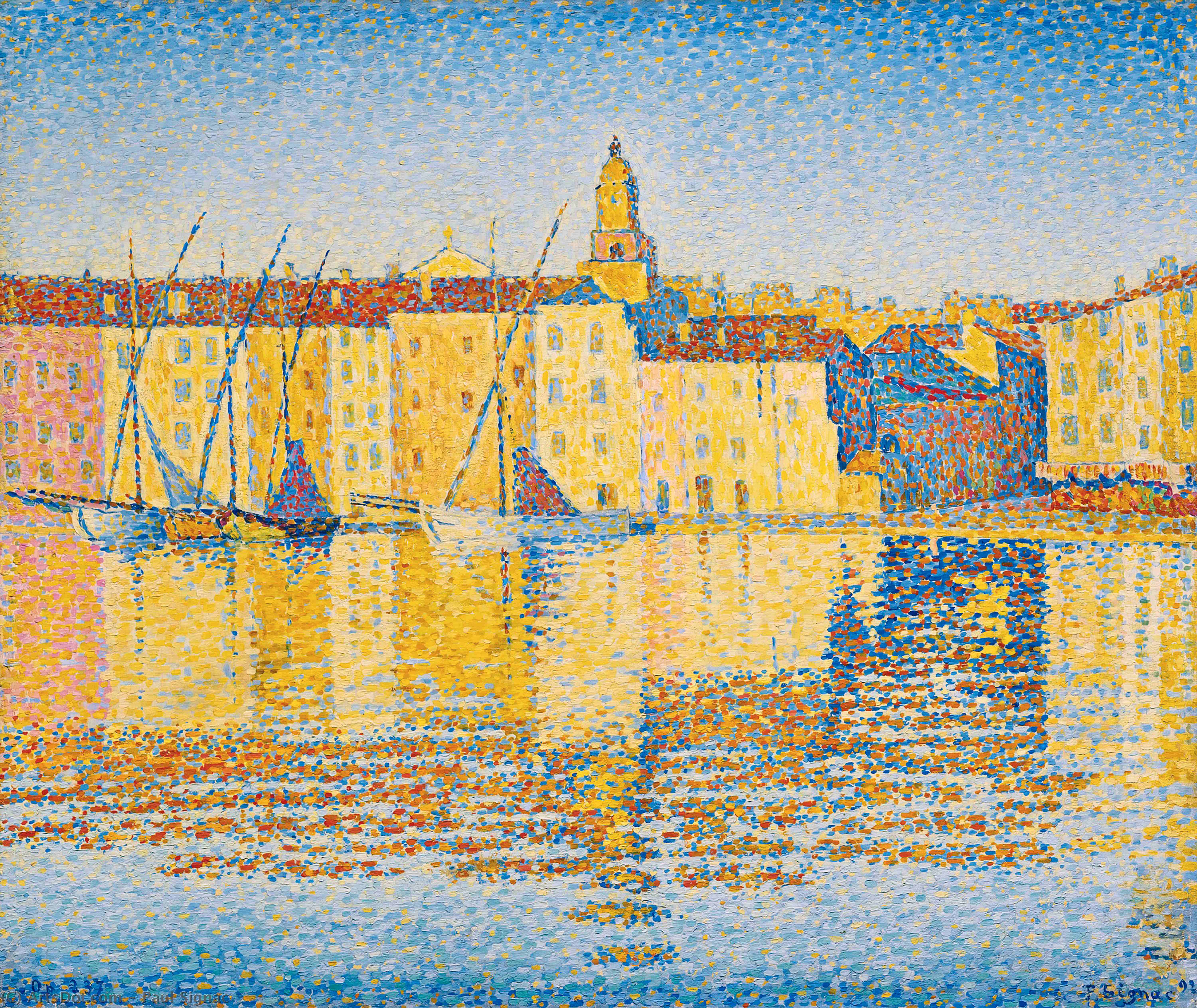
          Houses in the Port, Saint-Tropez, Opus 237

          View the most popular artwork of Paul Signac ranked #23: Houses in the Port, Saint-Tropez, Opus 237
          1892 · original 47 x 55 cm

          Experience the tranquil beauty of Saint-Tropez through Paul Signac’s luminous Neo-Impressionist masterpiece—a vibrant harbor scene rendered in dazzling dots of color and capturing the harmonious vision of Impressionism's groundbreaking artist.

          Technika
          Kézzel festett olajvászon
          Készült
          Rendelés esetén egy képzett festő készíti el
          Popularity
          No. 23 of 407 artworks by Paul Signac
          Szállítás
          Világszerte, kb. 5 hét
          from$18134 × 29 cm Commission this artwork
          Same size as the original$23055 × 47 cm Commission at original size

          The River Bank, Petit-Andely (also known as Riverbank, Les Andelys) - Paul Signac

          View the most popular artwork of Paul Signac ranked #24: The River Bank, Petit-Andely (also known as Riverbank, Les Andelys) - Paul Signac
          2026

          Merüljön el Paul Signac Neo-Impresszionista remekművében, a „Seine partja, Petit-Andely” című képen! Ez a gyönyörű Studio Kézzel Festett Kép megragadja a fény és a szín vibrálását aprólékos pontozással. Nyugodt francia folyópárkép műgyűjtőknek. Rendeljen még ma!

          View the artwork

          Saint-Tropez

          View the most popular artwork of Paul Signac ranked #25: Saint-Tropez
          1901 · Nemzetközi Nyugati Művészeti Múzeum, Tókyó

          Experience Paul Signac's iconic 'Saint-Tropez' (1901), a vibrant Post-Impressionist masterpiece capturing the bustling harbor of France. Hand-painted reproductions available now.


          Technika
          Kézzel festett olajvászon
          Készült
          Rendelés esetén egy képzett festő készíti el
          Popularity
          No. 25 of 407 artworks by Paul Signac
          Szállítás
          Világszerte, kb. 5 hét
          from$18135 × 28 cm Commission this artwork
          The artist

          Paul Signac

          1863 – 1935

          Paul Signac portréja
          Gyors tények
          • Gift suitabilityévforduló
          • Best occasionsakcentus
          • Emotional tonenyugodt
          • Lifespan72 years
          • Born1863, Párizs, Franciaország
          • Art period19. század
          • Museums on APSMusée d'Orsay, Nemzeti Galéria, Chicagói Művészeti Intézet, Minneapolis Institute of Art, Toledói Múzeum
          • Vibebékés, nyugodt
          Biography

          The Life and Identity of Paul Signac

          Born in Paris on 11 November 1863, Paul Signac entered a world that was beginning to shift under the weight of new visual ideas. He was the son of Jules Jean-Baptiste Signac and Héloïse Anaïs-Eugénie Deudon, a family that provided the foundation for a life dedicated to the pursuit of light. While his parents once envisioned a different path for him, the pull of the canvas proved stronger than any other calling. He would eventually become a central figure in the Neo-Impressionist movement, a man whose very identity was tied to the way color and light interacted upon a surface.

          His existence was marked by a deep connection to the sea and the shifting colors of the coast. He was a sailor at heart, a man who found his true rhythm amidst the waves and the sun-drenched harbors of the Mediterranean. This love for the water was not merely a hobby but a way of seeing the world, one that he translated into his paintings through a disciplined, almost scientific application of pigment. He sought to find order within the chaos of light, using his brushes to reconstruct the world through a meticulous, rhythmic method.

          By the time he passed away in 1935 at the age of 72, he had left behind a body of work that challenged the traditional boundaries of how we perceive color. His life was a long, steady pursuit of a specific kind of harmony, one that sought to marry the precision of science with the deep feelings of the artist. He lived through a period of immense change, remaining a steadfast advocate for his chosen methods until his final days in Paris.

          Early Life, Family and Training

          Born in Paris, the young Signac grew up in a household shaped by the commerce of the city. His father managed a shop on the Rue Frochot, where he sold luxury horse saddles and harnesses to a discerning clientele. This environment of craftsmanship and material detail provided a backdrop to a childhood that would soon shift toward the artistic heart of the capital. As his family moved into the Montmartre area, the boy found himself immersed in an urban center teeming with creative energy and the evolving spirit of the age.

          His early education was marked by a structured interest in form and construction. He spent his time studying architecture at the Collège Rollin in Montmartre until 1880. This training in the logic of space and structure would linger in his mind long after he turned his attention toward the canvas. By 1882, his path led him to the École des Arts-Décoratifs in Paris, where he sought to refine his technical abilities. It was during these formative years that the pull of the Seine and the light of the outdoors began to compete with the rigid lines of his architectural studies.

          The Development of Neo-Impressionism

          The seeds of Signac's transformation were sown during a visit to an exhibition in 1880, where the works of Claude Monet left a lasting impression upon him. This encounter stirred a curiosity that would eventually lead him away from the fleeting impressions of his youth toward a more structured way of seeing. By 1884, his path crossed with Georges Seurat, a meeting that would alter the course of his life and the history of painting. Together, they sought to move beyond the spontaneous brushwork of their predecessors, looking instead toward a method that combined art with the logic of light.

          This partnership focused on the development of Pointillism, a technique where tiny, distinct dots of pure color were applied to the canvas. They believed that by placing these dots side by side, the eye of the viewer would perform the work of mixing them, creating a luminosity that traditional blending could not achieve. While Seurat provided much of the initial theoretical weight, Signac became the movement's most vital voice. Following the death of his collaborator in 1891, Signac emerged as the principal spokesman for Divisionism, ensuring that their scientific approach to color and light would endure and influence the generations that followed.

          Technique and the Science of Color

          Signac sought to bring a sense of order to the canvas, treating the act of painting as a rigorous investigation into how the human eye perceives light. He moved away from the traditional method of mixing pigments on a palette, which he believed could dull the true intensity of color. Instead, he adopted a technique known as Pointillism, or Divisionism, where he applied tiny, distinct dots of pure color directly onto the surface. By placing complementary colors side by side, he relied on the viewer's own eye to perform the optical blending, creating a shimmering effect that felt more alive than a pre-mixed hue. This was a disciplined, almost mathematical approach to the canvas.

          His commitment to these principles was not merely a matter of habit but a deeply held intellectual conviction. He spent years studying the scientific laws of light and color, seeking to ground his art in the truths of physics. In 1899, he articulated these complex theories in his writing, From Eugène Delacroix to Neo-Impressionism. Through his work, he demonstrated that the artist could achieve a new kind of luminosity by respecting the purity of each pigment. As his career progressed, his application of these dots became more fluid and expressive, yet he never abandoned the fundamental science that governed his vision.

          Artistic Activity in Paris and Asnières

          The streets of Paris in the mid-1880s offered a restless energy that pulled Signac toward new ways of seeing. In 1886, he participated in the 8th Impressionist exhibition, contributing eighteen works that largely focused on city views and seascapes. His style at this time was caught in a transition, blending the loose, rapid brushstrokes of the Impressionists with the emerging, more disciplined application of color that would soon define his reputation. It was during this period of intense experimentation that he encountered Vincent van Gogh. The two men found a shared language in the light of the French landscape, and by 1887, they began to frequent Asnières-sur-Seine together. In the quietude of the riverbanks, they sought to capture the shifting atmosphere of the outskirts of the capital.

          As his ideas matured, Signac moved closer to the radical theories of his contemporaries. He found himself standing alongside figures such as Degas, Pissarro, Gauguin, and Seurat during the IX Impressionist Exhibition. These gatherings were more than mere social meetings; they were the crucibles where the future of modern painting was forged. While his early years were marked by a fascination with the river landscapes of the Seine, his time in Asnières allowed him to refine the rhythmic, mosaic-like application of paint that would eventually move away from the fleeting impressions of the past toward a more structured, scientific harmony.

          Coastal Life and the Mediterranean

          The pull of the sea eventually drew the artist away from the urban landscapes of the north. In 1892, he sailed the Garonne River southeast through France, seeking the light of the Mediterranean Sea. He dropped anchor in Saint-Tropez aboard his yacht, the Olympia, and found there a landscape that would become a major theme across his paintings. The shimmering waters and sun-drenched harbors offered a new rhythm for his brush, far removed from the riverbanks of the Seine.

          He found such deep inspiration in this southern light that he established a home in Saint-Tropez. This coastal retreat became a sanctuary where he could observe the interplay of color and tide. His technique began to change as he moved through these maritime settings; the strict, meticulous dots of his earlier years gradually gave way to a more fluid and expressive application of paint. The movement of the waves and the brightness of the Mediterranean air encouraged a broader palette and a more spontaneous touch.

          • The Red Buoy, Saint-Tropez (1895)
          • The Pine Tree at St. Tropez (1909)

          Key Works of the Artist

          In the early years of his experimentation, Signac sought to capture the pulse of the city through a rigorous, scientific lens. His 1886 work, Boulevard de Clichy, captures a winter scene in Paris, where the snowy boulevard is rendered through the meticulous application of small dots of pure color. This approach allowed him to translate the urban landscape into a rhythmic arrangement of light and shadow. By 1887, his focus shifted toward the quietude of domestic life. In Breakfast (The Dining Room), he applied thousands of tiny, distinct points of color to a scene of Belle Époque elegance, where sunlight streams through a window to illuminate a breakfast table with a vibrating energy.

          As his life moved toward the sea, his brushwork began to change, finding a new freedom in the light of the south. The 1895 painting The Red Buoy, Saint-Tropez demonstrates this evolution, using his mastery of Pointillism to catch the dynamic energy of the Mediterranean coast. The colors in these maritime scenes became more fluid and expressive, moving away from the strict, tiny dots of his earlier years toward a broader, more mosaic-like touch. Even when turning his attention to the people around him, his technique remained precise. His 1890 Portrait of Felix Feneon used this meticulous construction to explore light and color, presenting the subject with a clarity born from his revolutionary method.

          • Boulevard de Clichy, 1886
          • Breakfast (The Dining Room), 1887
          • Portrait of Felix Feneon, 1890
          • The Red Buoy, Saint-Tropez, 1895

          Leadership and the Avant-Garde

          Beyond the quietude of his coastal studies, Signac moved through the social circles of Paris with a firm sense of purpose. He was a well known Anarchist, a conviction that mirrored his desire to break away from the rigid, established structures of the art world. This spirit of rebellion found a practical outlet through his leadership within the Société des Artistes Indépendants. He held the presidency of this influential group from 1908 until his death in 1935, ensuring that the spirit of independence remained a guiding force for those who sought to challenge the status quo.

          His influence extended far beyond his own canvases, as he acted as a patron for those who dared to experiment. He possessed a keen eye for the new, recognizing the potential in the radical shifts of the coming century. By providing a platform for emerging talents, he helped foster the rise of movements that would change the course of modern art. He was among the first to offer his support to the pioneers of Fauvism and Cubism, welcoming their departures from tradition. Through his guidance, artists like Henri Matisse and André Derain found the space necessary to develop their own unique visions.

          Legacy and Influence on Modern Art

          The ripples of Signac’s experiments with light and color reached far beyond the quiet harbors of the Mediterranean. He acted as a bridge between the structured theories of the late nineteenth century and the explosive freedom of the next. By championing the idea that color could be applied with a rhythmic, almost musical intensity, he provided a foundation for those who sought to break away from traditional representation. His presence in the art world was felt not only through his brush but through his intellect, as he became a leading figure who helped define the direction of modern expression.

          This influence was particularly evident in the emergence of Fauvism. Signac’s approach to the canvas inspired artists like Henri Matisse and André Derain, who would later push the boundaries of color even further. He showed that the way an artist handles pigment can change the very way a viewer perceives reality. His commitment to the evolution of new styles ensured that his ideas remained a vital part of the artistic conversation, influencing a whole generation of painters who looked to his work to understand the potential of pure hue and light.

          Where to See the Works Today

          To witness the light that Signac so carefully studied, one must travel to the great halls of Paris. The Musée d'Orsay holds nine of his works, offering a significant gathering of his vision. It is there that the meticulous application of color becomes most apparent to the observer. In the same city, other treasures can be found, though the largest concentration remains in the French capital.

          Across the Atlantic, the Metropolitan Museum of Art in New York preserves five of his paintings, allowing those in the Americas to encounter his specific method of optical mixing. The reach of his influence extends even further, finding its way to the Kröller-Müller Museum in Otterlo, which maintains four of his pieces. These works allow us to see how his style evolved from the strict dots of his early years toward a more fluid touch.

          The presence of his art is truly global, reaching as far as the National Gallery of Victoria in Melbourne, where two of his works reside. These scattered collections ensure that his experiments with light and color remain accessible to those seeking to understand the science of his brushwork. Some of the specific pieces held in these various institutions include:

          • Boulevard de Clichy 1886
          • The Red Buoy, Saint-Tropez (1895)
          • Portrait of Felix Feneon (1890)
          • Breakfast (The Dining Room) (1887)
          • The Jetty, Cassis, Opus 198

          Kérdések és válaszok

          Mely történelmi korszakban alkotott Paul Signac?

          Paul Signac a 19. század korszakban alkotott. Ez az időszak a művész tevékenységét a történelembe helyezi.

          Hogyan találhatom meg Paul Signac alkotásainak összes darabját egy adott médiumban?

          Paul Signac alkotásainak meghatározott technikában való kereséséhez használja a művész Minden médium oldalát.

          Mennyire népszerűek Paul Signac művei?

          Paul Signac számára elérhető egy Statisztikák oldal, amely statisztikákat mutat be a művész alkotmányairól a ez a weboldal felületén.

          A WahooArt.com szerkesztősége által Frissítve: 2026. október 14.
          Gyűjtői kvíz
          1. Mely művészeti technikát segített Paul Signac kidolgozni Georges Seurat mellett?

          2. In hvilket városban született Paul Signac?

          3. Mely szervezet elnökeként szolgált Paul Signac 1908 és 1935 között?

          4. Mi volt a 1899-es színtanulati kiadványának címe, amelyet Signac írt?

          5. Mely művészkelőtt találkozott Paul Signac a párizsi művészkellett 1886-ban?

          Keep exploring

          Explore Paul Signac

          • Biography & Works
          • Összes műalkotás
          • Krónika
          • Legnézettebb festmények
          • Összes technika
          • Spektrális index
          • Paletta-genom
          • Színpaletták alapján
          • Kulcsszavak alapján
          • Statisztikák
          • Témakör-atlasz
          • Összes művészeti irányzat
          • 3D Múzeum
          • Műalkotások időrendje
          • Hangulatterem
          egy Ön választja ki a méretet

          Standard méretek vagy bármilyen egyedi forma, az eredeti arányoknak megfelelően.

          kettő Festünk és küldünk egy előnézeti képet

          Egy fotó a kész vászonról az Ön jóváhagyadása előtt, mielőtt a szállítmányozás történne.

          három Szállítási és hitelesítési bizonytosítvány

          Tekercsen, vászonra feszítve vagy keretbe ragasztva, biztosítással ellátva, hitelesítési tanúsítvánnyal.

          Készíttessen Paul Signac

          Every artwork by Paul Signac in our catalog can be painted to order, in the size that suits the room.

          Minden művészeti alkotás Paul Signac
          Segítségre van szüksége a megfelelő festmény kiválasztásához?

          A kompromisszumok nélküli gyűjtők számára a WahooArt a keresés végső állomása. Minden reprodukció mesterfestők keze alól származik, múzeumminőségű kidolgozottsággal, az online elérhető legnagyobb szépművészeti katalógus kínálatából válogatva. Legyen szó gyűjtemény bővítéséről vagy egy központi alkotás egyedi megrendeléséről, minden lépésben prémium kézműves munka és professzionális szolgáltatás vár Önt. Böngésszen a teljes galériában, és foglalja le remekművét — szakértői segítséglet és elégedettséget garantálunk.

          INGYENES TANÁCSADÁS Nyíl
          Facebook Twitter Pinterest Instagram
          E-mail WhatsApp Telegram Viber
          Művészeti megoldások
          • Művészeti konzierszerviz
          • 3 ingyenes előnézet
          • Ingyenes művészeti válogatás
          • Ingyenes művészeti válogatás
          • Ingyenes műalkotás-értékelés
          • Kezdje el saját alkotása megtervezését
          • Műalkotás-előnézet a saját szobájában
          • Hogyan válassza ki a tökéletes műalkotást az Ön otthonához
          • Fotófestménnyé alakítás
          • Fotóból művészeti nyomat készítés
          Fedezés
          • Összes műalkotás
          • Műalkotás-aukvciók
          • Összes művész
          • Összes múzeum
          • Cikkek és útmutatók
          • Művészek névsor szerint
          • A 100 legjobb művész
          • A Top 100 művész idővonalon
          • A 100 legjobb művész művészeti irányt按 soron
          • A 150 Mester Panteonja
          • A 100 legjobb műalkotás
          • Seven Duels, One Master
          • Műalkotások terek szerint
          • Műalkotások témák szerint
          • Műalkotások korszakok szerint
          • Múzeumok országonként
          • A 100 legjobb múzeum
          Szolgáltatások
          • Egyedi, személyre szabott festmények készítése
          • Egyedi műalkotások készítése
          • Szerezzen ingyenes művészeti ajánlásokat
          • Kezdje el az alkotás tervezését
          • Ingyenes műalkotásértékelés
          • Művészként árulhat itt
          • Vállalati művészet: Inspirálja irodáját a kreativitással
          • Esküvői és évfordulós ajándékok
          • Alakítsa fotóit művészetté
          • Hírlevél-feliratkozás
          • Saját fiók, Kedvencek, Rendelések
          Rólunk
          • Rólunk
          • Keressen minket!
          • GYIK / Gyakran Ismételt Kérdések
          • A festési folyamat
          • Vélemények
          • Globális statisztikák
          • Ingyenes világszerte történő szállítás
          • Pénzvisszatérítési garancia
          • Adatvédelmi irányelvek
          • Visszaküldési és visszatérítési szabályzat
          • Általános Szerződési Feltételek
          • Visa
          • Mastercard
                100% kézzel festett   •   Teljes elégedettség garantálva   •   Ingyenes világszerte történő szállítás
          © WahooArt.com - Minden jog fenntartva
          Complete collection index
          W Konciérge Online · válaszol egy percet
          Szia! Segíthetek műalkotás választásában, nyomon követni egy rendelést, vagy válaszolhatok a garanciával kapcsolatos kérdéseidre is. Miben segíthetek?
          Szeretne közvetlenül egy ügyintézővel beszélni? Írjon nekünk e-mailben WhatsApp Viber