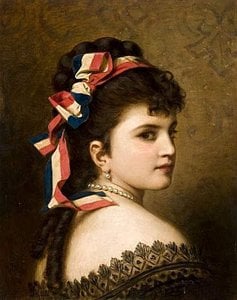
Anton Windmaier, 1840 – 1896

A 18 legnévesebb festménye: Anton Windmaier

Anton Windmaier nevéét Girl in Folk Costume (1879) mű maakte ismertté. Autumn Near Munich (1874) és The Little Truant (1885) követik őket a gyűjtők és a múzeumi látogatók elősörvetében. A Anton Windmaier katalógusában található 18 mű közül ezek a 18 a legcsodálatosabbak, melyeket dátummal, múzeummal és a műre jellemző különlegességekkel mutatunk be.

A rangsorolásunkat a népszerűségi pontszám határozza meg, amely az egyes művek kereséseit, látogatottságát és megrendeléseit ötvözi. Frissítve: október 2026. Az ezen az oldalon található összes remekmű megrendelhető múzeumi minőségű, kézzel festett olajfestmény másolatként vagy fine art nyomtatásként, a választott méretben.

Anton Windmaier portréja
Anton Windmaier · 1840 – 1896
Született · meghalt
1840 – 1896, Pfarrkirchen
A katalógusban szereplő művek
18
Legnépszerűbb
Girl in Folk Costume (1879)
A legtöbb művel a
Reading Public Museum

Anton Windmaier: a tíz remekmű

Girl in Folk Costume (1879) szerzője Anton Windmaier
1

Girl in Folk Costume

1879

A Glimpse into 19th-Century Russian Heritage: "Girl in Folk Costume" This captivating oil on canvas portrait, dating back to 1879, offers a poignant glimpse into the cultural landscape of 19th-century Russia. Painted by Anton Ebert, the artwork depicts a young woman adorned in traditional folk attire, presented within an elegant oval frame that enhances its classical feel. The subject's serene expression and dignified posture evoke a sense of quiet strength…

Hand-painted oil reproduction from $181 29 × 35 cm

További Anton Windmaier remekművek, 11től 18ig

A leggyakoribb témakörök, amelyeket Anton Windmaier festett

A négy leggyakoribb téma ezek között a mesterdarabok közül, mindegyik legkivágtebb példájával.

Hol láthatja Anton Windmaier festményeit

A 2 olyan múzeum, amely a legtöbb ezen az oldalon szereplő festményet őrzi.

Múzeumok Város Anton Windmaier művei Ebből a listából származó festmények
Reading Public Museum, ReadingReading Public Museum Reading 2 Autumn Near Munich, Sunset Near Munich
Bavári Állami Festırménygyűjtemények, MunchenBavári Állami Festırménygyűjtemények Munchen 1 Winter landscape

Anton Windmaier, évtizedenként: az évtized meghatározó festményei

  1. 1870s
    Girl in Folk Costume (1879) szerzője Anton Windmaier
    1. hely 18 közül

    Girl in Folk Costume

    Kor: 30 – 39 év

    A Glimpse into 19th-Century Russian Heritage: "Girl in Folk Costume" This captivating oil on canvas portrait, dating back to 1879, offers a poignant glimpse into the cultural landscape…

  2. 1880s
  3. 1890s
    Winter landscape (1896) szerzője Anton Windmaier
    5. / 18

    Winter landscape

    Kor: 50 – 56 év · Bavári Állami Festırménygyűjtemények

Anton Windmaier remekművei: kérdések és válaszok

Melyik festményről ismert leginkább Anton Windmaier?Mutasd meg a választ

Girl in Folk Costume (1879). Ezután következik Autumn Near Munich (1874) és The Little Truant (1885).

Hány éves volt Anton Windmaier, amikor megalkotta a Girl in Folk Costume című művét?Mutasd meg a választ

39 éves: Girl in Folk Costume 1879-ből származik, Anton Windmaier pedig 1840 évfolyamon született.

Melyek Anton Windmaier tíz legnagyszerűbb festménye?Mutasd meg a választ

Girl in Folk Costume, Autumn Near Munich, The Little Truant, The Little Polka Dancer, Winter landscape, An Elegant Lady, The Mellon Seller, Sunset Near Munich, Grandmother's Recovery és The Gypsy Girl. A fenti rangsor a művek évszámát és a múzeumát jelzi.

Hány művet festett Anton Windmaier?Mutasd meg a választ

Katalógusunkban 18 mű található Anton Windmaier alkotótól, 1874 és 1896 közötti időszakból.

Melyik múzeumokban tekinthetjük meg Anton Windmaier remekműveit?Mutasd meg a választ

A legtöbbjüket Reading Public Museum (Reading) és Bavári Állami Festırménygyűjtemények (Munchen) találhatja meg. A fenti táblázatban a múzeumokat egymás után soroljuk fel.

Mikor festette Anton Windmaier ezeket a remekműveket?Mutasd meg a választ

1870s idején: a jelen laphonon található 18 műből 3 származik onnan, köztük Girl in Folk Costume.

Mikszétek a Anton Windmaier első és legutolsó híres festményei?Mutasd meg a választ

A legkorábbi alkotás ezen az oldalon Autumn Near Munich (1874), a legutóbb pedig Winter landscape (1896).

Melyek voltak Anton Windmaier kedvenc témái?Mutasd meg a választ

Portrait (2), Russian art (2) és Female figure (2), a jelen oldalon található 18 mű közül.

Mely Anton Windmaier remekművei láthatóak a Reading Public Museum falain?Mutasd meg a választ

A Autumn Near Munich és Sunset Near Munich a 2 mű közül foglal helyet ezen az oldalon, amelyeket a Reading Public Museum, Reading tartományában őrzik.

Én is vásárolhatok egy Anton Windmaier remekművének reprodukcióját?Mutasd meg a választ

Igen. Az oldalon található minden festmény a festmény saját oldalán, a választott méretben rendelhető meg, hogy muzeumi minőségű, kézzel festett olajfestmény-másolatként vagy kiváló minőségű művészeti nyomtatásként.

Anton Windmaier életútja

The Soul of a Nation: The Life and Art of Anton Ebert

Anton Ebert stands as a pivotal figure in the development of Russian realist painting, a master whose meticulous observation and profound empathy captured the very essence of everyday life in 19th-century Russia. Born in Berlin to Polish heritage, Ebert’s artistic journey was one of remarkable migration, leading him from the bustling, structured streets of Europe to the heartland of Russia. It was here that he found his true calling, spending much of his career documenting the lives of peasants, merchants, and members of the aristocracy with a sensitivity that transcended mere portraiture. His work offers a poignant window into a rapidly changing nation, reflecting both its enduring, ancient traditions and the encroaching, transformative forces of modernity.

Ebert’s early artistic training was deeply rooted in the rigorous academic tradition, receiving foundational instruction at the prestigious Berlin Academy of Fine Arts. However, his creative spirit was profoundly reshaped by his exposure to the burgeoning realist movement sweeping through Europe, spearheaded by visionaries such as Gustave Courbet and Jean-François Millet. Rejecting the polished, idealized representations of beauty prevalent in academic circles, Ebert sought to portray his subjects with an unflinching honesty. He turned his gaze toward the lives of ordinary people, a commitment that would become the defining hallmark of his artistic legacy. While his early years were spent exploring landscapes and formal portraits, it was his move to Russia in 1870 that truly ignited his creative fire.

A Master of Realism and Light

Initially employed as a portraitist for the Imperial family, Ebert quickly found himself drawn away from the gilded halls of the elite and toward the vibrant, rugged reality of the rural population. He recognized within the peasantry a wealth of character and narrative potential that demanded to be recorded. His artistic style is characterized by an extraordinary level of detail and a meticulous approach to realism. He possessed a rare ability to capture the subtle nuances of human expression, the intricate textures of heavy fabrics, and the shifting atmospheric conditions of the Russian landscape. In works such as "Girl in Folk Costume," one can witness his mastery; he brings the richness of traditional attire—the vibrant red headscarf and delicate necklaces—to life with such precision that the subject seems to breathe within her frame.

A key element of Ebert’s evocative power is his sophisticated use of light. He often employed a diffused, sometimes melancholic light that imbued his scenes with a sense of quiet introspection and depth. This technique allowed him to create immersive experiences, transporting the viewer into the very world he observed. His paintings are not merely static depictions; they are atmospheric studies that utilize smooth brushstrokes to render soft skin, contrasting beautifully with more textured applications used for the coarse fabrics of peasant clothing. Through this interplay of light and texture, Ebert achieved a sense of sentimental realism, where the physical world is rendered with scientific accuracy yet remains deeply infused with emotion.

Legacy and Historical Significance

The historical significance of Anton Ebert lies in his role as a visual chronicler of a vanishing era. During the late 19th century, Russia underwent a period of intense cultural revival and national identity formation. Artists like Ebert played a crucial role in documenting traditional costumes, customs, and social structures that were being altered by industrialization. His oeuvre serves as a vital archive of Russian heritage, preserving the dignity of the common person through art.

Ebert’s contributions can be summarized through several key artistic achievements:

  • Documentary Precision: His ability to record the specificities of folk costumes and social hierarchies provides an invaluable historical record.
  • Emotional Depth: By blending Neoclassical balance with Romantic undertones, he moved beyond simple realism to touch upon the psychological state of his subjects.
  • Cultural Bridge: As a painter of Polish heritage trained in Germany but working in Russia, his work represents a unique intersection of European technical training and Russian thematic soul.

Ultimately, the works of Anton Ebert—from the tender "Grandmother's Recovery" to the vibrant "The Mellon Seller"—continue to resonate with modern audiences. They offer a timeless connection to a period of profound human experience, inviting us to look closely at the beauty found in the ordinary and the strength found in the simple rhythms of life.